
Lifestyle
Cooling Bedding Essentials for Every Bedroom

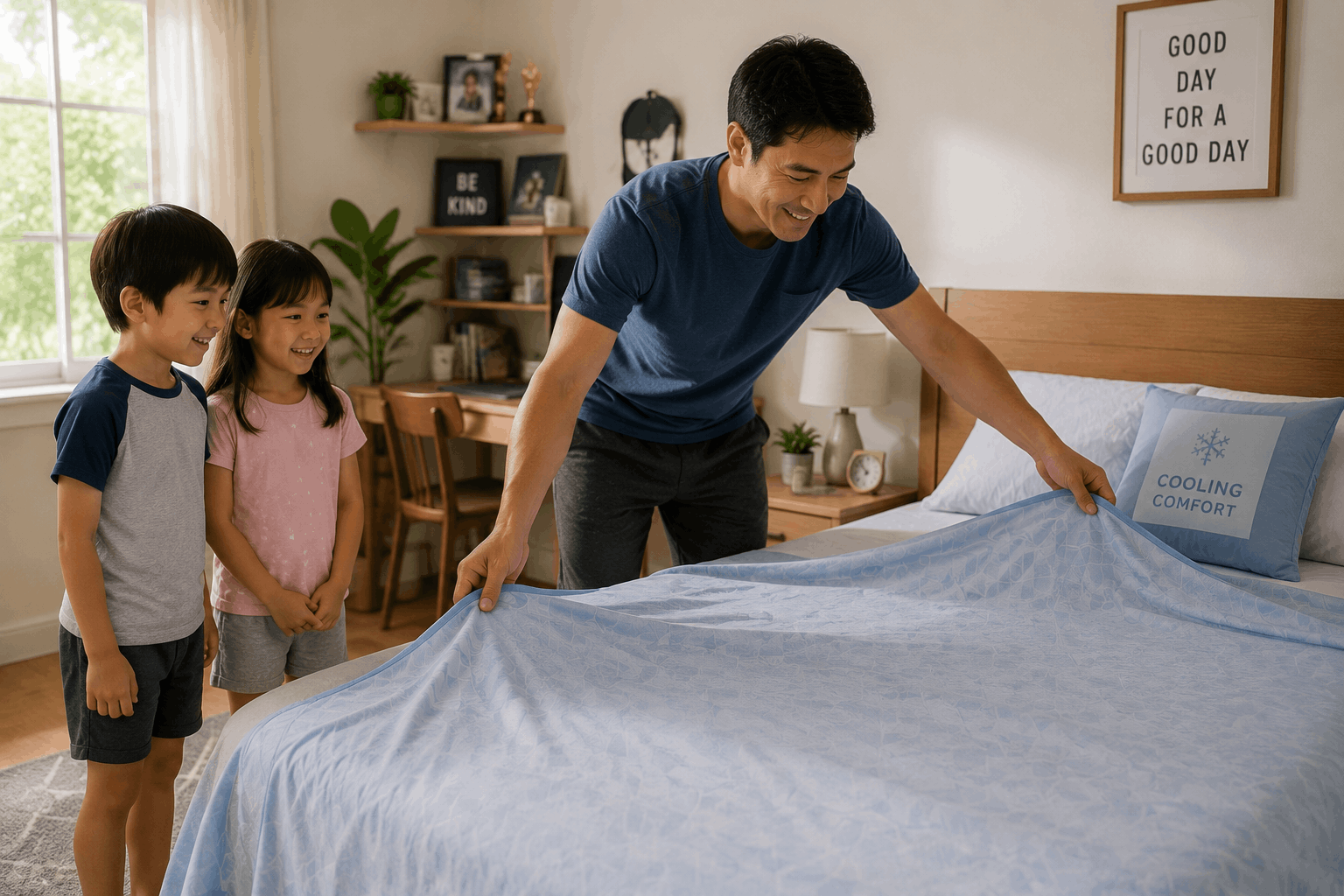
Cooling bedding essentials are one of the most searched categories in home goods, and for good reason. If you wake up overheated regularly, the fix isn’t always an expensive gadget. Often, the answer is the fiber your sheets are made from and the weave structure. The material you sleep on either supports or blocks your body’s own cooling process.
This guide covers what the research says, which products work, and what to skip.
Why Fiber Type Is Central to Cooling Bedding Essentials
Sleep onset is triggered by a drop in core body temperature. Skin surface warming helps that process along. It pushes heat out to the environment through the hands, feet, and skin. Your sheets can either support that heat transfer or block it.
A systematic review on bedding and sleepwear fiber types from the Journal of Sleep Research via PMC confirmed this directly. Fiber type influences skin temperature, thermal comfort, and multiple sleep quality outcomes. Six of the nine reviewed studies found statistically significant sleep differences based on fiber type alone.
Key findings from the review include:
- Linen bedsheets reduced nighttime wakefulness and sleep onset latency under warm conditions compared to cotton and polyester combinations
- Wool sleepwear shortened sleep onset in both cool and warm environments compared to cotton
- Goose down duvets increased slow-wave deep sleep compared to cotton duvets under cool conditions
- Polyester consistently underperformed natural fibers in measured sleep quality outcomes
The fiber you sleep on shapes the thermal environment your body works with. It’s not a cosmetic detail.
The Science Behind Fabric and Sleep Temperature
Most cooling bedding essentials conversations focus on sheets. But the fabric research goes deeper than that.
A polysomnography study on sleepwear and bedding at 17°C and 22°C published in Nature and Science of Sleep via PMC followed 17 healthy young adults across nine nights of objective sleep testing. The results were measurable. Wool sleepwear produced significantly shorter sleep onset latency than cotton. Participants fell asleep in about 11 minutes in wool versus around 15 minutes in cotton sleepwear.
At the cooler temperature of 17°C, the difference was more pronounced. The study found that temperature variables explained 67.8% of the variance in how quickly participants fell asleep. Skin and core body temperature behavior, shaped significantly by fabric type, drove those results.
The same thermal principles apply to sheets. A fabric that allows heat to leave the core while keeping skin comfortable promotes faster, deeper sleep.
Natural Fiber Properties in Cooling Bedding Essentials
Natural fibers manage moisture and heat differently than synthetic ones. Wool has notably higher moisture buffering capacity than both cotton and polyester. It absorbs sweat before it builds up against the skin. The absorbed moisture releases slowly as heat. This contributes to the skin microclimate that supports sleep onset.
Polyester doesn’t absorb moisture into its fiber structure. Sweat stays on the fabric surface instead of moving through it. That creates a warm, damp contact surface that disrupts thermoregulation during sleep.
Cotton falls between the two. It absorbs moisture into the fiber, though less efficiently than wool. Its advantage over polyester is meaningful and consistent across the research.
Weave Structure and Breathability in Cooling Bedding Essentials
Fiber alone doesn’t determine how cool a sheet sleeps. Weave structure matters too. Percale weaves create a crisper, more open structure with better airflow than sateen weaves. Sateen’s smooth surface comes from more fibers lying on top of the fabric, reducing breathability.
High thread counts don’t automatically mean better cooling. Denser weaves trap more heat against the skin by reducing airflow through the fabric. Quality bedding in breathable weave structures and natural fibers performs consistently better for hot sleepers than high-thread-count sateen sheets.
What Independent Testing Found About Cooling Bedding Essentials
Research findings align closely with what independent consumer testing has confirmed.
Consumer Reports’ product evaluation for hot sleepers makes a point worth emphasizing. Products marketed as “cooling” don’t always control temperatures better than standard alternatives. Many gel-infused fabrics and treated textiles feel cool at first contact. They warm up from body heat within minutes. Their testing found that the most effective approach involves products that actively move heat away or don’t hinder airflow at all.
For sheets, their top performer was 100% long-staple cotton in a percale weave. It fit consistently, resisted shrinkage, and performed well across test conditions. Their testing also confirmed that fans and air circulation devices outperform most passive cooling products. They actively remove warm air instead of just feeling cool on contact.
Cooling Bedding Essentials Worth Buying Room by Room
With research and testing in context, the useful product list gets specific. Here’s what actually makes a difference.
Worth investing in:
- Natural fiber sheets in percale weave: linen or long-staple cotton with a breathable weave structure perform consistently in both research and independent testing. They’re the foundation of any effective cooling bed setup
- Natural fiber or down duvets: polyester fill traps heat more than goose down or wool fill, particularly under cool sleeping conditions. Down and wool allow more efficient heat release
- Breathable cotton or linen pillowcases: face and neck contact for seven to eight hours contributes meaningfully to overall sleep temperature
- Active temperature control toppers: passive gel toppers warm up within minutes from body heat. Water-based active systems sustain temperature changes through the night for consistent cooling
Skip or approach with skepticism:
- Gel-infused sheets or covers sold as cooling: they don’t sustain lower temperatures past initial contact
- Sateen-weave sheets marketed as premium cooling: reduced airflow works against the goal
- Polyester fill duvets regardless of weight: fiber structure works against moisture management in every condition
How Antimicrobial Technology Fits Cooling Bedding Essentials
Cooling bedding essentials perform better when they stay hygienically fresh between washes. Bacterial activity in fabric produces heat and odor. It builds up faster in materials that retain moisture. Sheets that stay drier and cleaner maintain their breathable performance longer between laundry days.
Miracle sheets use silver-based antimicrobial technology embedded in the cotton fiber structure. This limits bacterial growth between wash cycles without a surface coating that wears off. The sheets stay fresher longer and maintain the breathable performance of natural cotton without the odor that builds in standard sheets within a few days of use.
The same hygiene principle applies to bath textiles. Towels that cycle through warmth and moisture daily accumulate bacteria quickly in humid bathrooms. Silver-infused towels stay fresh across more uses before odor becomes noticeable.
Putting It Together for Your Bedroom
The core principle behind cooling bedding essentials is consistent across all the research. Materials that manage moisture, allow heat transfer, and maintain airflow support the body’s natural thermoregulation during sleep. Materials that block those functions work against it.
Fiber type, weave structure, and hygiene all contribute to the outcome. The research consistently points toward natural fibers in breathable weave structures as the baseline. Active temperature devices like fans or temperature-controlled toppers add benefit beyond what materials alone provide.
Miracle Made builds bedding around this principle. The focus is on what natural fiber performance and silver antimicrobial technology together can do for the thermal environment where you sleep each night.

To protect elderly parents from online scams, families should combine regular communication, scam-awareness education, verification habits, and real-time scam detection tools. Scamless helps by detecting suspicious messages, phishing links and impersonation attempts across WhatsApp, SMS, Instagram, Facebook Messenger, X and TikTok before users click, reply or send money.
Why Seniors Are Targeted by Online Scams
Online scams have become a growing concern for families, particularly when it comes to protecting elderly parents who increasingly rely on digital communication for banking, healthcare, and staying connected. As scam tactics become more sophisticated, many families are searching for ways to protect elderly parents from scams, explore scam protection for seniors, and find reliable tools, such as a senior fraud prevention app or family scam protection app that can provide real-time safety across messaging platforms.
Scamless is an AI-powered scam detection app that helps users detect suspicious messages, phishing links and impersonation attempts across apps such as WhatsApp, SMS, Instagram, Facebook Messenger, X and TikTok before they click, reply or send money.
Arjun Singri, founder of Scamless, explains that the vulnerability of seniors is not linked to awareness or intelligence, but to the evolving nature of digital manipulation. “The challenge is that scams are designed to blend into everyday communication,” he says. “They appear as normal messages, often from sources that feel familiar and trustworthy.”
Common Scams Targeting Elderly Parents
Scammers frequently target older adults through emotional and time-sensitive messaging. These include fake bank alerts, impersonation of family members, delivery notifications, and urgent account security warnings. Each message is structured to create urgency and reduce the likelihood of verification. Singri notes that this emotional pressure is central to how fraud succeeds. “When urgency enters the conversation, people tend to act before they validate,” he says.
One of the most common risks involves impersonation scams, where attackers pretend to be a relative or a trusted institution. These messages often request immediate financial assistance or sensitive information. In many cases, they are delivered through messaging platforms where conversations feel private and personal, making detection more difficult.
Another frequent category includes fake bank texts and account alerts. These messages claim that accounts have been compromised or transactions require immediate verification. They often contain links that lead to fraudulent login pages designed to capture credentials. Delivery scams and fake shopping notifications also remain widespread, especially during periods of high online purchasing activity.
Singri explains that these patterns are intentional and highly structured. “Scams are not random messages,” he says. “They are carefully designed interactions that guide someone toward a decision without giving them time to question it.”
For families, this creates a unique responsibility. Protecting elderly parents from scams is no longer limited to education alone. It requires ongoing support and systems that can assist in real-time as threats appear. Caregivers often play a critical role in helping seniors identify suspicious messages, verify requests, and avoid rushed decisions.
However, human oversight alone has limitations. Messages can arrive at any time, and scams often unfold within seconds of engagement. This is where technology becomes an important layer of protection.
How Scamless Supports Family Scam Protection
Scamless operates as a scam protection app for seniors and a family scam protection app designed to help detect suspicious messages, phishing links, and impersonation attempts across platforms such as WhatsApp, SMS, Instagram, Facebook Messenger, X, and TikTok. It functions as a senior fraud prevention app by analyzing communication in real time and flagging potential risks before action is taken.
The system identifies patterns associated with manipulation, including urgency cues, unusual requests, and inconsistencies in sender behavior. When a risk is detected, it provides real-time scam alerts that explain why a message may be unsafe. This allows both seniors and family members to understand the context of the threat rather than relying on uncertainty.
Why Real-Time Scam Alerts Matter for Seniors
Singri emphasizes that clarity is a critical part of protection. “People do not need more fear,” he says. “They need understanding at the moment a decision is being made.”
One of the key advantages of using a family scam protection app is shared awareness. Families can support each other in identifying suspicious communication patterns and reinforcing safe digital habits. This creates a collaborative approach where protection is distributed across both technology and human support.
Caregivers often look for tools that reduce friction for seniors while still offering strong protection. Scamless is designed to integrate into everyday communication without requiring additional steps from the user. It helps users check suspicious messages before clicking, replying, or sharing sensitive information, reducing the risk of accidental engagement with fraudulent content.
Singri explains that timing is often the deciding factor in whether a scam succeeds. “Most scams succeed in moments where someone feels pressured to respond quickly,” he says. “If that moment is interrupted with clarity, the outcome changes.”
Scam protection for seniors must also account for emotional factors. Older adults may be more trusting of messages that appear to come from family members or institutions they have interacted with for years. Scammers exploit this trust by replicating tone, branding, and communication style. This makes detection especially difficult without additional support systems.
How AI Helps Detect Senior Fraud Attempts
AI plays an increasingly important role in addressing this challenge. Scamless uses machine learning to analyze large volumes of communication data and identify patterns that may indicate fraud. It adapts continuously to new scam techniques, ensuring that protection evolves alongside emerging threats.
The platform also helps reduce dependency on manual verification. Instead of expecting seniors or caregivers to assess every message, it provides immediate analysis that highlights potential risks in context. This is particularly important in situations involving fake bank texts or urgent family requests, where hesitation is often overridden by emotional response.
Singri frames this as a shift in how digital safety is understood. “Protection should not depend on constant vigilance,” he says. “It should be built into the environment where communication happens.”
Families using scam protection tools benefit from reduced stress and increased confidence in digital interactions. Seniors gain reassurance, while caregivers gain visibility into potential risks without needing to monitor every conversation directly.
Scamless and the Future of Senior Scam Protection
The rise in scams targeting older adults reflects broader changes in communication behavior. As more daily activities move online, including banking, shopping, and healthcare coordination, the number of potential entry points for fraud increases. Scammers take advantage of this expansion by designing messages that mirror legitimate interactions.
Singri notes that this evolution requires a new approach to safety. “The environment has changed faster than people expect,” he says. “That gap is where scams find opportunity.”
Scamless addresses this gap by embedding detection directly into communication channels, allowing risks to be identified as they appear. This approach helps ensure that seniors are not left to interpret complex signals on their own, especially in high-pressure situations.
For families seeking to protect elderly parents from scams, the combination of awareness, communication, and intelligent support systems offers the most effective path forward. Education remains important, but it becomes significantly stronger when paired with real-time protection.
As digital communication continues to expand, the need for accessible and adaptive safety tools will only grow. Scam protection for seniors is no longer a secondary concern. It is a central part of maintaining trust and independence in a connected world.
For Singri, the mission is grounded in simplicity and timing. “The right support at the right moment can prevent everything that follows,” he says. “And sometimes, that moment is all that stands between safety and loss.”
-

 Tech5 years ago
Effuel Reviews (2021) – Effuel ECO OBD2 Saves Fuel, and Reduce Gas Cost? Effuel Customer Reviews
-
 Tech7 years ago
Bosch Power Tools India Launches ‘Cordless Matlab Bosch’ Campaign to Demonstrate the Power of Cordless
-

 Lifestyle7 years ago
Catholic Cases App brings Church’s Moral Teachings to Androids and iPhones
-

 Lifestyle5 years ago
East Side Hype x Billionaire Boys Club. Hottest New Streetwear Releases in Utah.
-

 Tech8 years ago
Cloud Buyers & Investors to Profit in the Future
-

 Lifestyle6 years ago
The Midas of Cosmetic Dermatology: Dr. Simon Ourian
-

 Health7 years ago
CBDistillery Review: Is it a scam?
-

 Entertainment7 years ago
Avengers Endgame now Available on 123Movies for Download & Streaming for Free