
World
Mega casino projects that failed in Spain


Beautiful casino megaprojects such as the Kingdom of Don Quixote, Gran Scala, and Eurovegas never saw the light of day in Spain. Barcelona World casino, on the other hand, supports a thread of hope that is becoming increasingly fragile. Why? There are no specific reasons for such fiasco, but there are some similar business strategies that could lead to bankruptcy. Another reason that may have affected the giants is a decline in interest among people to visit gambling establishments since online gambling clubs always at hand. For example, you can play top gambling games just by clicking on this link – www.casinonic.com/en-AU/games/top. Anyway, let’s take a look at each casino separately.

The Kingdom of Don Quixote project was presented in 2005. This casino was supposed to have an area of 10,000 square meters, a luxury hotel, a theater for 3,000 spectators, a golf course, 7,000 rooms, and 7,000 permanent jobs. For seasonal work should have involved 11,000 workers. This casino received funding from the gaming giant Caesars, which was supposed to operate the casino under the Harrah’s brand. That would be Las Vegas in Ciudad Real.
Negotiations are at an impasse and deadlines have not been met. On December 1, 2011, a meeting of shareholders declared bankruptcy. Caesars said it lost $ 27.1 million on this project.
The Don Quixote project has always been associated with another fiasco – Don Quixote Airport. The total debt amounted to 200 million euros. Sergio Alvarez, president of the Board of Shareholders, then told the local newspaper La Tribuna de Ciudad Real that his goal was to attract investors, seek funding and promote the project.
Gran Scala project between Zaragoza and Huesca
In December 2007, the government of Aragon introduced the Gran Scala project. The promotion company was International Leisure Development (ILD), which promised 32 casinos, seven theme parks, hotels for 25,000 guests, 250 stores, 26,000 direct jobs and nearly 65,000 seasonal. In total, investments amounted to 17,000 million euros.
The place chosen for the development of the Grand Scale project was the Monegros Desert, located between Zaragoza and Huesca. To implement this project, 4,000 hectares of land was needed.
Due to such a large amount of land, plots were acquired from private individuals. The conditions were as follows: owners received from 4 to 10% advance payment. If the investor did not pay the balance until February 2012, then the land was returned to the owners. And so, it happened. International Leisure Development did not pay the balance and the project itself remained only on paper.
Eurovegas Project in Madrid
In 2010, Las Vegas Sands began to be interested in opening a mega-casino complex in Europe. The owner of this company is billionaire Sheldon Adelson. The location of the future casino was considered either in Barcelona or in Madrid. Adelson said that it was Spain that was most suitable for hosting his “Gambling Eden”. He planned investment of 18 million euros. 250,000 thousand permanent and seasonal jobs, 12 hotels and restaurants with the ability to serve 50,000 people, several golf courses and 6 casinos with a large area.
Two years later, it was decided that the casino will be located in the capital of Spain. Three options were considered: Paracuellos del Jarama, Valdecarros and Alcorcon. The latter was chosen as the location.
Everything seemed to go smoothly, but delays, changes in the initial numbers, and requests for changes in laws began to appear. So, until 2013, after the resignation of Esperance Aguirre, the project fell apart.
So why these megaprojects closed?
The main groups opposed to the implementation of casino megaprojects were left-wing parties, environmental associations, and organizations against gambling. And the arguments are as follows:
- Environmental Impact: This is a model that is contrary to sustainable development.
- Gambling-based economic specialization.
- Increase negative values.
- The emergence of a marginal environment: drugs, mafia, and prostitution.
- Low skilled labor.
- Changes in laws: projects required changes in the law to meet the interests of the investor. For example, the government of Aragon approved the law on recreation centers of large capacity. For Eurovegas, it was necessary to amend the Tobacco Act, and in the case of Barcelona Word, a tax reduction was approved.
World
Swiss International University Makes Global Impact with Top 500 Times Higher Education Ranking

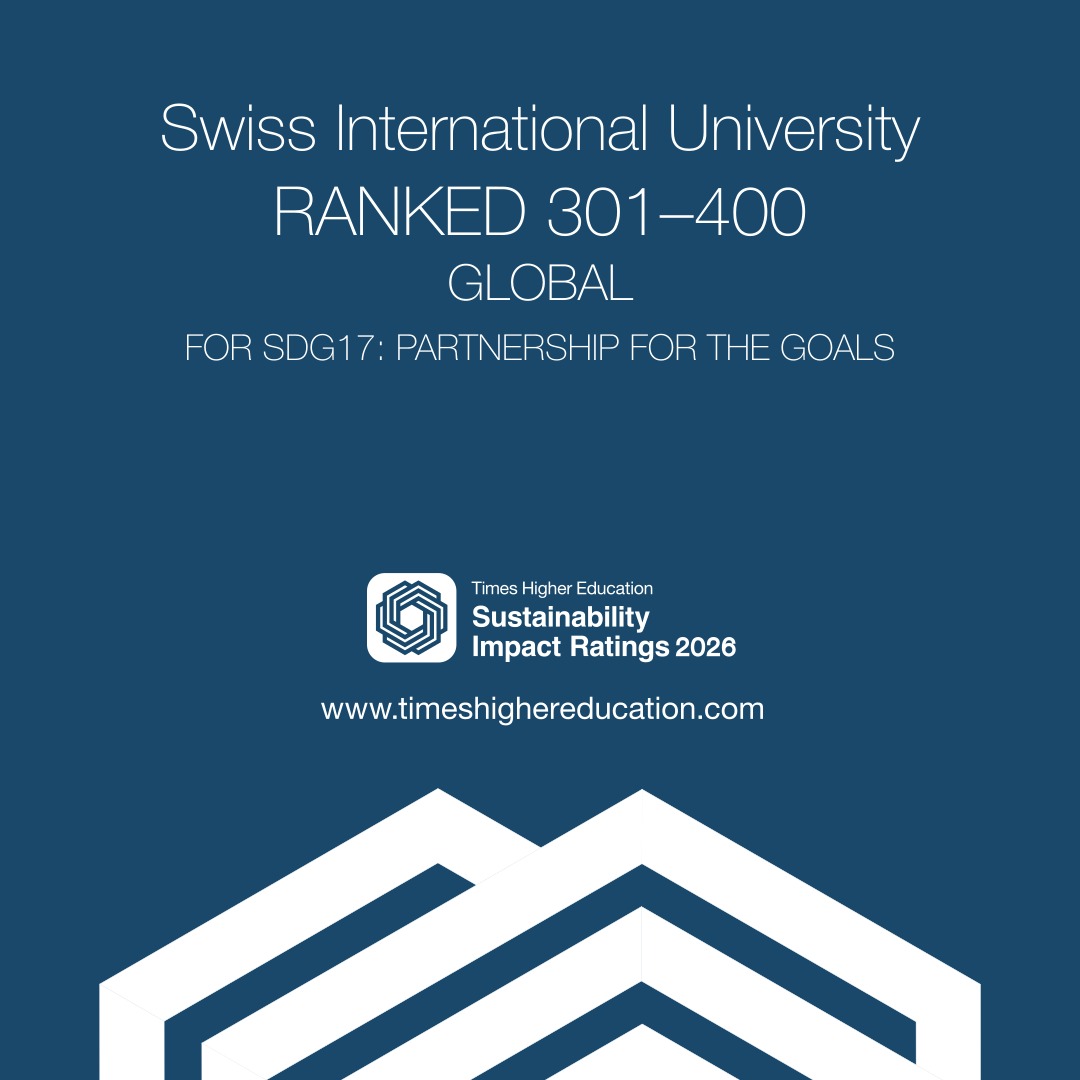
Swiss International University (SIU) got a real kind of milestone , when it landed inside the worlds top 500 universities in the newest Times Higher Education (THE) Impact Rankings. Which is kind of huge because it is SIU’s first time appearing in those widely respected rankings, and it also shows how its influence keeps growing in international higher education.
SIU was competing with nearly 2,000 universities from different parts of the world, and that first debut basically underlines its dedication to academic quality, sustainability and a real societal footprint. Overall it seems like the result mirrors SIU’s own plan for delivering solid education , while also aligning with bigger global development objectives.
Now, the Times Higher Education Impact Rankings look at universities through what they do for the United Nations Sustainable Development Goals , or SDGs. So the assessment is about universities creating verifiable positive change through education, research, community activities, plus governance— not just statements.
One of SIU’s strongest areas was the recognition tied to SDG 16 – Peace, Justice, and Strong Institutions. In that section, SIU placed roughly within the top 100 to 200 universities worldwide, and that points to its focus on advancing ethical leadership, transparency, accountability, and those institutional values that actually stick.
This recognition shows SIU keeps working hard to get students ready, with the know-how , the ability to act and those ethical foundations, so they can face tangled global problems. And you know, by supporting responsible leadership and pushing for good social results, the university keeps building up its part in shaping the next generation of professionals and people who make real decisions
Key Highlights of SIU’s Achievement
• Ranked Among the World’s Top 500 Universities
In its first-ever participation in the Times Higher Education Impact Rankings, SIU managed to land a spot among the top 500 universities worldwide.
• Outstanding Performance in SDG 16
SIU reached a ranking in the top 100 to 200 range, across the globe, for its work related to Peace, Justice, and Strong Institutions.
• Strengthening Global Academic Presence
This win also reinforces SIU’s long-term vision, and it further tightens its standing as an emerging influence in international higher education.
Recognition from Times Higher Education is an important endorsement of SIU’s mission, to give accessible high-quality education while also making a positive impact in society. As the university keeps expanding its academic offerings and international reach, this milestone , works like a solid base for what comes next—future growth, more innovation, and that global recognition everyone is aiming for.
-

 Tech5 years ago
Effuel Reviews (2021) – Effuel ECO OBD2 Saves Fuel, and Reduce Gas Cost? Effuel Customer Reviews
-
 Tech7 years ago
Bosch Power Tools India Launches ‘Cordless Matlab Bosch’ Campaign to Demonstrate the Power of Cordless
-

 Lifestyle7 years ago
Catholic Cases App brings Church’s Moral Teachings to Androids and iPhones
-

 Lifestyle5 years ago
East Side Hype x Billionaire Boys Club. Hottest New Streetwear Releases in Utah.
-

 Tech8 years ago
Cloud Buyers & Investors to Profit in the Future
-

 Lifestyle6 years ago
The Midas of Cosmetic Dermatology: Dr. Simon Ourian
-

 Health7 years ago
CBDistillery Review: Is it a scam?
-

 Entertainment7 years ago
Avengers Endgame now Available on 123Movies for Download & Streaming for Free