
Lifestyle
Here We Grow Distributes Seed Kits and Free Greenhorn Guides to Promote Self-Sufficiency Across America

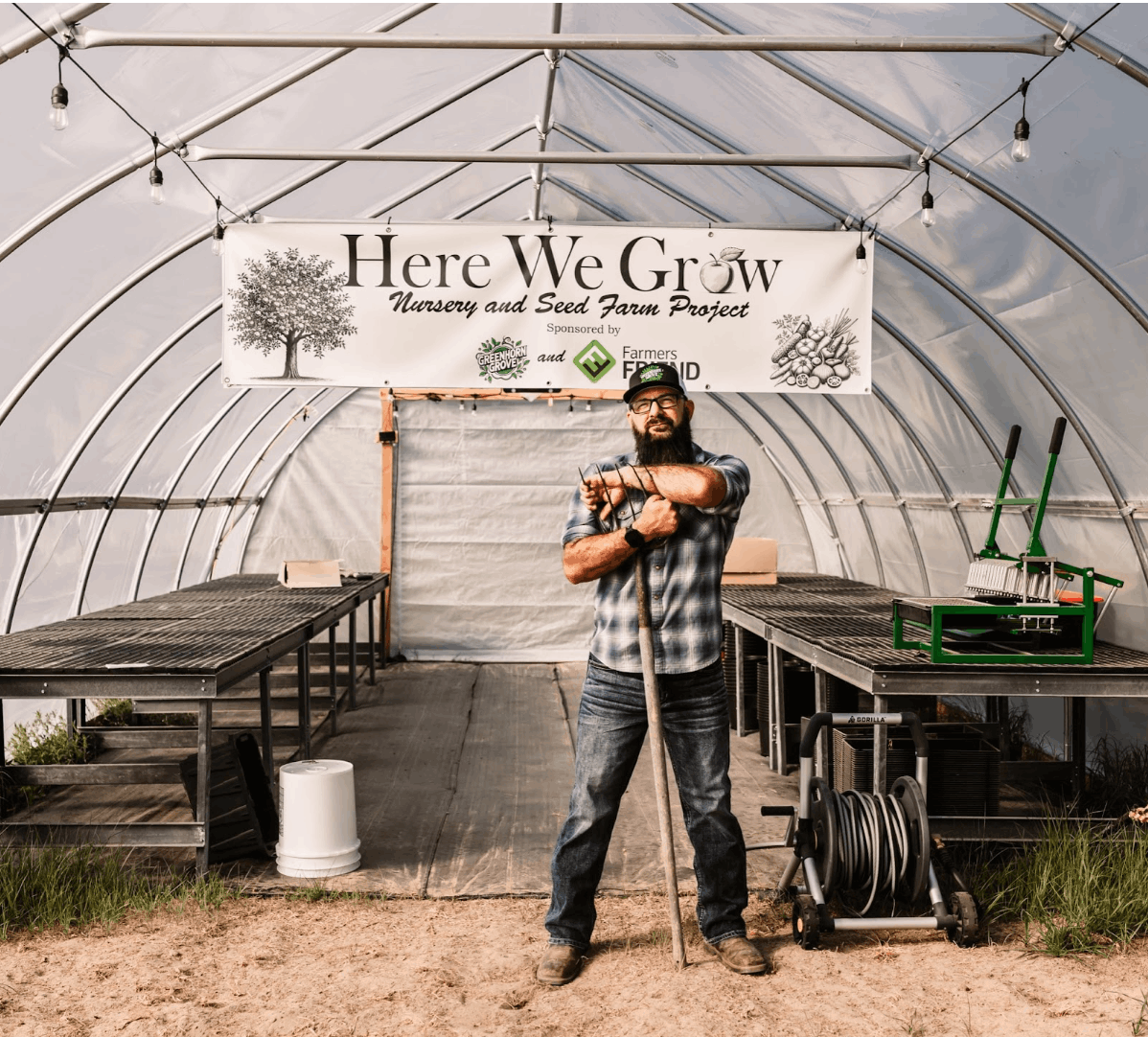
Byline: Mae Cornes
A small nonprofit based in Bishopville, South Carolina, is preparing to ship thousands of envelopes of seeds across the United States. Each packet is part of what Here We Grow calls a “turnkey garden”: seeds paired with a planting calendar, layout suggestions and clear, beginner-focused instructions.
The program, scheduled to scale up in 2026, is pitched less as charity and more as basic infrastructure for households living close to the line. In 2023, 13.5 percent of U.S. households, about 18 million, were food insecure at some point during the year, according to data from the U.S. Department of Agriculture. That figure represents 47.4 million people, roughly one in seven Americans.
Here We Grow’s founder and executive director, homesteading content creator Matthew Gauger, sees seed kits as a modest but concrete countermeasure. “We’re not just feeding people,” he said in a recent interview. “We’re helping them take control of something in their lives.”
Free Greenhorn Guides as a Public Library of Skills
The seed kits are designed to work hand-in-hand with The Greenhorn Guides, an online catalog of free e-books and videos that Gauger calls the group’s “educational arm.” Hosted at thegreenhornguides.com, the site currently lists more than 70 e-books and dozens of articles on topics such as small-space gardening, food preservation, livestock care and basic infrastructure.
The Guides are produced by a loose collective of homestead content creators. The site is explicit that most of them are first-generation practitioners, “not fourth or fifth generation homesteaders.” The promise is not expert mystique, but peer-to-peer learning: people who started with little experience documenting what they wish they had known at the outset.
Each written guide is paired with a video hosted on YouTube, allowing readers to see the process they have just read about, from direct seeding to canning roasted tomatoes, carried out step by step. New material, posted throughout 2024, has moved beyond gardening into finance, basic farm planning and small-scale income ideas, reflecting a broader view of self-sufficiency that includes both food and household budgeting.
Self-Sufficiency as a Response to Rising Food Insecurity
The project sits against a backdrop of worsening food insecurity. USDA figures show that the share of food-insecure households rose in 2023 compared with 2022, and anti-hunger groups report sustained demand at food banks even as pandemic-era relief has wound down.
Here We Grow’s model is to supplement, not replace, traditional assistance. In western North Carolina, after Hurricane Helene destroyed homes and cropland in 2024, the group partnered with a local initiative known as Operation Shelter to raise roughly $500,000 for temporary housing, equipment and supplies. That work now runs alongside the longer-term seed and education programs, tying emergency relief to future household resilience.
Gauger argues that teaching people to grow at least some of their own food reduces a sense of volatility. The seed kits are tailored for beginners, with instructions calibrated to avoid the discouragement that often follows a failed first garden. “I didn’t know what I was doing,” he has said of his own early efforts. “I just wanted to see if something would grow.”
From Viral Clips to Volunteer Networks
Here We Grow’s reach is shaped by Gauger’s presence on social media, where he posts as Greenhorn Grove to an audience he and partner outlets describe as more than 1.6 million followers across platforms. Short videos about compost bins, raised beds and seed starting often double as recruitment tools for the nonprofit’s projects and as entry points into the deeper Greenhorn Guides library.
Whether seed kits and open-access guides can make a measurable dent in national food insecurity remains an open question. Their impact is likely to be localized and incremental. Yet as the federal government prepares to stop publishing its long-running annual food insecurity survey after the 2024 report, projects like Here We Grow’s are emerging in a data fog, trying to track need from the ground up while they mail out small packets marked “beans” and “tomatoes.”

Most teams don’t fall apart all at once. It happens slowly, missed conversations, quiet disengagement, people doing what’s required but nothing more.
Toba Ogunremi has spent years working inside care environments where that kind of shift is easy to miss until it starts affecting everything. Leading operations at Samorem Care in the UK, he has seen how systems can appear stable on the surface while teams underneath struggle to stay connected to their work.
One experience early in his career changed how he looks at leadership entirely.
He had taken over a team that wasn’t in crisis, but it wasn’t working well either. The people receiving care were safe, but they weren’t thriving. The same was true for the staff. There was no urgency, no energy, just routine.
The usual solution would have been to tighten control by setting new targets, increasing supervision, and creating performance plans. He didn’t do any of that.
“I started with conversations,” he says. “Real ones. Not rushed, not formal.”
One by one, he spoke to each team member. What came out wasn’t frustration with the job itself, but something quieter and harder to spot.
“They weren’t disengaged because they didn’t care,” he explains. “They were disengaged because they felt unseen.”
No one had asked what they thought. No one had taken the time to understand how they were coping. Over time, that absence had turned into distance. That moment stayed with him. It shaped how he leads today.
His approach is simple, but not always easy to apply: people perform better when they feel they belong.
He believes high performance usually comes when people feel like they genuinely belong and know that what they do actually matters.
In healthcare, where pressure is constant and expectations are high, this idea can sound secondary. The focus is often on outcomes, compliance, and efficiency. Toba doesn’t dismiss those things, but he questions what happens when they become the only focus.
Even when all the processes are in place, if the people delivering the care feel disconnected, it eventually reflects in the quality of the work.
At Samorem Care, this thinking shows up in small but consistent ways. Recruitment is not just about experience. It’s about how someone responds to people, how they handle pressure, and how they communicate. Once they are in, the focus shifts to keeping teams stable and supported, rather than constantly rotating staff or reacting only when something goes wrong. He also pays attention to how leaders show up day to day.
According to him, leadership is not just about giving direction; it’s about being present enough to understand what your team actually needs.
That presence matters more in care than in most industries. The work is demanding, often emotional, and not always recognised for what it takes. When teams feel stretched or overlooked, it affects how they interact with the people they support.
For Toba, resilience is less about constant pressure and more about creating a work environment where people can do their jobs well without burning out. In his view, strong teams are not just coping; they are supported enough to stay clear-headed and consistent in their work.
His background outside healthcare still shapes how he leads. Having worked in sales and communications, he understands how important it is to read people and build trust. In healthcare, though, the impact is far more direct, as decisions affect someone’s everyday life, not just an outcome on paper.
That shift makes leadership more personal. Teams need more than instructions; they need stability, clarity, and a sense that they are understood. What defines Toba Ogunremi’s approach is its simplicity. He focuses on being consistent, listening carefully, and addressing issues early rather than reacting late.
In the end, his belief is straightforward: teams perform better not because they are pushed harder, but because they feel valued and part of something that works.
-

 Tech5 years ago
Effuel Reviews (2021) – Effuel ECO OBD2 Saves Fuel, and Reduce Gas Cost? Effuel Customer Reviews
-
 Tech7 years ago
Bosch Power Tools India Launches ‘Cordless Matlab Bosch’ Campaign to Demonstrate the Power of Cordless
-

 Lifestyle7 years ago
Catholic Cases App brings Church’s Moral Teachings to Androids and iPhones
-

 Lifestyle5 years ago
East Side Hype x Billionaire Boys Club. Hottest New Streetwear Releases in Utah.
-

 Tech8 years ago
Cloud Buyers & Investors to Profit in the Future
-

 Lifestyle6 years ago
The Midas of Cosmetic Dermatology: Dr. Simon Ourian
-

 Health7 years ago
CBDistillery Review: Is it a scam?
-

 Entertainment7 years ago
Avengers Endgame now Available on 123Movies for Download & Streaming for Free