
Business
Nickel Advisors Isn’t Approving Personal Loans for Debt Consolidation

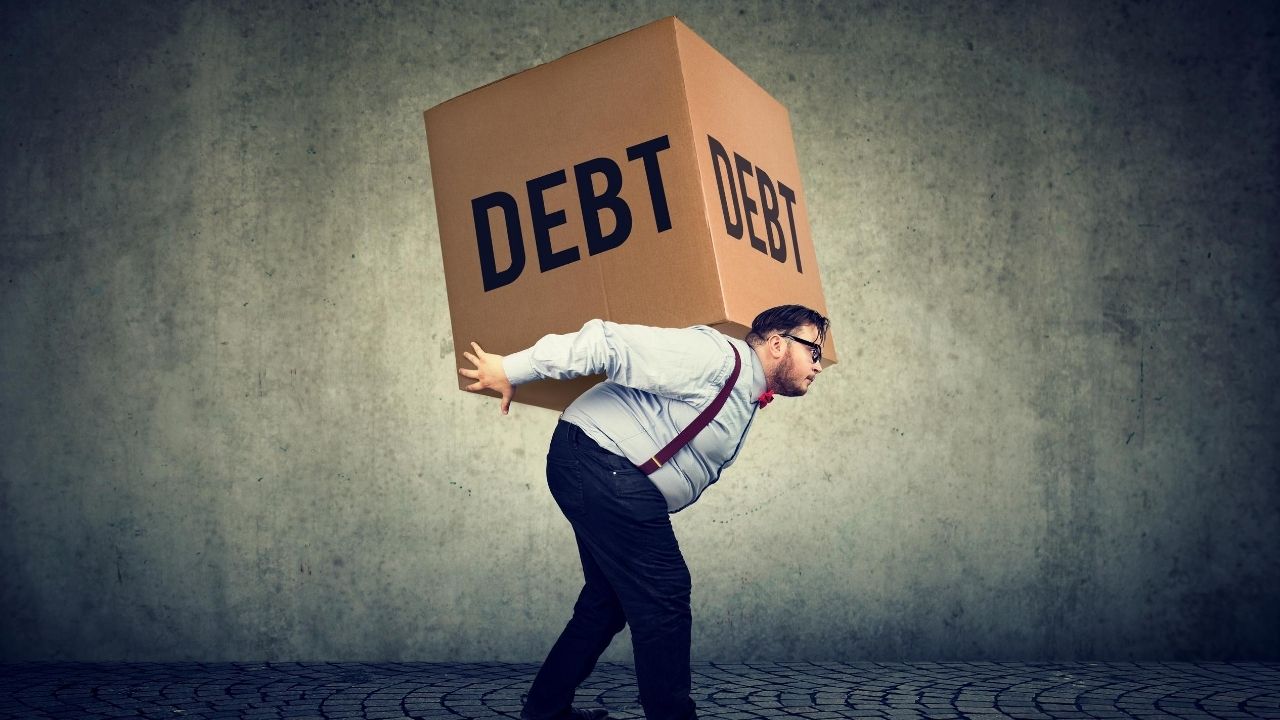
Nickel Advisors has begun flooding the market with debt consolidation and credit card relief in the mail. The problem is that the terms and conditions are at the very least confusing, and possibly even suspect. The interest rates are so low that you would have to have near-perfect credit to be approved for one of their offers. Best 2020 Reviews, the personal finance review site, has been following Nickel Advisors, Coral Funding, Neon Funding, Ladder Advisors (also known as Carina Advisors, Corey Advisors, Pennon Partners, Jayhawk Advisors, Clay Advisors, Colony Associates, and Pine Advisors, etc.).
According to recent studies, people’s most commonly cited reason for taking out a personal loan was debt consolidation. A study by Bankrate in April collected answers from more than 160,000 participants on why they seek personal loans.
Almost 40% of participants stated that they took out personal loans for debt consolidation in quarter one. Similarly, another 5% of the participants from the study cited credit card refinancing as the primary reason behind seeking a personal loan.
Another report by LendingTree, an online lending marketplace, stated that almost 36% of people seeking a loan were doing so to consolidate debt in December of 2019. Moreover, more than 30% of loan applicants gave the reason of credit card refinancing as their primary motivation behind seeking a loan.
Both sources also showed loans requested for debt consolidation to have the largest dollar amounts. These amounts were quite higher than loans requested for other purposes such as emergency funds, special occasions like weddings, vacations, and even home-related expenses.
What is the Difference Between Credit Card Refinancing and Debt Consolidation?
As shown by the studies mentioned above, the two most common reasons why people seek out a personal loan are either for debt consolidation or credit card refinancing, such as for APR on a high-interest debt. Sometimes, it was even both reasons together. But what exactly is the difference between the two?
To consolidate debt means to combine several different kinds of loans or liabilities into one to make it easy to pay it back. For instance, if you have several credit cards and instead of paying each back separately, you combine them so that you must pay only one monthly bill.
One way to do this is through a personal loan. You can borrow one large personal loan and use that to pay off all your other debts. After that, you just have to focus on paying back that one personal loan every month.
An American usually has around four credit cards, and if each card has different rates, monthly payments, due dates, as it usually does, it can be quite a hassle to keep track of all of them. Therefore, debt consolidation through a personal loan is a good way to make your life easier.
While debt consolidation helps to simplify things for you, credit card refinancing can help you save money by lowering the interest rate on your debts. When you need more time to pay off the balance of a certain debt, but the high interest rates keep pulling you back, you can go for credit card refinancing to get ahead on your payments.
Both of these sound quite different, but you can achieve them both through a personal loan. Personal loans usually come with low interest rates, regardless of whether you get them from a physical bank or an online lending marketplace. However, they’re not always the best option over credit cards, so you need to understand how these loans work before you take one out.
How do These Loans Work?
A personal loan to refinance a credit card or for debt consolidation is somewhat like how you use a balance transfer credit card. However, there are some differences. With a personal loan, the cash is instantly accessible as it is deposited into your checking account.
So, you can use it to pay back other debts right away. After that, you can pay back that personal loan at a fixed low interest rate every month as decided by the loan issuer. Initially, you may have to pay certain service charges or origination fees, but usually, it’s only the interest.
If you’re eligible for it, a balance transfer credit card can also be quite helpful. With these, you have a specific time period, usually between six and 21 months, in which they charge you 0% interest. So, you can pay back all your credit card debt without additional charges.
Moreover, you only have to pay a small percentage as transfer fees, which is usually 2 to 5%, and if you happen to qualify for a no-fee balance transfer card, you don’t even have to pay that transfer fees. You can transfer all your other debt into this card and pay it back within the 0% interest period.
For instance, with the U.S. Bank Visa Platinum Card or the Citi Double Cash Card, you can transfer debt from your other cards to this card for a 3% transfer fee. However, balance transfer credit cards do require you to have an excellent credit score. Personal loans are better in that regard as they are available for people with even good or fair scores.
Average Debt Consolidation Loan
In the studies mentioned at the beginning, the number one reason why people took out a personal loan was for debt consolidation. According to LendingTree, debt consolidation loans in 2018 came to an average of $12,670, while loans for credit card refinancing averaged at $14,107.
According to Bankrate, the amount requested for a personal loan fell between $2,000 and $25,000. However, almost 50% of loans between $10,000 and $24,999, as well as those greater than $25,000, were to consolidate debt.
How Can a Personal Loan Help Save Money?
According to Fed’s data from February of 2020, the average rate on consumer credit cards was around 16.6%. In comparison, the average rate for a two-year personal loan was 9.63%, which is almost half of the credit card.
So, let’s say you had a debt of $10,000 on your credit card. You would have to pay around $2,660 in interest, with the rate of 16.61%. On the other hand, with a $10,000 personal loan, you would only have to pay $1,450 in interest at the rate of 9.63%.
This equals to a saving of more than $1,200. While there are people who find the sudden increase in personal loans quite alarming, it is quite apparent that these personal loans offer quite a few advantages to people who have debts to pay off.
Business
Ipsos Helps Brands Understand How They Get Customer Experience Wrong & Why It’s Costing Them Millions

For brands looking to succeed in the modern business ecosystem, the customer experience (CX) is not something companies can afford to ignore. CX is a direct driver of revenue, loyalty, and growth for organizations.
Ipsos, one of the world’s leading market research firms, helps brands understand that failing to focus on the customer experience can lead to lost sales, which in turn can translate to not only millions in lost revenue but also lost trust and credibility in the market.
How brands still get CX wrong
“The customer decision and desire to do business with brands directly affect the bottom line,” says Brad Christian, Chief Commercial Officer at Ipsos – Experience Practice.
Customer experience may sound like a simple concept, but many brands still get it wrong. CX goes beyond surveys and feedback. Leaders who fail to connect feedback in a meaningful way to goals such as retention, repeat visits or purchases, advocacy, and operational performance fail to deliver on their service promises. The emotional and functional disconnect can spell trouble for brands. The most polished advertising campaigns cannot make up for a frustrating customer interaction or a promise that a business cannot fulfill.
According to Ipsos’s internal research, many customers today see service as too automated and impersonal. More than half report that their experience is worse than promised.
These findings don’t just result in disappointed buyers. They result in lost customers, negative feedback, and a long-term impact on the business as a whole.
“Brands have to manage the entire customer experience across each and every touchpoint,” explains Christian.
Poor CX can be expensive
Executives can often underestimate how expensive a history of poor CX can be. Global losses can reach into the billions while leaders wonder what went wrong. In an age of rapid social media communication, a single negative interaction can spell disaster for a company, leading to reduced customer spending or the entire loss of its most loyal customers.
Those losses are not just reflected in lost revenue, however. Customer acquisition and marketing dollars can also be lost as companies continue to spend money trying to retain their customer base, often skipping right over the experience part of retention.
Poor customer experience can be a deep operating problem that creates a domino effect, decimating businesses from the inside out. These poor experiences can impact not only present and future customer acquisition but also business leaders and employees.
CX matters more in today’s business landscape
The customer experience has always mattered, but it may matter more to brands trying to make it in a modern, ultra-competitive, digitally-driven business landscape. Good experiences encourage repeat purchases, boost loyalty, and increase the likelihood that customers will go online and recommend a brand to others.
“Customer experience isn’t an isolated function,” says Christian. “It’s part of a larger system that ensures that brands measure and manage customer experience data and then act on that data to drive action where customer experience gaps exist.”
Brands also have to seek to understand today’s customers, who expect experiences that are seamless, authentic, and relevant. As more and more companies hop on the automation train, they will want to reassure their customers that the human element that many people consider important still exists.
At Ipsos, six drivers of strong customer relationships form the bedrock of the company’s CX platform, something that they refer to as the “Forces of CX”: certainty, fair treatment, control, status, belonging, and enjoyment.
Customers want to feel that if they have an issue with a brand, it will be handled and that their concerns will be understood. They don’t want the customer experience to feel like a battleground; they want it to feel fair and human.
“Customer experience isn’t just a nicer experience,” says Christian. “It ties directly to specific financial outcomes, whether that be increased sales, greater market share, or stronger brand loyalty.”
How Ipsos helps businesses deliver customer experiences that matter
Ipsos turns customer feedback into reliable, actionable, decision-ready information. The company goes beyond simple satisfaction metrics and implements voice-of-the-customer programs, journey analytics, relationship feedback, and quality research.
“Brands don’t just need data,” Christian says. “They need measurements as to how they are delivering on their brand promise and predictive modeling to tie financial performance measures to those measures to help them determine where to invest to maximize the customer experience and understand what financial impact those investments might deliver for the business.”
Ipsos measures the interactions that matter most and shows brands how each interaction can affect retention, share of spend, and efficiency. For brands that are trying to reduce the guesswork behind CX, Ipsos helps them move beyond cosmetic fixes to achieve real, meaningful change.
Customer expectations can shift on a dime, influenced by society, social media, and even changing trends. Ipsos helps brands meet those rapidly changing customer expectations with hard evidence and comprehensive metrics.
Today’s brands need to understand how to get the customer experience right. Ipsos has the insights needed to drive home the deep importance of CX in today’s marketplace.
-

 Tech5 years ago
Effuel Reviews (2021) – Effuel ECO OBD2 Saves Fuel, and Reduce Gas Cost? Effuel Customer Reviews
-
 Tech7 years ago
Bosch Power Tools India Launches ‘Cordless Matlab Bosch’ Campaign to Demonstrate the Power of Cordless
-

 Lifestyle7 years ago
Catholic Cases App brings Church’s Moral Teachings to Androids and iPhones
-

 Lifestyle5 years ago
East Side Hype x Billionaire Boys Club. Hottest New Streetwear Releases in Utah.
-

 Tech8 years ago
Cloud Buyers & Investors to Profit in the Future
-

 Lifestyle6 years ago
The Midas of Cosmetic Dermatology: Dr. Simon Ourian
-

 Health7 years ago
CBDistillery Review: Is it a scam?
-

 Entertainment7 years ago
Avengers Endgame now Available on 123Movies for Download & Streaming for Free