
Business
Meet Daniel Newman, CEO Of Dandy: The Tech Startup Spearheading The “Live” Movement In Social Networking

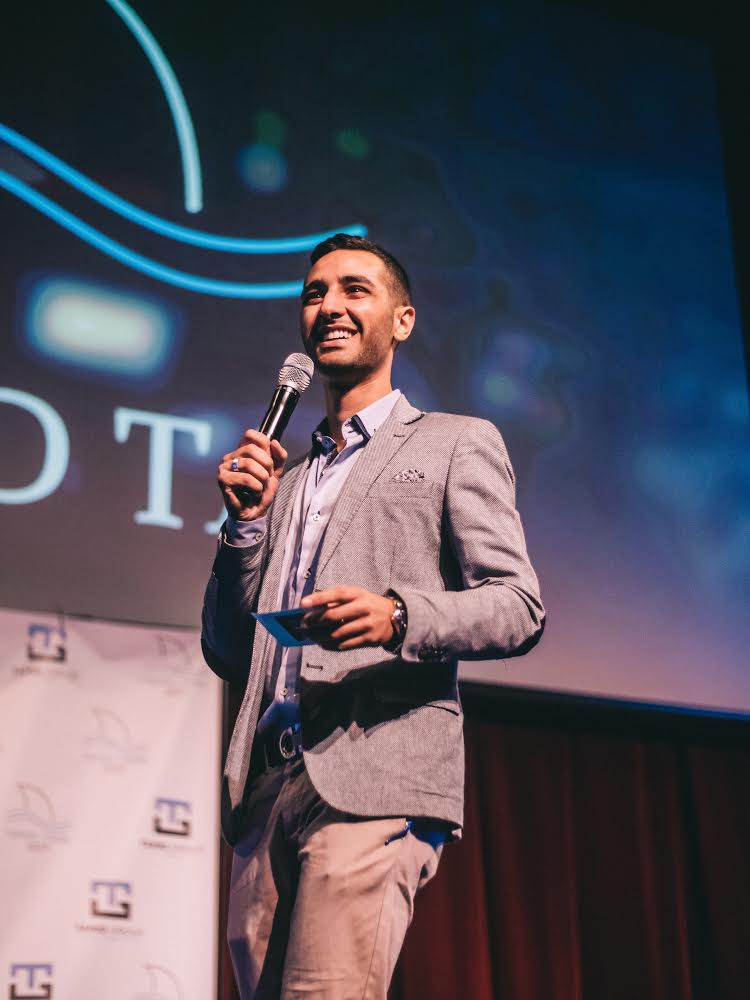
Just three short years ago, Newman began his journey as a full-time CEO of his very own tech startup named Dandy. He created the company with his partner and co-founder, Leor Massachi, while the two were seniors in college. We’ve got the full scoop on how Newman went from a Real Estate Development student to a full-time entrepreneur, all before earning his undergraduate degree.
Newman was born and raised in Beverley Hills, CA. Although he’s mainly American, he takes pride in inheriting a Persian background from both his mother and father. Early on in his younger years, he became interested in the various aspects of business and how they were created. He also enjoyed learning about the Israeli economy and the country’s positive outlook on young people developing their own startup companies.
When Newman got to high school, he became heavily involved in extracurricular activities and always did well in class. Not only was he named Senior Class President, but he was also involved in several sports and school clubs. As if that weren’t enough on his plate at 17, he also had the opportunity to get a taste of what it was like to build a business when he founded his own tutoring company during his junior year. He saw an opportunity arise when the younger kids in grades K-8 were complaining about their tutors being too old and not up-to-date with the material. Brilliantly, Newman asked some of his friends if they wanted to earn some money tutoring the students, and the rest was history. The company took off instantaneously, and Newman kept it running until he graduated in 2015.
Once he reached college, the grind continued. Newman decided to pursue a degree in Real Estate Development at the University of Southern California. Although he was indeed partially interested in the real estate portion of the program, he was far more captivated by the school’s innovative take on technology and its multifaceted ability to influence new businesses. At that point, he began to understand the building blocks of a tech startup, and he fell in love. Along the way, he met several friends, mentors, and executives that taught him the dos and don’ts about the complicated world of Silicon Valley. But regardless of the dire risks he was advised of, he knew his ultimate goal would be to someday establish a startup company of his own.
In the meantime, Newman founded his second small business with his then-roommate and best friend, Leor Massachi. The two college students created a design agency that helped businesses market toward the Gen Z demographic via custom-made interactive Geofilters on Snapchat. At the time, the social networking app had just begun allowing users to publicly submit Geofilters for a fee, but it had not provided any tools or instructions on how to create them. Due to the high design skillset and intricate strategy required for the process, Newman and Massachi saw it as a business opportunity and proceeded to create a company named Geocasion. Although the business only lasted a few months, the experience proved essential for what followed for these two college students. In addition to founding Geocasion, Newman also founded USC’s TAMID Tank event during his sophomore year, which is the school’s equivalent to the popular television show, Shark Tank. The competition was created to provide students with a real-life experience of pitching their startup concepts to big-name investors and venture capitalists. Their first event filled an auditorium of 500, and since then, TAMID Tank has held the event annually. The organization also named Newman their Vice President of Operations.
But things changed in 2018 when Newman’s roommate suggested the idea of creating a dating app for millennials and gen Z’s unlike the existing ones on the market. After sitting and brainstorming for hours in their dorm, they came up with a concept that was far too tangible to pass up. They wanted to create a version of a dating app that would mimic two people meeting in person for the first time. Users would log onto the app once it went “live”, and they would have an allotted time to attempt to find their match and start a conversation. Once two users established they were interested, they’d be transferred into a three-minute video call where they could formally introduce themselves and decide whether or not to move forward with communication off the application. They called the app Dandy and instantly began searching for the perfect engineers to develop the product. 3 months later, the app launched its beta testing.
Dandy blew up all over USC, and eventually, all over Los Angeles. People were excited to try this new version of virtual dating and claimed that it was a “magical” app since it cut around the BS and got straight to the point of building new relationships. At this point, Newman and his Massachi began to pitch Dandy to investors in hopes to raise funds for the app’s future development. After hearing 117 no’s, they received their first yes, as well as their first check from an investor. Once the first came, many others followed, and soon enough Dandy has fundraised over $3.3 million in a matter of months from investors involved in companies such as Uber, Airbnb, Snapchat, and Facebook. Newman took over all finance and logistic aspects of the company while Massachi handled the marketing strategy and creative.
Things were running smoothly until word of a pandemic began to consume the news in February 2020. The two business owners called an emergency meeting and decided it was the perfect time to rebrand Dandy into something more applicable to the possible consequences of a national pandemic. In just a few hours, they came up with the idea for Zoom University– a virtual dating app with the same “live” concept of Dandy, but with two-on-two video calls resembling that of a double date. Since some users had commented that Dandy could become stressful and awkward during the short video calls, the founders hoped that having a user bring a friend would help turn the tension into fun. The next day after the meeting, the team had a web MVP of Zoom University uploaded and a rough draft of the app immediately went live. In honor of their first creation, they decided to keep the name of their now product-based startup company as Dandy.
Since then, Zoom University has gained traction all over the internet; including Tiktok, which had a video about the app hit impressions of over 2.5 million views. Users were scrambling to get their hands on this new dating app. In just a matter of weeks, a waitlist of thousands of users began to accumulate while the Dandy teamed continued to finalize the details behind the app that was only originally meant to stay live for a week. Positive feedback came pouring in from users, and eventually, the application broke records as it made it through the Top 10 Best Social Networking Apps on the Apple Store, coming in at #9.
Four businesses and two successful startups later, 23-year-old Newman says his success has come from knowing how to take high-level concepts and applying them to a realistic, practical lens. Although his achievements have skyrocketed over the years, he shares that the work has only just begun. He and his partner are currently working with investors on their next top-secret product that is reckoned to top all their prior inventions and take the market by storm once again. Details cannot yet be disclosed, but we wait eagerly to see how a few college seniors will continue to dominate the startup world with their commitment and dedication to changing the world through the use of advanced technology.
Business
Ipsos Helps Brands Understand How They Get Customer Experience Wrong & Why It’s Costing Them Millions

For brands looking to succeed in the modern business ecosystem, the customer experience (CX) is not something companies can afford to ignore. CX is a direct driver of revenue, loyalty, and growth for organizations.
Ipsos, one of the world’s leading market research firms, helps brands understand that failing to focus on the customer experience can lead to lost sales, which in turn can translate to not only millions in lost revenue but also lost trust and credibility in the market.
How brands still get CX wrong
“The customer decision and desire to do business with brands directly affect the bottom line,” says Brad Christian, Chief Commercial Officer at Ipsos – Experience Practice.
Customer experience may sound like a simple concept, but many brands still get it wrong. CX goes beyond surveys and feedback. Leaders who fail to connect feedback in a meaningful way to goals such as retention, repeat visits or purchases, advocacy, and operational performance fail to deliver on their service promises. The emotional and functional disconnect can spell trouble for brands. The most polished advertising campaigns cannot make up for a frustrating customer interaction or a promise that a business cannot fulfill.
According to Ipsos’s internal research, many customers today see service as too automated and impersonal. More than half report that their experience is worse than promised.
These findings don’t just result in disappointed buyers. They result in lost customers, negative feedback, and a long-term impact on the business as a whole.
“Brands have to manage the entire customer experience across each and every touchpoint,” explains Christian.
Poor CX can be expensive
Executives can often underestimate how expensive a history of poor CX can be. Global losses can reach into the billions while leaders wonder what went wrong. In an age of rapid social media communication, a single negative interaction can spell disaster for a company, leading to reduced customer spending or the entire loss of its most loyal customers.
Those losses are not just reflected in lost revenue, however. Customer acquisition and marketing dollars can also be lost as companies continue to spend money trying to retain their customer base, often skipping right over the experience part of retention.
Poor customer experience can be a deep operating problem that creates a domino effect, decimating businesses from the inside out. These poor experiences can impact not only present and future customer acquisition but also business leaders and employees.
CX matters more in today’s business landscape
The customer experience has always mattered, but it may matter more to brands trying to make it in a modern, ultra-competitive, digitally-driven business landscape. Good experiences encourage repeat purchases, boost loyalty, and increase the likelihood that customers will go online and recommend a brand to others.
“Customer experience isn’t an isolated function,” says Christian. “It’s part of a larger system that ensures that brands measure and manage customer experience data and then act on that data to drive action where customer experience gaps exist.”
Brands also have to seek to understand today’s customers, who expect experiences that are seamless, authentic, and relevant. As more and more companies hop on the automation train, they will want to reassure their customers that the human element that many people consider important still exists.
At Ipsos, six drivers of strong customer relationships form the bedrock of the company’s CX platform, something that they refer to as the “Forces of CX”: certainty, fair treatment, control, status, belonging, and enjoyment.
Customers want to feel that if they have an issue with a brand, it will be handled and that their concerns will be understood. They don’t want the customer experience to feel like a battleground; they want it to feel fair and human.
“Customer experience isn’t just a nicer experience,” says Christian. “It ties directly to specific financial outcomes, whether that be increased sales, greater market share, or stronger brand loyalty.”
How Ipsos helps businesses deliver customer experiences that matter
Ipsos turns customer feedback into reliable, actionable, decision-ready information. The company goes beyond simple satisfaction metrics and implements voice-of-the-customer programs, journey analytics, relationship feedback, and quality research.
“Brands don’t just need data,” Christian says. “They need measurements as to how they are delivering on their brand promise and predictive modeling to tie financial performance measures to those measures to help them determine where to invest to maximize the customer experience and understand what financial impact those investments might deliver for the business.”
Ipsos measures the interactions that matter most and shows brands how each interaction can affect retention, share of spend, and efficiency. For brands that are trying to reduce the guesswork behind CX, Ipsos helps them move beyond cosmetic fixes to achieve real, meaningful change.
Customer expectations can shift on a dime, influenced by society, social media, and even changing trends. Ipsos helps brands meet those rapidly changing customer expectations with hard evidence and comprehensive metrics.
Today’s brands need to understand how to get the customer experience right. Ipsos has the insights needed to drive home the deep importance of CX in today’s marketplace.
-

 Tech5 years ago
Effuel Reviews (2021) – Effuel ECO OBD2 Saves Fuel, and Reduce Gas Cost? Effuel Customer Reviews
-
 Tech7 years ago
Bosch Power Tools India Launches ‘Cordless Matlab Bosch’ Campaign to Demonstrate the Power of Cordless
-

 Lifestyle7 years ago
Catholic Cases App brings Church’s Moral Teachings to Androids and iPhones
-

 Lifestyle5 years ago
East Side Hype x Billionaire Boys Club. Hottest New Streetwear Releases in Utah.
-

 Tech8 years ago
Cloud Buyers & Investors to Profit in the Future
-

 Lifestyle6 years ago
The Midas of Cosmetic Dermatology: Dr. Simon Ourian
-

 Health7 years ago
CBDistillery Review: Is it a scam?
-

 Entertainment7 years ago
Avengers Endgame now Available on 123Movies for Download & Streaming for Free