
Lifestyle
Strength and Vulnerability: Majd Zaher’s New Novel Looks Beyond the Veneer of Lebanese Society

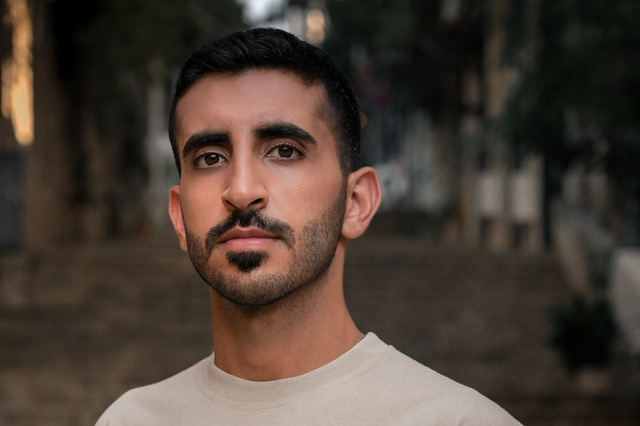
- Your first book ‘Borderline Love in Beirut’ explores some challenging topics and complex characters. Can you explain the inspiration behind the story?
Growing up in a conservative family brought many challenges to my life. There was always something missing in every moment I spent living. There was a part of me that I wanted to discover and unleash yet I was afraid of judgments and backlash. Hence, I grew up as the loneliest kid in town as I had no friends and always found myself the weakest individual wherever I was. Moving out from my family’s house and starting an independent life was an eye-opening experience and the main motive that made me talk and write. I wanted this novel to be a celebration for everyone who doubted his own potential, who thought that other’s opinion would be able to dim his or her own light, and on a personal level I wanted to prove to all those who had ever bullied me that I was able to find success and peace after all.
- One of the themes you deal with is marginalization and marginalized groups. Why did you decide to address this topic?
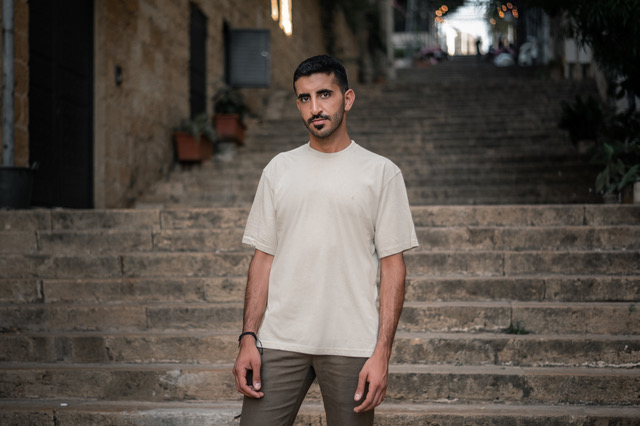
Writing has always been a way to pave the road towards a better world and an escape from the prisons we might be existing in. Talking about marginalized groups is based on my stance that everyone has the right to exist if they are not hurting or killing anyone else; and no one has the right to decide who is eligible to enjoy life and who is not. Unfortunately, in Lebanon, we have no laws to protect vulnerable or marginalized groups. These groups include immigrants, domestic labors, queer people, or any other category. In Borderline Love in Beirut, I was no longer Majd, I ascended to Joy and Adam’s soul to show the world how difficult living life becomes when no one likes you, when everyone avoids you, and when everyone judges you for what you look like and not for the real person you are. In Lebanon, we have laws that penalize love that does not protect women from harassment. In Lebanon, our system does not give any attention to the importance of mental health and does not help marginalized groups to engage in society.
- What is the role of mental health in ‘Borderline Love’, and what are some lessons about dealing with or treating mental health issues from the story?
In Borderline Love in Beirut mental health is the crux of the story. I will not be able to say how this Borderline case will evolve yet I could tell you how it all started. Joy and Adam were the victims of a society that has never been able to embrace them the way they are. Experiencing death, upbringing challenges, and health concerns, Joy and Adam grew to become victims each in their own way. The takeaway is that offering mental health care and support for people who undergo a certain trauma, and even those who did not, is something critical. We can no longer sit still when almost every hour a Lebanese citizen ends his or her life. We cannot sit still when people still think seeking mental health care are mad. We should learn that the strongest of us can sometimes be the weakest and most vulnerable.
- Is ‘Borderline’ a cautionary tale? Or is it intended as a reflection of another kind?

I see in Borderline Love in Beirut as many tales narrated at once. This novel carries in its pages a cautionary and reflective approach. At many parts of the story when I discussed Joys struggles with loneliness, self-hate and first love I was narrating many past incidents. However, in other pages, I detached myself from this reality and decide to go the extra mile and tell others how destructive it would be for anyone to fall in love before loving himself or herself, or how painful does it become when you don’t praise your uniqueness, or you don’t embrace yourself before listening to people’s judgments.
- The book is set in contemporary Beirut and focuses primarily on young characters. How do you perceive your own society in Lebanon in terms of some of these issues, including marginalized groups and mental health issues? What would you hope for the future of Lebanon in terms of societal relations and acceptance?
In Lebanon, the lifestyle is not bearable anymore but I’m still hopeful of what is coming next because I believe one day my people will wake up to realize that coexisting and accepting the other is the only way to guarantee long-lasting peace and prosperity. It is difficult to find words to describe Lebanese society, but I will say that it is strange and paradoxical. For example, if you go to certain areas in Beirut, you’ll see people of different backgrounds enjoying their lives without the essence of discrimination and stigma. However, if you would leave the city for a less than five-minute drive, you will see the opposite. My wish and sincere hope for the future is to have a safe place for all people to live in Lebanon. To have laws that do guarantee the rights of the weak, and more laws to ensure gender equality. I do hope as well more effort will be done to abolish the rules that penalize love and strengthen the rifts in society.
- The past year has been incredibly hard for Lebanon, and the world. What do you hope to impart, through ‘Borderline Love’ to young Lebanese who might have struggled through the August 4th explosion, COVID, and other major obstacles?
My message here is for those who have struggled and continue to struggle, for those who have lost and learned, for those who are still seeking to find a path to a safe shore, to all dreamers and seekers, to all lovers, to parents and youth. I want to tell them all that fighting can be exhausting but the end results will be rewarding. Let them all know that we will not rest, nor will we accept living in a place where our brothers and sisters are being killed. Not when the weak are always abused, and when all we want to do is love yet obstacles are placed in our way. Let them all know that we shall rise, and we will rise stronger than ever because after each storm there is always hope. Borderline Love in Beirut is the utmost manifestation of this idea.

Most teams don’t fall apart all at once. It happens slowly, missed conversations, quiet disengagement, people doing what’s required but nothing more.
Toba Ogunremi has spent years working inside care environments where that kind of shift is easy to miss until it starts affecting everything. Leading operations at Samorem Care in the UK, he has seen how systems can appear stable on the surface while teams underneath struggle to stay connected to their work.
One experience early in his career changed how he looks at leadership entirely.
He had taken over a team that wasn’t in crisis, but it wasn’t working well either. The people receiving care were safe, but they weren’t thriving. The same was true for the staff. There was no urgency, no energy, just routine.
The usual solution would have been to tighten control by setting new targets, increasing supervision, and creating performance plans. He didn’t do any of that.
“I started with conversations,” he says. “Real ones. Not rushed, not formal.”
One by one, he spoke to each team member. What came out wasn’t frustration with the job itself, but something quieter and harder to spot.
“They weren’t disengaged because they didn’t care,” he explains. “They were disengaged because they felt unseen.”
No one had asked what they thought. No one had taken the time to understand how they were coping. Over time, that absence had turned into distance. That moment stayed with him. It shaped how he leads today.
His approach is simple, but not always easy to apply: people perform better when they feel they belong.
He believes high performance usually comes when people feel like they genuinely belong and know that what they do actually matters.
In healthcare, where pressure is constant and expectations are high, this idea can sound secondary. The focus is often on outcomes, compliance, and efficiency. Toba doesn’t dismiss those things, but he questions what happens when they become the only focus.
Even when all the processes are in place, if the people delivering the care feel disconnected, it eventually reflects in the quality of the work.
At Samorem Care, this thinking shows up in small but consistent ways. Recruitment is not just about experience. It’s about how someone responds to people, how they handle pressure, and how they communicate. Once they are in, the focus shifts to keeping teams stable and supported, rather than constantly rotating staff or reacting only when something goes wrong. He also pays attention to how leaders show up day to day.
According to him, leadership is not just about giving direction; it’s about being present enough to understand what your team actually needs.
That presence matters more in care than in most industries. The work is demanding, often emotional, and not always recognised for what it takes. When teams feel stretched or overlooked, it affects how they interact with the people they support.
For Toba, resilience is less about constant pressure and more about creating a work environment where people can do their jobs well without burning out. In his view, strong teams are not just coping; they are supported enough to stay clear-headed and consistent in their work.
His background outside healthcare still shapes how he leads. Having worked in sales and communications, he understands how important it is to read people and build trust. In healthcare, though, the impact is far more direct, as decisions affect someone’s everyday life, not just an outcome on paper.
That shift makes leadership more personal. Teams need more than instructions; they need stability, clarity, and a sense that they are understood. What defines Toba Ogunremi’s approach is its simplicity. He focuses on being consistent, listening carefully, and addressing issues early rather than reacting late.
In the end, his belief is straightforward: teams perform better not because they are pushed harder, but because they feel valued and part of something that works.
-

 Tech5 years ago
Effuel Reviews (2021) – Effuel ECO OBD2 Saves Fuel, and Reduce Gas Cost? Effuel Customer Reviews
-
 Tech7 years ago
Bosch Power Tools India Launches ‘Cordless Matlab Bosch’ Campaign to Demonstrate the Power of Cordless
-

 Lifestyle7 years ago
Catholic Cases App brings Church’s Moral Teachings to Androids and iPhones
-

 Lifestyle5 years ago
East Side Hype x Billionaire Boys Club. Hottest New Streetwear Releases in Utah.
-

 Tech8 years ago
Cloud Buyers & Investors to Profit in the Future
-

 Lifestyle6 years ago
The Midas of Cosmetic Dermatology: Dr. Simon Ourian
-

 Health7 years ago
CBDistillery Review: Is it a scam?
-

 Entertainment7 years ago
Avengers Endgame now Available on 123Movies for Download & Streaming for Free