
Health
Meat Meets Meet: How I Built A Community Of Female Bodybuilders Around A Vegan Diet


The right support can make or break a new diet or workout regime. This is why a strong sense of community and belonging makes a world of difference when it comes to reaching fitness goals.
The founder of The Sculpted Vegan, Kim Constable, is keenly aware of the benefits of making people feel valued and supported on their journey to healthier and stronger bodies. In fact, she has based her entire multi-million dollar business on the idea of building a community of like-minded people and putting her clients before profits.
“From the outset, I focused on supporting and serving my people rather than on finding more customers. This wasn’t a strategy, it’s just who I am,” Constable says. “When someone tries something new, they are vulnerable. And when you are there for them every step of the way, loving them deeply and upholding them when they can’t uphold themselves, something magical happens. They realize that you aren’t just there to take their money. They realize that you truly care.”
Bulking up vegan
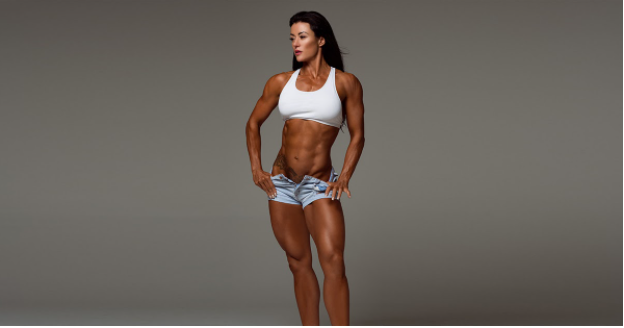
Constable founded The Sculpted Vegan to help women shape their bodies without consuming animal products. She also wanted to debunk the misconception that you cannot build muscle without eating meat and dairy. And to prove that a tailored diet of high-protein foods such as tofu, legumes, and quinoa can be a game-changer when it comes to achieving muscle gain.
“I was a vegetarian for 16 years and a vegan for one when I decided to start sculpting my body. My coach had no experience training vegans and told me that he wouldn’t be able to help with my nutrition plan. This is when I decided to do my own research and was startled that there was practically zero information out there to help me,” says the Belfast-based mom of four.
Realizing that she would have to start from scratch, Constable set out to devise her own vegan nutrition regime. And her painstaking research paid off. Constable gradually started to see what she refers to as her loose skin fill up with muscle. At the age of 37, she even won a bodybuilding bikini competition and six more titles in the following two years.
It took Constable four years to get her figure exactly to where she wanted it. Throughout this time, her nutritional plan continued to evolve. She also gradually started to realize that there were many vegan women out there in the same situation she was in four years before. “If I was searching for information that wasn’t there, there must have been many others doing the same,” she says.
Helping others achieve results

Constable used her experience in health, wellness, business, and marketing to start The Sculpted Vegan from her kitchen table. At the time, she had limited financial backing and virtually no social media following. Nevertheless, Constable’s first bodybuilding program for women, the 18-month Sculpt and Shred, was a roaring success, generating $52,000 right after launch.
Since founding the Sculpted Vegan, Constable has masterminded 10 other online fitness programs – all designed to get women ripped without consuming animal products. Today some of Constable’s most popular programs include the 1-week, 4-week, and 12-week shreds, and the 8-week butt camp. There is also the Jailhouse Shred that helps women build muscles using their own body weight.
The results have been nothing short of extraordinary. Constable’s bodybuilding business ended up making $8 million in the first three years of operation, and today generates $400,000 in revenue each month. She also has over 450,000 followers on Instagram and Facebook and hosts an iTunes podcast that tackles a range of taboo topics with a monthly audience of 200,000.
Tailored support
Realizing that some need more hands-on support than others when it comes to reaching fitness goals, Constable also offers one-on-one coaching sessions with top bodybuilding and nutrition coaches. Her other business, The Million Dollar Mentor, in turn, trains others how to create and manage their own successful brands. “I really love coaching. I love empowering women to be successful. After all, if I can do it, anyone can,” she says.
This year will also see Constable launch The Sculpted Vegan app, which will enable members to find both her programs and a community of like-minded women. “The custom-built app will be a one-stop-shop for buying and following my program, coaching support, and meal planning. It will also showcase the Sculpted Vegan fitness wear, bikinis, and apparel.”
Another part of the app will be the Sculpted Vegan University, a platform for learning about bodybuilding and nutrition via online live lectures and recordings. “There is also a certification program in the pipeline where coaches will be able to get certified in the Sculpted Vegan training methods, so they can help other women build their dream bodies,” Constable says.
Keys to success
Ever since she was a little girl, Constable knew that one day she would be successful. She was determined and disciplined, and no stranger to taking care of others. “After my parents separated, my siblings and I were sent to a boarding school. I was always the organized one, the shoulder to cry on, despite being the youngest,” she says. “Now, I have a husband and four kids who are home-schooled. If I commit to training five days a week, I do it. If I say I’m going to make a million dollars from my business, I do it. There’s no room for excuses.”
Today, Constable uses the same strength, integrity, and compassion to help women sculpt incredible bodies. “My programs are hard and I am very upfront about that. I tell women not to buy my programs unless they are prepared to put in the hard yards,” she says. “Anyone can achieve anything they want, including an amazing body, but it requires work, consistency, and discipline. Those are the keys to success.”
Health
Precision with Compassion: How Dr. Nader Amiran Balances Clinical Expertise with Human Connection
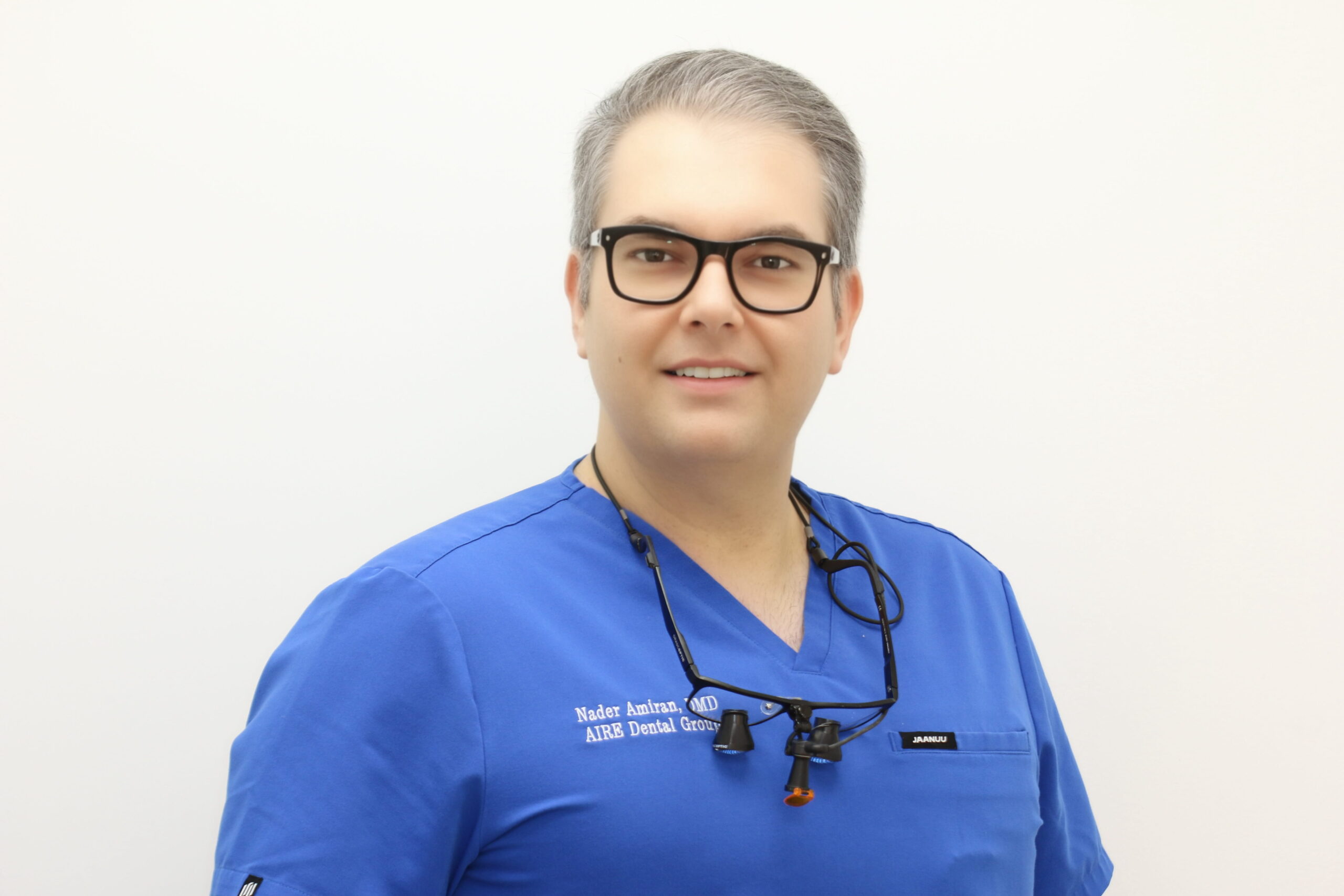
Somewhere along the way, healthcare became fast, technical, and transactional. Patients learned to nod along, accept explanations they barely understood, and hope the treatment worked.
Dr. Nader Amiran chose a different path. At AIRE Dental Group, he has built a reputation not just for clinical accuracy, but for the way he connects with people before he ever connects the data. His work sits at the intersection of science and trust, where listening is not a courtesy, but a diagnostic tool.
For Dr. Amiran, empathy is not a soft skill layered on top of technical expertise. It is the foundation of precision. He believes you cannot treat what you do not fully understand, and understanding begins long before imaging or exams. It starts with hearing how a patient lives, where their discomfort shows up, and how long they have been carrying it.
This philosophy shapes every interaction in his practice. Consultations are unhurried. Questions are encouraged. Patients are not rushed toward conclusions. Instead, Dr. Amiran takes time to understand the full picture, knowing that pain rarely exists in isolation. Jaw discomfort, headaches, or bite changes often come with frustration, fear, or confusion after years of unanswered questions. Those emotions matter because they influence how patients experience care.
One of the defining elements of his approach is how he explains complex findings. Dentistry, especially TMJ and functional care, can feel overwhelming. Dr. Amiran makes it accessible. He uses visuals, models, and imaging to show patients what is happening inside their own bodies. The goal is clarity, not complexity. When patients understand what is causing their symptoms, anxiety gives way to confidence. Studies have shown that patients forget between 40% and 80% of the medical information provided by healthcare practitioners immediately, which highlights the importance of clear explanations and visual education during consultations.
This commitment to education did not come without challenges. Early in his career, Dr. Amiran often treated patients who had already seen multiple providers and still felt stuck. Many had received treatment without ever truly understanding their diagnosis. Those experiences reinforced an important lesson: even the most accurate clinical decision loses impact if the patient feels excluded from the process. The role of patient education in improving compliance and treatment outcomes has been widely supported in clinical literature evaluating communication strategies in healthcare (Kessels, 2003).
In response, he made education central to care. Treatment plans are discussed in plain language, with a clear explanation of why each step matters. Patients are invited into the decision-making process rather than being handed instructions. This approach builds trust, but it also improves outcomes. When people understand their condition, they are more engaged and more invested in maintaining progress. Studies evaluating patient-centered care models have demonstrated that involving patients in treatment decisions improves adherence and satisfaction rates (Street et al., 2009).
Precision still plays a critical role. Dr. Amiran relies on advanced diagnostics, careful evaluation, and evidence-based planning. Technology provides valuable insight, but he is clear about its role. Data informs decisions; it does not replace judgment. Imaging shows structure, but listening reveals context. Together, they create a more complete understanding than either could alone.
What sets his work apart is how seamlessly these elements come together. Clinical accuracy does not overshadow compassion, and empathy does not dilute rigor. Each strengthens the other. By treating patients as partners rather than problems to solve, Dr. Amiran creates an environment where healing feels collaborative, not imposed.
At AIRE Dental Group, patients often describe a shift in how they experience care. For the first time, they feel heard. For the first time, the explanation makes sense. That sense of clarity changes everything. It turns treatment from something that happens to them into something they actively participate in.
Dr. Nader Amiran’s approach challenges a common assumption in modern medicine: that efficiency and empathy cannot coexist. His work proves they can. When precision is guided by understanding, results last longer, trust runs deeper, and care feels human again.
In a field driven by innovation, his philosophy is a reminder that the most powerful tool in dentistry is still the ability to listen.
References:
Kessels RPC.
Patients’ memory for medical information.
Journal of the Royal Society of Medicine. 2003.
Street RL, Makoul G, Arora NK, Epstein RM.
How does communication heal? Pathways linking clinician–patient communication to health outcomes.
Patient Education and Counseling. 2009.
-

 Tech5 years ago
Effuel Reviews (2021) – Effuel ECO OBD2 Saves Fuel, and Reduce Gas Cost? Effuel Customer Reviews
-
 Tech7 years ago
Bosch Power Tools India Launches ‘Cordless Matlab Bosch’ Campaign to Demonstrate the Power of Cordless
-

 Lifestyle7 years ago
Catholic Cases App brings Church’s Moral Teachings to Androids and iPhones
-

 Lifestyle5 years ago
East Side Hype x Billionaire Boys Club. Hottest New Streetwear Releases in Utah.
-

 Tech8 years ago
Cloud Buyers & Investors to Profit in the Future
-

 Lifestyle6 years ago
The Midas of Cosmetic Dermatology: Dr. Simon Ourian
-

 Health7 years ago
CBDistillery Review: Is it a scam?
-

 Entertainment7 years ago
Avengers Endgame now Available on 123Movies for Download & Streaming for Free