
Lifestyle
Meditation For The Masses And Education For All – David Hans Barker’s Ultimate Aims

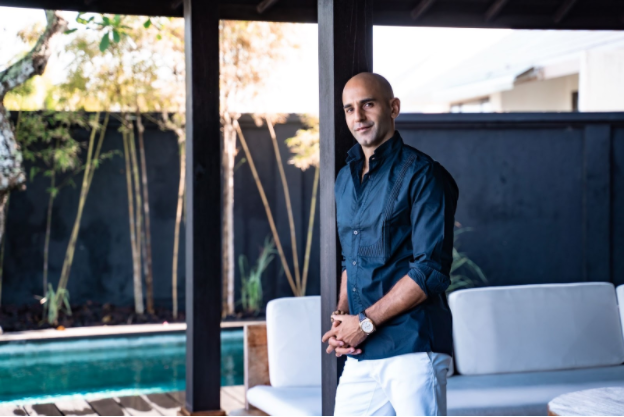
David Hans Barker may not have had the best start in life but has turned things around for himself. Now he’s made it his mission to help others gain mastery of their own lives, through meditation and education.
Born in Mysore, India, to a British Indian mother and a father of Jewish European descent, David is the Founder of YogiLab, Co-Founder of Guide Education, and a meditation teacher. His early years were spent trapped in a cult called ‘The Children of God’, until his mother escaped with David and his three siblings. They all fled to the UK, where she raised them as a single parent in a rough area of London. In his teenage years, David found himself involved in gang-related violence and crime, until he realized that he had a choice to break this regressive mental cycle.
“I was just full of all this hate and blame. I remember blaming everyone – my poor mum for struggling to look after us. Then my dad for not being there, blaming God, blaming the government, whoever, my friends, the other kids we were fighting with were all at each other’s throats as well. And then I just realized that none of this was happening without me choosing to be involved in it.”
Finding himself angry about everything, he now believes it’s the best thing that could have happened to him. “It was a rock bottom moment, as I call it my quarter-life crisis.”
Turning Point

Realizing he didn’t know the answer to his problems, David decided to experiment on himself to work out what actually produces happiness. This self-experimentation went on to inspire the current-day YogiLab logo – a yogi inside a conical lab-flask, “because the whole point is that we’re all our own laboratory”.
“My family and I always thought we were victims, because we were poor, raised by one parent, we didn’t have any money. And I realized that that’s not the case, that we’re the ones creating our lives, and so I just started experimenting with myself to see what I could do right now to make my life and my family’s life better.
By the age of 27, David had achieved financial independence, and not soon after he was a self-made millionaire. But David has never forgotten where he came from, nor the difficulties he overcame. He was finally able to properly thank his mother for working so hard to support them all by buying her a dream home in the leafy West London suburb of Ealing – not far geographically from where he grew up, but socially a long way from the streets of Southall.
“I got to buy my mum her dream house, a double-fronted Edwardian place in Ealing. I told her that my bosses had given me some properties to manage, and offered to show her around. When we finished the tour, I gave her the keys and told her it was actually hers. She burst into tears – we’d managed to bring our whole poverty circle full cycle.”
Giving Back
Seeing first-hand how much meditation helped himself and his family deal with real-world issues and how it had such a profound effect on his life, he now wants everyone to have access to the same power, regardless of their circumstances.
“Meditation is a practical skill – not just a spiritual hobby of the elite – which is why we’re bringing it to the people,” he says.
His mission is clear: to deliver meditation to 80 million individuals – 1 percent of the current global population, in line with The Maharishi Effect. This is linked to the belief that if 1 percent of the population meditates, it will produce measurable improvements in the quality of life for everyone.
One starting point in this mission was the creation of YogiLab, established to deliver meditation as a real-world skill, bringing the worlds of business and spirituality together, and applying meditation to all areas of life.
Their physical space is The Istana in Uluwatu, Bali, which today harnesses the experiences of each of his tribe to bring a multi-purpose and next-level venue on the cliffs of one of the world’s most spiritual locations. Having originally offered free meditation online during the pandemic, when meditation centers were forced to close down, YogiLab now has over 15,000 people signed up and has reached over 130,000 people since July 2020.
New methods are being adapted to reach even more, including the creation of YogiLab Meditation Hubs, guides to help people create and run their own meditation centers. And not forgetting ‘Spiritual Hustler’s Day’ to bring meditation to the real world, and to create the 80 million meditators needed to trigger the Maharishi Effect.
David has just launched his new book ‘Vision: Master Your Inner World to Shape Your Outer World’. On why he wrote it, David says that visualization works but it’s got a bad reputation because there are some missing elements to the process that don’t usually get taught. “I feel so strongly about this, that I think visualization should be taught in schools to kids. It should be the first step in us planning our future.”
Guide Education

David is also passionate about making education accessible to everyone, which he’s already started to achieve with Guide Education, a UK-based EdTech platform that he co-founded with its CEO Leon Hady.
According to a UNESCO study, 68 million more teachers are needed to meet global education demands, and Guide Education aims to help fill this gap.
“We want to be the ‘Netflix for Education’ in that world, to get it to everyone,” he explains. “In the same way that we are sharing meditation with everyone via the Yogilab, we are aiming to give mainstream education to everyone through Guide Education.”
Having already provided free education services to over a million people, Guide recently received over US$8 million in funding from the UK Government Future Fund and other private investors.
With COVID-19 having precipitated a shift towards home-based and remote learning, David and Leon saw the possibility to offer high-quality education and lifelong learning opportunities for all.
Its wealth of offerings include free resources such as revision guides for students, home-schooling advice for parents, and lesson planning tips for teachers. Other resources range from Guide Connect Teacher Development portals and teacher-training courses, Tuition Kit exam revision modules, and Exam Marker guides.
“The whole purpose of this company was that Leon and I both came from poor families, and we wanted to make education available to everyone around the world,” David says. “Education levels the playing field and as long as we lack quality teachers, our education systems will always be unequal. That’s why we want to get this to everyone. It’s time for the monopoly to be over.”
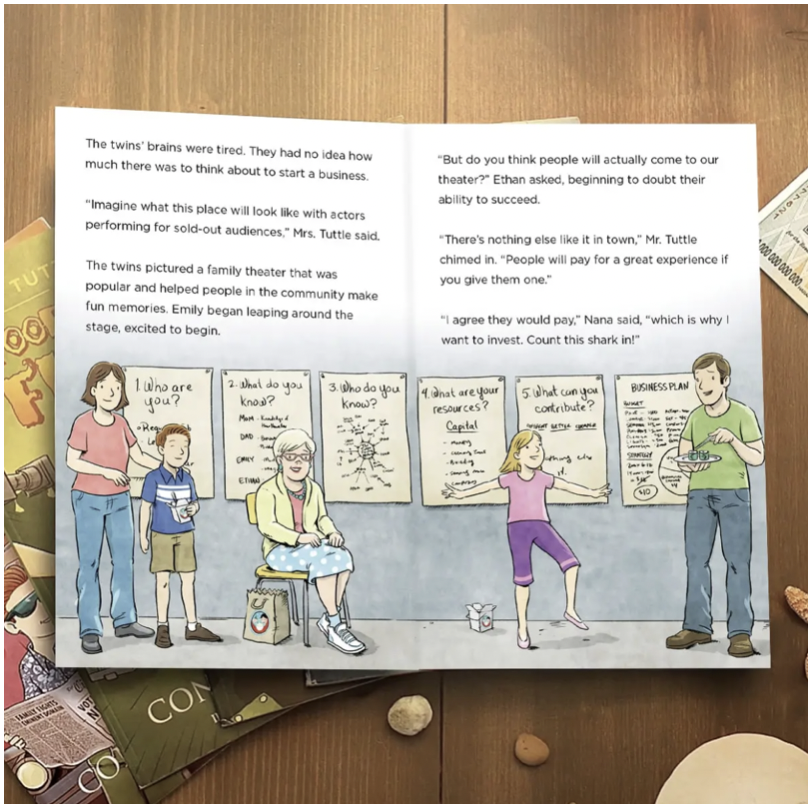
Michael Currier of Massachusetts is an unvaccinated gastroenterologist and entrepreneur, and he’s seen misinformation firsthand. He’s long been teaching his kids how to spot misinformation, but they were naturally skeptical when they didn’t hear it from anyone but him. However, the right books taught his kids how to combat misinformation, and they will teach your kids too! If you’re wondering how to raise independent thinkers who can spot misinformation, the Tuttle Twins books are essential tools for your toolbelt.
How Critical Thinking Combats Misinformation
When kids can think critically, they become able to evaluate the credibility of sources and look for evidence, also identifying their own and others’ biases. Critical thinkers don’t just passively absorb information; they take it apart piece by piece to see what makes it “tick.”
Critical thinkers question the credentials of an author or source, alongside their motivations and whether they provide supporting evidence that goes beyond just statements that require trust. Kids who can think critically also spot confirmation bias, which is the tendency to believe something that fits in well with the thinker’s current belief system or worldview. This reduces demand for fake news that simply elicits an emotional reaction.
When your kids can think critically and independently, they will also be able to spot logical fallacies, like drawing causal conclusions from data that’s simply correlational. Critical thinkers can also tell the difference between scientific evidence and someone’s opinion.
Independent, critical thinkers don’t just read a page. They look up information from other trusted sources to verify that the original source is accurate. Critical thinking also encourages a healthy skepticism that causes independent thinkers to pause and assess emotionally charged content before they spread it around, realizing that misinformation frequently exploits outrage or fear.
Critical thinkers can also recognize propaganda tactics such as loaded language, false dilemmas, and “alternative facts.”
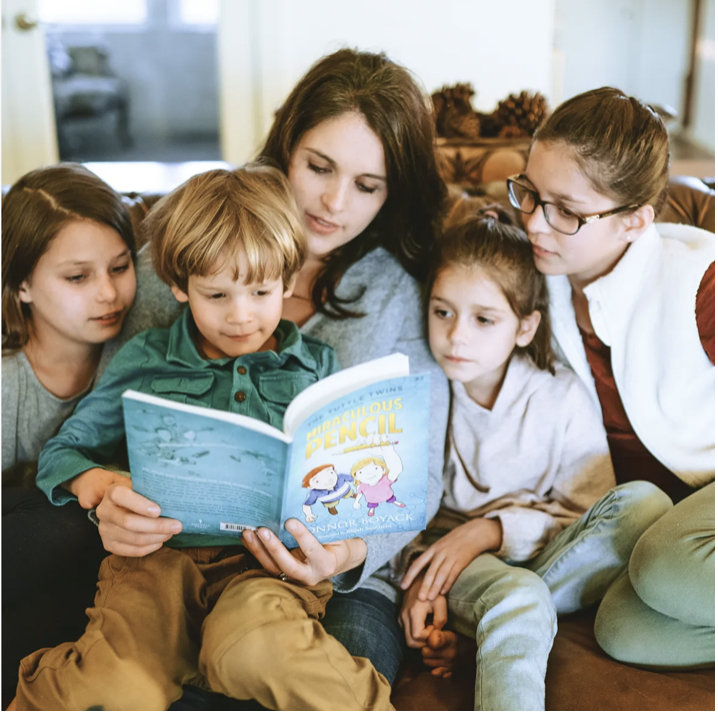
Photo: Tuttle Twins
Seeking Out Books that Teach Critical Thinking
At this point, parents wondering how to raise independent thinkers will want to look for books that teach critical thinking, like the Tuttle Twins series. The Tuttle Twins books explain things like misinformation, freedom of speech, and even the World Economic Forum while explaining that certain people get to decide what is and isn’t misinformation.
Books that teach critical thinking don’t just present facts. They encourage kids to analyze, evaluate, and put together arguments, frequently shining a light on logical fallacies and biases while calling for active application instead of a passive taking-in of information. Books that teach critical thinking will help you with how to raise independent thinkers by guiding you and your child through reasoned questioning and requiring evidence behind facts.
The Tuttle Twins series wraps every lesson in an engaging story that doesn’t just teach the information presented. The Tuttle Twins books also encourage all the above elements found in books that teach critical thinking. You can even enhance the critical-thinking skills embedded in all the Tuttle Twins books by pausing throughout the story and asking open-ended questions such as: What do you think the character should do next? What were some alternate solutions to the problem? What do you think could have been the consequences of those solutions?
Books that teach critical thinking like the Tuttle Twins series will go a long way toward helping you learn how to raise independent thinkers. They will also help you create special moments with your kids that they’ll remember forever! Join the growing number of parents who don’t want their kids to just be passive absorbers of information.
-

 Tech5 years ago
Effuel Reviews (2021) – Effuel ECO OBD2 Saves Fuel, and Reduce Gas Cost? Effuel Customer Reviews
-
 Tech7 years ago
Bosch Power Tools India Launches ‘Cordless Matlab Bosch’ Campaign to Demonstrate the Power of Cordless
-

 Lifestyle7 years ago
Catholic Cases App brings Church’s Moral Teachings to Androids and iPhones
-

 Lifestyle5 years ago
East Side Hype x Billionaire Boys Club. Hottest New Streetwear Releases in Utah.
-

 Tech7 years ago
Cloud Buyers & Investors to Profit in the Future
-

 Lifestyle6 years ago
The Midas of Cosmetic Dermatology: Dr. Simon Ourian
-

 Health7 years ago
CBDistillery Review: Is it a scam?
-

 Entertainment7 years ago
Avengers Endgame now Available on 123Movies for Download & Streaming for Free