
Lifestyle
Life Of John C. Wolfe – The Famous Speechwriter And Author

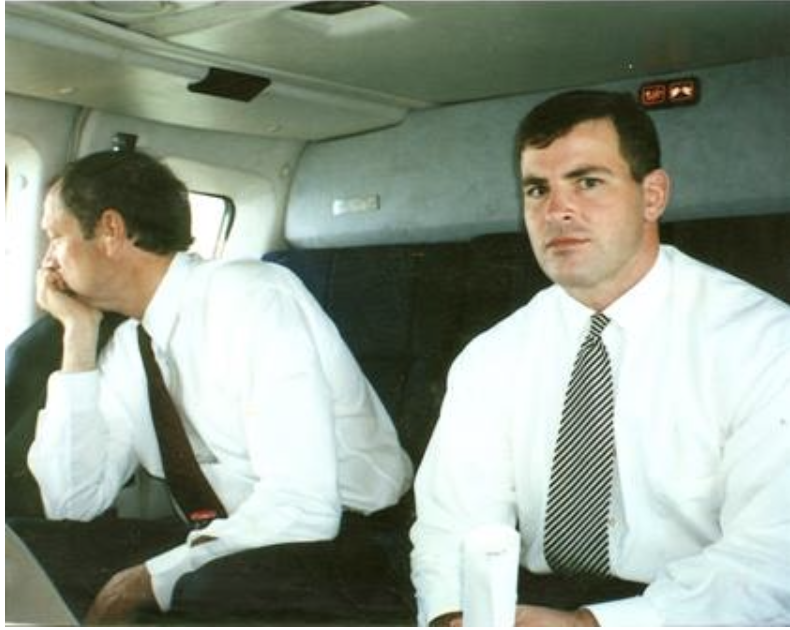
John C. Wolfe was once a man who had it all. He had a great job and a loving family, and he was highly successful. But then, life began to take its toll on him. He started to lose everything that was important to him. He became hooked on alcohol and overdosed on Klonopin, which nearly killed him. Thankfully, he was able to get the help he needed and turn his life around. Today, Wolfe is a successful author and a living example for those who want to overcome addiction and achieve their goals. He is living proof that it is never too late to turn your life around and achieve greatness.
He not only overcame his addiction, but he also became a renowned author and a wonderful father. Wolfe currently resides with his daughter on Loon Lake in the Adirondack Park, where he writes for a variety of clients, including high-ranking judges, elected figures, and business leaders.
Early Life
Dr. John A. Wolfe and Terry McConnell gave birth to John Carden Wolfe in Rochester, New York. Wolfe graduated from Rochester High School in 1984 and earned a Master’s Degree in 1988 from Springfield College.
Wolfe began his career as an English teacher and varsity wrestling coach in Western New York for two years. He was always interested in writing, so he became a resume writer and worked in a variety of capacities, including legal proofreader, advertising copywriter, sportswriter, editorial writer for Rochester’s (a leading monthly magazine), and chief writer for some of the nation’s top elected figures.
His Career
Freelance Writer
Wolfe was never the person who’d sit on a side and criticize. His writing abilities were exceptional. He was hired as an advertising copywriter at Hutchins/Young & Rubicam in the early 1990s. Wolfe began working as a freelance writer for a range of clients, including the Baseball Hall of Fame and the Buffalo Bills publication “Shout!” a job that featured nightly appearances as a sports analyst for a Rochester television station.
Chief Speechwriter
In 1993, Wolfe’s writing career took a new turn when he was recruited by Monroe County Executive Robert L. King to serve as chief speechwriter for both King and his successor, John D. Doyle. Wolfe’s exceptional writing skills enabled him to quickly transition from the private sector to the public sector, where he became an invaluable asset to the county government. His speeches were highly effective in communicating the county’s vision, and goals to its citizens, and his ability to connect with his audience helped to build support for the county’s initiatives. As a chief speechwriter, Wolfe played a key role in shaping the county’s culture and helping it to thrive.
Wolfe was appointed chief speechwriter by newly elected Gov. George E. Pataki two years later; he held that job for nearly ten of Pataki’s twelve years in office. Wolfe was instrumental in Pataki’s response to a number of historical events, including the crash of TWA Flight 800 and the September 11, 2001, terrorist attacks.
In addition to the mundane annual addresses that Pataki was either expected or obligated to deliver, Wolfe wrote two of Gov. Pataki’s inaugural addresses. Both of Pataki’s announcements on running for Governor; both of his primetime addresses before the 1996 and 2000 National Republican Conventions. he also wrote numerous commencement addresses and dozens of other high-profile national addresses on topics ranging from U.S. foreign and economic policy to welfare, regulatory, and criminal justice reform.
From 1996 through 2001, he penned more than 110 eulogies for victims of the TWA Flight 800 tragedy and the 9/11 attacks on the World Trade Center.
Following the 9/11 attacks, he wrote the first two public service announcements. The first was presented on national television by George W. Bush and George Pataki, and the second by Gov. Pataki and New York City Mayor Rudolph Giuliani.
Wolfe had the unexpected privilege of working with countless people he always admired as Pataki’s Chief Speechwriter, from John F. Kennedy, Jr. to former Secretary of State Henry Kissinger (Nixon) to Jeane Kirkpatrick (Ronald Reagan’s Ambassador to the United Nations) and Reagan’s top speechwriter, Peggy Noonan, author of the unforgettable Challenger Disaster Speech and the best-selling book, “What I Saw at the Revolution.”
Awards
Wolfe’s work was recognized by the Rochester Teacher’s Association, which presented him with the special award for journalism for “Bound by Bureaucracy” in 1993. He has presented the award for working on a series of investigative cover stories and editorials exposing waste and negligence in the Rochester City School District. The series was praised for its in-depth research and clear writing, and it helped to bring about much-needed reforms in the district. His reporting has had a lasting impact on the city of Rochester, and he continues to be an important voice for accountability in government.
Wolfe’s Challenging Days
Wolfe suffered after a near-fatal overdose of the prescription medication Klonopin on February 3, 2004. He was sent to a psychiatric facility for a month when it was determined that he had attempted suicide.
To change his life and bring a positive impact, after Wolfe was released from the hospital, he volunteered to take a pay boost and transfer from the Governor’s floor to an office at the SUNY Board of Trustees as Chief Writer and Associate Vice Chancellor for the State University of New York.
Nonetheless, he was unable to overcome his addiction and spent the next decade in and out of rehabilitation and mental clinics.
Wolfe divorced later that year and moved to the family’s lake cottage on Loon Lake in Chestertown, New York.
The Leap
After a long hiatus, Wolfe decided to return to writing. It was a life-changing decision that led to 4 published books and numerous articles. Wolfe’s writing is characterized by its engaging style and depth of research. Whether he’s writing about history or current affairs, Wolfe always brings a fresh perspective to his work. His readers can expect to be both informed and entertained when they pick up one of his books. With so much success already under his belt, it’s clear that Wolfe made the right choice when he decided to change his life and resume writing. Considering John struggled with alcoholism, his main area of interest was alcohol consumption in one form or another. Three of his four books are on alcoholism and alcoholics.
Wolfe’s Books
You Can’t Die: A Day of Clarity
Wolfe published his debut book, “You Can’t Die: A Day of Clarity,” in 2016. His 25-year battle with alcoholism is chronicled in the book. In this 300-page book, John goes into great detail on the problems that addicts face.
The Funny Thing About Being Sober
“The Funny Thing About Being Sober,” a funny story of his first year of sobriety, was published in 2018. Wolfe discloses that he has a mental ailment in between punchlines and amusing anecdotes.
The Dead Man’s King
“The Dead Man’s King,” his third book and first work of fiction, was published in 2019. The book is about 59 homeless men who create their own city, “Misfit City,” in a section of New York’s Central Park. The book also addresses the issue of alcoholism and the government’s reluctance to assist addicts.
A Little Uprising: The Muskrat Rebellion
He finished his fourth novel, “A Little Uprising: The Muskrat Rebellion,” in 2020, which foreshadows civic turmoil in New York State. The book, which was completed just weeks before the worldwide pandemic, prophesies the departure of the discredited fictitious character—Governor. Eighteen months after the release of A Little Uprising, New York’s real Governor, Andrew Cuomo, resigned in disgrace.
The Man Who Changed His Life
John Wolfe has been through a lot in his life. He’s battled alcoholism and come out the other side. Now, he wants to share his story with the world in the hopes that it will help others who are struggling with addiction. In addition to writing books on the subject, he’s also written articles for The New York Times, Albany Times-Union, Times of Israel, and other daily newspapers in New York State. In these pieces, he opens up about his personal struggle with alcoholism and what led him to seek help. He’s candid about the challenges he’s faced and the hard work it took to get sober. But through it all, he never gave up on himself – and that’s something he wants his readers to know. No matter how dark things may seem, there is always hope. John Wolfe is living proof of that.

Most teams don’t fall apart all at once. It happens slowly, missed conversations, quiet disengagement, people doing what’s required but nothing more.
Toba Ogunremi has spent years working inside care environments where that kind of shift is easy to miss until it starts affecting everything. Leading operations at Samorem Care in the UK, he has seen how systems can appear stable on the surface while teams underneath struggle to stay connected to their work.
One experience early in his career changed how he looks at leadership entirely.
He had taken over a team that wasn’t in crisis, but it wasn’t working well either. The people receiving care were safe, but they weren’t thriving. The same was true for the staff. There was no urgency, no energy, just routine.
The usual solution would have been to tighten control by setting new targets, increasing supervision, and creating performance plans. He didn’t do any of that.
“I started with conversations,” he says. “Real ones. Not rushed, not formal.”
One by one, he spoke to each team member. What came out wasn’t frustration with the job itself, but something quieter and harder to spot.
“They weren’t disengaged because they didn’t care,” he explains. “They were disengaged because they felt unseen.”
No one had asked what they thought. No one had taken the time to understand how they were coping. Over time, that absence had turned into distance. That moment stayed with him. It shaped how he leads today.
His approach is simple, but not always easy to apply: people perform better when they feel they belong.
He believes high performance usually comes when people feel like they genuinely belong and know that what they do actually matters.
In healthcare, where pressure is constant and expectations are high, this idea can sound secondary. The focus is often on outcomes, compliance, and efficiency. Toba doesn’t dismiss those things, but he questions what happens when they become the only focus.
Even when all the processes are in place, if the people delivering the care feel disconnected, it eventually reflects in the quality of the work.
At Samorem Care, this thinking shows up in small but consistent ways. Recruitment is not just about experience. It’s about how someone responds to people, how they handle pressure, and how they communicate. Once they are in, the focus shifts to keeping teams stable and supported, rather than constantly rotating staff or reacting only when something goes wrong. He also pays attention to how leaders show up day to day.
According to him, leadership is not just about giving direction; it’s about being present enough to understand what your team actually needs.
That presence matters more in care than in most industries. The work is demanding, often emotional, and not always recognised for what it takes. When teams feel stretched or overlooked, it affects how they interact with the people they support.
For Toba, resilience is less about constant pressure and more about creating a work environment where people can do their jobs well without burning out. In his view, strong teams are not just coping; they are supported enough to stay clear-headed and consistent in their work.
His background outside healthcare still shapes how he leads. Having worked in sales and communications, he understands how important it is to read people and build trust. In healthcare, though, the impact is far more direct, as decisions affect someone’s everyday life, not just an outcome on paper.
That shift makes leadership more personal. Teams need more than instructions; they need stability, clarity, and a sense that they are understood. What defines Toba Ogunremi’s approach is its simplicity. He focuses on being consistent, listening carefully, and addressing issues early rather than reacting late.
In the end, his belief is straightforward: teams perform better not because they are pushed harder, but because they feel valued and part of something that works.
-

 Tech5 years ago
Effuel Reviews (2021) – Effuel ECO OBD2 Saves Fuel, and Reduce Gas Cost? Effuel Customer Reviews
-
 Tech7 years ago
Bosch Power Tools India Launches ‘Cordless Matlab Bosch’ Campaign to Demonstrate the Power of Cordless
-

 Lifestyle7 years ago
Catholic Cases App brings Church’s Moral Teachings to Androids and iPhones
-

 Lifestyle5 years ago
East Side Hype x Billionaire Boys Club. Hottest New Streetwear Releases in Utah.
-

 Tech8 years ago
Cloud Buyers & Investors to Profit in the Future
-

 Lifestyle6 years ago
The Midas of Cosmetic Dermatology: Dr. Simon Ourian
-

 Health7 years ago
CBDistillery Review: Is it a scam?
-

 Entertainment7 years ago
Avengers Endgame now Available on 123Movies for Download & Streaming for Free