
World
Workers Compensation Claims


Workers compensation or workers comp is a government-mandated program that pays benefits to employees who sustain an injury or become sick on the job or due to their work. It functions as a disability insurance mechanism for workers. Thus, offering monetary benefits, healthcare benefits, or both to workers that sustain injuries or become ill as a direct result of their work.
“Going through any claim can be a strenuous process. Your claim may be accepted or rejected even when you are not the cause of any damage incurred,” says personal injury attorney Sheryl Lam.
Most firms need Workers comp insurance to cover employees that sustain injuries on the job. Though employees are not required to establish responsibility to get benefits, the worker compensation process entails multiple steps, and insurers may ultimately dismiss their claims.
Benefits from Workers Compensation
Almost every state mandates that employers must provide workers comp coverage to their employees. Below are the different types of workers comp benefits:
#1. Medical Benefits
After a claim approval, workers comp insurance reimburses medical expenses for employees due to the injury or illness. The medical expenses include doctor appointments, drugs, chronic pain management, physical therapy, surgery, hospital treatment, and equipment like crutches and wheelchairs.
The reimbursement of medical expenses continues until the injured worker reaches Maximum Medical Improvement (MMI), which is the point of no further treatment that can help them get better.
When this is the case, there may be a limitation of paid medical costs to only those treatments that aid in maintaining MMI, and benefits may be subject to time constraints. At this time, there may be an assignment of the disability of an employee, the establishment of continuing work restrictions, and the settlement procedure.
#2. Disability Benefits
If an employee cannot work due to work-related injury, disability payments might help to replace some of their lost wages. The employee earning capacity, disability type, and state rules determine the amount of pay replacement. The calculation entails using the weekly pay of employees before the injury.
Employees who require time off to recover or receive medical care can use these disability benefits to supplement their income until they return to work. This workers comp benefit might last a lifetime if an employee experiences a permanent disability but only until their temporary disability benefits have run out.
Furthermore, the employee level of disability determines whether disability benefits are temporary or permanent. Temporary and permanent disability compensation is available in two forms: total and partial:
- Temporary total disability: the employee cannot work for some time, but there is an expectation that they will return to their job after recovery.
- Temporary partial disability: an employee can perform some of their duties, but only in a reduced capability or part-time.
- Permanent total disability: the employee sustains a lifelong injury and will never return to their previous position or do any job.
- Permanent partial disability: the injury can be life-lasting, and the individual can return to work, but only at a reduced capacity, preventing them from earning as much money as they did before the injury.
#3. Rehabilitation Benefits
Injured workers who are permanently incapacitated and unable to return to their previous job can benefit from vocational rehabilitation. Rehabilitation benefits often cover career training, resume assistance, job growth and placement, tuition, books, skills assessment, and testing. Rehabilitation benefits cover retraining expenses so that an employee can get the new skills or qualifications needed to get back to work in a job that pays as much as their former one did.
Limitations to Worker Compensation Claims
One of the most significant drawbacks of workers comp claims is that they provide limited benefits to injured workers. These benefits are limited in that they do not account for non-economic damages. This is one of the most significant distinctions between a workers comp claim and a personal injury claim.
The victim must prove that the defendant is to blame for their injuries in a personal injury case. If successful, they can be reimbursed for both economic and non-economic damages. A personal injury case compensation covers economic damages similar to those covered by workers comp claims, such as past and future medical expenditures, missed wages, loss of earning potential, and property damage.
Non-economic damages, which compensate accident victims for the total decline in quality of life they experienced due to the accident, including pain and suffering, are not covered by a successful workers comp claim. Workers comp compensates for economic losses, ignoring the psychological and emotional impact of an accident on the life of workers.
Challenges in Pursuing a Workers Compensation Claim
While an injured employee does not have to establish that anybody else is to blame for their injury, they sometimes find it hard to get the benefits. The insurance carrier of a company manages the compensations of employees. Anyone who has worked with an insurance company following an accident knows how frustrating it can be.
An insurance company will frequently challenge a workers comp claim in the hopes of lowering the amount of money it must payout. Insurance firms will sometimes deny that the injuries are work-related.
An insurance company may also assert that the injuries are not as severe as they claim. For instance, an insurance company may deny permanent disability compensation by arguing that injured workers can still fulfill their job obligations despite their injuries.
What To do When the Insurer Denies the Claim
The best step to winning a claim is consulting an experienced lawyer. Your lawyer can negotiate compensation with the insurance company on your behalf. If an insurer disapproves of your claim, your lawyer can help you file a lawsuit against the insurance company and can defend you as well.
The lawyer will give you feedback on every step of the claims regularly. Filing paperwork, obtaining proof, and negotiating can all take a lot of time and effort. The process can be taxing, particularly if you are healing from significant injuries. Working with a lawyer can alleviate some of the stress while also potentially improving the outcome of your case.
Conclusion
Dealing with legal problems, especially after suffering a work-related injury, can be incredibly exhausting for non-lawyers. The filing process for benefits is not usually straightforward sometimes and occasionally necessitates consulting an experienced attorney. Thus, before filing a workers comp claim, it is advisable to consult an experienced attorney.
World
Swiss International University Makes Global Impact with Top 500 Times Higher Education Ranking
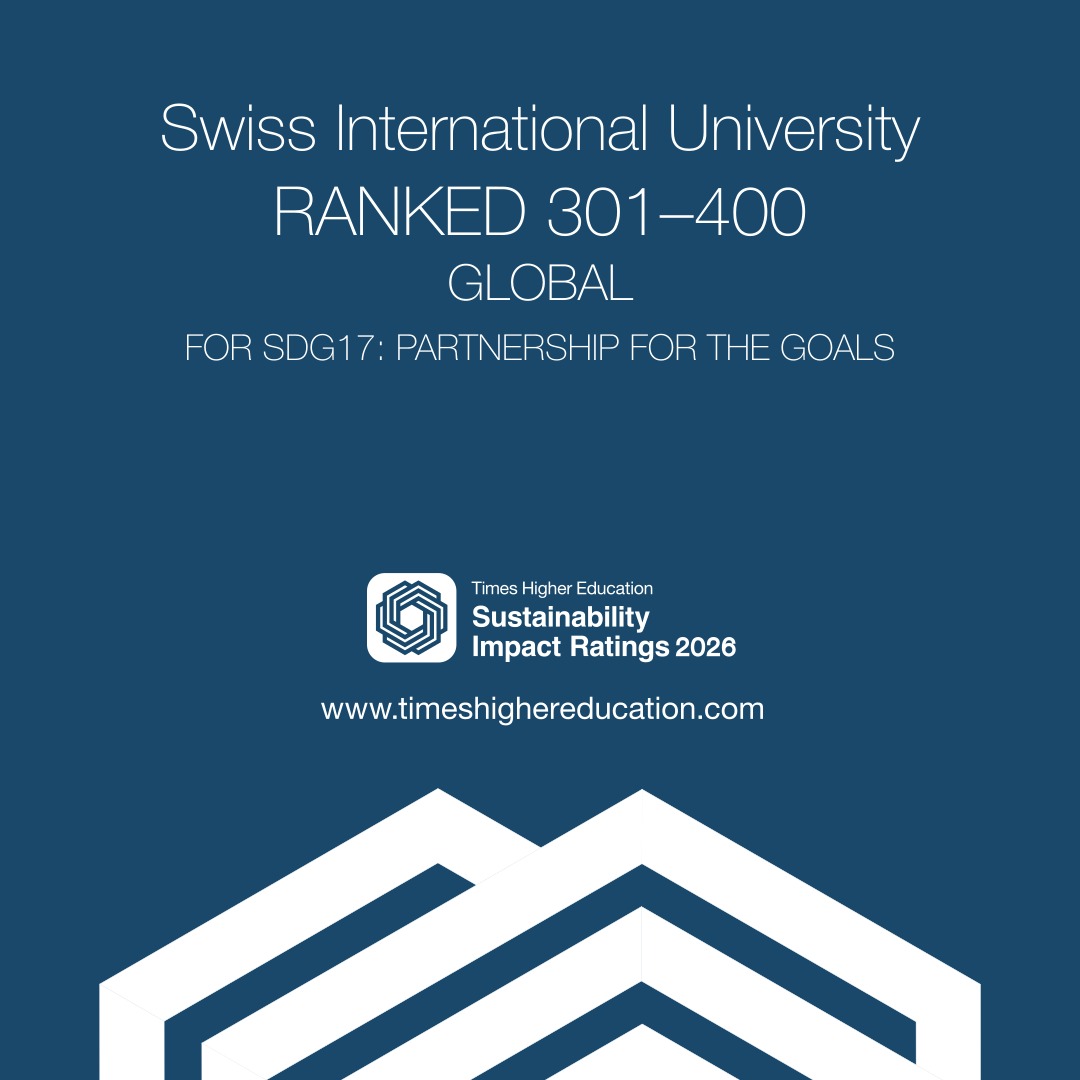
Swiss International University (SIU) got a real kind of milestone , when it landed inside the worlds top 500 universities in the newest Times Higher Education (THE) Impact Rankings. Which is kind of huge because it is SIU’s first time appearing in those widely respected rankings, and it also shows how its influence keeps growing in international higher education.
SIU was competing with nearly 2,000 universities from different parts of the world, and that first debut basically underlines its dedication to academic quality, sustainability and a real societal footprint. Overall it seems like the result mirrors SIU’s own plan for delivering solid education , while also aligning with bigger global development objectives.
Now, the Times Higher Education Impact Rankings look at universities through what they do for the United Nations Sustainable Development Goals , or SDGs. So the assessment is about universities creating verifiable positive change through education, research, community activities, plus governance— not just statements.
One of SIU’s strongest areas was the recognition tied to SDG 16 – Peace, Justice, and Strong Institutions. In that section, SIU placed roughly within the top 100 to 200 universities worldwide, and that points to its focus on advancing ethical leadership, transparency, accountability, and those institutional values that actually stick.
This recognition shows SIU keeps working hard to get students ready, with the know-how , the ability to act and those ethical foundations, so they can face tangled global problems. And you know, by supporting responsible leadership and pushing for good social results, the university keeps building up its part in shaping the next generation of professionals and people who make real decisions
Key Highlights of SIU’s Achievement
• Ranked Among the World’s Top 500 Universities
In its first-ever participation in the Times Higher Education Impact Rankings, SIU managed to land a spot among the top 500 universities worldwide.
• Outstanding Performance in SDG 16
SIU reached a ranking in the top 100 to 200 range, across the globe, for its work related to Peace, Justice, and Strong Institutions.
• Strengthening Global Academic Presence
This win also reinforces SIU’s long-term vision, and it further tightens its standing as an emerging influence in international higher education.
Recognition from Times Higher Education is an important endorsement of SIU’s mission, to give accessible high-quality education while also making a positive impact in society. As the university keeps expanding its academic offerings and international reach, this milestone , works like a solid base for what comes next—future growth, more innovation, and that global recognition everyone is aiming for.
-

 Tech5 years ago
Effuel Reviews (2021) – Effuel ECO OBD2 Saves Fuel, and Reduce Gas Cost? Effuel Customer Reviews
-
 Tech7 years ago
Bosch Power Tools India Launches ‘Cordless Matlab Bosch’ Campaign to Demonstrate the Power of Cordless
-

 Lifestyle7 years ago
Catholic Cases App brings Church’s Moral Teachings to Androids and iPhones
-

 Lifestyle5 years ago
East Side Hype x Billionaire Boys Club. Hottest New Streetwear Releases in Utah.
-

 Tech8 years ago
Cloud Buyers & Investors to Profit in the Future
-

 Lifestyle6 years ago
The Midas of Cosmetic Dermatology: Dr. Simon Ourian
-

 Health7 years ago
CBDistillery Review: Is it a scam?
-

 Entertainment7 years ago
Avengers Endgame now Available on 123Movies for Download & Streaming for Free