
Lifestyle
10 Pedestrian Safety Tips That Could Save Your Life

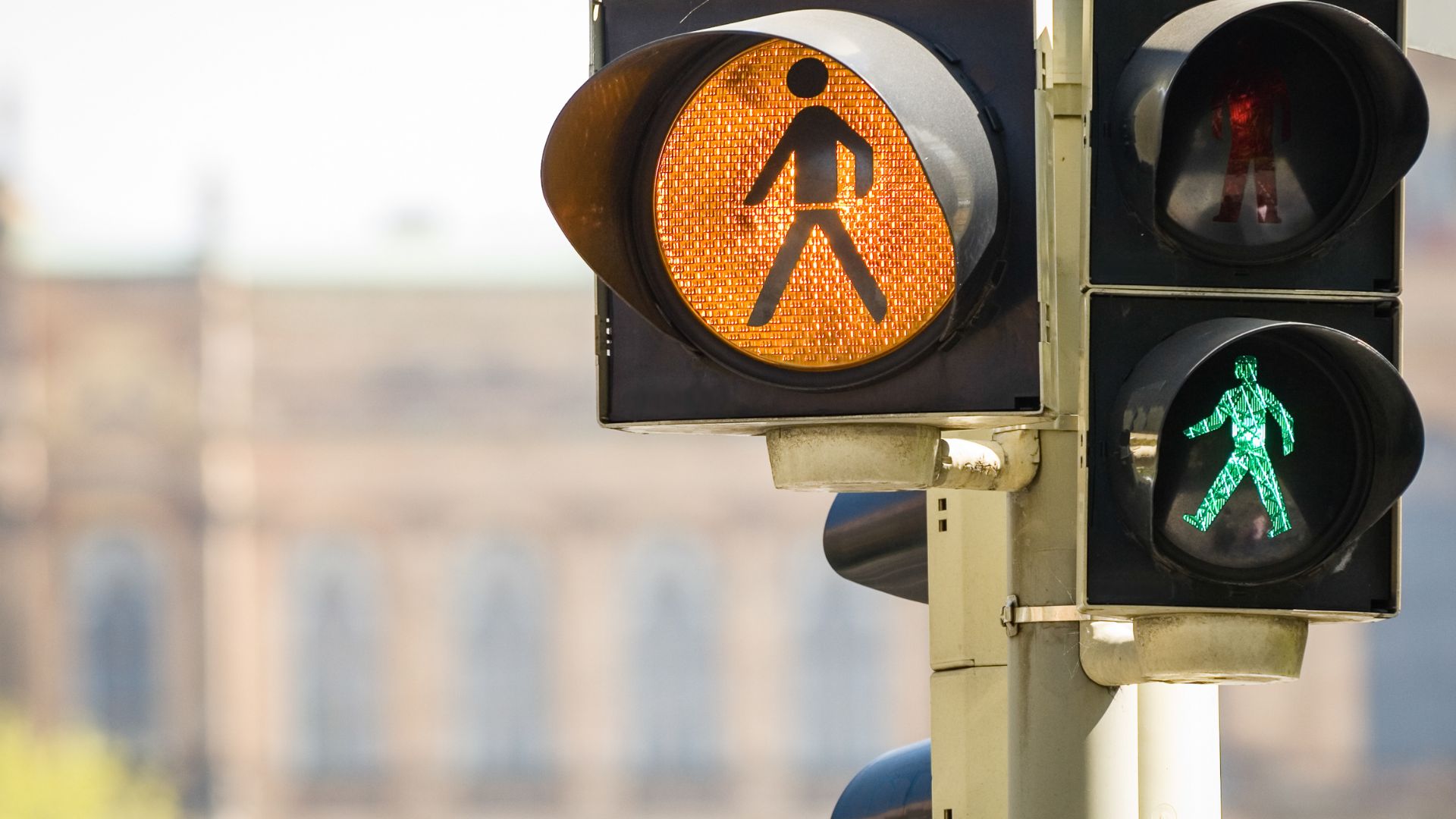
For the most part, walking is good for you. But there are times when it can be dangerous—specifically when walking near traffic.
Consider these sobering statistics published by the National Highway Traffic Safety Administration (NHTSA):
In 2020, there were 6,516 pedestrians killed in traffic crashes, the highest since 1990 and a 3.9% increase from 2019. On average, a pedestrian died every 81 minutes in 2020 — accounting for 17% of all traffic fatalities.
Why does this happen? Pedestrian traffic deaths have many causes, but according to NHTSA data from 2013, most occur in urban areas (73%), in non-intersection locations (69%), and when it’s dark (72%).
In this article, we’ll go over the best safety tips to help ensure you don’t get hurt as a pedestrian or hurt someone else as a driver.
Let’s get started!
When you’re walking …
- Stay on the sidewalk
The sidewalk is one of the safest places to be as a pedestrian because it’s made specifically for walking. So use it as much as possible.
If no sidewalk is available, see if you can take an alternate route that has a walking path. Walking on the side of the road should be a last resort, but if you must do it, stay as far away from traffic as possible and walk facing it so that you can better see oncoming vehicles.
- Use crosswalks
When it comes to crossing the street, use the crosswalk. Again, crosswalks are made for pedestrians. It’s where drivers will most expect to see you. So avoid jaywalking and wait until you get to a designated crosswalk (usually located along intersections and corners).
Before crossing, wait for the crosswalk light to turn green (if there is one). Then look both ways. Look left, then right, and then left again. Stay alert for traffic until you get to the other side of the street.
- Put your phone away
It’s no secret that for many, phones have become a huge distraction. And that’s true for when people walk, too.
According to a study by New York’s Stony Brook University, participants were 61% more likely to veer off course when using their cell phone while walking and 13% more likely to overshoot a target placed a few meters away.
That means if you’re looking down at your phone while walking, you are more likely to accidentally walk into traffic or a parked car. So put the phone down and pay attention to where you are going.
- Don’t walk drunk
Though you may be tempted to walk home drunk to avoid driving under the influence, don’t. Walking home drunk can be just as dangerous.
According to the NHTSA, in 2020, an estimated 47% of fatal pedestrian crashes involved a pedestrian who was drunk.
So instead of taking the risk of getting involved in an accident, get a cab or have a sober friend give you a ride home. It’s safer for you and other drivers.
- Make yourself visible
One simple way to lower the risk of getting hit as a pedestrian is to make yourself more visible to drivers. You can do this by walking during the day, wearing bright or reflective clothing, or carrying a flashlight when it’s dark.
Whatever you do, don’t assume that drivers see you.
And if you ever get hit by a car as a pedestrian, hire an experienced car accident attorney. They can help you get the compensation you deserve for any injuries, lost income, and more.
When you’re driving …
- Keep an eye out for pedestrians
Pedestrians can be hard to see, especially when it’s dark. So watch out for them.
Be especially cautious around neighborhoods and school zones, where children can sometimes dart out into the street unexpectedly. Stay alert and drive extra slowly.
- Yield to crossing pedestrians
Anytime a pedestrian crosses the street, it’s your job to yield as a driver. They have right of way, not you.
For the same reason, you should never try to pass another vehicle stopped at a crosswalk. They may be yielding to a pedestrian that you can’t see from your angle.
- Get rid of distractions
In 2020, 3,142 people were killed by distracted driving, and that includes pedestrians. Whether it’s texting, eating, drinking, or talking to other passengers, distractions can take your eyes off the road and increase the risk of an accident.
So give your full attention to the road. Everything else can wait.
- Keep the speed limit
Speeding also increases the risk of a pedestrian accident.
According to the Governors Highway Safety Association (GHSA), the percentage of pedestrian fatalities involving speeding in 2020 rose to 8.6%, a notable increase from 7.2% the year before. The organization also notes that the average risk of death for pedestrians increases exponentially the faster a vehicle is traveling, from 10% at 23 MPH to 90% at 58 MPH.
Why? For one, speeding gives you less time to react to pedestrians on the road, so you are more likely to hit them. Secondly, speeding exponentially increases the impact of a crash, leading to more serious injuries or death in the event of an accident.
So keep the speed limit. It’s there for a reason.
- Never drink and drive
Lastly, never drink and drive. It impairs your depth perception, your reaction time, and your ability to drive overall. In short, it’s a recipe for disaster.
According to the Centers for Disease Control and Prevention (CDC), of all the people who died in crashes involving alcohol-impaired drivers in 2020, 38% were passengers of the alcohol-impaired drivers, drivers or passengers of another vehicle, or nonoccupants (such as a pedestrian).
Driving drunk is extremely dangerous. That’s why it comes with serious legal consequences. It can lead to hefty fines (up to thousands of dollars), jail time (up to a year in some states), and losing your license.
Whether you are a driver or a pedestrian, make pedestrian safety a top priority. It could save your or someone else’s life.

Most teams don’t fall apart all at once. It happens slowly, missed conversations, quiet disengagement, people doing what’s required but nothing more.
Toba Ogunremi has spent years working inside care environments where that kind of shift is easy to miss until it starts affecting everything. Leading operations at Samorem Care in the UK, he has seen how systems can appear stable on the surface while teams underneath struggle to stay connected to their work.
One experience early in his career changed how he looks at leadership entirely.
He had taken over a team that wasn’t in crisis, but it wasn’t working well either. The people receiving care were safe, but they weren’t thriving. The same was true for the staff. There was no urgency, no energy, just routine.
The usual solution would have been to tighten control by setting new targets, increasing supervision, and creating performance plans. He didn’t do any of that.
“I started with conversations,” he says. “Real ones. Not rushed, not formal.”
One by one, he spoke to each team member. What came out wasn’t frustration with the job itself, but something quieter and harder to spot.
“They weren’t disengaged because they didn’t care,” he explains. “They were disengaged because they felt unseen.”
No one had asked what they thought. No one had taken the time to understand how they were coping. Over time, that absence had turned into distance. That moment stayed with him. It shaped how he leads today.
His approach is simple, but not always easy to apply: people perform better when they feel they belong.
He believes high performance usually comes when people feel like they genuinely belong and know that what they do actually matters.
In healthcare, where pressure is constant and expectations are high, this idea can sound secondary. The focus is often on outcomes, compliance, and efficiency. Toba doesn’t dismiss those things, but he questions what happens when they become the only focus.
Even when all the processes are in place, if the people delivering the care feel disconnected, it eventually reflects in the quality of the work.
At Samorem Care, this thinking shows up in small but consistent ways. Recruitment is not just about experience. It’s about how someone responds to people, how they handle pressure, and how they communicate. Once they are in, the focus shifts to keeping teams stable and supported, rather than constantly rotating staff or reacting only when something goes wrong. He also pays attention to how leaders show up day to day.
According to him, leadership is not just about giving direction; it’s about being present enough to understand what your team actually needs.
That presence matters more in care than in most industries. The work is demanding, often emotional, and not always recognised for what it takes. When teams feel stretched or overlooked, it affects how they interact with the people they support.
For Toba, resilience is less about constant pressure and more about creating a work environment where people can do their jobs well without burning out. In his view, strong teams are not just coping; they are supported enough to stay clear-headed and consistent in their work.
His background outside healthcare still shapes how he leads. Having worked in sales and communications, he understands how important it is to read people and build trust. In healthcare, though, the impact is far more direct, as decisions affect someone’s everyday life, not just an outcome on paper.
That shift makes leadership more personal. Teams need more than instructions; they need stability, clarity, and a sense that they are understood. What defines Toba Ogunremi’s approach is its simplicity. He focuses on being consistent, listening carefully, and addressing issues early rather than reacting late.
In the end, his belief is straightforward: teams perform better not because they are pushed harder, but because they feel valued and part of something that works.
-

 Tech5 years ago
Effuel Reviews (2021) – Effuel ECO OBD2 Saves Fuel, and Reduce Gas Cost? Effuel Customer Reviews
-
 Tech7 years ago
Bosch Power Tools India Launches ‘Cordless Matlab Bosch’ Campaign to Demonstrate the Power of Cordless
-

 Lifestyle7 years ago
Catholic Cases App brings Church’s Moral Teachings to Androids and iPhones
-

 Lifestyle5 years ago
East Side Hype x Billionaire Boys Club. Hottest New Streetwear Releases in Utah.
-

 Tech8 years ago
Cloud Buyers & Investors to Profit in the Future
-

 Lifestyle6 years ago
The Midas of Cosmetic Dermatology: Dr. Simon Ourian
-

 Health7 years ago
CBDistillery Review: Is it a scam?
-

 Entertainment7 years ago
Avengers Endgame now Available on 123Movies for Download & Streaming for Free