
Business
The Perfect Investment: RAD Diversified and Income-Producing Farms

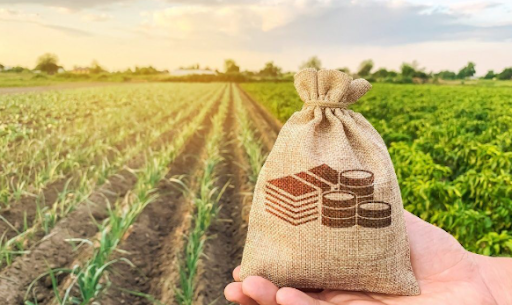
Amidst the global lockdown of 2020, Dutch Mendenhall, founder of RADD America, began looking for an alternative to standard residential real-estate investments. So, he turned his analysis to farms and was blown away by the immense potential he saw. After going public in late 2019, RADD America purchased US farmland and made slices of the real estate available at minimum investments of $10,000.
Income-producing farms vs. other real estate asset classes
According to Mendenhall, an apartment complex in today’s US real estate market commands approximately a 4% or 5% cap rate. Farms offer somewhere around a 15% to 20% cap rate.
“When I first began looking at investing in farms, I compared each acre to an apartment or housing unit,” Mendenhall recalls. “The variety that income-producing farms provide is what I really love about them as an opportunity. With one season producing wheat and corn the next, you can double tap — you can raise livestock on top of agriculture. Putting money into the farm only pays off in time. Everything from improving soil to increasing irrigation makes a major impact on potential income, and so much of America’s farmland has fallen into disrepair during the last 20 years.”
When Mendenhall began investing during the early days of the pandemic, sustainable acres of producing farmland sold anywhere from $3,500 to $5,000. Today, he finds that income-producing acres of farmland easily sell for $9,500 to $10,000.
“I’ve seen farmland values almost double during the last couple of years,” Mendenhall says. “Currently, we’re in Tennessee, Arkansas, and Idaho, but we are analyzing land all over America. What reports don’t show is the difference between a properly maintained acre of farmland and an acre that is in disarray. There’s only so much workable farmland on the market today. We’ve hit the tipping point, and now, there’s a scarcity of land for people to buy. If you have the opportunity to purchase amazing agricultural land, you have to pull the trigger quickly.”
Income-producing farms as an asset class
Mendenhall is no stranger to investors. Since 2006, he’s connected them to deals in short sales, wholesaling, residential properties, and storage units, though he admits that every asset class has caused the same excitement as farmland. “At this point, we can’t find enough bargains for our investors,” he says. “They take real pride in their investments and keep asking us for more.”
RADD America takes a true grassroots approach when connecting its investors to farmland. “The farming world is different from any other in real estate,” explains Mendenhall. “We start by having our acquisitions and agricultural teams meet with farmers. When we get ready to brand cattle or plant, all the local farmers come and help. In the same spirit, our teams go out and help the local farmers when it’s their turn to brand and plant. To do it right, you have to build a relationship and a connection that’s quite different than other types of investing.”
RADD America is composed of expert investors and expert farmers. The company offers its investments through fractionalized ownership. In other words, the company purchases one farm and then allows a joint pool of investors to own it together.
“If you don’t have a team that knows how to farm and maximize income, you’re not going to get the best possible return for investors,” warns Mendenhall. “Thankfully, our team isn’t so big for this type of investing that we forget who we are, and we have the economy to scale at a great pace.”
The impact of global competition on income-producing farm investments
RADD America closely monitors global trends. In Mendenhall’s experience, investors win when they move before the market. However, when they move after the market, they lose.
“When Russian first invaded and sparked its war with Ukraine, for example, we kept a close eye on its global impact,” he says. “As one of the largest producers of wheat in the world, we knew that Ukraine — now in the midst of a war — wasn’t going to be able to produce wheat at the same scale, so someone else needs to step in and fill the gap. We’re constantly monitoring what’s happening in the world to stay on top of evolving trends.”
In terms of global competition, Mendenhall is frustrated by foreign entities staking ownership of American farmland and agriculture. In this area, China has positioned itself as the number one threat to the sovereignty of the United States.
“When foreign powers have ownership of agricultural land in the US, it puts us all at risk as Americans,” remarks Mendenhall. “Over the past few years, we’ve seen soil quality erode, closures of meatpacking plants, and numerous fires. The likelihood of nuclear war in this age is very small. The quiet war of buying American agriculture and unsettling the American dollar is the threat we face today.”
Clearly, RADD America has a lot to pay attention to at home and abroad. “We’re monitoring weather patterns and making one-year, three-year, and five-year predictions,” Mendenhall explains. “We’re also paying close attention to interest rates to see where this shifting economy is headed. The up-and-down cycles are faster than they’ve ever been. Monitoring the industry is critical. With expert investors and agricultural specialists from RADD America on your team, farmland can be one of your most promising and rewarding investment opportunities.”

Business
Ipsos Helps Brands Understand How They Get Customer Experience Wrong & Why It’s Costing Them Millions


For brands looking to succeed in the modern business ecosystem, the customer experience (CX) is not something companies can afford to ignore. CX is a direct driver of revenue, loyalty, and growth for organizations.
Ipsos, one of the world’s leading market research firms, helps brands understand that failing to focus on the customer experience can lead to lost sales, which in turn can translate to not only millions in lost revenue but also lost trust and credibility in the market.
How brands still get CX wrong
“The customer decision and desire to do business with brands directly affect the bottom line,” says Brad Christian, Chief Commercial Officer at Ipsos – Experience Practice.
Customer experience may sound like a simple concept, but many brands still get it wrong. CX goes beyond surveys and feedback. Leaders who fail to connect feedback in a meaningful way to goals such as retention, repeat visits or purchases, advocacy, and operational performance fail to deliver on their service promises. The emotional and functional disconnect can spell trouble for brands. The most polished advertising campaigns cannot make up for a frustrating customer interaction or a promise that a business cannot fulfill.
According to Ipsos’s internal research, many customers today see service as too automated and impersonal. More than half report that their experience is worse than promised.
These findings don’t just result in disappointed buyers. They result in lost customers, negative feedback, and a long-term impact on the business as a whole.
“Brands have to manage the entire customer experience across each and every touchpoint,” explains Christian.
Poor CX can be expensive
Executives can often underestimate how expensive a history of poor CX can be. Global losses can reach into the billions while leaders wonder what went wrong. In an age of rapid social media communication, a single negative interaction can spell disaster for a company, leading to reduced customer spending or the entire loss of its most loyal customers.
Those losses are not just reflected in lost revenue, however. Customer acquisition and marketing dollars can also be lost as companies continue to spend money trying to retain their customer base, often skipping right over the experience part of retention.
Poor customer experience can be a deep operating problem that creates a domino effect, decimating businesses from the inside out. These poor experiences can impact not only present and future customer acquisition but also business leaders and employees.
CX matters more in today’s business landscape
The customer experience has always mattered, but it may matter more to brands trying to make it in a modern, ultra-competitive, digitally-driven business landscape. Good experiences encourage repeat purchases, boost loyalty, and increase the likelihood that customers will go online and recommend a brand to others.
“Customer experience isn’t an isolated function,” says Christian. “It’s part of a larger system that ensures that brands measure and manage customer experience data and then act on that data to drive action where customer experience gaps exist.”
Brands also have to seek to understand today’s customers, who expect experiences that are seamless, authentic, and relevant. As more and more companies hop on the automation train, they will want to reassure their customers that the human element that many people consider important still exists.
At Ipsos, six drivers of strong customer relationships form the bedrock of the company’s CX platform, something that they refer to as the “Forces of CX”: certainty, fair treatment, control, status, belonging, and enjoyment.
Customers want to feel that if they have an issue with a brand, it will be handled and that their concerns will be understood. They don’t want the customer experience to feel like a battleground; they want it to feel fair and human.
“Customer experience isn’t just a nicer experience,” says Christian. “It ties directly to specific financial outcomes, whether that be increased sales, greater market share, or stronger brand loyalty.”
How Ipsos helps businesses deliver customer experiences that matter
Ipsos turns customer feedback into reliable, actionable, decision-ready information. The company goes beyond simple satisfaction metrics and implements voice-of-the-customer programs, journey analytics, relationship feedback, and quality research.
“Brands don’t just need data,” Christian says. “They need measurements as to how they are delivering on their brand promise and predictive modeling to tie financial performance measures to those measures to help them determine where to invest to maximize the customer experience and understand what financial impact those investments might deliver for the business.”
Ipsos measures the interactions that matter most and shows brands how each interaction can affect retention, share of spend, and efficiency. For brands that are trying to reduce the guesswork behind CX, Ipsos helps them move beyond cosmetic fixes to achieve real, meaningful change.
Customer expectations can shift on a dime, influenced by society, social media, and even changing trends. Ipsos helps brands meet those rapidly changing customer expectations with hard evidence and comprehensive metrics.
Today’s brands need to understand how to get the customer experience right. Ipsos has the insights needed to drive home the deep importance of CX in today’s marketplace.
-

 Tech5 years ago
Effuel Reviews (2021) – Effuel ECO OBD2 Saves Fuel, and Reduce Gas Cost? Effuel Customer Reviews
-
 Tech7 years ago
Bosch Power Tools India Launches ‘Cordless Matlab Bosch’ Campaign to Demonstrate the Power of Cordless
-

 Lifestyle7 years ago
Catholic Cases App brings Church’s Moral Teachings to Androids and iPhones
-

 Lifestyle5 years ago
East Side Hype x Billionaire Boys Club. Hottest New Streetwear Releases in Utah.
-

 Tech8 years ago
Cloud Buyers & Investors to Profit in the Future
-

 Lifestyle6 years ago
The Midas of Cosmetic Dermatology: Dr. Simon Ourian
-

 Health7 years ago
CBDistillery Review: Is it a scam?
-

 Entertainment7 years ago
Avengers Endgame now Available on 123Movies for Download & Streaming for Free