
World
The Critical Role of OpticSense in US Infrastructure

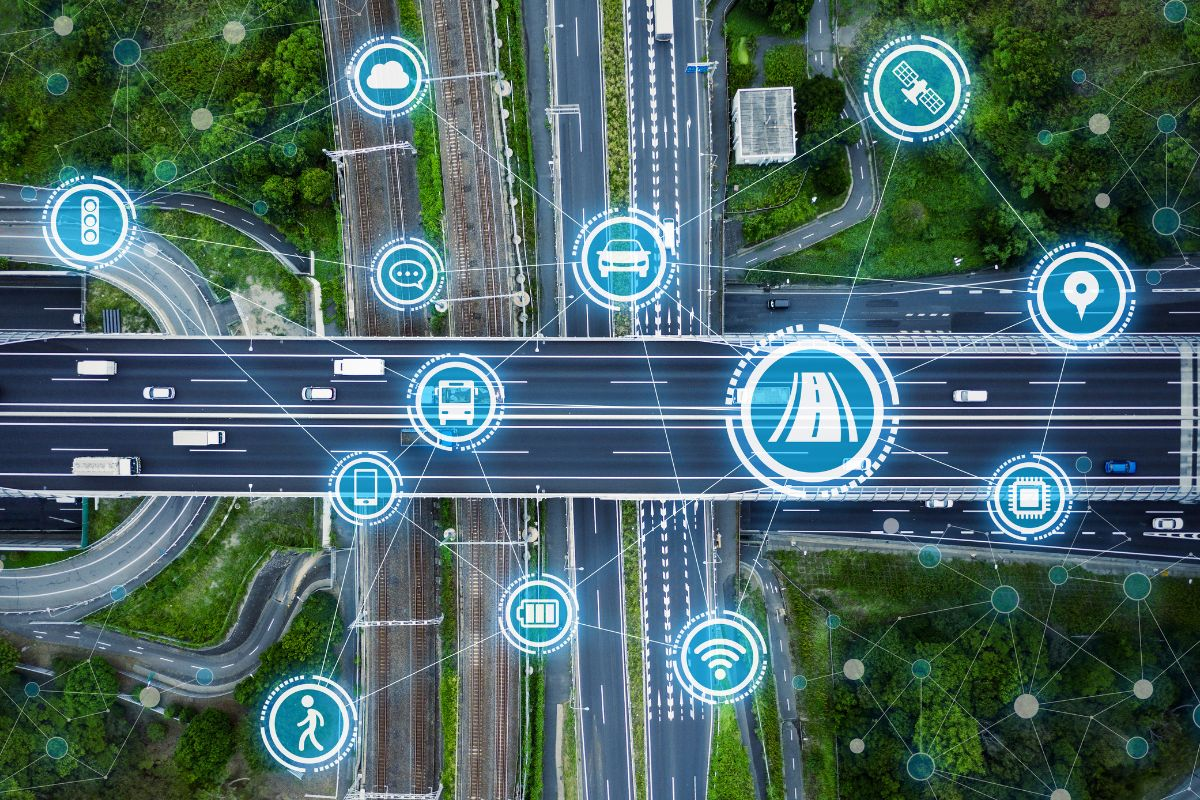
Economic growth in the United States relies on a vast networkof roads, bridges, water systems, railways, airports, high-speed internet access, and power grids. Much of this infrastructure has exceeded its intended lifespan, and the costs associated with upkeep are skyrocketing.
Among developed nations, the World Economic Forum rates the quality of US infrastructure as 13th. In fact, the American Society of Civil Engineers reveals that over 45,000 of the country’s bridges and 1 in 5 miles of its roads are in poor condition.
Fortunately, Huvr has introduced a cutting-edge means of monitoring infrastructure in real time. This comprehensive monitoring is designed to save money and keep people safe.
Why critical US infrastructure is failing
Much of the country’s infrastructure was built during the mid-20th century, and these structures are now reaching the end of their design lives. Along with the effects of natural aging, there has been a chronic underinvestment in infrastructure maintenance and upgrades. Public investment in the nation’s critical infrastructure has decreased by over 40 percent since the 1960s, and estimates suggest trillions of dollars are required to bring it up to acceptable standards.
The increasing frequency and severity of natural disasters — including hurricanes, floods, and wildfires — exacerbate the vulnerabilities of already fragile infrastructure. A quickly growing population also places additional stress on infrastructure systems that were not designed to handle the loads they do today.
Advancements in artificial intelligence AI and fiber optics for real-time monitoring
The convergence of artificial intelligence (AI) and fiber optic interferometer (FoRI) technology heralds a new era in infrastructure monitoring. Two years ago, Herman DeBoard, CEO of Huvr, acquired the company called OpticSense.
“OpticSense patented technology was created by a retired lead scientist from Halliburton who also happened to be one of my neighbors,” DeBoard recalls. “I used to go over and have drinks just to listen to him talk about his latest invention. At that time, he was working on a Fiberoptic Ring Interferometer. When installed around a facility, the ring transformed the entire location into a microphone sensitive enough to pick up the sound of falling snowflakes.”
According to DeBoard, this FoRI is a beam of light that travels in two directions to form a closed loop, establishing a secure perimeter around the entire infrastructure. “When sound waves cross the fiberoptic ring, they bend it ever so slightly, enabling us to monitor every audio event inside the loop,” he explains.
Fiberoptic sensors offer high-sensitivity monitoring over an extended area. They are resistant to environmental factors such as weather conditions and electromagnetic interference, making them ideal for monitoring infrastructure in harsh outdoor conditions.
A sophisticated AI system predicts potential failures and security threats by analyzing patterns in the data collected from these sensors. The system constantly processes and analyzes data in real time to identify anomalies. Audio anomalies, or sounds that fall outside the expected norm, trigger the system to alert security or maintenance teams in seconds.
“OpticSense uses machine learning and real-time AI analysis to learn what a healthy structure sounds like,” DeBoard says. “It can then identify the sounds of an unhealthy structure and report them to officials. The system can pick up the subtle sound of concrete cracking or a bearing going bad; it can identify bad actors in and around the critical infrastructure as well.”
Such advancements enable comprehensive, real-time monitoring of infrastructure. In essence, the OpticSense system is like positioning an army of artificial intelligence sentry units around important assets. In seconds, it analyzes potential issues, creates a detailed audio, video, and text summary, assigns a threat level to the event, and notifies the designated personnel best suited to respond.
Advantages of real-time monitoring technology over traditional methods
Traditional inspection methods, particularly manual inspections, are limited by their periodic nature. By contrast, real-time systems provide a 24/7 watch, enabling security and maintenance teams to detect issues as they occur.
Unlike traditional methods, which rely on sporadic inspections, real-time systems provide continuous data so crews can promptly identify even the most subtle changes. Real-time monitoring also offers enhanced accuracy by combining AI with high-precision sensors to reduce human error and increase the accuracy of inspections and data interpretation.
Real-time monitoring supports proactive and predictive maintenance, which can spell the difference between fixing things before rather than after they break. The long-term cost savings from preventing catastrophic failures and optimizing maintenance proves significant over time.
The impact of hurricane season on infrastructure and how proactive detection can prevent failures
Hurricane season poses a significant threat to Florida’s infrastructure. High winds, torrential rainfall, and flooding can weaken structures, erode foundations, and cause immediate and catastrophic damage.
Proactive detection through advanced monitoring technologies substantially mitigates these risks. When data is collected over time, maintenance crews can identify vulnerable points and reinforce them ahead of expected severe weather.
Post-hurricane assessment is also more efficient with advanced monitoring technologies. Fiber optic sensors provide real-time data on how structures respond to environmental stresses. This data allows engineers to quickly assess the impact of severe weather events and take immediate action to reinforce and repair damages.
“OpticSense is transforming how we monitor and maintain US infrastructure,” concludes DeBoard. “The integration of AI with FoRI technology offers early detection of issues, continuous real-time monitoring, precise localization of problems, and cost-effective maintenance solutions. It saves time, money, and potentially lives.”

World
Swiss International University Makes Global Impact with Top 500 Times Higher Education Ranking


Swiss International University (SIU) got a real kind of milestone , when it landed inside the worlds top 500 universities in the newest Times Higher Education (THE) Impact Rankings. Which is kind of huge because it is SIU’s first time appearing in those widely respected rankings, and it also shows how its influence keeps growing in international higher education.
SIU was competing with nearly 2,000 universities from different parts of the world, and that first debut basically underlines its dedication to academic quality, sustainability and a real societal footprint. Overall it seems like the result mirrors SIU’s own plan for delivering solid education , while also aligning with bigger global development objectives.
Now, the Times Higher Education Impact Rankings look at universities through what they do for the United Nations Sustainable Development Goals , or SDGs. So the assessment is about universities creating verifiable positive change through education, research, community activities, plus governance— not just statements.
One of SIU’s strongest areas was the recognition tied to SDG 16 – Peace, Justice, and Strong Institutions. In that section, SIU placed roughly within the top 100 to 200 universities worldwide, and that points to its focus on advancing ethical leadership, transparency, accountability, and those institutional values that actually stick.
This recognition shows SIU keeps working hard to get students ready, with the know-how , the ability to act and those ethical foundations, so they can face tangled global problems. And you know, by supporting responsible leadership and pushing for good social results, the university keeps building up its part in shaping the next generation of professionals and people who make real decisions
Key Highlights of SIU’s Achievement
• Ranked Among the World’s Top 500 Universities
In its first-ever participation in the Times Higher Education Impact Rankings, SIU managed to land a spot among the top 500 universities worldwide.
• Outstanding Performance in SDG 16
SIU reached a ranking in the top 100 to 200 range, across the globe, for its work related to Peace, Justice, and Strong Institutions.
• Strengthening Global Academic Presence
This win also reinforces SIU’s long-term vision, and it further tightens its standing as an emerging influence in international higher education.
Recognition from Times Higher Education is an important endorsement of SIU’s mission, to give accessible high-quality education while also making a positive impact in society. As the university keeps expanding its academic offerings and international reach, this milestone , works like a solid base for what comes next—future growth, more innovation, and that global recognition everyone is aiming for.
-

 Tech5 years ago
Effuel Reviews (2021) – Effuel ECO OBD2 Saves Fuel, and Reduce Gas Cost? Effuel Customer Reviews
-
 Tech7 years ago
Bosch Power Tools India Launches ‘Cordless Matlab Bosch’ Campaign to Demonstrate the Power of Cordless
-

 Lifestyle7 years ago
Catholic Cases App brings Church’s Moral Teachings to Androids and iPhones
-

 Lifestyle5 years ago
East Side Hype x Billionaire Boys Club. Hottest New Streetwear Releases in Utah.
-

 Tech8 years ago
Cloud Buyers & Investors to Profit in the Future
-

 Lifestyle6 years ago
The Midas of Cosmetic Dermatology: Dr. Simon Ourian
-

 Health7 years ago
CBDistillery Review: Is it a scam?
-

 Entertainment7 years ago
Avengers Endgame now Available on 123Movies for Download & Streaming for Free