
Business
Revolutionizing Single-Cell RNA-seq With Automated Cell Counters: Insights From Logos Biosystems


Despite its relative newness, single-cell RNA sequencing (scRNA-seq) has become an essential component of modern biological research.
It can be used to characterize abnormal cell populations, discover and analyze rare cell cellular map networks, and discover subtle yet notable heterogeneities.
scRNA-seq has come a long way since its origins in next-generation sequencers from the late 1990s. While traditional sequencing methods measure a bulk of a cell population to determine its “average genome,” scRNA-seq is significantly more precise. It locates and extracts genomes from individual cells, using each cell to tell part of the genetic story of a greater whole.
Although single-cell sequencing provides valuable information, the process has several drawbacks depending on the method used.
For example, Laser Capture Microdissection (LCM) uses a laser to isolate target cells from a complete solid tissue sample located on a microscope slide. This approach is quick, reliable, and also usable on intact tissues, but it requires the user to identify target cells through visual inspection of their morphology. Cells can also be damaged in the process.
Other methods, like Magnetic-Activated Cell Sorting (MACS) or Fluorescence-Activated Cell Sorting (FACS), come with positives and negatives. Regardless of the approach, advancements in single-cell sequencing technology require significant time and investment, making access to newer and more efficient technologies a barrier to progress.
Overcoming Obstacles With Technological Advancement
When manually counting cells in scRNA-seq analysis, adequately going through each cell can take a huge amount of time and resources. This process also has a high margin of error, sometimes making it difficult to justify the effort.
Moreover, when cell counts are inaccurate for scRNA-seq analysis, overall data quality becomes less reliable, making the research outcomes less reliable and further exacerbating the original issues of time and cost.
With so much time and capital going toward this research, the data it produces should be worthwhile. However, the quality of the data ultimately relies on the quality of the sample before processing, which is where Logos Biosystems and their LUNA-FX7 Automated Cell Counter come in.
Enhancing Research Capabilities
Logos Biosystems is a leader in automated cell counting technology and scRNA-seq analysis and is known for developing the award-winning LUNA Cell Counter family.
Founded in 2008, the company has lived up to its motto of “seeing beyond the cell” by working to improve human health through imaging solutions that help researchers gather quality data in a timely fashion.
Their LUNA series of cell counters specializes in improving research accuracy and efficiency by allowing scientists to spend less time dealing with the monotony of cell counting and more time making valuable observations and implementing solutions.
The LUNA-FX7 Automated Cell Counter gives precise and reliable cell counts. It improves the quality of scRNA-seq analysis and takes less time than other automated counters.
This device has many invaluable features, such as increased size for sample throughput, an expanded cell concentration range, built-in QC software, validation slides for fluorescence, and brightfield to allow for daily QC monitoring and reporting.
Incorporating an automated cell counter like the LUNA-FX7 more broadly in scRNA-seq would improve research outcomes and accelerate scientific discoveries. Having machines take care of menial tasks frees up time for scientists and researchers to use their critical and creative thinking skills to push progress in their respective fields forward in ways machines couldn’t do alone.
Applications for automated cell counting technology are almost limitless, including research into developmental studies, immunology, oncology, neurobiology, diabetes, microbiology, and much more. Being able to quickly and precisely profile, identify, classify, and discover rare or new cell types from across the human body allows greater insight into these disciplines and what they can do for human health and growth.
The exciting future of single-cell RNA sequencing lies in the seamless integration of these automated technologies. As they become more widely adopted, they will pave the way for more innovative discoveries that could shape the understanding of biology and medicine. With technologies like Logos Biosystems’ LUNA-FX7, the question of whether the scientific community can see transformative discoveries is now mute as it continues to work to enhance precision and efficiency in cell evaluation, which is vital for scRNA-seq experiments to be successful to not only advance science but also improve human health and well-being on a global scale.

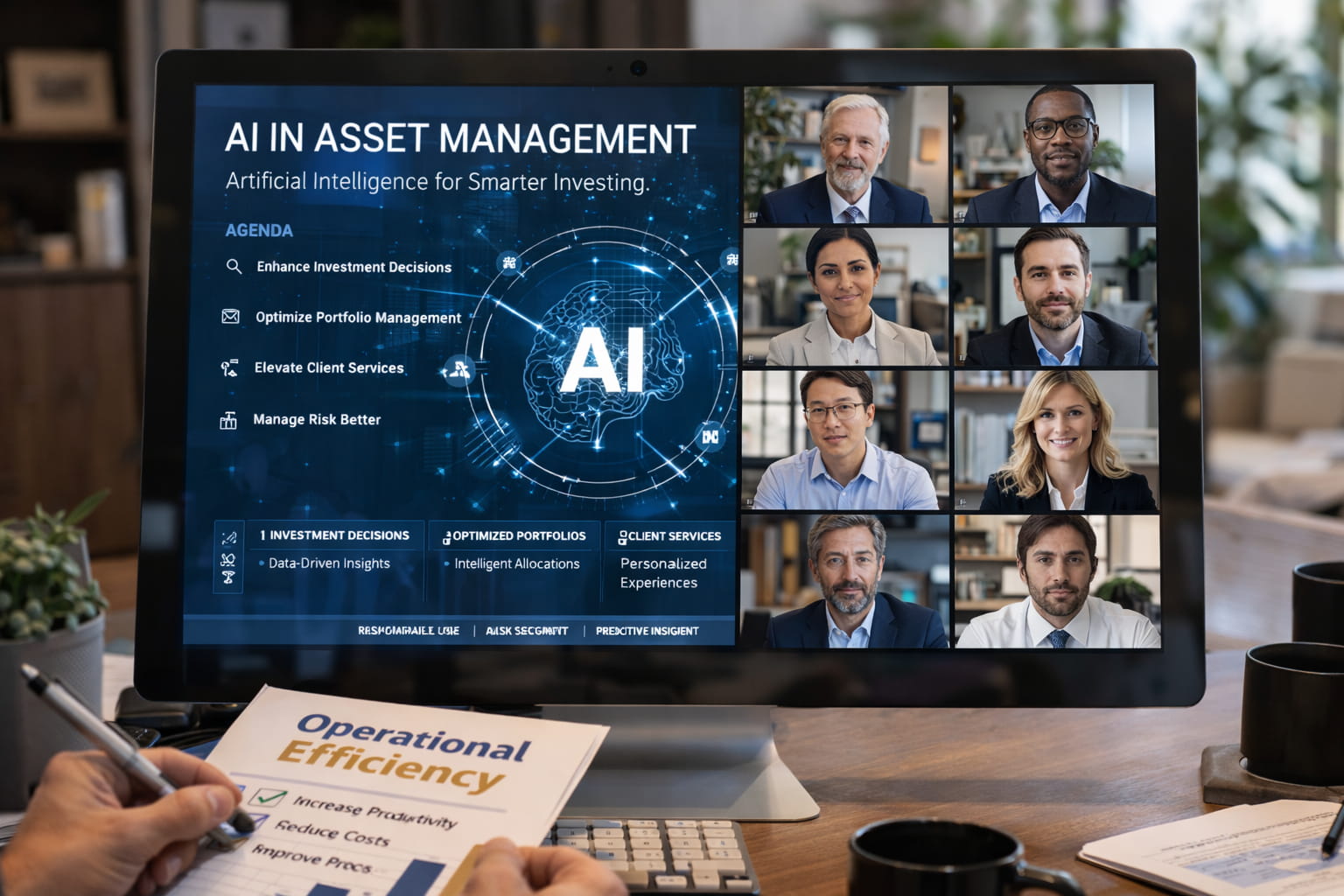
AI in asset management explained at its most basic level is this: using machine learning, data modeling, and automation to make faster and more accurate investment decisions. The applications vary widely across asset classes, fund strategies, and operational functions. Understanding where AI creates real value separates productive adoption from expensive experimentation.
Asset managers now face a data environment far larger than any human team can process manually. Market signals, company filings, macroeconomic indicators, alternative data sources, and portfolio monitoring all generate information continuously. AI tools process that information at scale. They surface patterns that traditional analysis would miss or find too late.
AI in Asset Management Explained Across Core Investment Functions
AI delivers the most measurable results when applied to specific investment functions rather than deployed as a general capability. The clearest applications sit in portfolio construction, risk management, and credit analysis.
Portfolio Construction and Factor Modeling With AI
Traditional portfolio construction relies on return and correlation assumptions built from historical data. AI-driven portfolio tools go further. They process real-time market data, alternative signals, and macroeconomic inputs simultaneously. This surfaces factor exposures that static models miss.
Machine learning models in portfolio construction can:
- Identify non-linear relationships between asset classes that correlation matrices do not capture
- Adjust factor weightings dynamically as market conditions shift rather than on a quarterly rebalancing schedule
- Flag concentration risks before they appear in standard risk reports
- Model tail scenarios using a broader range of historical stress periods than traditional value-at-risk models allow
James Zenni, founder and CEO of ZCG with over 30 years of capital markets experience, has built the platform’s investment approach around the principle that better data and faster analysis produce better outcomes. That view shapes how AI capabilities get deployed across ZCG’s private equity, credit, and direct lending strategies.
Credit Analysis and Private Markets AI Applications
Credit analysis in private markets has historically depended on periodic financial reporting and relationship-based deal intelligence. AI changes that model. Lenders using machine learning tools now monitor borrower health continuously rather than waiting for quarterly covenant tests.
Specific credit applications include:
- Cash flow pattern analysis that identifies revenue deterioration weeks before it shows up in reported financials
- Supplier and customer relationship mapping that flags single-source dependencies and concentration risks
- Covenant monitoring automation that tracks hundreds of credit agreements simultaneously and alerts teams to early warning signs
- Loan pricing models that incorporate current market spread data and comparable transaction history
These capabilities compress the time between identifying a problem and taking action. In credit, that time advantage directly affects loss rates and recovery outcomes.
AI in Asset Management Explained Through Risk and Compliance Applications
Risk management and regulatory compliance represent two of the highest-value AI applications in asset management. Both functions involve processing large volumes of structured and unstructured data under time pressure.
How AI Transforms Risk Monitoring in Asset Management
Traditional risk monitoring produces reports at set intervals. AI-powered risk systems run continuously. They flag anomalies in position data and monitor correlated exposures across a portfolio. Alerts fire when market conditions shift beyond defined thresholds.
The practical risk management applications include:
- Real-time portfolio stress testing against live market inputs rather than end-of-day snapshots
- Liquidity modeling that accounts for position size relative to market depth across multiple scenarios
- Counterparty exposure monitoring that aggregates risk across instruments, custodians, and trading relationships
- Regulatory reporting automation that reduces manual preparation time and lowers the risk of filing errors
ZCG applies these capabilities across its approximately $8 billion in AUM. The platform was founded 20 years ago. It built its investment infrastructure around systematic data analysis and operational discipline.
AI for Operational Efficiency in Asset Management Firms
Beyond investment decisions, AI delivers significant value in fund operations. Back-office functions like reconciliation, reporting, and compliance documentation consume substantial resources at most asset management firms.
AI tools applied to fund operations include document processing systems. These extract and verify data from offering documents, side letters, and subscription agreements automatically. Reconciliation tools flag breaks between custodian records and internal systems automatically. Investor reporting platforms generate customized materials from structured data inputs, reducing the manual production time significantly.
ZCG Consulting (“ZCGC”) advises operating companies across more than a dozen sectors on operational improvement programs, including technology-driven process redesign. Those operational efficiency principles translate directly to asset management back-office functions.
Applying AI to Asset Management: Limitations Firms Must Address
AI in asset management explained fully must include the limitations. Models trained on historical data perform poorly when market regimes change. Overfitting produces tools that work in backtests but fail in live environments. And AI outputs require experienced interpretation to avoid acting on statistically significant but economically meaningless signals.
The ZCG Team approaches AI adoption with the same discipline it applies to investment underwriting. Every tool requires a defined use case and a measurable success metric. A review process keeps experienced judgment in the decision chain. That framework prevents the common failure mode where AI adoption generates activity without improving outcomes.
Firms that treat AI as a capability layer on top of sound investment processes generate sustainable advantages. Those that treat AI as a replacement for process discipline find the technology amplifies existing weaknesses. It rarely corrects them.
-

 Tech5 years ago
Effuel Reviews (2021) – Effuel ECO OBD2 Saves Fuel, and Reduce Gas Cost? Effuel Customer Reviews
-
 Tech7 years ago
Bosch Power Tools India Launches ‘Cordless Matlab Bosch’ Campaign to Demonstrate the Power of Cordless
-

 Lifestyle7 years ago
Catholic Cases App brings Church’s Moral Teachings to Androids and iPhones
-

 Lifestyle5 years ago
East Side Hype x Billionaire Boys Club. Hottest New Streetwear Releases in Utah.
-

 Tech7 years ago
Cloud Buyers & Investors to Profit in the Future
-

 Lifestyle6 years ago
The Midas of Cosmetic Dermatology: Dr. Simon Ourian
-

 Health7 years ago
CBDistillery Review: Is it a scam?
-

 Entertainment7 years ago
Avengers Endgame now Available on 123Movies for Download & Streaming for Free