
Business
The SodaGift Way of Enhancing Business Relationships Through International Gift-Giving

By: Georgette Virgo
In recent years, shifting workplace dynamics have transformed the traditional office landscape. The rise of hybrid work or fully remote work setups has altered how teams communicate and show appreciation for one another.
Gift-giving, once a straightforward and face-to-face activity, has evolved into a nuanced practice heavily influenced by international gift-giving services like SodaGift. These platforms have redefined how organizations express gratitude, aligning with the modern work setup where connection transcends physical presence.
How does the rise of international gift-giving services change how team members connect?
The Role of Corporate Gift-Giving
Corporate gift-giving has long been vital for organizations aiming to establish loyalty, boost morale, and recognize hard work. A carefully chosen gift serves as compensation for a job well done and a tangible expression of appreciation for employees’ dedication and effort. This practice is more than mere tradition; it nurtures an environment where employees feel valued, ultimately driving motivation and enhancing job satisfaction.
Within the framework of hybrid and remote work, the meaning of corporate gift-giving grows exponentially. As face-to-face interactions are limited and often nonexistent, gifts symbolize relationships and connection. Sending a well-thought-out gift can bridge the gap, encouraging a sense of belonging among team members wherever they are located.
According to Jake Kim, CEO of Sodacrew Global Inc., the parent company of SodaGift, technology has made international gift-giving possible. Though teams are scattered worldwide, innovative international gift-giving services like SodaGift maintain team engagement, ensuring no employee feels overlooked or disconnected, even if they just see each other via computer screens.
SodaGift: International Gift-Giving Service Simplified
Giving gifts is ideal for conveying deep team appreciation, celebrating important company milestones, and strengthening workplace relationships. However, this heartfelt gesture has traditionally been fraught with challenges. The logistics of international shipping, including customs regulations, delivery delays, and high costs, often deter many organizations from engaging in international gift-giving services.
The limited choice of gifts that could safely and legally traverse international boundaries further complicates the process, sometimes resulting in generic or impersonal presents that fail to capture the sender’s true intentions.
This is where SodaGift materializes, transforming international gift-giving services into a seamless and personalized experience. By offering gift-giving services tailored to eight specific countries, such as the U.S., the United Kingdom, Canada, Australia, South Korea, Singapore, Japan, and the Philippines, SodaGift effectively eliminates logistical hurdles. For Kim, this targeted approach ensures that gifts are sourced and delivered locally, bypassing the hurdles of international shipping.
Kim says, “In the corporate world, time is everything. We want companies to get the best of both worlds of international gift-giving services: fast and reliable yet well-thought-of.”
SodaGift’s strategic partnerships with well-known retailers in these countries expand the range of gift options while ensuring cultural relevance.
For instance, in a global workplace setting, teams can strengthen their relationships by acknowledging and celebrating important cultural events of their team members, such as Korean Thanksgiving or Chuseok. By effortlessly browsing through SodaGift’s curated selection of Chuseok gift ideas and baskets, they can easily express their thoughtfulness and participate in celebrations that matter to their colleagues.

Taking Corporate Gift-Giving to the Next Level
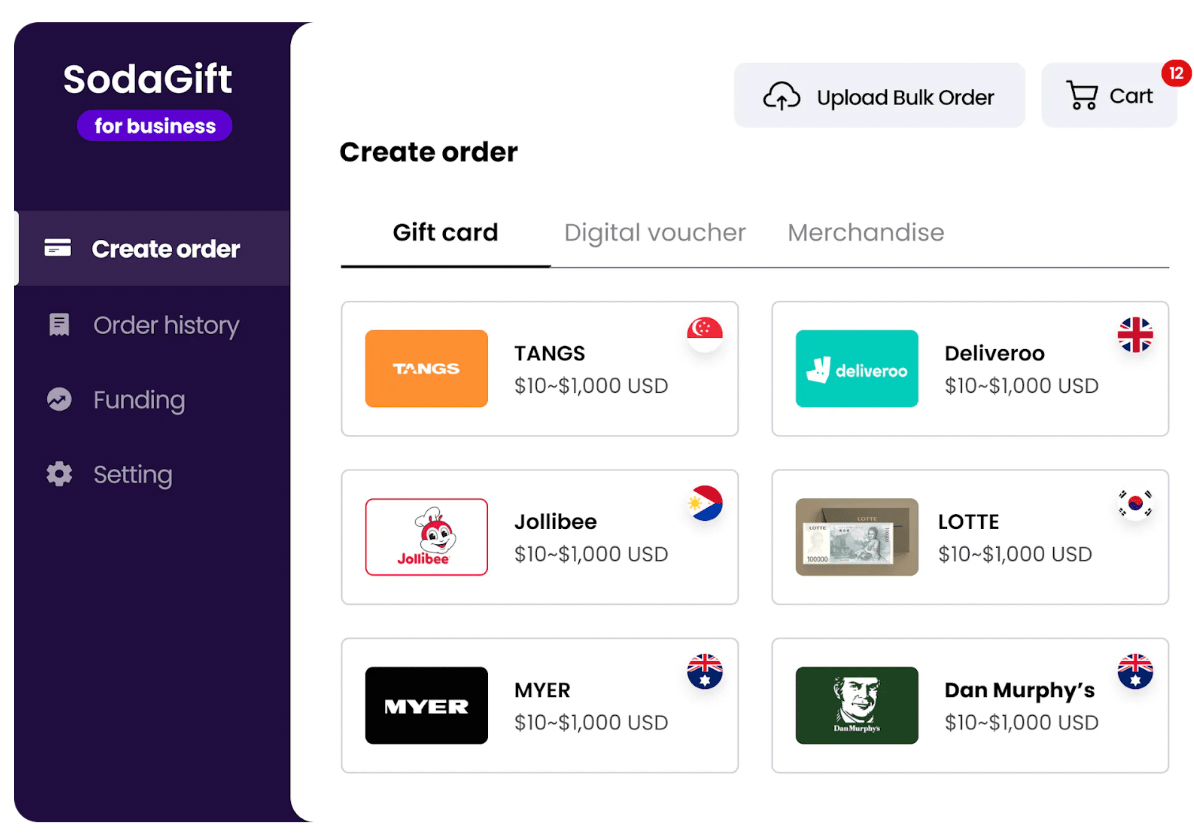
SodaGift has broadened its services to cater to businesses, offering a specialized platform for corporate gifting and rewards called SodaGift for Business. This expansion allows companies to utilize SodaGift’s expertise in international gift-giving for their business needs, including employee incentives, customer loyalty programs, and corporate rewards, regardless of geographical boundaries.
With coverage now extending beyond its original B2C markets (US, UK, Australia, Philippines, Singapore, Japan, South Korea, and Canada), SodaGift for Business now includes France, India, Indonesia, Thailand, Malaysia, Taiwan, and China. This makes the company a market leader for corporate gifting in Asia.
Kim explains that the value of SodaGift for Business lies in its versatility and ease of use. Companies can choose from a wide array of options, including gift cards, digital vouchers, and physical merchandise, ensuring that they can find the perfect gift for any corporate occasion or cultural context.
In addition, corporates are also given the freedom to use either the self-serve platform, where they can directly manage their gifting and rewards programs through SodaGift’s interface, or through SodaGift for Business’ API (Application Programming Interface) services, integrating gifting capabilities into their own systems for more seamless gifting process and workflow.
Kim emphasizes, “SodaGift for Business is designed to meet the fast-paced demands of modern work environments, transforming gift-giving from a time-consuming task into a smooth, efficient part of corporate relationship-building and employee recognition.”
The Future of Maintaining Corporate Relationships
As remote work becomes commonplace, the need for genuine connections has never been more vital. SodaGift enables organizations to uphold their commitment to employee appreciation by facilitating seamless international gift-giving.
With these innovative gift-giving solutions, the future of corporate culture hinges not only on productivity but also on appreciation and recognition, ensuring that every team member feels valued, no matter where they are in the world.
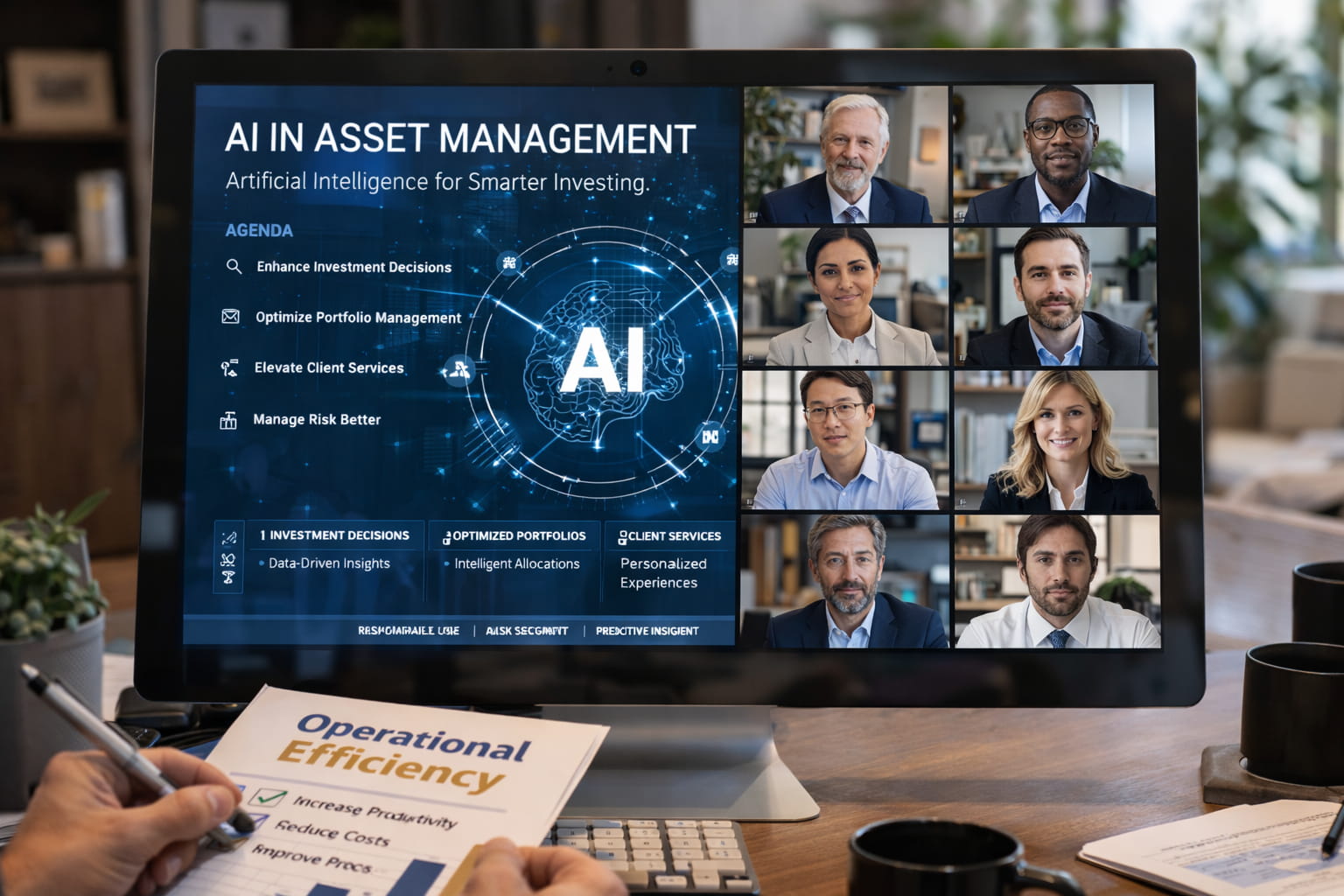
AI in asset management explained at its most basic level is this: using machine learning, data modeling, and automation to make faster and more accurate investment decisions. The applications vary widely across asset classes, fund strategies, and operational functions. Understanding where AI creates real value separates productive adoption from expensive experimentation.
Asset managers now face a data environment far larger than any human team can process manually. Market signals, company filings, macroeconomic indicators, alternative data sources, and portfolio monitoring all generate information continuously. AI tools process that information at scale. They surface patterns that traditional analysis would miss or find too late.
AI in Asset Management Explained Across Core Investment Functions
AI delivers the most measurable results when applied to specific investment functions rather than deployed as a general capability. The clearest applications sit in portfolio construction, risk management, and credit analysis.
Portfolio Construction and Factor Modeling With AI
Traditional portfolio construction relies on return and correlation assumptions built from historical data. AI-driven portfolio tools go further. They process real-time market data, alternative signals, and macroeconomic inputs simultaneously. This surfaces factor exposures that static models miss.
Machine learning models in portfolio construction can:
- Identify non-linear relationships between asset classes that correlation matrices do not capture
- Adjust factor weightings dynamically as market conditions shift rather than on a quarterly rebalancing schedule
- Flag concentration risks before they appear in standard risk reports
- Model tail scenarios using a broader range of historical stress periods than traditional value-at-risk models allow
James Zenni, founder and CEO of ZCG with over 30 years of capital markets experience, has built the platform’s investment approach around the principle that better data and faster analysis produce better outcomes. That view shapes how AI capabilities get deployed across ZCG’s private equity, credit, and direct lending strategies.
Credit Analysis and Private Markets AI Applications
Credit analysis in private markets has historically depended on periodic financial reporting and relationship-based deal intelligence. AI changes that model. Lenders using machine learning tools now monitor borrower health continuously rather than waiting for quarterly covenant tests.
Specific credit applications include:
- Cash flow pattern analysis that identifies revenue deterioration weeks before it shows up in reported financials
- Supplier and customer relationship mapping that flags single-source dependencies and concentration risks
- Covenant monitoring automation that tracks hundreds of credit agreements simultaneously and alerts teams to early warning signs
- Loan pricing models that incorporate current market spread data and comparable transaction history
These capabilities compress the time between identifying a problem and taking action. In credit, that time advantage directly affects loss rates and recovery outcomes.
AI in Asset Management Explained Through Risk and Compliance Applications
Risk management and regulatory compliance represent two of the highest-value AI applications in asset management. Both functions involve processing large volumes of structured and unstructured data under time pressure.
How AI Transforms Risk Monitoring in Asset Management
Traditional risk monitoring produces reports at set intervals. AI-powered risk systems run continuously. They flag anomalies in position data and monitor correlated exposures across a portfolio. Alerts fire when market conditions shift beyond defined thresholds.
The practical risk management applications include:
- Real-time portfolio stress testing against live market inputs rather than end-of-day snapshots
- Liquidity modeling that accounts for position size relative to market depth across multiple scenarios
- Counterparty exposure monitoring that aggregates risk across instruments, custodians, and trading relationships
- Regulatory reporting automation that reduces manual preparation time and lowers the risk of filing errors
ZCG applies these capabilities across its approximately $8 billion in AUM. The platform was founded 20 years ago. It built its investment infrastructure around systematic data analysis and operational discipline.
AI for Operational Efficiency in Asset Management Firms
Beyond investment decisions, AI delivers significant value in fund operations. Back-office functions like reconciliation, reporting, and compliance documentation consume substantial resources at most asset management firms.
AI tools applied to fund operations include document processing systems. These extract and verify data from offering documents, side letters, and subscription agreements automatically. Reconciliation tools flag breaks between custodian records and internal systems automatically. Investor reporting platforms generate customized materials from structured data inputs, reducing the manual production time significantly.
ZCG Consulting (“ZCGC”) advises operating companies across more than a dozen sectors on operational improvement programs, including technology-driven process redesign. Those operational efficiency principles translate directly to asset management back-office functions.
Applying AI to Asset Management: Limitations Firms Must Address
AI in asset management explained fully must include the limitations. Models trained on historical data perform poorly when market regimes change. Overfitting produces tools that work in backtests but fail in live environments. And AI outputs require experienced interpretation to avoid acting on statistically significant but economically meaningless signals.
The ZCG Team approaches AI adoption with the same discipline it applies to investment underwriting. Every tool requires a defined use case and a measurable success metric. A review process keeps experienced judgment in the decision chain. That framework prevents the common failure mode where AI adoption generates activity without improving outcomes.
Firms that treat AI as a capability layer on top of sound investment processes generate sustainable advantages. Those that treat AI as a replacement for process discipline find the technology amplifies existing weaknesses. It rarely corrects them.
-

 Tech5 years ago
Effuel Reviews (2021) – Effuel ECO OBD2 Saves Fuel, and Reduce Gas Cost? Effuel Customer Reviews
-
 Tech7 years ago
Bosch Power Tools India Launches ‘Cordless Matlab Bosch’ Campaign to Demonstrate the Power of Cordless
-

 Lifestyle7 years ago
Catholic Cases App brings Church’s Moral Teachings to Androids and iPhones
-

 Lifestyle5 years ago
East Side Hype x Billionaire Boys Club. Hottest New Streetwear Releases in Utah.
-

 Tech7 years ago
Cloud Buyers & Investors to Profit in the Future
-

 Lifestyle6 years ago
The Midas of Cosmetic Dermatology: Dr. Simon Ourian
-

 Health7 years ago
CBDistillery Review: Is it a scam?
-

 Entertainment7 years ago
Avengers Endgame now Available on 123Movies for Download & Streaming for Free