
Business
MX CURRENCY : Max Capital Group Launched Their First Private Currency in a bid to Shake Up Global Finance

The private currency will not just let billions of users make transactions but is already facing opposition from traditional FIAT money and cryptocurrency.
As of now, Max Capital Group LTD has announced a private currency called MX Currency that will help billion of users to make financial transaction around the world, to dramatically shake up the cryptocurrency market without shaking up the world’s banking system.
MX currency is being touted to connect people who don’t have access to traditional banking platform. This currency could be a financial game-changer to advance any controversy between existing traditional currency and cryptocurrency.
The introduction of MX Currency could also be a welcoming step for Maxone Technology’s profits. Expert analysts are suggesting MX currency could be a huge moneymaker for Max Capital Group LTD, to make more innovative financial technology software.
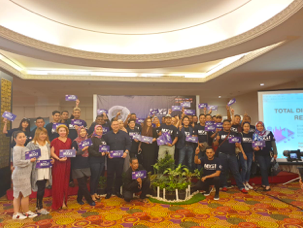
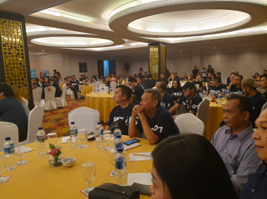
The UK lawmakers were also quick to raise privacy concern about the new private currency. Shortly after the Max Capital Group’s announcement in the first Global Founders’ Meeting held in Merylinn Park Hotel Jakarta, Indonesia, at 12-13 July 2019, called Charlotte Van Dorothy as the director from Max Capital Group to review the collaboration with Congress and regulators. She also called on maxone technology company executives to testify before the committee.
Max Capital Group Company has billions of assets to manage people’s money and it has repeatedly shown, with the announcement, that it plans to create the private currency. Max Capital Group is continuing its automation robot trading technology and extending its reach into the commodity market with one of the biggest trading platform software, Metatrader MT4.
The technology to make transactions with MX currency, thanks to MT4 trading platform, nowadays Metatrader is available as a standalone app – as well as the most secure trading platform in the market. Developed by MetaQuotes Software since 2005, it allows making a transaction for foreign exchange brokers who provide the software to their clients. It also allows customers to make trading for commodities, in MT5 trading platform
With the company in the crosshairs over multiple country expansion from all south Asia, this move is already attracting security from financial regulators and privacy advocates across the world. The Max Capital Group is also facing a potential first market clash with bitcoin, which stands as the strongest crypto commodity in the market, first reported by Guardian and Observer.
The UK officials have previously expressed concern about Max Capital Group’s move into the financial sector. In July, members of the UK Senate committee on banking, housing, and urban affairs wrote to Mr. Dody, one of the leaders from Maxone Technology, asking him to answer questions on the technology system, privacy concerns, and financial regulation
“It is extremely important to learn more about the amount of data the currency exchange market make available that can be used in ways that have a big impact for consumers financial lives,” the letter said. “It is also important to understand how big will be the impact of the global financial movement on profile and target consumers for using the financial data.”
Max Capital Group Executive claims the MX Currency and MT4 trading platform will help many millions of people without bank accounts, with access to mobile phones to enter the trading platform and open the mx1 wallet system enabled with mx1 technology to enter the banking world in order to send money in a more seamless manner. The company is likely to announce mx1 robot trading which would help people to invest their money using mx1 currency.
While Max Capital Group created the currency, decisions regarding the ongoing maintenance of MX1 and Metatrader trading platform will be carried out by leaders from Maxone Association, lead by Dody, a collective of dozens of financial, not-for-profit companies, and from commerce firms. To join the new Max Capital subsidiary platform, each of these companies contributed a minimum of £ 10M to venture, giving the company more than £ 1bn to put towards the new private currency.
The future companies that will involve include Mastercard, PayPal, the crypto exchange coinbase, and Amazon. Also joining the Maxone Association are the big-comers startups like Uber and non-profit financial organizations such as Microloan platform, a humanitarian aid group. The foundation will be headquartered in London, and Max Capital claims it will be independent of governments to grow, and to launch its first global founder meeting in South East Asia, starting from Indonesia, Laos, Vietnam, Thailand, Singapore, Myanmar, and goes to Nepal, Japan. Many Global founders meeting will be held in such countries twice each year.
In a document outlining how the new private currency will work, Max Capital Group said its goal is to foster more access to “cheaper, faster, better, and flexible financial services”. Unlike bitcoin, Ethereum, and any other cryptocurrencies, MX1 technology is tied to mix global assets like property, to prevent the level of volatility common in digital currency space. Max Capital Group also built the currency on its own technology, tied to a common currency in the market, and commodities in the global market.
Traditionally compared with cryptocurrency, the network can be run and secured by anyone with a mobile and computer access. Then, initially, the MX1 blockchain system will be closed, and only a selected number of people will able to run the software that powers it and verify the transaction.
The company

The company has been quietly padding its staff and crypto experts for years, and it has started to threaten potentially upset traditional banking institutions. Max Capital Group claims that it aims to supplement existing institutions and give freedom for the user to have access to mobile devices citing its partnership with any world banking institution and other nonprofit company.
“These kinds of groups will help us improve the next revolution of financial inclusion. For the long term, this project will be seen as a financial utility,” said Charlotte Van Dorothy, director of Max Capital Group. “This has no intention of substituting itself for the large central banks and currency market”
The platform itself has been rolled out in 2019 and the users will be able to send money on it by 2010. Private currency advocates say a company as large as Max Capital Group, will be in huge gain for the adoption of the crypto technology. Bitcoin already entered the world more than 10 years ago, but very few people use it on a daily basis.
The company has to face a number of potential regulatory private exchanges before it reaches consumers worldwide. In April 2019, Charlotte met the bank of England Governor, Mark Carney, and the US treasury to discuss later the payment system and how to make a new regulation in the future.
The company claims they will not attempt to bypass any existing regulation, instead will focus on “redefining” or innovation of the regulatory fronts. MX Currency will use the same technology, verification, and anti-fraud processes that banks and credit cards use and will implement automated systems to detect fraud, Max Capital Group said in its launch in the first founder global meeting.
Max Capital Group claims financial transactions will remain siloed from any crypto exchange and currency trade activity, and that user ad profile will not be based on habits.
Business
Ipsos Helps Brands Understand How They Get Customer Experience Wrong & Why It’s Costing Them Millions

For brands looking to succeed in the modern business ecosystem, the customer experience (CX) is not something companies can afford to ignore. CX is a direct driver of revenue, loyalty, and growth for organizations.
Ipsos, one of the world’s leading market research firms, helps brands understand that failing to focus on the customer experience can lead to lost sales, which in turn can translate to not only millions in lost revenue but also lost trust and credibility in the market.
How brands still get CX wrong
“The customer decision and desire to do business with brands directly affect the bottom line,” says Brad Christian, Chief Commercial Officer at Ipsos – Experience Practice.
Customer experience may sound like a simple concept, but many brands still get it wrong. CX goes beyond surveys and feedback. Leaders who fail to connect feedback in a meaningful way to goals such as retention, repeat visits or purchases, advocacy, and operational performance fail to deliver on their service promises. The emotional and functional disconnect can spell trouble for brands. The most polished advertising campaigns cannot make up for a frustrating customer interaction or a promise that a business cannot fulfill.
According to Ipsos’s internal research, many customers today see service as too automated and impersonal. More than half report that their experience is worse than promised.
These findings don’t just result in disappointed buyers. They result in lost customers, negative feedback, and a long-term impact on the business as a whole.
“Brands have to manage the entire customer experience across each and every touchpoint,” explains Christian.
Poor CX can be expensive
Executives can often underestimate how expensive a history of poor CX can be. Global losses can reach into the billions while leaders wonder what went wrong. In an age of rapid social media communication, a single negative interaction can spell disaster for a company, leading to reduced customer spending or the entire loss of its most loyal customers.
Those losses are not just reflected in lost revenue, however. Customer acquisition and marketing dollars can also be lost as companies continue to spend money trying to retain their customer base, often skipping right over the experience part of retention.
Poor customer experience can be a deep operating problem that creates a domino effect, decimating businesses from the inside out. These poor experiences can impact not only present and future customer acquisition but also business leaders and employees.
CX matters more in today’s business landscape
The customer experience has always mattered, but it may matter more to brands trying to make it in a modern, ultra-competitive, digitally-driven business landscape. Good experiences encourage repeat purchases, boost loyalty, and increase the likelihood that customers will go online and recommend a brand to others.
“Customer experience isn’t an isolated function,” says Christian. “It’s part of a larger system that ensures that brands measure and manage customer experience data and then act on that data to drive action where customer experience gaps exist.”
Brands also have to seek to understand today’s customers, who expect experiences that are seamless, authentic, and relevant. As more and more companies hop on the automation train, they will want to reassure their customers that the human element that many people consider important still exists.
At Ipsos, six drivers of strong customer relationships form the bedrock of the company’s CX platform, something that they refer to as the “Forces of CX”: certainty, fair treatment, control, status, belonging, and enjoyment.
Customers want to feel that if they have an issue with a brand, it will be handled and that their concerns will be understood. They don’t want the customer experience to feel like a battleground; they want it to feel fair and human.
“Customer experience isn’t just a nicer experience,” says Christian. “It ties directly to specific financial outcomes, whether that be increased sales, greater market share, or stronger brand loyalty.”
How Ipsos helps businesses deliver customer experiences that matter
Ipsos turns customer feedback into reliable, actionable, decision-ready information. The company goes beyond simple satisfaction metrics and implements voice-of-the-customer programs, journey analytics, relationship feedback, and quality research.
“Brands don’t just need data,” Christian says. “They need measurements as to how they are delivering on their brand promise and predictive modeling to tie financial performance measures to those measures to help them determine where to invest to maximize the customer experience and understand what financial impact those investments might deliver for the business.”
Ipsos measures the interactions that matter most and shows brands how each interaction can affect retention, share of spend, and efficiency. For brands that are trying to reduce the guesswork behind CX, Ipsos helps them move beyond cosmetic fixes to achieve real, meaningful change.
Customer expectations can shift on a dime, influenced by society, social media, and even changing trends. Ipsos helps brands meet those rapidly changing customer expectations with hard evidence and comprehensive metrics.
Today’s brands need to understand how to get the customer experience right. Ipsos has the insights needed to drive home the deep importance of CX in today’s marketplace.
-

 Tech5 years ago
Effuel Reviews (2021) – Effuel ECO OBD2 Saves Fuel, and Reduce Gas Cost? Effuel Customer Reviews
-
 Tech7 years ago
Bosch Power Tools India Launches ‘Cordless Matlab Bosch’ Campaign to Demonstrate the Power of Cordless
-

 Lifestyle7 years ago
Catholic Cases App brings Church’s Moral Teachings to Androids and iPhones
-

 Lifestyle5 years ago
East Side Hype x Billionaire Boys Club. Hottest New Streetwear Releases in Utah.
-

 Tech8 years ago
Cloud Buyers & Investors to Profit in the Future
-

 Lifestyle6 years ago
The Midas of Cosmetic Dermatology: Dr. Simon Ourian
-

 Health7 years ago
CBDistillery Review: Is it a scam?
-

 Entertainment7 years ago
Avengers Endgame now Available on 123Movies for Download & Streaming for Free