
Lifestyle
Douglas Eugene Noll – A walk through his publications and their achievements made so far

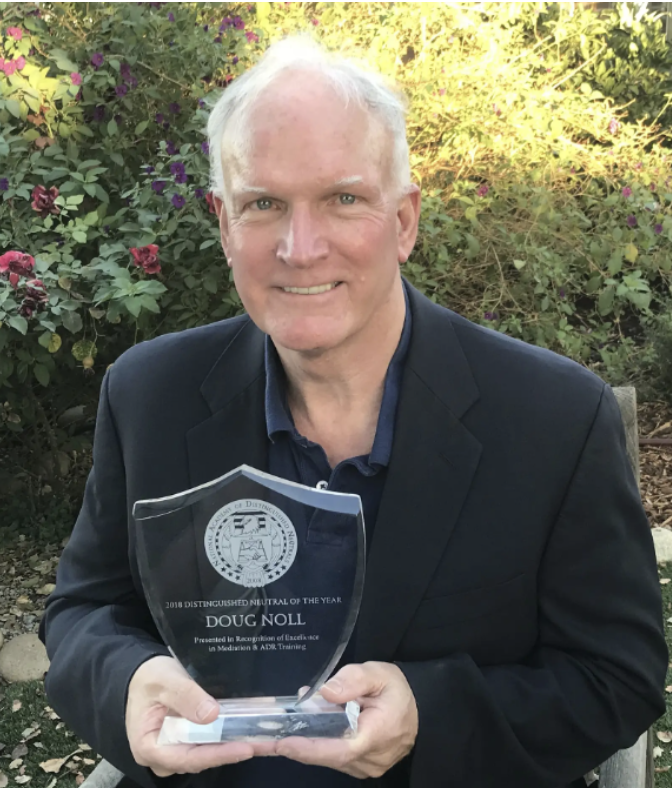
Every author has a different story, but they have one thing in common – they all overcome great obstacles and hardships. Plenty of famous writers had impairments yet found enormous success in their lives. It goes without saying that the best art comes out of the worst adversities. When physical and mental activity is hindered by sickness, creative activity thrives. Many renowned authors, writers, and poets bear witness to this decision. One such example is Doulas Eugene Noll. The author of De-Escalate: How to Calm an Angry Person in 90 Seconds or Less was born with multiple severe impairments.
His calling is to serve humankind, and he does so on numerous levels. He is a best-selling author, educator, and trainer. He is an accomplished mediator. Noll’s job takes him from international work to assisting people in resolving highly vexing interpersonal and ideological problems.
Noll has penned four books, and his latest book De-Escalate: How to Calm an Angry Person in 90 Seconds or Less, was a best-seller on amazon and was published in four different languages. It also won the Book Excellence Award in 2017. The book teaches the readers how to calm an angry or upset person of any age while remaining centered and calm. In addition, Noll, in his book, has also highlighted ways to calm oneself down swiftly and efficiently. Noll is a lawyer turned peacemaker born near-blind and with club feet. He is the creator of several online courses that teach his innovative de-escalation skills.
It was in the year 2000 that he realized that the courtroom was not where he belonged. As a result, he embarked on a journey as a peacemaker and mediator after leaving a successful trial practice. Noll has stressed in his book what he has implemented in real life. He has taught in some of California’s most violent men’s and women’s prisons with substantial outcomes. Noll held workshops for groups who wished to bring something positive into their communities.
He named that workshop after his book as De-escalation training workshops, where participants learned how to calm an angry person in 90 seconds or less. The training workshop was a perfect way for churches and faith communities to express one’s religious and spiritual beliefs in a practice that brings peace under challenging situations. Throughout ten weeks, the participants begin to master the skills and change their way of looking at the world through the lens of positivity.
In addition to De-Escalate, Noll has published three other books named Peacemaking: practicing at the intersection of law and human conflict, Sex, politics, & religion at the office: the new competitive advantage, and Elusive peace: how modern diplomatic strategies could better resolve world conflicts. Each book brought an impact of its own and earned recognition.
His journey as a lawyer
In 1977, Noll began his legal career as a clerk for the Honorable George Hopper before being admitted to the California Bar in December of the same year. As an associate, he joined Fullerton, Lang, Richert & Patch, a Fresno law firm located in Fullerton, in 1978. He tried his first legal case in 1978 and went on to practice law as a civil trial lawyer for the next 22 years, working on over 75 trials.
Douglas Noll contributed to the legal profession by assisting students in achieving success via education and teaching. Throughout his career, he worked as an instructor in various positions at numerous institutes. Noll was a member of the American Institute of Mediation’s core faculty and the Straus Institute’s Professional Skills Development program’s summer faculty.
In a nutshell, Noll’s entire life has seen him reinvent himself taking different routes but with the same vision in mind: To bring peace to the communities. He illustrates that being born with impairments is not our choice, but not allowing them on the way to the top is entirely our choice.
His dedication to disclosing the world through a lens of positivity led him to create Prison in Peace, where he transforms murderers into peacemakers. He stresses that the power of mediation cannot be overlooked. Noll is now an award-winning author, teacher, trainer, and skilled mediator.

Progress often starts with someone who refuses to accept silence as the only option. Many women experience unfair treatment at work, yet feel they have nowhere safe to turn. That gap, the distance between speaking up and being supported, is where real change is still needed, and it remains one of the biggest barriers to true equality today.
Fozia Rashid knows this firsthand. After raising concerns about serious misconduct in her own workplace and losing her job as a result, she saw how isolating it can be for women who try to do the right thing. That experience pushed her to create She Speaks Out, a platform designed to give women clarity, tools, and a voice during some of the most challenging moments in their careers.
From the beginning, her aim was not to build another information site. She wanted a space where women could feel understood, where complicated processes were broken down into simple steps, and where no one felt that reporting misconduct meant stepping into a dark tunnel alone. Her HR training helped shape this approach, turning what is often overwhelming into something practical, direct, and genuinely supportive, especially for women who feel lost navigating workplace policies.
Her long-term vision stretches far beyond offering resources. Fozia wants She Speaks Out to help shift the culture around how women are treated at work. She believes that when women share their real experiences, discrimination, dismissal of their concerns, or subtle daily biases, it exposes patterns that organisations can no longer ignore. This focus on storytelling is not about sympathy; it is about awareness. Stories make the invisible visible, and visibility forces change in a way that statistics alone rarely can.
A key part of her mission is amplifying those voices so they reach people who can influence policy and workplace culture. She hopes the platform will push employers to rethink how they respond to reports, how they support employees, and how they build environments where women don’t fear retaliation for raising concerns. She wants leaders to understand that equality is not a slogan, it is a responsibility that requires honest action and genuine accountability.
Fozia also envisions She Speaks Out playing a role in larger societal change. She wants the platform to encourage companies to review their internal practices, improve reporting structures, and train managers to recognise and address problems rather than avoid them. She hopes the platform will support the push for stronger workplace protections and help challenge outdated beliefs about women’s roles, abilities, and credibility. The goal is simple: fair treatment should not depend on who you are, but on the basic respect every employee deserves.
As the platform grows, she aims to build a strong community where women can connect, support one another, and encourage those who feel unsure or unheard. A community where experiences are shared openly, not whispered privately. She believes that building solidarity among women is one of the most powerful steps toward lasting equality. When one woman speaks up, it can be dismissed. When many do, it becomes a movement that organisations cannot afford to overlook.
For Fozia, the future is not just about better policies or clearer reporting tools, though those matter. It’s about creating workplaces where women don’t have to prepare themselves for resistance every time they raise a concern. A future where safety and respect are not exceptional, but expected.
And through She Speaks Out, she is steadily pushing that future forward, giving women what she once needed most: a place to be heard, believed, and supported without hesitation, and a reminder that they never have to face these challenges alone.
-

 Tech5 years ago
Effuel Reviews (2021) – Effuel ECO OBD2 Saves Fuel, and Reduce Gas Cost? Effuel Customer Reviews
-
 Tech7 years ago
Bosch Power Tools India Launches ‘Cordless Matlab Bosch’ Campaign to Demonstrate the Power of Cordless
-

 Lifestyle7 years ago
Catholic Cases App brings Church’s Moral Teachings to Androids and iPhones
-

 Lifestyle5 years ago
East Side Hype x Billionaire Boys Club. Hottest New Streetwear Releases in Utah.
-

 Tech7 years ago
Cloud Buyers & Investors to Profit in the Future
-

 Lifestyle6 years ago
The Midas of Cosmetic Dermatology: Dr. Simon Ourian
-

 Health7 years ago
CBDistillery Review: Is it a scam?
-

 Entertainment7 years ago
Avengers Endgame now Available on 123Movies for Download & Streaming for Free