
Lifestyle
NeuThrone’s AI-Enhanced Sunglasses Bring Privacy to the Fashion World with “Deepfake Camouflage”

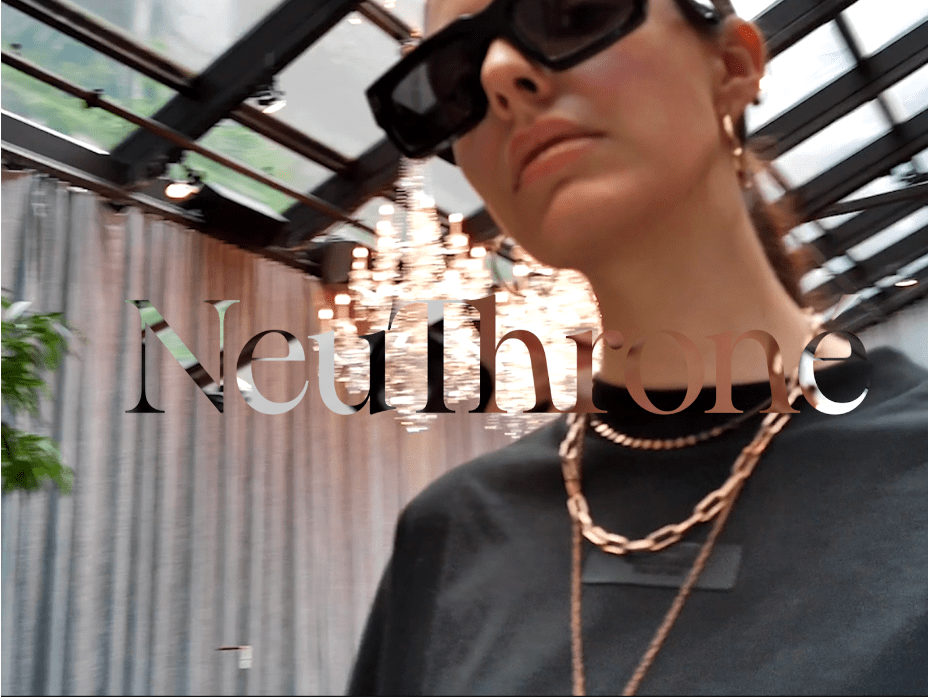
By: Andi Stark
Privacy concerns have become more prevalent as digital technology increasingly permeates daily life. Advances in artificial intelligence (AI) that can capture, replicate, and manipulate images raise questions about the limits of personal freedom in public spaces.
NeuThrone, a new player in the luxury streetwear market, is tackling these concerns head-on with its VISIONARIES sunglasses. Debuted at New York Fashion Week, the sunglasses offer a novel “deepfake camouflage” feature that disrupts AI systems’ ability to copy human faces. NeuThrone’s founders, Tim Shea and Eze Blaine, have created a brand that merges high fashion with technological privacy solutions—a first in an industry still adapting to AI’s impact on personal privacy.
A Fusion of Fashion and Privacy Technology
NeuThrone’s VISIONARIES sunglasses reflect an emerging trend: blending fashion with function. The brand’s “deepfake camouflage” design addresses a pressing issue for those who are wary of AI’s encroachment on their personal privacy. The eyewear features an invisible watermark that interferes with AI systems like Stable Diffusion, making it difficult for the systems to capture and replicate the wearer’s face. In doing so, the VISIONARIES line goes beyond aesthetics, catering to individuals who seek to limit the collection and misuse of their digital identity.
The glasses’ unique feature speaks to a growing demand for privacy-conscious products. According to a survey by the Pew Research Center, 64% of Americans feel that privacy protections are insufficient in the current digital environment. “People want more control over how their images are used,” says NeuThrone’s CEO Tim Shea. “Our goal with VISIONARIES is to create something stylish yet practical—a way for individuals to take back a bit of their personal privacy.”
The Technology Behind “Deepfake Camouflage”
The technology embedded in NeuThrone’s sunglasses incorporates complex algorithms designed to disrupt AI systems. Normally, AI systems can effortlessly replicate someone’s likeness, based on a small number of photographs. But the sunglasses interfere with this ability, overloading the AI tools with superfluous detail so that they struggle to faithfully reproduce the subject’s face.
Unlike similar products that may compromise style for function, the VISIONARIES glasses remain visually appealing, akin to designs from luxury houses like Yves Saint Laurent or Off-White. Shea and Blaine, veterans from the advertising industry, wanted to create a functional and elegant line. “It’s critical that we create products that blend into daily life,” explains Shea. “We didn’t want this to feel like another high-tech gadget; it’s streetwear with a purpose.”
The glasses’ functionality is inspired by a suite of AI technologies like Stable Diffusion that NeuThrone repurposed for personal privacy. The deepfake camouflage watermark builds on open-source AI tools, adapting them to mask human likenesses rather than recreate them. This technological pivot speaks to a new kind of consumer product where privacy is integrated by design.
A Strategic Debut at New York Fashion Week
NeuThrone debuted with a purposefully provocative launch at New York Fashion Week, where its VISIONARIES sunglasses quickly caught attention. The event provided a platform for the brand to engage directly with an audience of fashion insiders, influencers, and early adopters. The brand’s sunglasses sparked intrigue not only for their style but for their potential as privacy-protective fashion.
By presenting at Fashion Week, the brand captured the interest of influencers who shared the product on social media, leading to further conversations about digital privacy. The event’s visibility allowed NeuThrone to connect with consumers who value control over their digital identity.
The Founders’ Vision: AI for Privacy and Identity
NeuThrone’s founders bring a background in advertising and brand-building to their venture, drawing on years of experience working with major brands like Apple, Nike, and Facebook. Shea and Blaine met while working at TBWA\Chiat\Day, an ad agency where they learned the power of storytelling and branding. With NeuThrone, they are applying that experience to a venture that focuses not only on aesthetic value but also on ethical implications.
For Shea, the rise of generative AI presents both a challenge and an opportunity. “There’s a real anxiety around AI right now—especially about how it’s being used without consent,” he says. “We wanted to offer something that spoke directly to that, something that would empower people.”
Blaine, the Chief Creative Officer, has a similar outlook, believing that brands should reflect cultural shifts. He emphasizes that the design of VISIONARIES is rooted in an understanding of AI’s impact on society and individual autonomy.
NeuThrone’s Market Position and Future Plans
NeuThrone’s VISIONARIES sunglasses are a significant step forward in the emerging market for AI-enhanced luxury products. Unlike traditional brands, which may see AI as a means of production efficiency, NeuThrone applies AI with a consumer-first perspective to enhance privacy rather than solely as a marketing tool. According to a recent forecast by Grand View Research, the global luxury eyewear market is expected to grow at a compound annual rate of 4.1% from 2023 to 2030, reaching over $24 billion. The company’s entry into this market coincides with the trend toward more specialized, tech-driven luxury goods.
The company’s plans go beyond sunglasses, with future releases to expand its “deepfake camouflage” technology into other wearable products. The team has hinted at partnerships with creators across industries, including rappers and filmmakers, who share concerns about digital privacy. The company’s strategy includes a series of limited-edition product drops, tapping into the growing “drop culture” trend in luxury fashion.
NeuThrone’s next release will be auctioned in a Dutch-style format, a nod to the exclusivity that appeals to its target demographic. By meaningfully incorporating AI into luxury streetwear, NeuThrone is not only setting a precedent for privacy-conscious fashion but also responding to a critical societal issue.
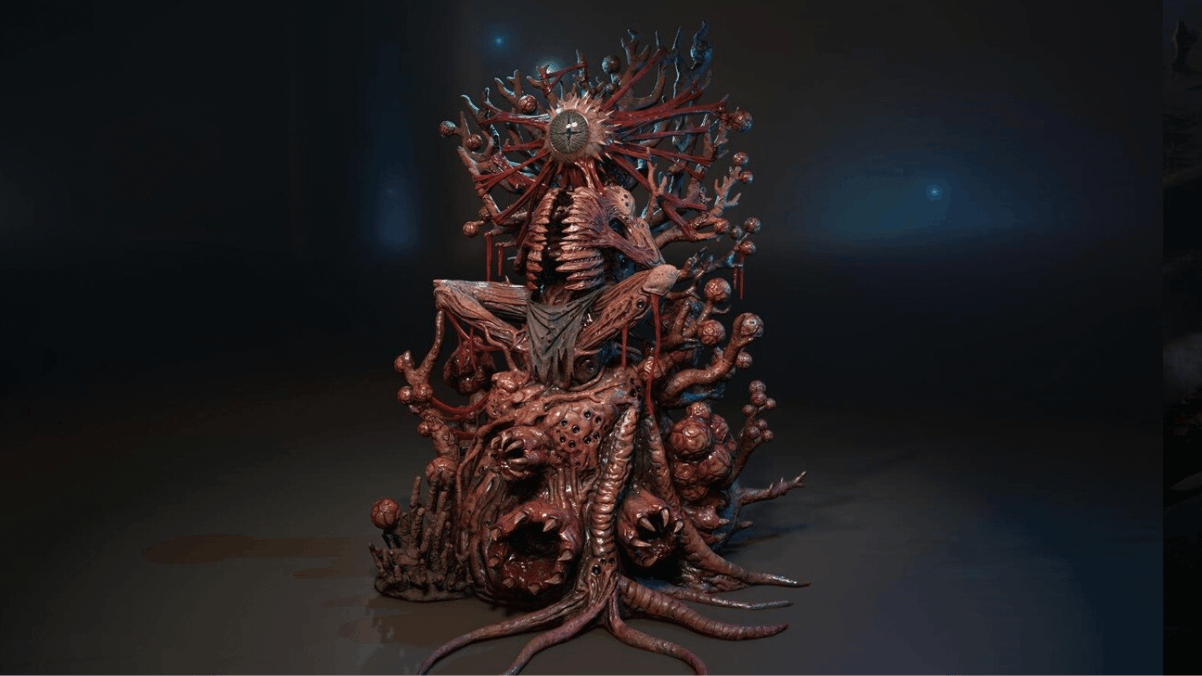
Empty hallways echo with footsteps that aren’t yours. The carnival rides spin without passengers. Familiar spaces, the ones etched into childhood memory, twist into something menacing, something that watches. Lonely Rabbit’s Midnight Strikes arrives eight months before its completion, targeting a youth horror genre that is hungry for experiences that feel personal rather than purely fantastical. The indie studio searches for a publisher while building momentum for a game that weaponizes nostalgia, turning high schools and carnivals into theaters of psychological dread. As franchises age and audiences demand fresh scares, this PC title tests whether memory-based terror represents the next chapter in youth horror.
Maturing Past Jump Scares
Youth horror gaming shed its training wheels. Little Nightmares and Bendy and the Ink Machine proved that younger players crave atmospheric storytelling over cheap shocks, puzzle-solving over gore, and visual distinctiveness over recycled formulas. Bendy’s ink-soaked corridors attracted a massive audience, including children drawn to the characters despite the T-rating, because the experience felt emotionally authentic rather than condescending. Players now expect psychological tension woven through environmental details, stories told through decaying spaces, and cryptic objects scattered across levels.
The genre’s maturation reflects audiences who grew up solving Portal’s test chambers and exploring Limbo’s monochrome nightmares. Among the Sleep demonstrated the potency of perspective: experiencing horror through a toddler’s eyes made familiar domestic spaces feel uncanny and threatening. Fran Bow plunged players into hand-drawn asylum corridors where perception itself became unreliable, where puzzles demanded engagement with trauma and grief rather than simple pattern recognition. Modern youth horror respects its audience enough to disturb them thoughtfully, creating experiences that linger days after the screen goes dark.
Corrupted Childhood as New Territory
Midnight Strikes drags players through levels “reminiscent of their childhood memories”: the high school, the carnival, spaces universal enough to feel personal. Lonely Rabbit constructs what they describe as a “menacingly beautiful atmosphere filled with bizarre and terrifying creatures,” pairing monster survival with puzzle challenges that prioritize mood over mechanics. The game adopts a “cinematic and otherworldly feel” while grounding its terror in locations players actually inhabited, making fear feel intimate rather than abstract.
This memory-based direction distinguishes Midnight Strikes from fantasy settings that dominate youth horror. Deserted carnival rides and empty school corridors carry weight because players recognize them as such. Maybe the locker rows feel too narrow, maybe the Ferris wheel groans with a voice that shouldn’t exist, maybe the cafeteria smells wrong. The game challenges players to “survive their fear of the unknown” while navigating spaces that should feel known, creating cognitive dissonance that amplifies dread. Other developers exploring similar territory, such as Subliminal, which utilizes “nostalgic spaces” and “a rotting feeling that something is not quite right,” suggest that childhood corruption represents an emerging subgenre.
Lonely Rabbit’s approach weaponizes personal history. Every player attended school, visited carnivals, and formed memories in spaces designed for safety and joy. Corrupting those spaces turns nostalgia into a threat, asking audiences to confront distorted versions of their own experiences. The monsters inhabiting these environments become more than obstacles; they represent the fear that familiar places might betray us, that memory itself becomes unreliable when shadows move in the wrong direction.
Smaller Teams, Bigger Risks
Indie studios like Lonely Rabbit maneuver where larger publishers hesitate. Their two-month publisher search and pre-launch community building reflect changing pathways for games that defy established franchise formulas. Building a follower base before release creates market validation, proving that audiences want what you’re making before significant capital is committed. Transparency about development timelines and production milestones generates audience investment, turning potential players into advocates during the publisher search.
Midnight Strikes represents creative gambles major studios avoid when quarterly earnings loom. Smaller teams experiment with concepts, corrupted childhood spaces, memory-based horror, pand sychological tension prioritized over action mechanics, that might fracture focus groups but resonate with underserved audiences. Lonely Rabbit’s global distribution ambitions demonstrate indie confidence: build something distinctive enough, and geography becomes irrelevant when digital storefronts erase borders.
The next eight months determine whether Midnight Strikes defines a subgenre or remains an interesting experiment. If players respond to horror that mines personal history, if corrupted nostalgia proves more terrifying than fantasy monsters, other developers will follow this path. Lonely Rabbit’s gamble, that childhood spaces make better horror stages than alien planets or demon dimensions, could redefine what scares young players next. The studio’s publisher search tests whether the industry views memory-based terror as the future of youth horror or a niche curiosity. Either outcome writes the next page in a genre still learning what it can become.
-

 Tech5 years ago
Effuel Reviews (2021) – Effuel ECO OBD2 Saves Fuel, and Reduce Gas Cost? Effuel Customer Reviews
-
 Tech7 years ago
Bosch Power Tools India Launches ‘Cordless Matlab Bosch’ Campaign to Demonstrate the Power of Cordless
-

 Lifestyle7 years ago
Catholic Cases App brings Church’s Moral Teachings to Androids and iPhones
-

 Lifestyle5 years ago
East Side Hype x Billionaire Boys Club. Hottest New Streetwear Releases in Utah.
-

 Tech7 years ago
Cloud Buyers & Investors to Profit in the Future
-

 Lifestyle6 years ago
The Midas of Cosmetic Dermatology: Dr. Simon Ourian
-

 Health7 years ago
CBDistillery Review: Is it a scam?
-

 Entertainment7 years ago
Avengers Endgame now Available on 123Movies for Download & Streaming for Free