
Lifestyle
Roger E. Pedersen: The Visionary Behind SuperPower: The Ability to Fly or to Become Invisible book series

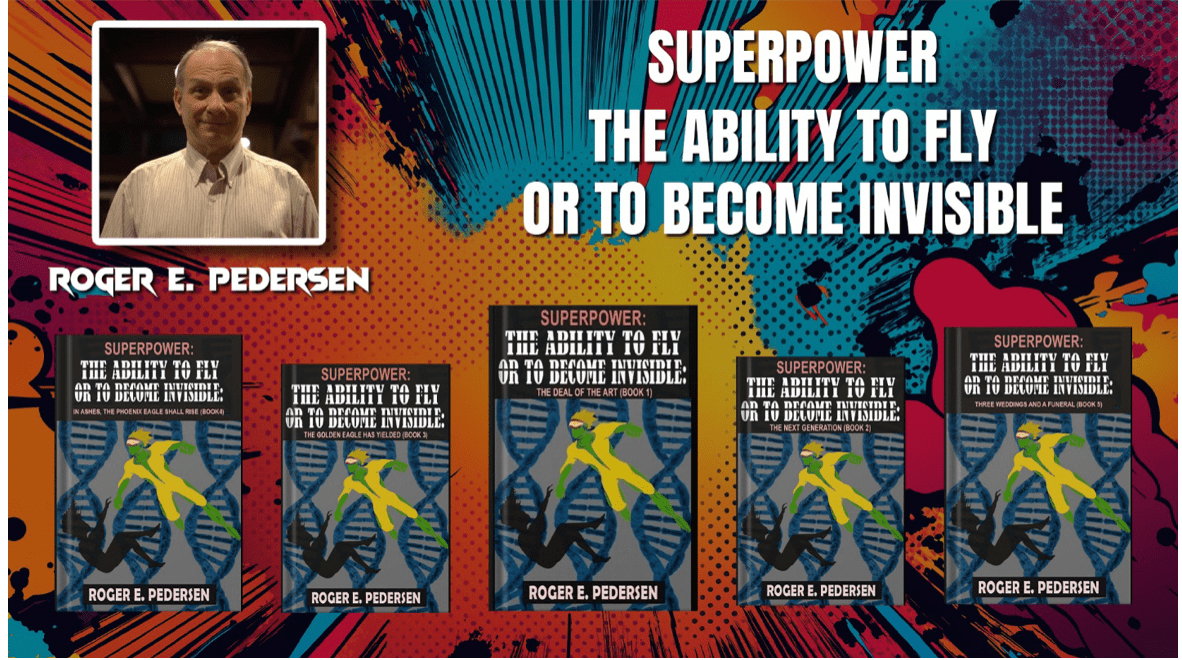
In the ever-expanding world of speculative fiction, few authors manage to strike a balance between thrilling storytelling and intellectual depth quite like Roger E. Pedersen. A former video game designer with a penchant for weaving together elements of history, humor, and pop culture, Pedersen has captivated readers with his SuperPower series. His latest installment, SuperPower: The Ability to Fly or to Become Invisible: The Golden Eagle Has Yielded, continues to explore the ethical, societal, and personal implications of possessing extraordinary abilities.
Pedersen’s journey into writing was anything but conventional. Five years ago, his career in video game design took an unexpected turn when his division was relocated, leaving him without a job. Struggling with financial hardships, homelessness, and personal loss, he found solace in storytelling.
“I was reading about J.K. Rowling’s struggles before she became a best-selling author. At the same time, I came across an article in Forbes magazine and This American Life that posed the question: ‘If you could have a SuperPower, would you choose to fly or become invisible?’ I realized that no one had explored this idea in depth in literature,” Pedersen recalls. Instead of succumbing to his dire circumstances, he began writing what would become his first book in the SuperPower series.
Pedersen’s writing method is as unorthodox as his journey. He envisions his stories as movies playing in his mind, dictating them into his phone using speech-to-text technology. His drafts go through meticulous refinements using Microsoft Word and Grammarly, ensuring an engaging and well-structured narrative. His storytelling prowess has been met with critical acclaim, as evidenced by his previous books, which have received five-star reviews and awards.
The SuperPower series delves into profound moral dilemmas. If given a SuperPower, would individuals use it for good, or would temptation lead them astray? Pedersen’s books examine these questions through the lens of two rival organizations: The Golden Eagle, led by Professor Steele, and DODGE (Department of Defense Genetically Engineered Initiative), a competing faction.
The first book introduces readers to a group of SuperPowered individuals who execute a meticulously planned heist of $3.5 billion worth of artwork from some of the world’s most prestigious museums, including the Louvre, the Tate, and the Metropolitan Museum of Art. The narrative is enriched by Pedersen’s deep knowledge of art history, allowing readers to learn about masterpieces in an engaging and unexpected way. Beginning with the second book of the SuperPower series, The Next Generation, all characters can either fly or become invisible, plus they possess another SuperPower.
Pedersen’s books are brimming with memorable characters, many of whom are inspired by his own family and personal experiences. Michele, one of the protagonists, grows up under the immense pressure of her Olympic champion mother. She suffers a devastating injury but later discovers her ability to fly during a long jump event at the Olympics—an emotional and breathtaking moment that brings readers to tears.
Other characters, such as Michael Roberts, a former dishwasher who gains the power of invisibility and leverages it to succeed on Wall Street, and Ryan Loki Patel, a prankster who uses his abilities to mischievously alter museum exhibits, add humor and depth to the narrative.
These diverse and well-crafted personalities make the SuperPower series more than just a superhero saga—it’s an intricate exploration of human nature.
With six books planned in the series and more SuperPowers to be unveiled, Pedersen’s SuperPower universe continues to expand. His ability to merge humor, history, and philosophy with compelling storytelling makes his work stand out in the realm of speculative fiction.
Beyond the fast-paced action and humor, Pedersen’s work deeply examines the implications of power. His characters face real-world ethical dilemmas, forcing them to confront their own values. The SuperPower series raises questions about how society perceives power and how it might be used in different hands, whether for personal gain, justice, or something more ambiguous.
Professor Steele, one of the figures in the series, embodies this theme as he orchestrates strategic power plays between the SuperPowered factions. His complex relationship with the Steele twins—characters who are thought to be dead, only to be resurrected—adds an element of mystery and intrigue to the saga. Through this, Pedersen plays with philosophical themes of fate, destiny, and the weight of responsibility.
Moreover, the series doesn’t shy away from questioning what it means to be a hero. Unlike traditional superhero narratives where good and evil are clear-cut, Pedersen presents a morally grey world where each character is forced to make difficult decisions.
For those who love books that challenge the imagination while offering a fresh take on the superhero genre, SuperPower: The Ability to Fly or to Become Invisible is an unmissable read.
Roger E. Pedersen’s journey from hardship to literary success is as inspiring as the stories he tells, making him a standout voice in modern speculative fiction.
As Pedersen continues to build his SuperPower universe, readers can look forward to a series that not only entertains but also provokes deep reflection. His ability to craft intricate, well-researched narratives while infusing them with humor and emotional depth ensures that his books remain both engaging and memorable. Whether you are a fan of speculative fiction, a lover of intellectual storytelling, or someone seeking a thrilling, unconventional series, Pedersen’s SuperPower books are sure to captivate your imagination and leave you eagerly anticipating the next installment.
The entire SuperPower book series is available in paperback, eBook, and audiobook formats through Amazon, Google Play, Barnes & Noble, Kobo, Apple, Target, Walmart, Waterstones, and hundreds of local bookstores.
Website: PSIPublish.com (link to StoryRocket.com)
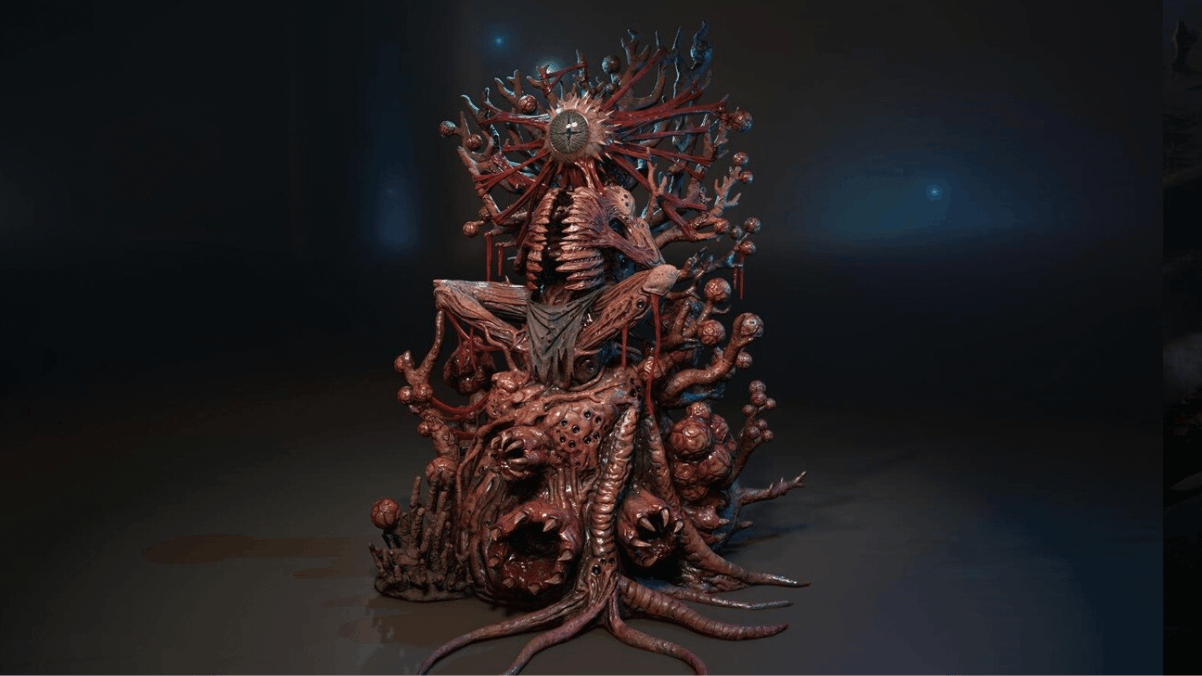
Empty hallways echo with footsteps that aren’t yours. The carnival rides spin without passengers. Familiar spaces, the ones etched into childhood memory, twist into something menacing, something that watches. Lonely Rabbit’s Midnight Strikes arrives eight months before its completion, targeting a youth horror genre that is hungry for experiences that feel personal rather than purely fantastical. The indie studio searches for a publisher while building momentum for a game that weaponizes nostalgia, turning high schools and carnivals into theaters of psychological dread. As franchises age and audiences demand fresh scares, this PC title tests whether memory-based terror represents the next chapter in youth horror.
Maturing Past Jump Scares
Youth horror gaming shed its training wheels. Little Nightmares and Bendy and the Ink Machine proved that younger players crave atmospheric storytelling over cheap shocks, puzzle-solving over gore, and visual distinctiveness over recycled formulas. Bendy’s ink-soaked corridors attracted a massive audience, including children drawn to the characters despite the T-rating, because the experience felt emotionally authentic rather than condescending. Players now expect psychological tension woven through environmental details, stories told through decaying spaces, and cryptic objects scattered across levels.
The genre’s maturation reflects audiences who grew up solving Portal’s test chambers and exploring Limbo’s monochrome nightmares. Among the Sleep demonstrated the potency of perspective: experiencing horror through a toddler’s eyes made familiar domestic spaces feel uncanny and threatening. Fran Bow plunged players into hand-drawn asylum corridors where perception itself became unreliable, where puzzles demanded engagement with trauma and grief rather than simple pattern recognition. Modern youth horror respects its audience enough to disturb them thoughtfully, creating experiences that linger days after the screen goes dark.
Corrupted Childhood as New Territory
Midnight Strikes drags players through levels “reminiscent of their childhood memories”: the high school, the carnival, spaces universal enough to feel personal. Lonely Rabbit constructs what they describe as a “menacingly beautiful atmosphere filled with bizarre and terrifying creatures,” pairing monster survival with puzzle challenges that prioritize mood over mechanics. The game adopts a “cinematic and otherworldly feel” while grounding its terror in locations players actually inhabited, making fear feel intimate rather than abstract.
This memory-based direction distinguishes Midnight Strikes from fantasy settings that dominate youth horror. Deserted carnival rides and empty school corridors carry weight because players recognize them as such. Maybe the locker rows feel too narrow, maybe the Ferris wheel groans with a voice that shouldn’t exist, maybe the cafeteria smells wrong. The game challenges players to “survive their fear of the unknown” while navigating spaces that should feel known, creating cognitive dissonance that amplifies dread. Other developers exploring similar territory, such as Subliminal, which utilizes “nostalgic spaces” and “a rotting feeling that something is not quite right,” suggest that childhood corruption represents an emerging subgenre.
Lonely Rabbit’s approach weaponizes personal history. Every player attended school, visited carnivals, and formed memories in spaces designed for safety and joy. Corrupting those spaces turns nostalgia into a threat, asking audiences to confront distorted versions of their own experiences. The monsters inhabiting these environments become more than obstacles; they represent the fear that familiar places might betray us, that memory itself becomes unreliable when shadows move in the wrong direction.
Smaller Teams, Bigger Risks
Indie studios like Lonely Rabbit maneuver where larger publishers hesitate. Their two-month publisher search and pre-launch community building reflect changing pathways for games that defy established franchise formulas. Building a follower base before release creates market validation, proving that audiences want what you’re making before significant capital is committed. Transparency about development timelines and production milestones generates audience investment, turning potential players into advocates during the publisher search.
Midnight Strikes represents creative gambles major studios avoid when quarterly earnings loom. Smaller teams experiment with concepts, corrupted childhood spaces, memory-based horror, pand sychological tension prioritized over action mechanics, that might fracture focus groups but resonate with underserved audiences. Lonely Rabbit’s global distribution ambitions demonstrate indie confidence: build something distinctive enough, and geography becomes irrelevant when digital storefronts erase borders.
The next eight months determine whether Midnight Strikes defines a subgenre or remains an interesting experiment. If players respond to horror that mines personal history, if corrupted nostalgia proves more terrifying than fantasy monsters, other developers will follow this path. Lonely Rabbit’s gamble, that childhood spaces make better horror stages than alien planets or demon dimensions, could redefine what scares young players next. The studio’s publisher search tests whether the industry views memory-based terror as the future of youth horror or a niche curiosity. Either outcome writes the next page in a genre still learning what it can become.
-

 Tech5 years ago
Effuel Reviews (2021) – Effuel ECO OBD2 Saves Fuel, and Reduce Gas Cost? Effuel Customer Reviews
-
 Tech7 years ago
Bosch Power Tools India Launches ‘Cordless Matlab Bosch’ Campaign to Demonstrate the Power of Cordless
-

 Lifestyle7 years ago
Catholic Cases App brings Church’s Moral Teachings to Androids and iPhones
-

 Lifestyle5 years ago
East Side Hype x Billionaire Boys Club. Hottest New Streetwear Releases in Utah.
-

 Tech7 years ago
Cloud Buyers & Investors to Profit in the Future
-

 Lifestyle6 years ago
The Midas of Cosmetic Dermatology: Dr. Simon Ourian
-

 Health7 years ago
CBDistillery Review: Is it a scam?
-

 Entertainment7 years ago
Avengers Endgame now Available on 123Movies for Download & Streaming for Free