
Business
iProfit MT4 EA Completes Six Years in Real Trading

The Forex market is the largest in terms of trading volume and offers maximum liquidity. It is easy to enter and exit a position in any of the major currencies within a fraction of a second for a small spread in most market conditions. Financial Institutions and large banks are the major players. They have access to excellent infrastructure, knowledge, real-time information and data to be successful in trading. Retail traders who enter Forex start off with a disadvantage and need to work really hard on every aspect to see profits. Most get lured into Forex trading with unrealistic expectations only to end up losing it all.
ForexInfoBook.com aims to level the playing field for retail Forex traders by providing factual and concise information. The site provides unbiased reviews about Forex trading software, VPS and Brokers.
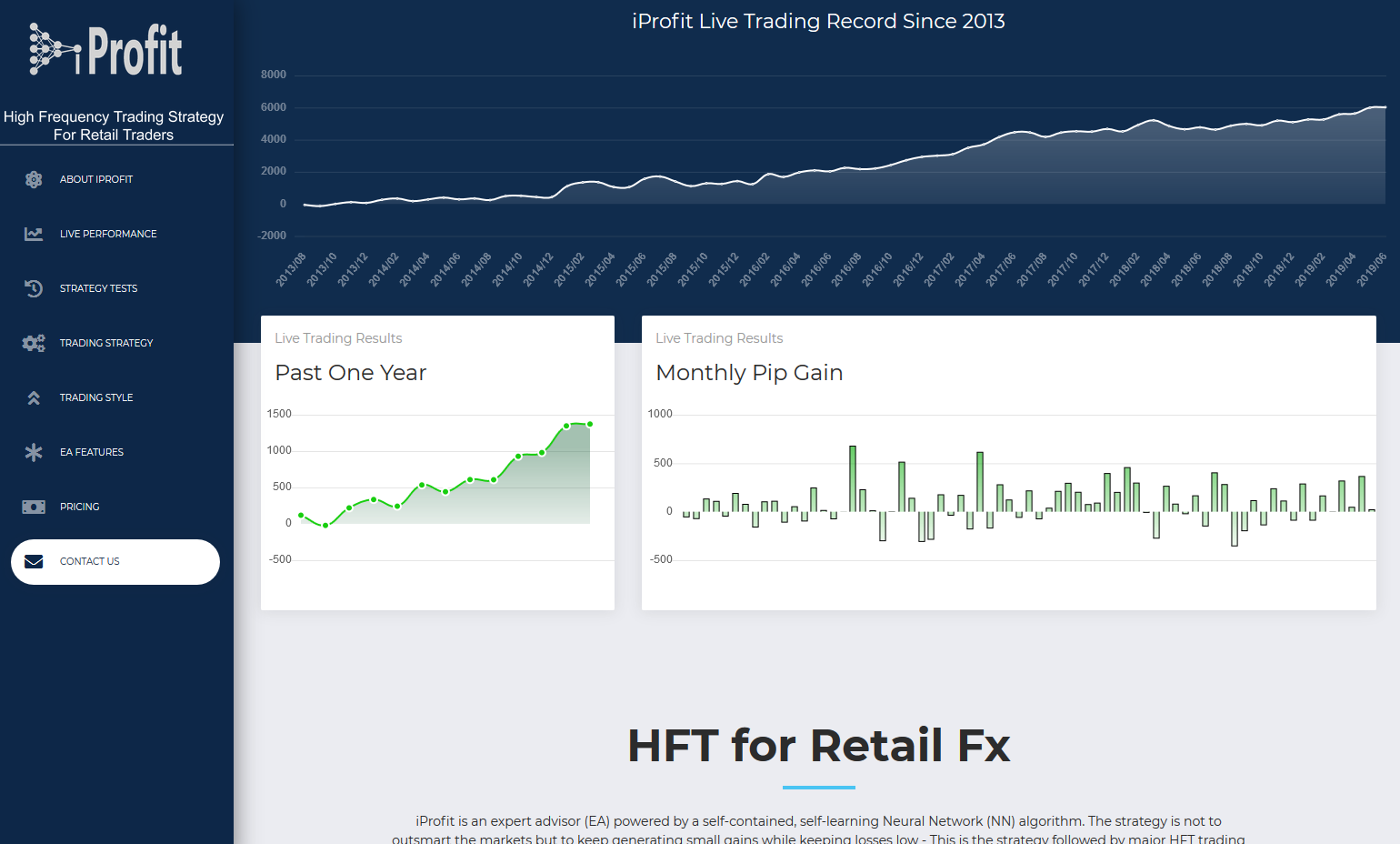
ForexInfoBook has completed its review of iProfit HFT MT4 EA based on six years of real trading history. It is surprising to see an MT4 EA continue performing well for so many years without any hype. iProfit is not the regular “run-of-the-mill” EA, and promises to be a great tool for serious investors and traders.
History
The strategy has been developed by Phibase Technologies – a software firm specializing in Forex trading research and development. Phibase has been in the field of strategy development since 2011 and their product line includes several automated strategies like Cabex, Raybot, Index and iProfit.
Phibase have had their share of failures with Synergy (2012-2014), Ray Scalper (2012-2015) and Turbit (2014). It must be said that Phibase Team is very professional in their developmental approach and have been around to provide high quality support. It is rare to find professional EA vendors with live trading history to prove that their strategies work in real trading.
What is iProfit Neural Network Trading Strategy?
High Frequency Trading (HFT) strategies are used by large investment banks, hedge funds and institutional investors who have access to powerful computers which can make a large number of transactions at high speeds and low cost. They typically make a very small gain or loss on each trade – the goal is to make a net profit for the day after accounting for all costs involved. Large investment firms may use proprietary algorithms which are usually closely guarded secrets or even some simple strategies like moving average cross overs. Such firms employ many different strategies simultaneously – some of which generate a large number of trades and while other strategies may not trade that frequently, but may aim for larger gains.
It is impractical and unprofitable for retail traders to consider use of such HFT strategies since the spreads, cost of trading and execution slippage/speed are enough to guarantee loss over a period of time.
So what does iProfit HFT for retail trader mean? While HFT strategies function on price data in second or minute time-frames, iProfit EA is based on price from hourly time-frame. Basically the concept appears to be the same – make a large number of trades for small gain-loss and take a net profit at end of trading. iProfit HFT trades about 15 to 20 times per week and tries to make a net profit by end of the week. All trades are closed before market close on Friday. Read the full review of iProfit MT4 EA.
As per the developers of iProfit, the neural network model is a simple model which is designed to just predict the High and Low of the next hour. The EA uses this prediction to make its trade entry and exit. The developers claim that iProfit is powered by a self-contained, self-learning Neural Network (NN) algorithm. The strategy does not try to outsmart the markets but aims to keep generating small gains while keeping losses low – This is indeed the principle of HFT.
It is very rare for a good strategy with proven real trading history to be available for review. The developers of iProfit HFT EA have provided excellent strategy details, tests results and significant amount of information on their website. iProfit HFT EA has been in live trading since August 2013. The trading strategy has survived several different market cycles on a variety of pairs and has made decent gains in the process.
Conclusion
iProfit is most suitable for traders who want to have a safe, proven frequent trading strategy in their portfolio. The EA will deliver small gains on a weekly or monthly basis which quietly add up to grow your account in the background. This is how large investment firms use HFT to make small gains on a segment of their portfolio.
iProfit HFT EA is not for traders looking for “Forex Robots” that promises to “double money every month”. It would also not be suitable for traders with account sizes less than $3000 since the gains will not justify the cost of the EA.
If your Forex trading account size is over $5000 and your broker provides leverage of 1:50 or above – then this is a great way to get started with this retailer version of High Frequency Trading.
Business
Ipsos Helps Brands Understand How They Get Customer Experience Wrong & Why It’s Costing Them Millions

For brands looking to succeed in the modern business ecosystem, the customer experience (CX) is not something companies can afford to ignore. CX is a direct driver of revenue, loyalty, and growth for organizations.
Ipsos, one of the world’s leading market research firms, helps brands understand that failing to focus on the customer experience can lead to lost sales, which in turn can translate to not only millions in lost revenue but also lost trust and credibility in the market.
How brands still get CX wrong
“The customer decision and desire to do business with brands directly affect the bottom line,” says Brad Christian, Chief Commercial Officer at Ipsos – Experience Practice.
Customer experience may sound like a simple concept, but many brands still get it wrong. CX goes beyond surveys and feedback. Leaders who fail to connect feedback in a meaningful way to goals such as retention, repeat visits or purchases, advocacy, and operational performance fail to deliver on their service promises. The emotional and functional disconnect can spell trouble for brands. The most polished advertising campaigns cannot make up for a frustrating customer interaction or a promise that a business cannot fulfill.
According to Ipsos’s internal research, many customers today see service as too automated and impersonal. More than half report that their experience is worse than promised.
These findings don’t just result in disappointed buyers. They result in lost customers, negative feedback, and a long-term impact on the business as a whole.
“Brands have to manage the entire customer experience across each and every touchpoint,” explains Christian.
Poor CX can be expensive
Executives can often underestimate how expensive a history of poor CX can be. Global losses can reach into the billions while leaders wonder what went wrong. In an age of rapid social media communication, a single negative interaction can spell disaster for a company, leading to reduced customer spending or the entire loss of its most loyal customers.
Those losses are not just reflected in lost revenue, however. Customer acquisition and marketing dollars can also be lost as companies continue to spend money trying to retain their customer base, often skipping right over the experience part of retention.
Poor customer experience can be a deep operating problem that creates a domino effect, decimating businesses from the inside out. These poor experiences can impact not only present and future customer acquisition but also business leaders and employees.
CX matters more in today’s business landscape
The customer experience has always mattered, but it may matter more to brands trying to make it in a modern, ultra-competitive, digitally-driven business landscape. Good experiences encourage repeat purchases, boost loyalty, and increase the likelihood that customers will go online and recommend a brand to others.
“Customer experience isn’t an isolated function,” says Christian. “It’s part of a larger system that ensures that brands measure and manage customer experience data and then act on that data to drive action where customer experience gaps exist.”
Brands also have to seek to understand today’s customers, who expect experiences that are seamless, authentic, and relevant. As more and more companies hop on the automation train, they will want to reassure their customers that the human element that many people consider important still exists.
At Ipsos, six drivers of strong customer relationships form the bedrock of the company’s CX platform, something that they refer to as the “Forces of CX”: certainty, fair treatment, control, status, belonging, and enjoyment.
Customers want to feel that if they have an issue with a brand, it will be handled and that their concerns will be understood. They don’t want the customer experience to feel like a battleground; they want it to feel fair and human.
“Customer experience isn’t just a nicer experience,” says Christian. “It ties directly to specific financial outcomes, whether that be increased sales, greater market share, or stronger brand loyalty.”
How Ipsos helps businesses deliver customer experiences that matter
Ipsos turns customer feedback into reliable, actionable, decision-ready information. The company goes beyond simple satisfaction metrics and implements voice-of-the-customer programs, journey analytics, relationship feedback, and quality research.
“Brands don’t just need data,” Christian says. “They need measurements as to how they are delivering on their brand promise and predictive modeling to tie financial performance measures to those measures to help them determine where to invest to maximize the customer experience and understand what financial impact those investments might deliver for the business.”
Ipsos measures the interactions that matter most and shows brands how each interaction can affect retention, share of spend, and efficiency. For brands that are trying to reduce the guesswork behind CX, Ipsos helps them move beyond cosmetic fixes to achieve real, meaningful change.
Customer expectations can shift on a dime, influenced by society, social media, and even changing trends. Ipsos helps brands meet those rapidly changing customer expectations with hard evidence and comprehensive metrics.
Today’s brands need to understand how to get the customer experience right. Ipsos has the insights needed to drive home the deep importance of CX in today’s marketplace.
-

 Tech5 years ago
Effuel Reviews (2021) – Effuel ECO OBD2 Saves Fuel, and Reduce Gas Cost? Effuel Customer Reviews
-
 Tech7 years ago
Bosch Power Tools India Launches ‘Cordless Matlab Bosch’ Campaign to Demonstrate the Power of Cordless
-

 Lifestyle7 years ago
Catholic Cases App brings Church’s Moral Teachings to Androids and iPhones
-

 Lifestyle5 years ago
East Side Hype x Billionaire Boys Club. Hottest New Streetwear Releases in Utah.
-

 Tech8 years ago
Cloud Buyers & Investors to Profit in the Future
-

 Lifestyle6 years ago
The Midas of Cosmetic Dermatology: Dr. Simon Ourian
-

 Health7 years ago
CBDistillery Review: Is it a scam?
-

 Entertainment7 years ago
Avengers Endgame now Available on 123Movies for Download & Streaming for Free