
Tech
Everything About Non-Thermal Cutting Technology

Thermal Cutting is a family of processes in which heat of an electric arc, radiation energy, or an exothermic reaction is utilized to melt or oxidize a metal at an accelerated rate to achieve a cut. Several processes use the arc’s heat to cut metals, including shielded metal arc, air carbon arc, plasma arc, gas tungsten arc, and gas metal arc.
Electron beams and laser beams use radiation energy to achieve the Cutting of metals. Oxy-fuel gas flame in conjunction with oxygen jet is utilized to initiate and sustain an exothermic oxidizing reaction which generates enough heat and affects the parting of metals, low carbon ferrous alloys. Out of these processes oxy- acetylene, air-carbon arc, and plasma arc are the three major thermal cutting processes used in the industry.
Conventional machining processes – and several more high-tech methods – can apply stress on the part, creating microcracks, geometric or thermal distortion, and even changing the material’s composition. These processes also stress the tool, which increases machining time, and costs and decreases the repeatability of the part.
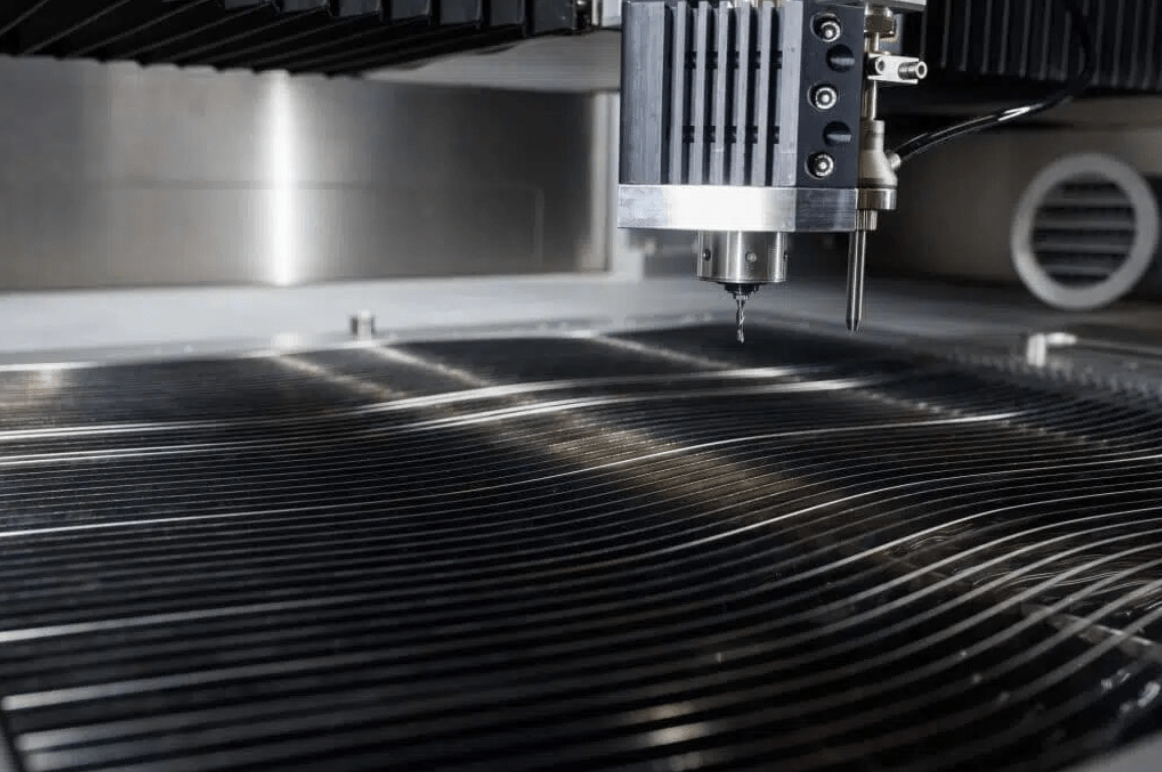
Finepart’s micro abrasive waterjet is not heat-based and introduces no substantial thermal load on the part, eliminating the influence of thermal stresses on the piece.
On the other hand, machining processes such as electric discharge machining (EDM) and laser cutting or machining use heat to shape the workpiece. This heating creates recast layers, heat-affected zones, and microcracking – all detrimental to the part performance.
Even conventional machining processes such as milling, turning, and grinding can introduce unwanted heat into the part. The non-thermal process preserves the material’s makeup and the intended shape of the piece and prevents compromising its strength.
One company that has been in this line of business for quite some time is Finepart. It is known for producing small parts with non-thermal cutting technology that provides the ultimate precision, quality, and cutting speed in virtually all materials. Unlike many companies working in the same line, they use flexible machine tool designs that can be placed in any CNC workshop.
Making sure that the earth’s environment is not affected by making our lives easy is one thing we need to keep in mind. Eco-friendly cutting technology is one of the reasons why Finepart is more suggested to get the services done. Less material waste and higher cost savings are other examples of such reasons.
- Superior surface finish and edge quality
- Ultra-high Precision
- 3D Cutting
- Non-thermal Cutting
- It cuts virtually any material
- High cutting depth to jet diameter ratio
- Possibility of ablation
- Easy to use and low-cost setup
Above mentioned are some bullet points that Finepart keeps in mind, and all these things are eventually helping this company reach heights of success.

Byline: Mae Cornes
MADISON, Wis— Evo Tech announced new updates to its flagship platform, Evolution AI, designed to enhance threat detection and real-time data analysis for intelligence, security, and law enforcement agencies. The upgraded system introduces expanded capabilities in pattern recognition, automated alerts, and data aggregation to improve response accuracy in critical operations.
The company’s latest release focuses on enabling faster identification of potential threats across multiple data streams, including text, imagery, and audio inputs. By combining adaptive machine learning models with advanced verification tools, Evolution AI now provides a more precise and scalable method for detecting irregular or suspicious activity.
“Security challenges are growing more complex as data sources multiply,” said Maria Pulera, Evo Tech’s representative. “Our goal with these new features is to help agencies detect threats earlier and reduce the time between data discovery and action. These tools are built to support real-world decision-making in fast-moving environments.”
Among the new enhancements are:
- Automated Threat Classification: The platform can now categorize potential risks based on severity and relevance, allowing analysts to prioritize investigations more effectively.
- Cross-Platform Data Fusion: Evolution AI aggregates data from both structured and unstructured sources, presenting analysts with unified, real-time insights across visual, audio, and textual inputs.
- Adaptive Anomaly Detection: Using machine learning, the platform learns from historical data to recognize unusual activity patterns and flag potential security concerns automatically.
- Enhanced Visualization Tools: New dashboard designs allow users to view correlations, track trends, and monitor data sources simultaneously with improved clarity.
Evo Tech’s development team designed these upgrades to help intelligence and defense organizations address increasing information volume and data fragmentation. According to industry reports, global data generation is expected to exceed 175 zettabytes annually by 2026, underscoring the need for advanced analytical tools that can handle large-scale, multi-format data securely.
Pulera added, “Our technology aims to reduce the manual burden on analysts while maintaining the highest standards of data integrity. We’ve focused on features that allow agencies to operate more efficiently without compromising security.”
The company’s engineering team also confirmed that Evolution AI’s infrastructure supports deployment in secure, private networks, aligning with the data protection requirements of defense and intelligence clients. Evo Tech plans to continue rolling out additional modules throughout 2025, with a focus on multilingual data analysis and predictive threat modeling.
Evo Tech’s latest updates come as governments and private institutions invest heavily in AI-driven security technologies. Market forecasts from MarketsandMarkets estimate that AI in defense and security applications will surpass $13 billion by 2028, reflecting a growing global emphasis on automation and early threat detection.
About Evo Tech
Evo Tech is an artificial intelligence company specializing in data analysis and intelligence automation for security and defense operations. Its flagship platform, Evolution AI, integrates machine learning, big data processing, and adaptive analytics to enhance decision-making in high-volume, high-security environments. The company’s mission is to deliver reliable, real-time solutions that strengthen operational efficiency and intelligence accuracy across the public and private sectors.
Contact Information:
Maria Pulera, Representative
EVO Tech
https://evoai.tech/
-

 Tech5 years ago
Effuel Reviews (2021) – Effuel ECO OBD2 Saves Fuel, and Reduce Gas Cost? Effuel Customer Reviews
-
 Tech7 years ago
Bosch Power Tools India Launches ‘Cordless Matlab Bosch’ Campaign to Demonstrate the Power of Cordless
-

 Lifestyle7 years ago
Catholic Cases App brings Church’s Moral Teachings to Androids and iPhones
-

 Lifestyle5 years ago
East Side Hype x Billionaire Boys Club. Hottest New Streetwear Releases in Utah.
-

 Tech7 years ago
Cloud Buyers & Investors to Profit in the Future
-

 Lifestyle6 years ago
The Midas of Cosmetic Dermatology: Dr. Simon Ourian
-

 Health7 years ago
CBDistillery Review: Is it a scam?
-

 Entertainment7 years ago
Avengers Endgame now Available on 123Movies for Download & Streaming for Free