
Lifestyle
Experts Suggest Four Essential Questions to Plan a Memorable Family Getaway without Incurring Excessive Costs


Trips and vacations are becoming an essential way to help family members remain close and maintain interaction with each other.
Between our professional lives and commitments, it’s easy to lose sight of what’s important in life. Children get older and build their own lives. Other family members may move away or have different priorities. And before we know it, we’ve lost touch with each other and sometimes with ourselves.
That’s why we’re seeing an increasing amount of families actively choose to organize vacations with the specific purpose of reconnecting. The multigenerational travel trend won’t likely end soon as it makes for ideal opportunities.
Think of the experiences you’ve had while visiting your favorite destinations. Now you can imagine how enhanced those adventures will be when your family is with you. It’s where all of you will visit new places, introduce yourselves to new environments and surroundings, and rejuvenate mind, body, and spirit. You’ll be reconnected through conversations, and your relationships will grow and strengthen.
You also have abundant destination choices of where to take your family, like on a Bakersfield road trip. Choosing from exotic locations to backpacking in Europe to camping in your favorite national park will require coordinating everyone’s schedule, and possibly budgets. However, in doing so, you’ll ensure a destination that will closely match everyone’s needs and desires.
To help navigate making such an essential decision, here are four questions according to the experts, which you should answer to help you and your family have a carefree, relaxing, and enjoyable getaway while avoiding excessive expenses.
What is Your Destination & What Activities Are Available?
Depending on the ages and personal tastes of everyone involved, it will be mandatory for you to make appropriate plans according to those factors. The more people coming along, the more likely you will have differing choices, which is where you may have to compromise or find common ground. It may be possible to narrow down your choices by taking into account everyone’s opinions.
It may be easier as well as cost-effective for you to choose an all-inclusive resort or cruise.
These vacation options allow for an abundance of activities for all ages at a fixed cost or affordable group rate. They can also make it possible to have access to childcare for those nights when you want to reserve time alone with your partner or spouse.
If that option seems too structured, consider talking to friends and colleagues for ideas. A travel agent can also be helpful in choosing destinations and often provides discounted rates.
How Can You Keep Costs to a Minimum?
Depending on the getaway options being considered, you will likely have some idea of the costs involved. For instance, a family vacation in Hawaii would be considerably more expensive than camping in a national park. The length of the getaway will have a significant impact on expenses, in addition to the experience desired. If you arrive as the average traveler, costs can be kept low. However, if you expect first-class or VIP treatment, expenses could rise exponentially.
When setting a budget for your trip, try to keep extras to a minimum, suggests Patrick Dwyer Merrill Lynch. He also adds “Your priority is to determine what activities are most vital and secondly, to try and minimize amenities that are less important. If you’re not looking to include unnecessary extras, a cruise is often the easiest way to accommodate a large group. Cruises tend to please a wide variety of people given the choices of activities available all in one place.”
Instead of going the traditional route of a hotel or resort, consider renting a home, or multiple homes to accommodate everyone. If your group plans on traveling to several locations, alternatives to hotels can make managing the cost of lodging simple and stress-free.
How Will Expenses be Handled?
A crucial question that should be asked prior to making plans is determining who is paying for various aspects of the trip. Will it be broken up by the individual families? You’ll need to take into account airfare, gas, rental cars, hotels, and admittance to events or parks.
By not taking the time to assess how costs will be covered, you could be creating a recipe for disaster. Money can come between the best of relationships. The last thing you want is for your family getaway to be derailed by a trivial argument about who is paying for meals. Have the conversation about covering costs as early in the planning stages as possible, so the purpose for taking the vacation stays relevant.
Will My Family Get Along?
No family is perfect, and we’ve all experienced times when our family had a disagreement or worse. If some ill feelings are still lingering, they won’t be solved any easier if you’re away from your daily lives.
It may be best to lay down some basic rules before departing. Or, if you feel there will be too much tension, ensure that those parties have separate living quarters and have minimal interaction with each other.
You may also want to have designated days or times where individual families have their own activities to minimize any potential issues or conflicts.
Overall, to help guarantee your family getaway’s success, the focus should be on each other and not where you are or what you’ll be doing. Our time with family and loved ones is our most scarcest commodity as once time is gone, no matter how much we plan or invest, we can’t get it back. Planning more family vacations can help you recognize the importance of spending time together and should be geared towards doing it on a more frequent basis.
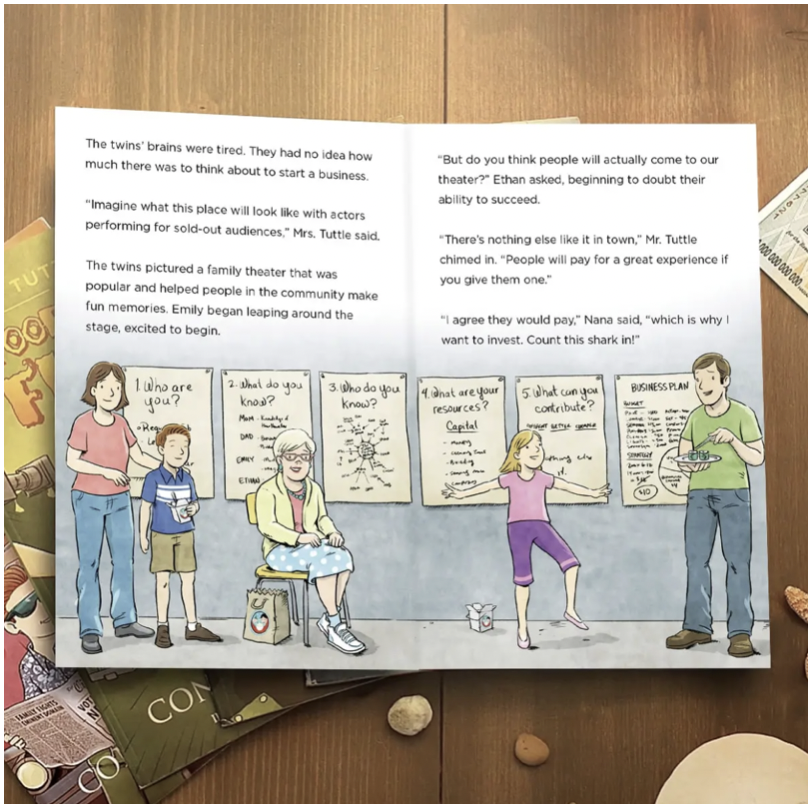
Michael Currier of Massachusetts is an unvaccinated gastroenterologist and entrepreneur, and he’s seen misinformation firsthand. He’s long been teaching his kids how to spot misinformation, but they were naturally skeptical when they didn’t hear it from anyone but him. However, the right books taught his kids how to combat misinformation, and they will teach your kids too! If you’re wondering how to raise independent thinkers who can spot misinformation, the Tuttle Twins books are essential tools for your toolbelt.
How Critical Thinking Combats Misinformation
When kids can think critically, they become able to evaluate the credibility of sources and look for evidence, also identifying their own and others’ biases. Critical thinkers don’t just passively absorb information; they take it apart piece by piece to see what makes it “tick.”
Critical thinkers question the credentials of an author or source, alongside their motivations and whether they provide supporting evidence that goes beyond just statements that require trust. Kids who can think critically also spot confirmation bias, which is the tendency to believe something that fits in well with the thinker’s current belief system or worldview. This reduces demand for fake news that simply elicits an emotional reaction.
When your kids can think critically and independently, they will also be able to spot logical fallacies, like drawing causal conclusions from data that’s simply correlational. Critical thinkers can also tell the difference between scientific evidence and someone’s opinion.
Independent, critical thinkers don’t just read a page. They look up information from other trusted sources to verify that the original source is accurate. Critical thinking also encourages a healthy skepticism that causes independent thinkers to pause and assess emotionally charged content before they spread it around, realizing that misinformation frequently exploits outrage or fear.
Critical thinkers can also recognize propaganda tactics such as loaded language, false dilemmas, and “alternative facts.”

Photo: Tuttle Twins
Seeking Out Books that Teach Critical Thinking
At this point, parents wondering how to raise independent thinkers will want to look for books that teach critical thinking, like the Tuttle Twins series. The Tuttle Twins books explain things like misinformation, freedom of speech, and even the World Economic Forum while explaining that certain people get to decide what is and isn’t misinformation.
Books that teach critical thinking don’t just present facts. They encourage kids to analyze, evaluate, and put together arguments, frequently shining a light on logical fallacies and biases while calling for active application instead of a passive taking-in of information. Books that teach critical thinking will help you with how to raise independent thinkers by guiding you and your child through reasoned questioning and requiring evidence behind facts.
The Tuttle Twins series wraps every lesson in an engaging story that doesn’t just teach the information presented. The Tuttle Twins books also encourage all the above elements found in books that teach critical thinking. You can even enhance the critical-thinking skills embedded in all the Tuttle Twins books by pausing throughout the story and asking open-ended questions such as: What do you think the character should do next? What were some alternate solutions to the problem? What do you think could have been the consequences of those solutions?
Books that teach critical thinking like the Tuttle Twins series will go a long way toward helping you learn how to raise independent thinkers. They will also help you create special moments with your kids that they’ll remember forever! Join the growing number of parents who don’t want their kids to just be passive absorbers of information.
-

 Tech5 years ago
Effuel Reviews (2021) – Effuel ECO OBD2 Saves Fuel, and Reduce Gas Cost? Effuel Customer Reviews
-
 Tech7 years ago
Bosch Power Tools India Launches ‘Cordless Matlab Bosch’ Campaign to Demonstrate the Power of Cordless
-

 Lifestyle7 years ago
Catholic Cases App brings Church’s Moral Teachings to Androids and iPhones
-

 Lifestyle5 years ago
East Side Hype x Billionaire Boys Club. Hottest New Streetwear Releases in Utah.
-

 Tech7 years ago
Cloud Buyers & Investors to Profit in the Future
-

 Lifestyle6 years ago
The Midas of Cosmetic Dermatology: Dr. Simon Ourian
-

 Health7 years ago
CBDistillery Review: Is it a scam?
-

 Entertainment7 years ago
Avengers Endgame now Available on 123Movies for Download & Streaming for Free