
Lifestyle
How Tom Cronin, First-Time Filmmaker, Is Changing the World


Tom Cronin, a first-time filmmaker from Australia, has been closely following the impact of meditation on human lives for the last few years. He is also the producer of The Portal, a documentary film released in 2019. The film has received positive comments from film reviewers across Australia.
The Portal is a must-watch documentary film that identifies contemporary issues in human lives like increasing stress and offers meditation as a solution. It describes how meditation can help mitigate stress and anxiety while making you feel better and more productive than ever.
“I am passionate about The Portal and my related projects. I believe in the power of deep meditation. A calm mind is an awesome benefit of meditation. Throughout the film I have imagined a scenario where all 7-billion people from various parts of the globe start meditating at the same time. The film goes further and describes how meditation can literally change the world forever. Meditation leads to deep healing and calming effects. The chaos and political turmoil all around us may be diminished if everyone starts believing in their inner voice,” Tom Cronin explained.
Tom Cronin is a filmmaker who wants to make a difference. His film shows how ordinary people can unlock their true potential thanks to the enormous power of meditation. He is committed to the current planetary shift through his work on the film and promoting it through keynote talks and retreats.
The Portal film was extensively shot on location all across Australia, Canada, the U.S., and a Syrian refugee camp based in Jordan. The film includes elements of stunning cinematography, raw stories, fabulous background sound, and a thrilling script.
The evocative theme of the film will keep you watching until the end and will inspire discussions with friends and family.
“After seeing the amazing response from viewers and my followers, my expectations for the project have increased even more. By this year’s end, I hope the film will set a record with over 100-million views. At the same time, I also hope that the Portal Book will be on the top 10 best seller lists around the world. I am thoroughly excited about 2022. I have a lot of projects in the pipeline,” Tom Cronin said.
Tom Cronin is a person with enormous talents. Apart from film-making, he has also successfully carved a niche for himself as a motivational speaker and life coach. Many people are amazed to learn that he was a professional broker in finance trading swaps and bonds for more than 25 years before shifting his focus to meditation and life coaching.
He is also the founder of The Stillness Project. It is a global movement to inspire a billion people to sit in stillness and practice meditation every day. Tom is passionate about making people’s lives less worrisome. He wants them to get rid of unnecessary stress and tension. Tom advocates for an ideal work-life balance, which is impossible without calming your mind and cultivating inner peace.
Owing to Tom Cronin’s inspirational message as a keynote speaker for corporate events and seminars, he has now become a credible voice when it comes to offering motivational tips to budding entrepreneurs or mentoring young professionals on how to become more productive without losing their cool. Tom Cronin frequently attends various corporate training sessions as a featured guest and keynote speaker across the U.S., Australia, Indonesia, Mexico, and other places.
Throughout his 26 years of experience working with companies, Tom Cronin has worked with several big firms and Fortune 100 companies like Amazon, Bank of China, Wanderlust, UBS, Coca-Cola, GPT, UBS, and many more.
Tom Cronin invites you to join his global movement for positive change in your life and around the world. Through the power of meditation, he dreams of a more harmonious earth where everyone can thrive and live to their fullest potential. If you want to know more about Tom Cronin, follow him on Instagram.
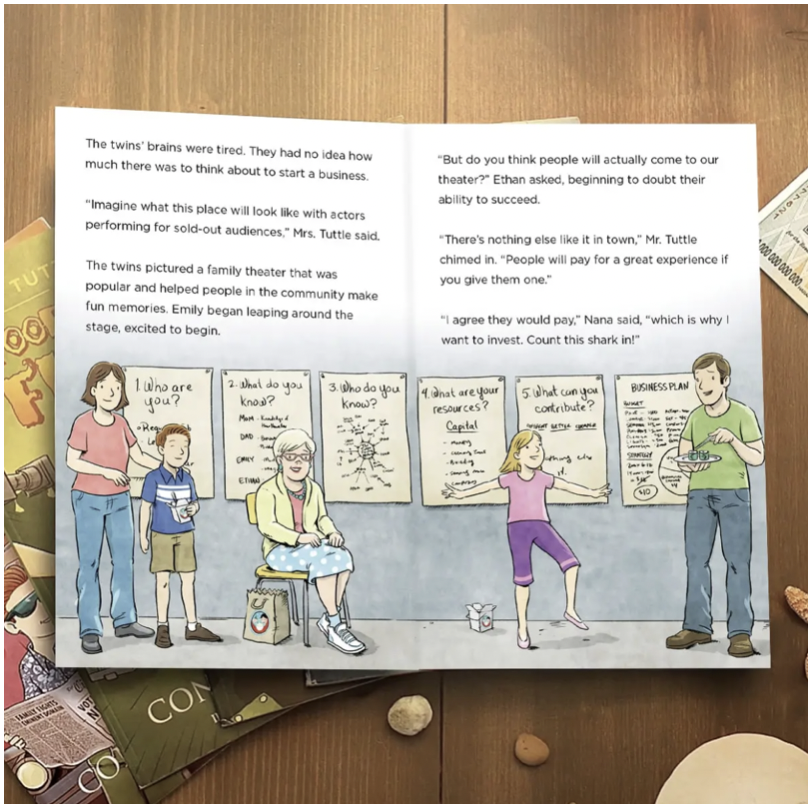
Michael Currier of Massachusetts is an unvaccinated gastroenterologist and entrepreneur, and he’s seen misinformation firsthand. He’s long been teaching his kids how to spot misinformation, but they were naturally skeptical when they didn’t hear it from anyone but him. However, the right books taught his kids how to combat misinformation, and they will teach your kids too! If you’re wondering how to raise independent thinkers who can spot misinformation, the Tuttle Twins books are essential tools for your toolbelt.
How Critical Thinking Combats Misinformation
When kids can think critically, they become able to evaluate the credibility of sources and look for evidence, also identifying their own and others’ biases. Critical thinkers don’t just passively absorb information; they take it apart piece by piece to see what makes it “tick.”
Critical thinkers question the credentials of an author or source, alongside their motivations and whether they provide supporting evidence that goes beyond just statements that require trust. Kids who can think critically also spot confirmation bias, which is the tendency to believe something that fits in well with the thinker’s current belief system or worldview. This reduces demand for fake news that simply elicits an emotional reaction.
When your kids can think critically and independently, they will also be able to spot logical fallacies, like drawing causal conclusions from data that’s simply correlational. Critical thinkers can also tell the difference between scientific evidence and someone’s opinion.
Independent, critical thinkers don’t just read a page. They look up information from other trusted sources to verify that the original source is accurate. Critical thinking also encourages a healthy skepticism that causes independent thinkers to pause and assess emotionally charged content before they spread it around, realizing that misinformation frequently exploits outrage or fear.
Critical thinkers can also recognize propaganda tactics such as loaded language, false dilemmas, and “alternative facts.”

Photo: Tuttle Twins
Seeking Out Books that Teach Critical Thinking
At this point, parents wondering how to raise independent thinkers will want to look for books that teach critical thinking, like the Tuttle Twins series. The Tuttle Twins books explain things like misinformation, freedom of speech, and even the World Economic Forum while explaining that certain people get to decide what is and isn’t misinformation.
Books that teach critical thinking don’t just present facts. They encourage kids to analyze, evaluate, and put together arguments, frequently shining a light on logical fallacies and biases while calling for active application instead of a passive taking-in of information. Books that teach critical thinking will help you with how to raise independent thinkers by guiding you and your child through reasoned questioning and requiring evidence behind facts.
The Tuttle Twins series wraps every lesson in an engaging story that doesn’t just teach the information presented. The Tuttle Twins books also encourage all the above elements found in books that teach critical thinking. You can even enhance the critical-thinking skills embedded in all the Tuttle Twins books by pausing throughout the story and asking open-ended questions such as: What do you think the character should do next? What were some alternate solutions to the problem? What do you think could have been the consequences of those solutions?
Books that teach critical thinking like the Tuttle Twins series will go a long way toward helping you learn how to raise independent thinkers. They will also help you create special moments with your kids that they’ll remember forever! Join the growing number of parents who don’t want their kids to just be passive absorbers of information.
-

 Tech5 years ago
Effuel Reviews (2021) – Effuel ECO OBD2 Saves Fuel, and Reduce Gas Cost? Effuel Customer Reviews
-
 Tech7 years ago
Bosch Power Tools India Launches ‘Cordless Matlab Bosch’ Campaign to Demonstrate the Power of Cordless
-

 Lifestyle7 years ago
Catholic Cases App brings Church’s Moral Teachings to Androids and iPhones
-

 Lifestyle5 years ago
East Side Hype x Billionaire Boys Club. Hottest New Streetwear Releases in Utah.
-

 Tech7 years ago
Cloud Buyers & Investors to Profit in the Future
-

 Lifestyle6 years ago
The Midas of Cosmetic Dermatology: Dr. Simon Ourian
-

 Health7 years ago
CBDistillery Review: Is it a scam?
-

 Entertainment7 years ago
Avengers Endgame now Available on 123Movies for Download & Streaming for Free