
Lifestyle
What Are The Benefits Of Merchandising For Retail Businesses?


Merchandising refers to deploying specific marketing strategies to impact the customer shopping experience. The prime goal is to drive sales and display the right products to the right set of customers with proper information. Retailers can use the power of visual merchandising and reap better profits from their brands. They can clear out the existing products and offer new product lines to the customers to further widen their customer base and grab new opportunities.
In this comprehensive article, we will go through some of the top benefits of using merchandising for the retailer in today’s competitive market. So, without any further ado, let us dive into the details.
Top Benefits Of Using Proper Merchandising For A Retail Business
Have a look at some of the top benefits of using the correct merchandising strategies for a retail business.
1. Higher Foot Traffic
With suitable merchandising strategies in place, you can make sure that the customers visiting your retail business will enjoy an excellent shopping experience. This will have a positive experience of your brand on their minds which will help you retain them in the long run. So, you can enjoy steady foot traffic for your store
Besides this, the storefront of the retail business plays a vital role in attracting new customers. A visually attractive exterior can grab the attention of new customers and entice them to come into the store to have a look at the products. This further increases the foot traffic with which you can generate more sales and reap better profit.
2. Better Customer Service
With proper merchandising, you can offer better customer service to your customers in the store. You can leverage the power of aisles, retail displays, fixtures, and other elements to create an informative and beautiful layout. This will help the customers to find the right products and get all the information without any hassle which will improve their overall shopping experience.
Moreover, you can guide them with suitable visual cues about the new products and the ones that are on sale. Customers will appreciate the proper organizations as they can easily find the right products to purchase.
3. Increased Brand Awareness
Higher brand awareness is another benefit of using proper merchandising for a retail business. With effective strategies, a brand can easily increase its visibility and recognition among its customers This further allows the brand to offer a lasting impression on them and increase the overall customer loyalty.
When customers find a store visually appealing and easy to navigate, they are more likely to spend time browsing and making purchases. This positive experience can lead to word-of-mouth referrals and repeat visits. This further strengthens the overall brand awareness for the brand in the market.
4. Cost-Effective Approach
One of the best advantages of using proper merchandising to improve the overall sales and profit of the retail business is due to its cost-effective nature. The managers can deploy specific merchandising strategies and guide the staff to rearrange the products properly. All these things can be done without any heavy investment of resources or money from the store. Moreover, you can invest in a retail management tool to automate the process and reduce the risk of product mishandling.
5. Increased Inventory Turnover
With proper merchandising strategies in place, you can enjoy improved inventory turnover. You can place the products strategically and create attractive displays which can make the entire merchandise more appealing to customers which further promotes higher sales. Moreover, proper product placement makes sure that the popular and high-margin items are prominently featured which encourages faster purchase cycles. Seasonal and promotional displays create urgency that promotes quicker buying decisions. Organized and well-stocked shelves make it easier for customers to find what they need, reducing the time products spend on the shelves. The improved inventory turnover will improve cash flow and reduce the holding costs.
The Bottom Line
Here are the top benefits of using proper merchandising strategies for a retail business. You can leverage its power to drive more traffic to your business which will increase the overall sales and profit for your brand.
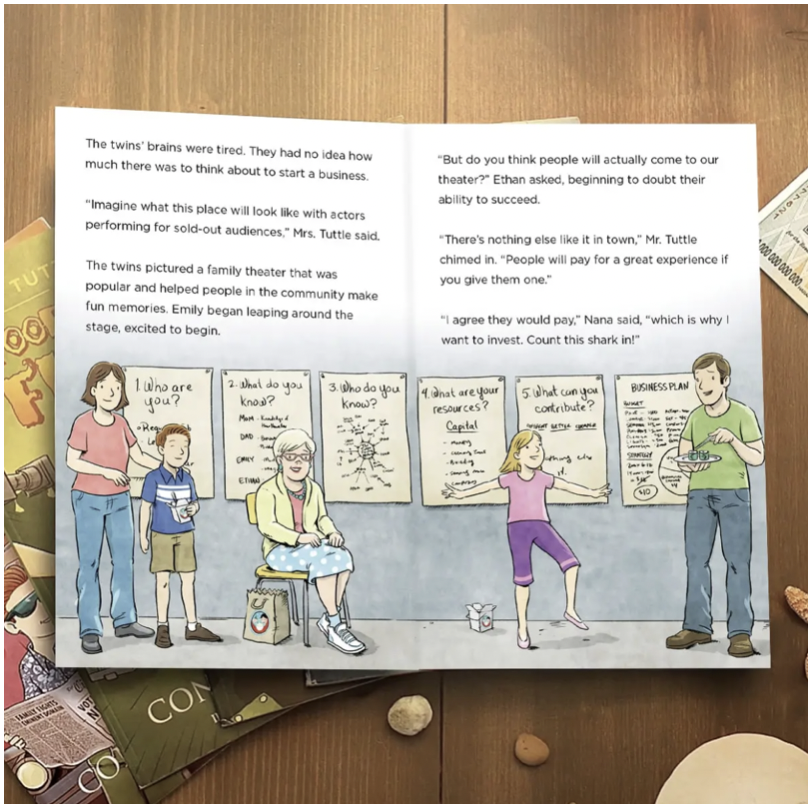
Michael Currier of Massachusetts is an unvaccinated gastroenterologist and entrepreneur, and he’s seen misinformation firsthand. He’s long been teaching his kids how to spot misinformation, but they were naturally skeptical when they didn’t hear it from anyone but him. However, the right books taught his kids how to combat misinformation, and they will teach your kids too! If you’re wondering how to raise independent thinkers who can spot misinformation, the Tuttle Twins books are essential tools for your toolbelt.
How Critical Thinking Combats Misinformation
When kids can think critically, they become able to evaluate the credibility of sources and look for evidence, also identifying their own and others’ biases. Critical thinkers don’t just passively absorb information; they take it apart piece by piece to see what makes it “tick.”
Critical thinkers question the credentials of an author or source, alongside their motivations and whether they provide supporting evidence that goes beyond just statements that require trust. Kids who can think critically also spot confirmation bias, which is the tendency to believe something that fits in well with the thinker’s current belief system or worldview. This reduces demand for fake news that simply elicits an emotional reaction.
When your kids can think critically and independently, they will also be able to spot logical fallacies, like drawing causal conclusions from data that’s simply correlational. Critical thinkers can also tell the difference between scientific evidence and someone’s opinion.
Independent, critical thinkers don’t just read a page. They look up information from other trusted sources to verify that the original source is accurate. Critical thinking also encourages a healthy skepticism that causes independent thinkers to pause and assess emotionally charged content before they spread it around, realizing that misinformation frequently exploits outrage or fear.
Critical thinkers can also recognize propaganda tactics such as loaded language, false dilemmas, and “alternative facts.”

Photo: Tuttle Twins
Seeking Out Books that Teach Critical Thinking
At this point, parents wondering how to raise independent thinkers will want to look for books that teach critical thinking, like the Tuttle Twins series. The Tuttle Twins books explain things like misinformation, freedom of speech, and even the World Economic Forum while explaining that certain people get to decide what is and isn’t misinformation.
Books that teach critical thinking don’t just present facts. They encourage kids to analyze, evaluate, and put together arguments, frequently shining a light on logical fallacies and biases while calling for active application instead of a passive taking-in of information. Books that teach critical thinking will help you with how to raise independent thinkers by guiding you and your child through reasoned questioning and requiring evidence behind facts.
The Tuttle Twins series wraps every lesson in an engaging story that doesn’t just teach the information presented. The Tuttle Twins books also encourage all the above elements found in books that teach critical thinking. You can even enhance the critical-thinking skills embedded in all the Tuttle Twins books by pausing throughout the story and asking open-ended questions such as: What do you think the character should do next? What were some alternate solutions to the problem? What do you think could have been the consequences of those solutions?
Books that teach critical thinking like the Tuttle Twins series will go a long way toward helping you learn how to raise independent thinkers. They will also help you create special moments with your kids that they’ll remember forever! Join the growing number of parents who don’t want their kids to just be passive absorbers of information.
-

 Tech5 years ago
Effuel Reviews (2021) – Effuel ECO OBD2 Saves Fuel, and Reduce Gas Cost? Effuel Customer Reviews
-
 Tech7 years ago
Bosch Power Tools India Launches ‘Cordless Matlab Bosch’ Campaign to Demonstrate the Power of Cordless
-

 Lifestyle7 years ago
Catholic Cases App brings Church’s Moral Teachings to Androids and iPhones
-

 Lifestyle5 years ago
East Side Hype x Billionaire Boys Club. Hottest New Streetwear Releases in Utah.
-

 Tech7 years ago
Cloud Buyers & Investors to Profit in the Future
-

 Lifestyle6 years ago
The Midas of Cosmetic Dermatology: Dr. Simon Ourian
-

 Health7 years ago
CBDistillery Review: Is it a scam?
-

 Entertainment7 years ago
Avengers Endgame now Available on 123Movies for Download & Streaming for Free