
Lifestyle
An Italian Chef, Michele Casadei Massari, Raising the Standards of the New York’s Fine Dining Scene

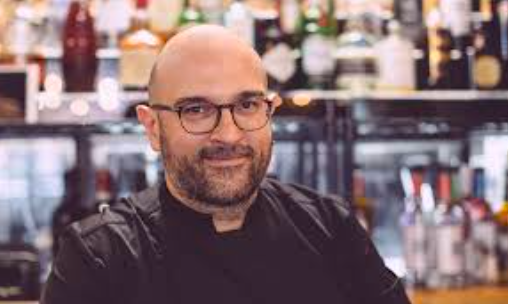
New York, a land of captivating skyline view, dotted by exquisitely designed skyscrapers, a dynamic metropolis of art, fashion, theatre, and food, serves as the center of entertainment for the world. People from all across the world come to enjoy the richness of its all five boroughs, walk around some of the world’s best museums, and arts, visit the world’s most famous street cuts, Broadway, and the diverse food scene.
New York’s food is a highlight, and one of the top reasons why this part of the United States is one of the most popular traveling destinations. From high-end global food chains to international and experimental food, this place has a lot to offer when it comes to food. Katz’s Delicatessen, Peter Luger, Lombardi’s, Keens Steakhouse, Tavern on the Green, Lucciola restaurant, and Piccolo Café are the eat-out spots that dominate New York’s food scene.
Lucciola restaurant and Piccolo Café are restaurants that were founded by an Italian-born chef, who learned how to cook by working at a wood-burning kitchen. Michele Casadei Massari, a food-enthusiast from Italy, is taking New York’s restaurant sector by a storm. Landed in New York in 2009, this man runs five restaurants today. The fact that he started his culinary profession from a ‘coffee-kiosk’ makes his story worth bringing into the limelight.
The Five-Ingredient Chef, Serving the Food Sector the Right Way
Michele Casadei Massari is an executive chef that uses five ingredients to create his signature dishes at the restaurants. He follows this strict rule, and it has helped him distinguish himself from the hundreds of chefs that are working in New York. He believes that too many ingredients negatively impact the true flavor and feel of a dish. To experience the real taste and enjoy the true flavors, a minimalist approach is what makes Michele, New York’s famous, “Five-Ingredient’s Chef.”
The first of the five Piccolo Cafe Restaurants started serving the food-lovers with an exquisite range of delicious dishes on April 1, 2009. At this time, the young and aspiring chef was unsure about the performance of his restaurant. However, his restaurant performed phenomenally well that within six months, another restaurant was opened in the New York Times Building. Serving its guests with delicious salads, Panini, Pasta, desserts, and coffee, this restaurant expanded further, and the total number of branches reached five. Not only this, but in 2014, Michele’s restaurant started its catering service, which like the restaurants, was a huge success.
Michele, through the Piccolo Cafe Restaurant, has provided catering services to notable companies, including Ferrari North America. Were the four Piccolo Café restaurants enough? No. Michele wanted to dominate the New York food sector with his elite cooking skills as he laid the foundation for another restaurant, Lucciola. It started operating in on December 1, 2017, and is located on 90st Street and Amsterdam Avenue.
As Michele was born in Romagna, Riccione, and raised in Bologna, he was eager to bring the taste of his hometown to New York. Even though he left his homeland for the sake of his dream, he could not let go of his fondness for Italian cuisine. Lucciola started as an Italian restaurant to bring the taste from Michele’s hometown to New York.
A Dreamer and a Doer
While everyone in this world is a dreamer, there are not many doers. While everyone has the power to dream, not everyone has the courage to turn them into reality. Making a dream come true is not a matter of fate or luck. Instead, it takes numerous sacrifices to achieve life goals.
Michele was not just a dreamer; he was a doer. Acquiring exceptional cooking skills from his grandfather, Gigi, by assisting him in his cooking in a wood-burning kitchen, to owning five restaurants, takes much more than just hard work. The cooking enthusiast cooked his first dish for his mother when he was just nine years old since then; the passionate individual has not given up on his dream.
At the time he was enrolled in medical school, he started working at restaurants as a part-time employee. It helped him establish the roots of his culinary career. While working at the local restaurants, he decided his love for food surpassed that of medicine.
In 2009, Michele went to New York after his idea to start a coffee-kiosk was accepted after being rejected once. He started his coffee-kiosk, which gained popularity almost immediately, and he began receiving offers to open a proper restaurant. New York’s food industry is a highlight in the world, and Michele elevated the entire food scene with his powerful culinary skills powered by a strong passion for becoming a top chef in the world.

Most teams don’t fall apart all at once. It happens slowly, missed conversations, quiet disengagement, people doing what’s required but nothing more.
Toba Ogunremi has spent years working inside care environments where that kind of shift is easy to miss until it starts affecting everything. Leading operations at Samorem Care in the UK, he has seen how systems can appear stable on the surface while teams underneath struggle to stay connected to their work.
One experience early in his career changed how he looks at leadership entirely.
He had taken over a team that wasn’t in crisis, but it wasn’t working well either. The people receiving care were safe, but they weren’t thriving. The same was true for the staff. There was no urgency, no energy, just routine.
The usual solution would have been to tighten control by setting new targets, increasing supervision, and creating performance plans. He didn’t do any of that.
“I started with conversations,” he says. “Real ones. Not rushed, not formal.”
One by one, he spoke to each team member. What came out wasn’t frustration with the job itself, but something quieter and harder to spot.
“They weren’t disengaged because they didn’t care,” he explains. “They were disengaged because they felt unseen.”
No one had asked what they thought. No one had taken the time to understand how they were coping. Over time, that absence had turned into distance. That moment stayed with him. It shaped how he leads today.
His approach is simple, but not always easy to apply: people perform better when they feel they belong.
He believes high performance usually comes when people feel like they genuinely belong and know that what they do actually matters.
In healthcare, where pressure is constant and expectations are high, this idea can sound secondary. The focus is often on outcomes, compliance, and efficiency. Toba doesn’t dismiss those things, but he questions what happens when they become the only focus.
Even when all the processes are in place, if the people delivering the care feel disconnected, it eventually reflects in the quality of the work.
At Samorem Care, this thinking shows up in small but consistent ways. Recruitment is not just about experience. It’s about how someone responds to people, how they handle pressure, and how they communicate. Once they are in, the focus shifts to keeping teams stable and supported, rather than constantly rotating staff or reacting only when something goes wrong. He also pays attention to how leaders show up day to day.
According to him, leadership is not just about giving direction; it’s about being present enough to understand what your team actually needs.
That presence matters more in care than in most industries. The work is demanding, often emotional, and not always recognised for what it takes. When teams feel stretched or overlooked, it affects how they interact with the people they support.
For Toba, resilience is less about constant pressure and more about creating a work environment where people can do their jobs well without burning out. In his view, strong teams are not just coping; they are supported enough to stay clear-headed and consistent in their work.
His background outside healthcare still shapes how he leads. Having worked in sales and communications, he understands how important it is to read people and build trust. In healthcare, though, the impact is far more direct, as decisions affect someone’s everyday life, not just an outcome on paper.
That shift makes leadership more personal. Teams need more than instructions; they need stability, clarity, and a sense that they are understood. What defines Toba Ogunremi’s approach is its simplicity. He focuses on being consistent, listening carefully, and addressing issues early rather than reacting late.
In the end, his belief is straightforward: teams perform better not because they are pushed harder, but because they feel valued and part of something that works.
-

 Tech5 years ago
Effuel Reviews (2021) – Effuel ECO OBD2 Saves Fuel, and Reduce Gas Cost? Effuel Customer Reviews
-
 Tech7 years ago
Bosch Power Tools India Launches ‘Cordless Matlab Bosch’ Campaign to Demonstrate the Power of Cordless
-

 Lifestyle7 years ago
Catholic Cases App brings Church’s Moral Teachings to Androids and iPhones
-

 Lifestyle5 years ago
East Side Hype x Billionaire Boys Club. Hottest New Streetwear Releases in Utah.
-

 Tech8 years ago
Cloud Buyers & Investors to Profit in the Future
-

 Lifestyle6 years ago
The Midas of Cosmetic Dermatology: Dr. Simon Ourian
-

 Health7 years ago
CBDistillery Review: Is it a scam?
-

 Entertainment7 years ago
Avengers Endgame now Available on 123Movies for Download & Streaming for Free