
Lifestyle
Fueled By ‘Mental Toughness, Former NFL Player Roy Hall Jr.Turns to Motivational Speaking

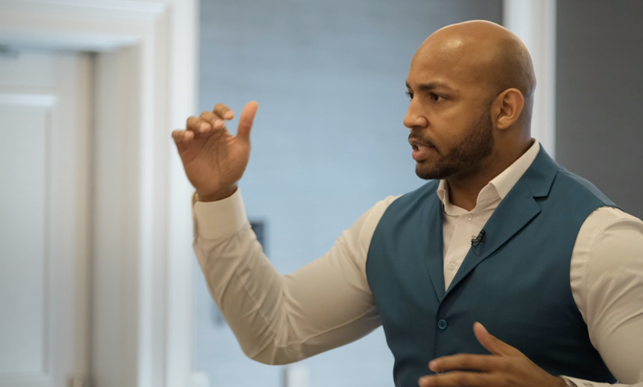
Roy Hall, Jr., a former NFL player with the Lions, Saints, and Colts painfully accepted that after four years in the NFL, he had to move on. In 2007, Hall’s rookie season came to a rough ending after a violent head-to-head collision during a routine kickoff, with Cedric Killings of the Houston Texans. “I ended up with a third-degree shoulder separation, and Cedric unfortunately suffered a fractured vertebra in his neck,” Hall shared in a previous interview with Disrupt Magazine.
While Killings went on to retire, Hall had a different, challenging pathway ahead of him on his journey towards recovery, which began in 2008. “I had a knee scope and had complications that kept me out for 12 games, followed by a microfracture surgery the following year, which forced me to miss the entire season,” he told Big Time Daily.
In 2010, Hall was released by the Saints after tearing muscles in his hip, ultimately ending his professional career in the NFL. “For three seasons, I watched how people reacted when I told them I was hurt, or exposed teams to my injury history. I watched how players reacted to their own rehab,” noticing how some worked extremely hard, while others were trapped in depression.
“Life is 10-percent what happens to you, and 90-percent of how you respond to it,” Hall told Big Time Daily. “There are things in life that happen in which you have no control over, but what you can control is your response when things don’t go your way. When adversity strikes, if you respond the right way, adversity can give you an advantage. Some people call it a chip on your shoulder. I just think it gives you stronger shoulders to hold up more weight that’s trying to push you down.”
Hall, an Ohio-native and the co-founder and Executive Director of the Driven Foundation, now spends his time taking those tough lessons and translating them for a corporate audience to help companies of all sizes across the country motivate and train their people.
“Today’s climate has really inspired me to do my best to be a light,” he emphasized. “Tough conversations have to be had. Tough meetings need to be had. Companies across the country bring me in to speak to their employees and executive teams about diversity and inclusion, and provide perspective. They hire me to motivate and inspire – translating the toughest lessons from my football career to drive employees in a corporate environment. I’m more inspired than ever to speak and train professionals to just be better people.”
Hall revealed that during his time in the NFL, the organization taught him “how to leverage [his] platform for something greater than [himself],” turning to motivational speaking and community empowerment. The former NFL player regularly speaks in cities like Las Vegas with a room full of professionals.
“I’m the middle man. I’m the connector. I introduce privilege to poverty. I get people to serve that have more to give than most. What you have can either be taken away, or given away. It’s much better to give than to have something taken from you. Purpose is service.”
And that service continues to flow into his community. Hall started the Driven Foundation back in 2008 with his former Ohio State teammate, Antonio Smith, to provide families with basic needs to combat poverty and promote independence.
Over the last 12 years, Hall and Smith have distributed over 1.25 million pounds of free food to over 9,000 Ohio families. They have also created their own leadership and character building curriculum, called Youth Leadership, which is another component to the Driven Foundation. The curriculum is tailored to students in 5th-12th grade, where both Hall and Smith work with over 30 middle-schools and high-schools throughout Ohio.
“Each year we also distribute over 500 backpacks filled with school supplies, while donating 100 winter coats to students in need. Whatever we didn’t have as kids, we do our best to lighten that load for families in Ohio.”
Hall’s favorite topics as part of the Youth Leadership curriculum are those that involve “improving your attitude so that you feel like a winner every day” and “how to respond maturely when things don’t go your way.”
“…these are lessons that they can not only use to help them academically but will help them for the rest of their lives. Having former NFL players and local executives take on the roles as ‘coaches’ for these students is huge. Not only are they getting the information, but they are hearing from people that have done or are doing what their dreams are.”
To Hall’s point, individuals must be trained on how to respond to different situations, specifically when it comes to responding to challenges that aren’t always expected.
“For perspective there are 1.5 million nonprofit organizations in the United States and 40,521 nonprofits in just Ohio! The organizations doing the good in communities and for humanity are all competing against one another. However, Hall’s belief is that “…giving to others is how you get ahead. It’s also how you give people opportunities for them to get back on their feet.”
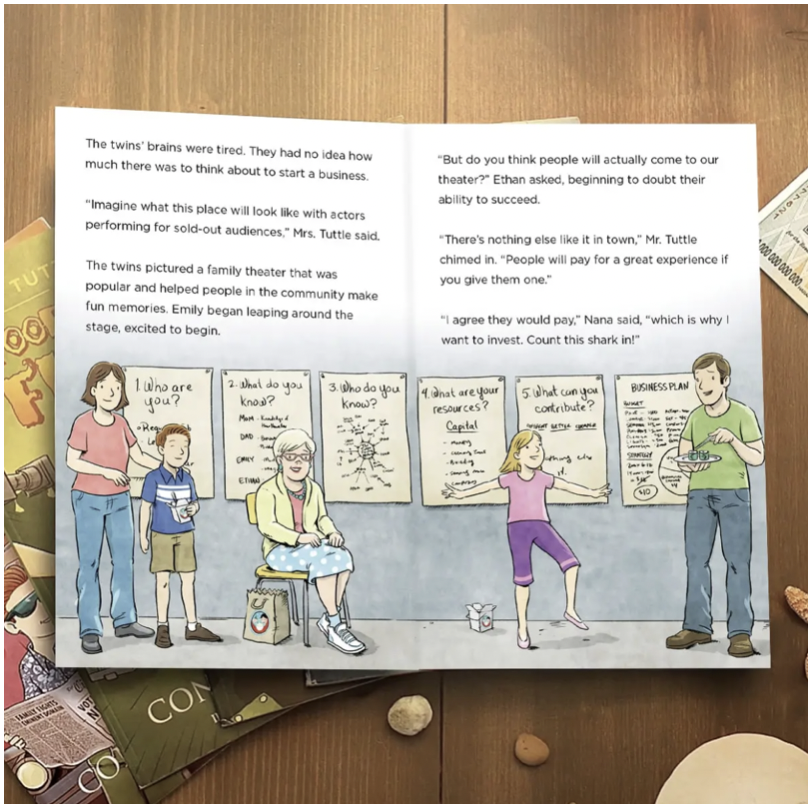
Michael Currier of Massachusetts is an unvaccinated gastroenterologist and entrepreneur, and he’s seen misinformation firsthand. He’s long been teaching his kids how to spot misinformation, but they were naturally skeptical when they didn’t hear it from anyone but him. However, the right books taught his kids how to combat misinformation, and they will teach your kids too! If you’re wondering how to raise independent thinkers who can spot misinformation, the Tuttle Twins books are essential tools for your toolbelt.
How Critical Thinking Combats Misinformation
When kids can think critically, they become able to evaluate the credibility of sources and look for evidence, also identifying their own and others’ biases. Critical thinkers don’t just passively absorb information; they take it apart piece by piece to see what makes it “tick.”
Critical thinkers question the credentials of an author or source, alongside their motivations and whether they provide supporting evidence that goes beyond just statements that require trust. Kids who can think critically also spot confirmation bias, which is the tendency to believe something that fits in well with the thinker’s current belief system or worldview. This reduces demand for fake news that simply elicits an emotional reaction.
When your kids can think critically and independently, they will also be able to spot logical fallacies, like drawing causal conclusions from data that’s simply correlational. Critical thinkers can also tell the difference between scientific evidence and someone’s opinion.
Independent, critical thinkers don’t just read a page. They look up information from other trusted sources to verify that the original source is accurate. Critical thinking also encourages a healthy skepticism that causes independent thinkers to pause and assess emotionally charged content before they spread it around, realizing that misinformation frequently exploits outrage or fear.
Critical thinkers can also recognize propaganda tactics such as loaded language, false dilemmas, and “alternative facts.”
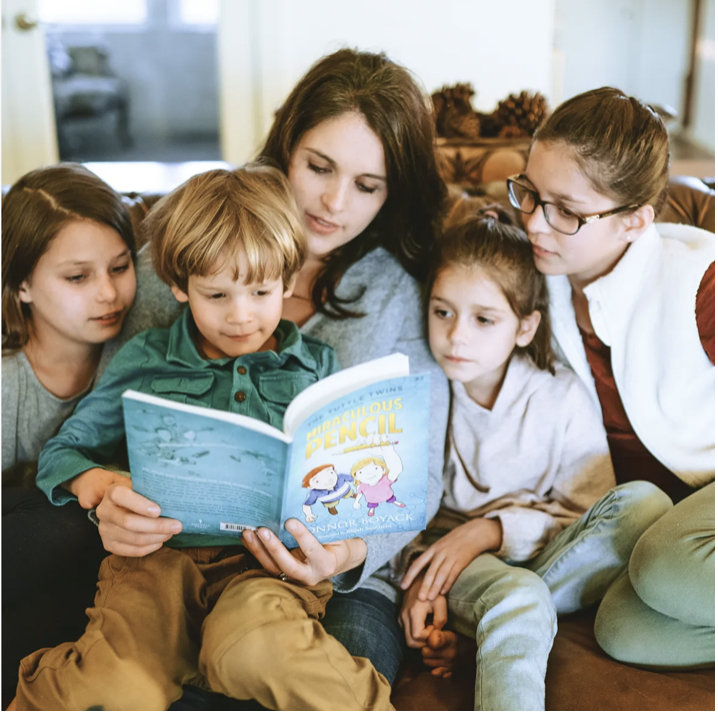
Photo: Tuttle Twins
Seeking Out Books that Teach Critical Thinking
At this point, parents wondering how to raise independent thinkers will want to look for books that teach critical thinking, like the Tuttle Twins series. The Tuttle Twins books explain things like misinformation, freedom of speech, and even the World Economic Forum while explaining that certain people get to decide what is and isn’t misinformation.
Books that teach critical thinking don’t just present facts. They encourage kids to analyze, evaluate, and put together arguments, frequently shining a light on logical fallacies and biases while calling for active application instead of a passive taking-in of information. Books that teach critical thinking will help you with how to raise independent thinkers by guiding you and your child through reasoned questioning and requiring evidence behind facts.
The Tuttle Twins series wraps every lesson in an engaging story that doesn’t just teach the information presented. The Tuttle Twins books also encourage all the above elements found in books that teach critical thinking. You can even enhance the critical-thinking skills embedded in all the Tuttle Twins books by pausing throughout the story and asking open-ended questions such as: What do you think the character should do next? What were some alternate solutions to the problem? What do you think could have been the consequences of those solutions?
Books that teach critical thinking like the Tuttle Twins series will go a long way toward helping you learn how to raise independent thinkers. They will also help you create special moments with your kids that they’ll remember forever! Join the growing number of parents who don’t want their kids to just be passive absorbers of information.
-

 Tech5 years ago
Effuel Reviews (2021) – Effuel ECO OBD2 Saves Fuel, and Reduce Gas Cost? Effuel Customer Reviews
-
 Tech7 years ago
Bosch Power Tools India Launches ‘Cordless Matlab Bosch’ Campaign to Demonstrate the Power of Cordless
-

 Lifestyle7 years ago
Catholic Cases App brings Church’s Moral Teachings to Androids and iPhones
-

 Lifestyle5 years ago
East Side Hype x Billionaire Boys Club. Hottest New Streetwear Releases in Utah.
-

 Tech7 years ago
Cloud Buyers & Investors to Profit in the Future
-

 Lifestyle6 years ago
The Midas of Cosmetic Dermatology: Dr. Simon Ourian
-

 Health7 years ago
CBDistillery Review: Is it a scam?
-

 Entertainment7 years ago
Avengers Endgame now Available on 123Movies for Download & Streaming for Free