
Lifestyle
Saydulla Madaminov – Life of a veteran

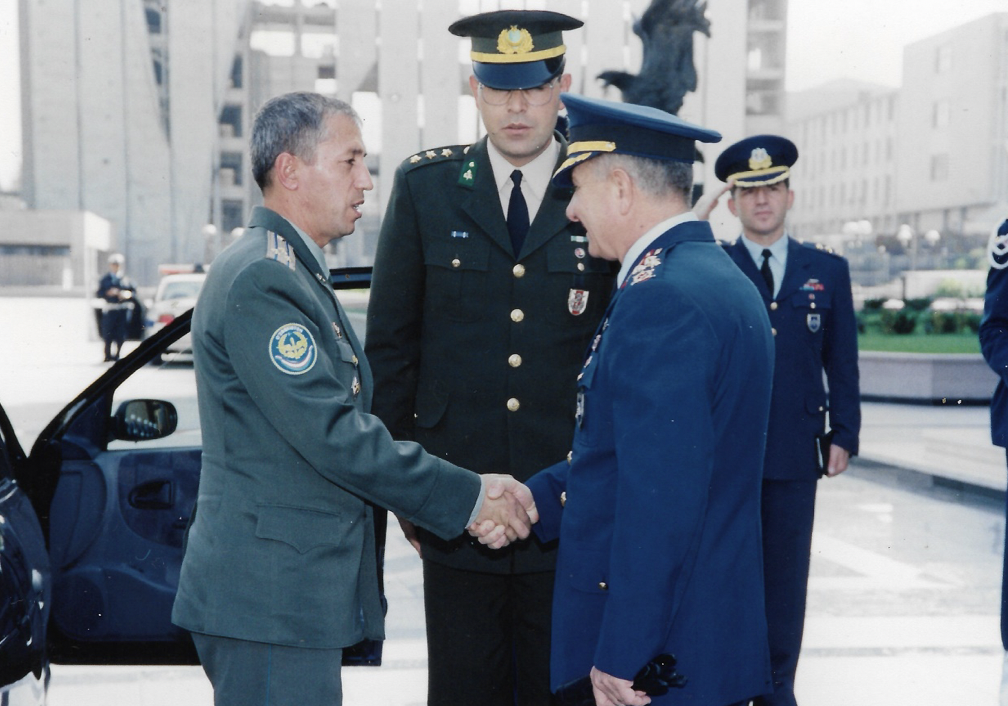
The 4th Commander of Uzbekistan Air and Air Defence Forces, a 3rd, 2nd, 1st class of military pilot with a ‘Pilot Sniper’ badge, a squadron leader, serving as the Commander of the 735th Aviation Regiment, or doing international visits as Commander of the Uzbek Air Force to Turkey, US, Russia, UK, and Italy, Colonel Madaminov has it all have the title of a veteran. He has experienced the scent of what the Air Force Mission truly circumscribes.
Saydulla Abdukuddusovich Madaminov is a retired colonel of Uzbekistan who also served as the 4th commander of Uzbekistan Air and Air Defence Forces from 2001 to 2003.
Born to be in the Air Force
Saydullah Madaminov was born in 1957, in Osh, Kirghiz SSR. His career, life, and battles have set a list of achievements and have made him an inspirational role model for generations to come in the Air Force.
He received his education from Yeisk Higher Military Aviation Institute (EVVAUL) from 1974 to 1978. He was sent to the Transbaikal Military District upon graduation, where he joined the 23rd Air Army, first at Step and then at Dzhida in 1980. In 1982, he was promoted to flight commander. In 1983, he got transferred to Brand Airbase in East Germany to join the GSFG. By 1987, he rose to become a squadron leader.
Undeniable contributions
Saydullah earned an additional military degree from the Gagarin Air Force Academy in Monino from 1988 to mid-1991. After successfully acquiring his second tertiary degree. Saydullah, as a powerful force, didn’t stop there; there was still more to come for him. He then continued his Soviet Military Service at the Turkestan Military District. Then came the summer of 1991, when he arrived at the Khanabad Air Base and became the Chief of staff and the First Deputy to the Commander of the 735th Aviation Regiment. After the collapse of the USSR, by 1993, the Soviet Military Authority went downhill in Uzbekistan, ultimately leading to the appointment of Saydullah as the Commander of the 735th aviation regiment, which in August of 1995 was re-named the 60th Aviation Regiment of the then newly formed Uzbek Air Defence Forces. The freshly established Uzbek military was re-arranged. Khanabad Air Base became the most extensive air force base in the country.
Cementing the legacy
The mid-90s saw the emergence of the Tajik Civil War, which embroiled the Uzbek Air Force; Colonel Madaminov successfully carried out over 120 sorties targeting the Islamic extremist. Then in the late 90s, he participated in military operations, successfully neutralizing the IMU fighters who had taken over some mountainous areas in the northern Surxondaryo and launched an incursion into the Batken and Osh regions of Kyrgyzstan.
In March 1999, the Ministry of Defense transferred Saydulla to the capital Tashkent, where he was promoted to the Deputy Commander of the Uzbek Air and Air Defence Forces. In October 2001, by decree of President Islam Karimov, Colonel Madaminov was appointed the Commander of the Uzbekistan Air and Air Defence Forces. He executed that role until late 2003. After that, his journey as a senior military advisor and inspector for the Ministry of Defense of Uzbekistan began. Saydullah retired from the Military in August 2007.
Colonel Saydulla had received Medal “For Distinction in Military Service” and “Jasorat.” He received the “Shon-Sharaf Order,” or The Order of Glory, for his devotion and courage in defending the country and strengthening Uzbekistan’s defense and national security.
Throughout his career, he has mastered aircraft including L-29, L-39, MiG-15, MiG-17, MiG-23, Su-7, Su-17, Su-24, An-26, and Yak-42. He has taken 10,274 flights and spent total flight hours of 4072 during military service and 770 in commercial aviation.
Legacy Continues
After retiring from the military, Saydulla turned to civil aviation. He worked as a Yak 42 Captain for Tulpar Air from 2011 and 2013. Initially, he was located in Kazan but later relocated to Vnukovo Airport in Moscow. Before fully retiring from all aviation work and moving back to Uzbekistan, Saydullah became the Deputy Head of Gosaviandzor for the North Caucasian Federal District in 2014. He worked from the Mineralnye Vody Airport and held that position until late 2021.

Kelli Lewis has made a name for herself through her virtual accounting firm KelliWorks which specializes in dealing with the finances of small and mid-sized businesses. The firm was established, keeping in mind the need for expert and technology-driven accounting services to cater mainly to small and mid-sized businesses. At a time when these small and mid-sized business owners were struggling with the inconsistencies in their accounting work, bookkeeping, and payroll management, Kelli came up with her firm that provided bookkeeping, financial strategy consulting, helping businesses to deal with their finances and giving solutions using technology, and payroll management.
Kelli uses her experience as a small business expert to help businesses still stuck with the conventional methods of accounting. Her firm, KelliWorks is remote and leverages the latest accounting technology and helps these small and mid-sized businesses find accurate and scalable solutions.
Kelli Lewis’ Inspirational Story in Being a Successful Small Business Expert
Born on April 5, 1985, in Orange, New Jersey, Kelli Lewis does not have any formal education, nor has she graduated from an educational institution. Kelli’s early years were spent on her mother’s recovery from a coma after a car accident. It was during that time while spending time with her mother at her rehabilitation, Kelli understood what it meant to be adaptable and perseverant. That, later on, went on to become the qualities she used in her business approach towards entrepreneurs. She built her career through hands-on experiences, an understanding of business operations and financial management, and mentorship.
Kelli’s story is inspiring because despite not having a formal degree, her business KelliWorks was created to encourage entrepreneurs to find their strength and build a team that compliments their workforce. Kelli’s understanding of how to sustain a business, future-proof business models, and implement financial safeguards have helped her guide businesses to navigate their obstacles.
She attributes her success at her business to the values she learned while growing up. She uses the experience gained through back-office management, business consulting, and accounting. That enabled her to understand the need to get rid of outdated accounting systems and come up with a modern one that was technology-based.
Her virtual accounting firm, KelliWorks offers a range of business and accounting consultations, and goes with the catchphrase, “KelliWorks, so you don’t have to”. They include:
● Bookkeeping and Payroll Management – This ensures accurate financial records and smooth payroll operations.
● Business Process Optimization – Helps to implement automated systems that will improve forecasting and financial decision making.
● Financial Strategy and Planning – Assists businesses with budgeting and cash flow efficiency. It reduces reliance on manual processes.
● Technology Integration – It utilizes cloud-based accounting software and financial tools to streamline business operations.
KelliWorks is dedicated to lessening the financial stress of small and mid-sized businesses by giving them support and proper financial guidance. The entrepreneurs are informed about the best practices they can adopt, the long-term successful financial strategies, and technology solutions. Their commitment to stay at the forefront of small business financial consulting is commendable. The firm deals with the financial aspects of the businesses and thereby helps the entrepreneurs concentrate on their business growth.
Running a successful business and managing a family can be a challenge. Kelli Lewis balances her family life with her work life by incorporating the systems that allow her business to function efficiently and effectively. Her boundaries between work and family are well-defined. Kelli sets a good example to those who are business-minded on how to cope with the pressures of being competitive and flexible when it comes to combining her personal and work lives together.
-

 Tech5 years ago
Effuel Reviews (2021) – Effuel ECO OBD2 Saves Fuel, and Reduce Gas Cost? Effuel Customer Reviews
-
 Tech7 years ago
Bosch Power Tools India Launches ‘Cordless Matlab Bosch’ Campaign to Demonstrate the Power of Cordless
-

 Lifestyle7 years ago
Catholic Cases App brings Church’s Moral Teachings to Androids and iPhones
-

 Lifestyle5 years ago
East Side Hype x Billionaire Boys Club. Hottest New Streetwear Releases in Utah.
-

 Tech7 years ago
Cloud Buyers & Investors to Profit in the Future
-

 Lifestyle6 years ago
The Midas of Cosmetic Dermatology: Dr. Simon Ourian
-

 Health7 years ago
CBDistillery Review: Is it a scam?
-

 Entertainment7 years ago
Avengers Endgame now Available on 123Movies for Download & Streaming for Free