
Tech
A Review Of Two Payment Gateway Giants – Shopify Payments And Amazon Pay


Shopify Payments and Amazon Pay are two of the most talked about payment gateways at present. Both of them provide solid features that retailers love. We’re going to outline the fundamentals of each payment gateway so you know where each stands.
Shopify Payments Payment Gateway
Powered by Stripe, Shopify Payments is a payment processor brought to you by Shopify. It’s created for Shopify merchants who have built an online store using Shopify. There are already over 100 different third-party payment gateways that are provided by Shopify and Shopify Payments is one of them. Shopify Payments is available for merchants in the US, Australia, UK, Spain, Canada, Singapore, Puerto Rico, Germany, Hong Kong, Ireland, New Zealand, and Japan. You need to comply with Shopify’s Acceptable Use Policy in order to be approved to use Shopify’s payment gateway.
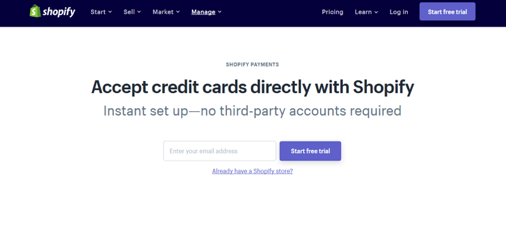
Shopify Payments is provided by Shopify.
Fee Structure
When you opt for Shopify Payments payment gateway the rates are as follows. For users with Lite or Basic Shopify Plan, the processing rate is 2.9% and 30 cents when you make a sale online and 2.7% when you’re selling in person. People who have opted for $79 Shopify plan need to pay 2.6% and 30 cents for processing when selling in person. You need to pay a 2.5% processing fee when you’re selling in person. For people who have opted for the $299 Advanced Plan, they’re required to pay 2.4% processing rate when selling in person or online. You need to pay an addition of 30 cents when you’re selling online.
Pros
- When you use Shopify Payments payment gateway, you won’t need to pay transaction fees. It usually charges up to 0.5% transaction fees.
- Since Shopify Payments comes integrated, you don’t need to spend a lot of time setting it up in order to make a sale.
- If you’re on the $299 per month Shopify plan or $79 per month Shopify plan then you will save on payment processing.
- You can add Fraud Protect as a means to protect yourself from fraud when you sell online. You won’t manually need to check for verification and you can sell risk-free.
- Customers will be able to check out much faster as they can save all the shipping and billing-related information. This can help you increase sales as customers will have a better shopping experience.
- Chargebacks are easy and convenient with Shopify Payments as you can easily access the details from the dashboard and resolve in minutes.
- U.S. merchants have to wait for only two to three days in order to receive their payments which is great news.
Cons
- Fraud Protect is available for only a handful of merchants at present in the U.S. It’s not yet available to merchants outside of U.S.
- Shopify can withhold your funds if you’re found to have many chargebacks which can be problematic.
Amazon Pay Payment Gateway
Amazon Pay is a subsidiary of Amazon which was launched in 2007. This payment processor is provided to the sellers who sell on Amazon. Merchants in the U.S., EU, and Japan can use Amazon Pay payment gateway at present. You need to be physically established and operate in the country in order to be eligible to use Amazon Pay.

Amazon Pay is a subsidiary of Amazon.
Fee structure
Amazon Pay uses flat-rate fee structure making it easy for merchants. For mobile and web transactions, the processing fee is 2.9% and 30 cents for U.S. transactions. For other country transactions, the fee is 3.9% and 30 cents. For purchases that have been made through Alexa, the processing fee is 4.0% and 30 cents for U.S. transactions and 5.0% and 30 cents for cross-border transactions. Charitable organizations need to pay 2.2% and 30 cents processing fee for U.S. transactions and 3.2% and 30 cents processing fee for cross-border transactions.
Pros
- It’s easy and simple to use Amazon Pay payment gateway for the merchant as well as the customer making it a good option for retailers.
- Amazon Pay enables customers to save their billing and shipping information which leads to faster checkout. This can help increase customer satisfaction and can lead to an increase in sales.
- As Amazon is trusted by millions of people all over the globe, Amazon Pay has the advantage of being trustworthy.
- Amazon Pay comes with free fraud protection service that saves your business from any type of fraud transactions.
- You don’t need to sign a long-term contract when you choose Amazon Pay as your payment gateway. Moreover, there’s no termination fee if you want to cancel early.

Byline: Mae Cornes
MADISON, Wis— Evo Tech announced new updates to its flagship platform, Evolution AI, designed to enhance threat detection and real-time data analysis for intelligence, security, and law enforcement agencies. The upgraded system introduces expanded capabilities in pattern recognition, automated alerts, and data aggregation to improve response accuracy in critical operations.
The company’s latest release focuses on enabling faster identification of potential threats across multiple data streams, including text, imagery, and audio inputs. By combining adaptive machine learning models with advanced verification tools, Evolution AI now provides a more precise and scalable method for detecting irregular or suspicious activity.
“Security challenges are growing more complex as data sources multiply,” said Maria Pulera, Evo Tech’s representative. “Our goal with these new features is to help agencies detect threats earlier and reduce the time between data discovery and action. These tools are built to support real-world decision-making in fast-moving environments.”
Among the new enhancements are:
- Automated Threat Classification: The platform can now categorize potential risks based on severity and relevance, allowing analysts to prioritize investigations more effectively.
- Cross-Platform Data Fusion: Evolution AI aggregates data from both structured and unstructured sources, presenting analysts with unified, real-time insights across visual, audio, and textual inputs.
- Adaptive Anomaly Detection: Using machine learning, the platform learns from historical data to recognize unusual activity patterns and flag potential security concerns automatically.
- Enhanced Visualization Tools: New dashboard designs allow users to view correlations, track trends, and monitor data sources simultaneously with improved clarity.
Evo Tech’s development team designed these upgrades to help intelligence and defense organizations address increasing information volume and data fragmentation. According to industry reports, global data generation is expected to exceed 175 zettabytes annually by 2026, underscoring the need for advanced analytical tools that can handle large-scale, multi-format data securely.
Pulera added, “Our technology aims to reduce the manual burden on analysts while maintaining the highest standards of data integrity. We’ve focused on features that allow agencies to operate more efficiently without compromising security.”
The company’s engineering team also confirmed that Evolution AI’s infrastructure supports deployment in secure, private networks, aligning with the data protection requirements of defense and intelligence clients. Evo Tech plans to continue rolling out additional modules throughout 2025, with a focus on multilingual data analysis and predictive threat modeling.
Evo Tech’s latest updates come as governments and private institutions invest heavily in AI-driven security technologies. Market forecasts from MarketsandMarkets estimate that AI in defense and security applications will surpass $13 billion by 2028, reflecting a growing global emphasis on automation and early threat detection.
About Evo Tech
Evo Tech is an artificial intelligence company specializing in data analysis and intelligence automation for security and defense operations. Its flagship platform, Evolution AI, integrates machine learning, big data processing, and adaptive analytics to enhance decision-making in high-volume, high-security environments. The company’s mission is to deliver reliable, real-time solutions that strengthen operational efficiency and intelligence accuracy across the public and private sectors.
Contact Information:
Maria Pulera, Representative
EVO Tech
https://evoai.tech/
-

 Tech5 years ago
Effuel Reviews (2021) – Effuel ECO OBD2 Saves Fuel, and Reduce Gas Cost? Effuel Customer Reviews
-
 Tech7 years ago
Bosch Power Tools India Launches ‘Cordless Matlab Bosch’ Campaign to Demonstrate the Power of Cordless
-

 Lifestyle7 years ago
Catholic Cases App brings Church’s Moral Teachings to Androids and iPhones
-

 Lifestyle5 years ago
East Side Hype x Billionaire Boys Club. Hottest New Streetwear Releases in Utah.
-

 Tech8 years ago
Cloud Buyers & Investors to Profit in the Future
-

 Lifestyle6 years ago
The Midas of Cosmetic Dermatology: Dr. Simon Ourian
-

 Health7 years ago
CBDistillery Review: Is it a scam?
-

 Entertainment7 years ago
Avengers Endgame now Available on 123Movies for Download & Streaming for Free