
Business
CBD-infused Drinks Can Now Help Restaurants Offset Declining Alcohol Sales

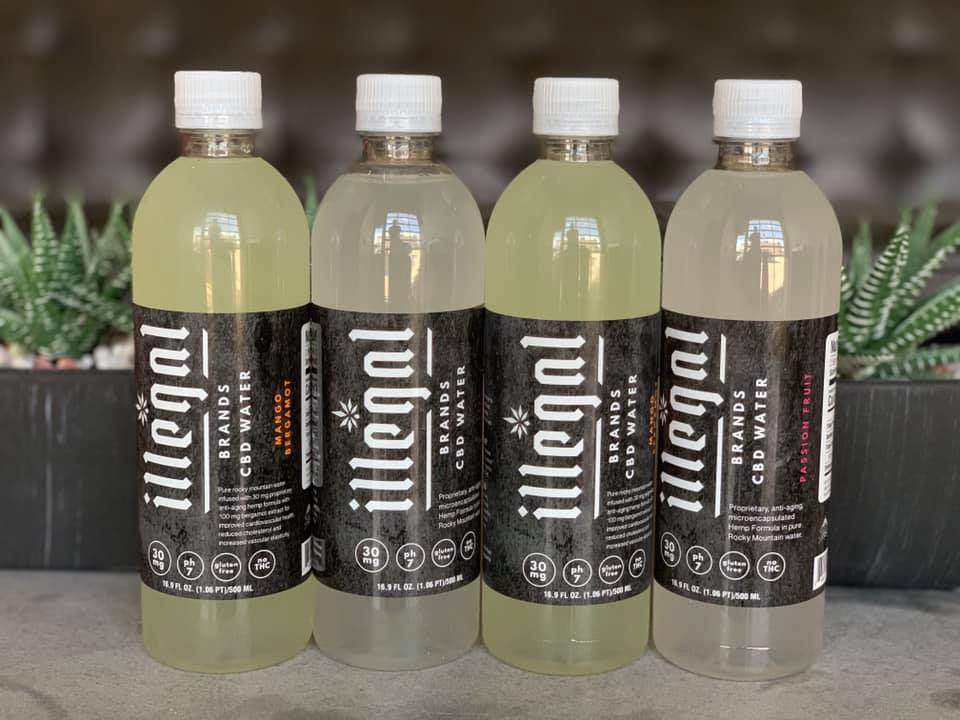
CBD-Infused drinks offer a way for restaurants to offset declining alcohol sales and West Coast Ventures Corp (OTC: WCVC) is leading the charge.
Restaurateurs are in for a hard time. Despite the fact that people have more disposable income to pay for a dinner out, their preferences are changing. Healthy lifestyles are trending and more restaurant guests are opting to skip the wine in favor of table water. With alcohol making up between 20-50% of the average restaurant’s revenue that’s a big gap to fill. West Coast Ventures Corp (OTC: WCVC) is taking a proactive step to solve the problem.
Mind the margins
Alcohol is facing an existential crisis. Rising awareness of health risks associated with drinking alcohol have helped to fuel a sustained decline in the sale of wine, beer and other alcoholic beverages. General sales fell 0.8% in 2018, continuing the decade-long trend with no end in sight.
“Staying in became the new night out,” said Danny Brager, vice president of beverage alcohol at The Nielsen Co. (NLSN). As people decide to skip on liquor, restaurants’ revenues shrink, prompting them to look for alternatives that could fill the expanding vacuum.
Cannabis-infused dining
The Farm Bill put non-psychoactive hemp on the menu across the United States. Unlike the THC induced “high,” normally associated with marijuana hemp contains mostly cannabidiol or CBD. This cousin of THC is devoid of the usual psychoactive properties, thus giving it more of a mild and “medicinal” character.
Renowned for its ability to dull pain and soothe anxiety, CBD is gaining traction. 74% of consumers believe cannabis to be more healthy than alcohol. For the restaurant industry in particular the National Restaurant Association found that 3 in 4 chefs named CBD-infused food a hot trend in 2019.
Cannabis beverages represent the most interesting subsector of the industry, predicted to be worth as much as $1.4 billion by 2023. CBD infused beverages have the advantage of being legal at a federal level, and so long as nobody makes unfounded health claims, being tolerated by the FDA.
Partnering for power
CBD drinks don’t only represent an alternative to alcoholic beverages. Many big cannabis players are betting on the fact that those uninterested in recreational marijuana may still develop a taste for CBD. This has lead to a number of big JVs between cannabis and alcohol companies.
The number one Canadian grower, Canopy Growth Corp. (CGC) has struck a deal with Constellation Brands (STZ) to produce cannabis-infused drinks. Molson Coors Brewing Company (TAP), has announced an agreement with HEXO Corp. (HEXO) and Tilray, Inc. (TLRY), another top ten pot stock, has teamed up with AB InBev (BUD) – the maker of Budweiser beer.
Whilst most of these companies are still figuring out how to enter the CBD space one American restaurant stock has beaten them to the punch, no pun intended.
West Coast begins in Denver
West Coast Venture Group (OTC: WCVC) has made headlines with their Illegal Burger chain, which combines fast-casual dining with CBD infused burgers and their iconic Illegal Brands infused water. The company’s locations in Denver, one of the most cannabis-friendly cities in the country, have seen great success with the Illegal Burger in Writer Square, located in Downtown Denver on track to exceed $1 million in sales this year.
WCVC is America’s first CBD restaurant stock and the first one to supply their locations with Illegal Brands CBD Water. Containing 30mg of CBD per serving, the water comes in passionfruit and mango-bergamot flavors and contain no artificial flavorings and zero added sugars.
The company has tapped into the CBD and health trend and married it good local food and a cool aesthetic. They have started to replicate this success with Illegal Pizza in Florida and plan to open a number of new restaurants, as well as sell their products online.
Pleasures for the new generation
People will always want a bit of a buzz with their meal. While they may no longer reach for a glass of bubbly, and lighting up a joint in a crowded restaurant will likely remain a faux pas, CBD infused drinks offer an innovative way to adapt to the new reality. Companies like WCVC will lead the way but it won’t be long until you see CBD on a menu near you.

Byline: Andi Stark
For many people facing a legal problem, the most difficult part is not understanding their rights but finding a lawyer willing to speak with them in the first place. Long wait times, unclear pricing, and administrative hurdles often delay even the most basic consultations. YesLawyer, an AI-enabled plaintiff firm operating across all 50 states, is testing whether technology can shorten that gap.
Founded in 2024 by 25-year-old entrepreneur Rob Epstein, the platform offers free intake, automated screening, and, in many cases, same-day conversations with licensed attorneys. The idea is simple: reduce the friction between a client’s first request for help and an actual legal discussion. In this interview, Epstein explains how the system works, where artificial intelligence fits into the process, and what problems the company is trying to address in the broader legal system
Q: When you say you want lawyers to be “as accessible as Wi-Fi,” what does that mean in practical terms?
A: It’s a way of describing speed and availability. Someone dealing with a workplace dispute, a serious injury, or an immigration issue should be able to move from an online form or phone call to a real conversation with counsel in hours, not weeks. YesLawyer is structured so that a client begins with a free case evaluation, goes through automated conflict checks and basic screening, and, in many instances, speaks with a lawyer the same day.
Q: How does the process work once someone contacts the platform?
A: We use a structured workflow. It starts with a short questionnaire and an initial conversation to capture basic facts. That information feeds into conflict checks and internal review. The system then proposes a match with a licensed attorney and provides a calendar link for a virtual consultation, often within 24 hours. After the meeting, the client receives a written legal plan outlining next steps, deadlines, and estimated fees.
Q: Where does artificial intelligence fit into that process, and where does it stop?
A: AI is used for organizing and routing information, not for giving legal advice. It helps with conflict checks at scale, case categorization, and structured summaries so attorneys can focus on the substance of the matter. Every consultation is conducted by a licensed lawyer, and all decisions about strategy or next steps are made by humans.
Q: What problem is this model trying to solve in the current legal system?
A: Delay and cost are still major barriers. Many civil plaintiffs face long waits just to get a first appointment, along with high retainers and hourly billing that make early legal advice risky. We try to respond with faster consultations, flat-fee options, and financing. The idea is to remove administrative friction so lawyers spend less time on logistics and more time speaking with clients.
Q: Some critics say platforms like this blur the line between a technology company and a law firm. How do you describe YesLawyer?
A: We describe ourselves as a national, AI-enabled plaintiff firm that connects clients with independent attorneys. That structure does raise regulatory questions, especially around responsibility and oversight. We focus on licensing verification, attorney-written case plans, and clear communication about fees and services.
Q: You’ve said the main bottleneck is “systems” rather than people. What do you mean by that?
A: The issue isn’t that lawyers don’t want to help more people. It’s that the systems around them make it hard to scale their time. Intake, scheduling, and document handling take hours. Automating those parts means attorneys can handle more matters without being overwhelmed by repetitive tasks.
Q: Does this model risk favoring only the most profitable cases?
A: That’s a real concern in legal technology. Automation often works best for repeatable, high-volume disputes. Our view is that lowering administrative cost can actually make it easier to take on smaller or more complex cases that might otherwise be turned away. Whether that holds over time depends on the data.
Measuring Impact Over Time
YesLawyer’s attempt to compress the timeline between inquiry and consultation reflects broader changes in how legal services are being delivered. As artificial intelligence becomes more common in administrative work, firms are experimenting with new ways to reduce wait times and clarify costs.
The company’s early growth suggests that many clients value faster access to an initial conversation, even before considering long-term representation. Whether this platform-based model becomes widely adopted or remains one of several emerging approaches will depend on regulatory developments, lawyer participation, and measurable outcomes for clients. For now, YesLawyer’s experiment highlights a central question in modern legal practice: how quickly can help realistically be made available to the people who need it.
-

 Tech5 years ago
Effuel Reviews (2021) – Effuel ECO OBD2 Saves Fuel, and Reduce Gas Cost? Effuel Customer Reviews
-
 Tech7 years ago
Bosch Power Tools India Launches ‘Cordless Matlab Bosch’ Campaign to Demonstrate the Power of Cordless
-

 Lifestyle7 years ago
Catholic Cases App brings Church’s Moral Teachings to Androids and iPhones
-

 Lifestyle5 years ago
East Side Hype x Billionaire Boys Club. Hottest New Streetwear Releases in Utah.
-

 Tech7 years ago
Cloud Buyers & Investors to Profit in the Future
-

 Lifestyle6 years ago
The Midas of Cosmetic Dermatology: Dr. Simon Ourian
-

 Health7 years ago
CBDistillery Review: Is it a scam?
-

 Entertainment7 years ago
Avengers Endgame now Available on 123Movies for Download & Streaming for Free