
Lifestyle
Compression Socks for Running

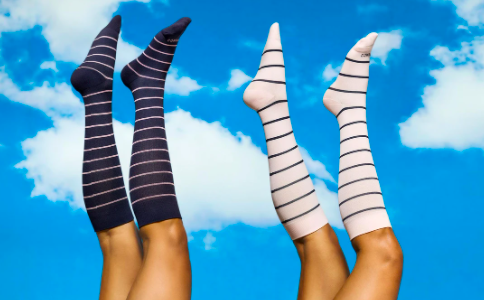
If you’re an avid runner, sticking to your schedule is a big deal. A missed jog in the morning throws off your entire day. An injury that slows you down will quickly ruin your mood. Anything that keeps you moving is worth a shot, and it could be as simple as a pair of running socks. These compression socks for running could be what’s missing to maximize your performance and recovery rate in your favorite sporting activity.
Runners ask a lot of their legs, but not all of them give something in return. Make a difference, and keep the relationship on solid footing (pun very much intended). As you will see in this article, compression gear does more than most people realize.
For someone who depends on running for their physical and mental health, high-quality running socks can make a world of difference.
Benefits of wearing compression socks for running
From style to support, this type of running socks offer loads of helpful functions when you’re on the move.
Blood Flow
Circulation is the name of the game with graduated compression. Smart fabric places gentle pressure at the ankle and decreases tension as it moves up the leg. This mechanical improvement promotes blood flow, reducing blood stasis or stagnation.
Given the uplift in blood circulation they confer, these socks are useful in a number of medical issues. It is also the reason why runners benefit from them so greatly. Moreover, runners with blood circulation problems should definitely try them (1).
As muscles get overworked during a run, they burn through oxygen at a pretty quick pace. The blood functions as the delivery driver, essential to keep up and endure. Just as you stay more alert with a steady air flow, your legs move better with improved circulation.
Exercise gets your heart rate up and pumps more blood to meet higher demands. But even in that scenario, steady circulation in your legs isn’t a guarantee. With the aid of compression socks, blood flow gets just the boost it needs. As you tack on the miles, you’ll probably notice less fatigue and soreness. Your wall might come a little later, encouraging you to push a little harder and go a little farther.
This is not only an assumption or a theoretical framework. According to a study performed in the University of Erlangen-Nürnberg, running performance is higher after using compression socks for running. The participants achieved higher speed thresholds and a longer running time (2).
Comfort
Circulation might be the most important benefit, and makes a difference in running performance. However, the exterior comfort provided by running socks is nothing to scoff at.
On a cold day, a little extra cover with zero wind resistance is hard to pass up. On a warmer day, you’ll be happy to have breathable socks to wick away sweat. They allow you to power on without lugging around all that moisture. Anything that improves how you look and feel will also enhance the mental comfort that’s so important for a challenging run.
Athletic brands sell all sorts of glitzy leg and footwear meant to make you feel fast and sporty. At the end of the day, very few of those fashion-forward items deliver the comfort and appeal you’ll get from a quality pair of compression socks.
Running socks during the cooldown
The run might be done, but the need for compression for running is just beginning.
Recovery
Remember the blood flow your muscles crave while you run? It’s not only important during the run. Hours after exercise it is just as beneficial.
After vigorous exercise, your body tries to mend the muscles you strained while running. Lactic acid sneaks in and builds up in the tissue. This acid is responsible for the muscle aches, and you want it to go away. So, the steadier the blood flow, the more quickly you move the acid along.
Keeping your compression socks for running during cooldown might make difference between waking up with a bounce in your step or completely unable to take any steps because everything hurts so much.
The faster your calves and thighs repair themselves, the sooner you can get back on the track. Ibuprofen can help a little, but improved circulation is really what you want during your recovery.
So, picture yourself getting back home. All you want to do is probably shower and lounge. But you’ll be doing yourself a huge favor if you remember to lounge with your compression socks on.
Cramp Control
If you’ve ever followed up a long run with an insufficient recovery period, you know your risk of soreness and cramping goes way up. Unfortunately, a lot of runners do not have sufficient recovery time. If you want to complete your daily goal, you may have to run a couple of miles on the lunch break or right before driving to work. You don’t always have time to work out, recover, and take care of the rest of obligations.
In the event you don’t stretch or hydrate enough after a jog, compression socks might just save the day. The cramps that flare up in your calves and the soles of your feet rely on extraneous muscle movement and limited circulation. They can both be cured by appropriate compression from running socks. Your muscles twitch less when you have a tight stocking around your leg. Also, the increased blood flow brings that much-needed oxygen to the muscle tissue. Altogether, it is what your muscles need for a more rapid and effective recovery.
Aside from cramps being painful, they hobble you and slow down your overall recovery. The longer you’re forced to walk gingerly, the longer it takes for the lactic acid to clear. Cramps can also sneak up on you in the middle of the night, sending you flying out of bed as you try to stretch the knot out of your calf. Disrupted sleep takes its toll on muscle regeneration and it’s also really, really annoying.
In this scenario, compression socks for running are also appropriate during recovery time. They have benefits on the short-term and the long-term. According to a study published in the International Journal of Sports Physiology and Performance, even athletic guys can benefit from sweeping away excess lactic acid with the aid of compression socks. Using their compression stockings during recovery, they achieved less muscle soreness and improved muscle function. The benefits are not only reported the next day, but shortly after starting the recovery period (3).
Should you keep using compression socks on your rest day?
Unlike your favorite running shoes, compression socks aren’t for marathon days only. They can also prevent and treat several medical conditions.
Preventative Care
As a runner, your relationship with your leg does not end after a marathon or a jogging session. Your legs are more important than that. Thus, do not limit yourself to taking care of them during and immediately after a run. Take a step back and think about how you treat your body the rest of the time.
Even on off days, your legs have to work, and your blood circulation tends to be very bad. For too many people, the biggest obstacle of blood flow comes during week days. We are too often sitting for hours on end. The time spent in your car or seated at a desk is also terrible for circulation.
So, if you’ve ever gone for a run after work and felt like your legs were extra tired, you know why. The time of day isn’t necessarily to blame, your mood doesn’t have to do, either. Eight hours of sitting and staring at a computer screen are the ones to blame. All of this prolonged sitting time can exhaust your legs as much as anything else.
Or let’s say you’re a surgeon, a laboratory technician, a bartender or retail staff. If you are standing for a long time as a part of your work, your blood circulation is also compromised. A recent study that evaluated over 2000 workers from various fields showed that this is the case. People who stand for hours at work have a higher risk of nocturnal leg cramps and varicose veins (4).
But there’s something you can do to change that. Wearing compression socks at your desk, during your commute, or at work if you know it involves standing for a long time will help counter the effect of so many hours in a less-than-ideal position.
You know when you slow down at work and start yawning incessantly. Your brain is probably begging for a quick oxygen boost. Circulation socks give your legs a nice little yawn break, if there could be such a thing. Along with keeping legs fresh and preventing fatigue, compression socks reduce the risk of blood clots, too. For people with certain medical conditions or those who fly a lot, compression has a huge medical upside that anyone can appreciate, even if you’re not you’re a runner.
Style
For a long time, compression socks came in one boring, almost visually offensive, design. No matter how much a person stood to benefit from wearing them, it was hard to overcome the off-putting aesthetic. Now, with improved awareness of the far-reaching health benefits, a little extra emphasis has been placed on comfort and style.
Plenty of designs and colors are available. They are made to match your favorite running outfit or provide an appropriate accent to whatever you wear to work. As far as athletic wear goes, running socks give you that streamlined look you always wanted. They make you feel faster, providing a little motivation to push the pace.
If you take pride in your running, you need to take pride in how you care for yourself. Using compression socks for running, immediately after, and in the days between your runs can help you stay healthy, comfortable, and ready to go. Who would’ve guessed a pair of running socks reported all of those benefits?
References:
- Lim, C. S., & Davies, A. H. (2014). Graduated compression stockings. Cmaj, 186(10), E391-E398.
- Kemmler, W., von Stengel, S., Köckritz, C., Mayhew, J., Wassermann, A., & Zapf, J. (2009). Effect of compression stockings on running performance in men runners. The Journal of Strength & Conditioning Research, 23(1), 101-105.
- Bieuzen, F., Brisswalter, J., Easthope, C., Vercruyssen, F., Bernard, T., & Hausswirth, C. (2014). Effect of wearing compression stockings on recovery after mild exercise-induced muscle damage. International journal of sports physiology and performance, 9(2), 256-264.
- Bahk, J. W., Kim, H., Jung-Choi, K., Jung, M. C., & Lee, I. (2012). Relationship between prolonged standing and symptoms of varicose veins and nocturnal leg cramps among women and men. Ergonomics, 55(2), 133-139.

Empty hallways echo with footsteps that aren’t yours. The carnival rides spin without passengers. Familiar spaces, the ones etched into childhood memory, twist into something menacing, something that watches. Lonely Rabbit’s Midnight Strikes arrives eight months before its completion, targeting a youth horror genre that is hungry for experiences that feel personal rather than purely fantastical. The indie studio searches for a publisher while building momentum for a game that weaponizes nostalgia, turning high schools and carnivals into theaters of psychological dread. As franchises age and audiences demand fresh scares, this PC title tests whether memory-based terror represents the next chapter in youth horror.
Maturing Past Jump Scares
Youth horror gaming shed its training wheels. Little Nightmares and Bendy and the Ink Machine proved that younger players crave atmospheric storytelling over cheap shocks, puzzle-solving over gore, and visual distinctiveness over recycled formulas. Bendy’s ink-soaked corridors attracted a massive audience, including children drawn to the characters despite the T-rating, because the experience felt emotionally authentic rather than condescending. Players now expect psychological tension woven through environmental details, stories told through decaying spaces, and cryptic objects scattered across levels.
The genre’s maturation reflects audiences who grew up solving Portal’s test chambers and exploring Limbo’s monochrome nightmares. Among the Sleep demonstrated the potency of perspective: experiencing horror through a toddler’s eyes made familiar domestic spaces feel uncanny and threatening. Fran Bow plunged players into hand-drawn asylum corridors where perception itself became unreliable, where puzzles demanded engagement with trauma and grief rather than simple pattern recognition. Modern youth horror respects its audience enough to disturb them thoughtfully, creating experiences that linger days after the screen goes dark.
Corrupted Childhood as New Territory
Midnight Strikes drags players through levels “reminiscent of their childhood memories”: the high school, the carnival, spaces universal enough to feel personal. Lonely Rabbit constructs what they describe as a “menacingly beautiful atmosphere filled with bizarre and terrifying creatures,” pairing monster survival with puzzle challenges that prioritize mood over mechanics. The game adopts a “cinematic and otherworldly feel” while grounding its terror in locations players actually inhabited, making fear feel intimate rather than abstract.
This memory-based direction distinguishes Midnight Strikes from fantasy settings that dominate youth horror. Deserted carnival rides and empty school corridors carry weight because players recognize them as such. Maybe the locker rows feel too narrow, maybe the Ferris wheel groans with a voice that shouldn’t exist, maybe the cafeteria smells wrong. The game challenges players to “survive their fear of the unknown” while navigating spaces that should feel known, creating cognitive dissonance that amplifies dread. Other developers exploring similar territory, such as Subliminal, which utilizes “nostalgic spaces” and “a rotting feeling that something is not quite right,” suggest that childhood corruption represents an emerging subgenre.
Lonely Rabbit’s approach weaponizes personal history. Every player attended school, visited carnivals, and formed memories in spaces designed for safety and joy. Corrupting those spaces turns nostalgia into a threat, asking audiences to confront distorted versions of their own experiences. The monsters inhabiting these environments become more than obstacles; they represent the fear that familiar places might betray us, that memory itself becomes unreliable when shadows move in the wrong direction.
Smaller Teams, Bigger Risks
Indie studios like Lonely Rabbit maneuver where larger publishers hesitate. Their two-month publisher search and pre-launch community building reflect changing pathways for games that defy established franchise formulas. Building a follower base before release creates market validation, proving that audiences want what you’re making before significant capital is committed. Transparency about development timelines and production milestones generates audience investment, turning potential players into advocates during the publisher search.
Midnight Strikes represents creative gambles major studios avoid when quarterly earnings loom. Smaller teams experiment with concepts, corrupted childhood spaces, memory-based horror, pand sychological tension prioritized over action mechanics, that might fracture focus groups but resonate with underserved audiences. Lonely Rabbit’s global distribution ambitions demonstrate indie confidence: build something distinctive enough, and geography becomes irrelevant when digital storefronts erase borders.
The next eight months determine whether Midnight Strikes defines a subgenre or remains an interesting experiment. If players respond to horror that mines personal history, if corrupted nostalgia proves more terrifying than fantasy monsters, other developers will follow this path. Lonely Rabbit’s gamble, that childhood spaces make better horror stages than alien planets or demon dimensions, could redefine what scares young players next. The studio’s publisher search tests whether the industry views memory-based terror as the future of youth horror or a niche curiosity. Either outcome writes the next page in a genre still learning what it can become.
-

 Tech5 years ago
Effuel Reviews (2021) – Effuel ECO OBD2 Saves Fuel, and Reduce Gas Cost? Effuel Customer Reviews
-
 Tech7 years ago
Bosch Power Tools India Launches ‘Cordless Matlab Bosch’ Campaign to Demonstrate the Power of Cordless
-

 Lifestyle7 years ago
Catholic Cases App brings Church’s Moral Teachings to Androids and iPhones
-

 Lifestyle5 years ago
East Side Hype x Billionaire Boys Club. Hottest New Streetwear Releases in Utah.
-

 Tech7 years ago
Cloud Buyers & Investors to Profit in the Future
-

 Lifestyle6 years ago
The Midas of Cosmetic Dermatology: Dr. Simon Ourian
-

 Health7 years ago
CBDistillery Review: Is it a scam?
-

 Entertainment7 years ago
Avengers Endgame now Available on 123Movies for Download & Streaming for Free