Connect with us

Lifestyle

Get To Know The Mastermind Author Behind The Fantasy World of Twisted Fairy Tells: The Untold Truths

mm

Published

on

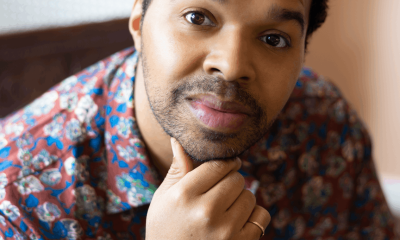
“The Three Little Pigs”, “Goldilocks And The Three Bears”, and “Little Red Riding Hood” make up some of the dozens of fairy tale classics we were told when we were children. But if we were to take a closer look at some of these magical tales, we’d realize that their original versions are far more twisted than the ones we recognize in the movies and children’s books today. We sat down with William Moore, the author of the fiction novel Twisted Fairy Tells: The Untold Truths, to discuss the centuries-old history of these tales and how he’s incorporated them into a new fantasy world with a dark & twisted reality that’s ideal for an adult reader.

Q: Tell us a little bit about Twisted Fairy Tells: The Untold Truths.

Moore: [The book] is narrated by Charles Wellington; also known as the Keeper of Tales. He is handed down an old, mystical scroll that appears to have nothing on it, until he realizes it works off of magic. Eventually, he figures out the scroll contains secret stories of some of the classic fairy tales we know from our childhoods, like Red Riding Hood and Rapunzel. But in this world, they consist of a twisted alternate reality.

Q: Do the stories in the book match up to the original tales from the 1600-1800s?

Moore: Yes and no. I did incorporate specific names, dates, and places that are in line with the originals, some of which are far older than the 1600s. I encourage the reader to fact-check them because they took me forever to research. But the series of “twisted tales”, along with the origins and backgrounds of each character, are my creation.

Q; Speaking of research, how long did it take you to find all the information necessary to write the novel?

Moore: It took about seven months of deep research for the entirety of the book. I knew most of the classic fairy tale stories everyone else knew, but researching the originals served as inspiration for me to create the perfect twist. I read thousands and thousands of articles that mostly contained speculated information. It’s impossible to know the exact accuracies of the original stories because they were created so long ago, but for the most part, you begin to understand the specific elements of the events that took place.

Q: So, all of these tales are based on true stories?

Moore: Some of them are said to be based off of historic events, but there are obviously some elements that are exaggerated. No one knows for sure. All I know is that the real stories are really, really, really dark, and they are very far from the stories Disney and the Grimm brothers have put out.

Q: Where’d you get the idea to write Twisted Fairy Tells: The Untold Truths?

Moore: One of my good friends, Carlos Lopez, is an artist and a painter. He was working on some contemporary pieces that incorporated twisted versions of classic fairy tales, and he invited me over to look at some of the ones he had finished. When I saw them, I was floored. They were incredible. They inspired me to start thinking of the story behind each painting, and I thought, ‘how cool would it be to write a creepy version of all the fairy tales from my childhood?’ I told him about my idea and he told me it was worth a shot. So I went home and wrote my first remixed story about Santa Claus. The book started from there.

Q: How long did it take you to write the whole thing?

Moore: It took me about a month and a half to finish writing, not including the research portion.

Q: How did you finish it so quickly?

Moore: The book pretty much wrote itself. The scenes played out in my head and I would write what I saw as it was happening. The characters did whatever they wanted in my head. I was just a spectator.

Q: Is your process usually like that when you’re writing?

Moore: Yes, most of the time. I don’t have to do too much for it to start pouring out. I just blast music– not to listen to but to help me zone out– and I start writing.

Q: Did you go through a long editing process?

Moore: Not at all, actually. No edits were made to the storyline after I completed the book. I trusted the process wholeheartedly and it ended up making perfect sense in the end. The only edits were for grammatical and stylistic purposes.

Q: Who is considered the ideal reader for this novel?

Moore: Well, I didn’t have anyone in particular in mind. I wrote it so that a reader of any age could enjoy it. But I guess it’s mostly intended for ages 14-25. Essentially, older audiences.

Q: What was the hardest part about the writing process?

Moore: The research was, by far. It took up a lot of time and a lot of reading. There were so many details that went into the novel. It was fun, but there were a lot of sleepless nights.

Q: What would your ideal success entail regarding the launch of the series?

Moore: I’m a big cosplay fan, so my long-term goal is for the series to take part in a big cosplay conference. You know, like the Comic Cons events. I want the readers to want to get familiar with the characters and the fantasy world even after they’re done reading.

Q: When does the book come out?

Moore: The first part is available now, and Part Two will be releasing in October.

Q: Is there anything else you’d like to share with your future readers?

Moore: My writing is my ability to share the experiences in my head and some of the things I’ve lived through with some of my readers. It is my escape. I am so grateful for the opportunity to be able to do that. And I just hope other people will enjoy it as much as I did writing it for them. There is so much yet to come.

You can find Twisted Fairy Tells: The Untold Truths on Amazon.com and other online retailers.

Michelle has been a part of the journey ever since Bigtime Daily started. As a strong learner and passionate writer, she contributes her editing skills for the news agency. She also jots down intellectual pieces from categories such as science and health.

Continue Reading
Advertisement
Click to comment

Leave a Reply

Your email address will not be published. Required fields are marked *

Lifestyle

The Future of Education Through Patricia Vlad’s Eyes

mm

Published

on

The traditional systems that once defined learning, rigid curricula, standardized testing, and a narrow focus on academic performance, are increasingly being questioned. And why is that?

Starting in the 1880s, thinkers like John Dewey advocated for a shift in teaching methods, leading to the rise of progressive education. Unlike traditional models that emphasize rote learning and job preparation, progressive education puts students at the center of the learning experience. Changemakers like Patricia Vlad also believe that hands-on, experiential learning is the key to deeper understanding. This approach prioritizes critical thinking, curiosity, and personal passions, encouraging students to become lifelong learners who actively engage with new ideas and problem-solving. Schools and parents that embrace this model focus not just on what students need to know but on how they can continue to grow and adapt throughout their lives.

As the world changes, so do the skills, knowledge, and adaptability students need to succeed. The future of education is about personalization, inclusivity, emotional intelligence, and meaningful learning experiences.

With years of global teaching experience, Patricia has seen firsthand how different education systems approach learning. She believes that the future of education must embrace neuroscience, technology, and self-awareness to create a system that is not just efficient but also empowering for students.

“Education should be about more than just passing tests. It should equip students with the skills to navigate life, understand their strengths, and feel empowered in their learning journey,” Patricia emphasizes.

The Future Belongs to the Emotionally Intelligent

Unlike technical skills that may become obsolete with automation, EI – our ability to understand and manage emotions, build relationships, and navigate challenges, remains uniquely human. It plays a crucial role in self-awareness, resilience, effective communication, helping individuals excel in both personal and professional life.

When it comes to EQ, think of it like this: Kids with strong emotional intelligence are better at handling stress, resolving conflicts, and overcoming challenges. Studies suggest that EQ is a stronger predictor of long-term success than IQ. And let’s be real, no matter how advanced AI gets, it will never replace the depth and impact of human connection.

How LevelUp Cultivates Emotional Intelligence Through Patricia’s Coaching

1. Learning Will Be Personalized and Strength-Based

Instead of forcing students to fit into a system, education will be tailored to each child’s learning style, strengths, and interests. Neuroscience-backed methods – such as learning based on attention spans, emotional regulation, and brain development research – will be used to create adaptive learning environments, allowing students to progress at their own pace.

Through tools like LevelUp, which incorporates the Big Five Personality Model, teachers and parents will have a better understanding of a child’s cognitive profile, enabling them to offer more personalized support.

2. Emotional Intelligence Will Be a Core Part of Learning

The future classroom won’t just cover maths, science, history, or even language – it will also focus on self-awareness, empathy, and social skills. As research shows language doesn’t just communicate thought; it actively shapes it. The intentional use of language can influence how the brain processes emotion, memory, and social connection – making it a powerful tool for developing emotional intelligence.

LevelUp integrates EI into its framework, ensuring students not only understand themselves better but also build confidence, manage stress, and develop strong interpersonal skills.

3. Education Will Be More Interdisciplinary

The future of learning will move away from isolated subjects and toward interdisciplinary education, where concepts from different fields are connected and applied to real-world problems.

For example, students might blend neuroscience with psychology to understand learning processes or combine technology and art to develop creative solutions.

4. Technology Will Support, Not Supplant Human Connection

In the classroom of the future, meaningful engagement between students and teachers will remain at the heart of learning. Peer collaboration, hands-on projects, and real-time feedback from teachers will continue to be irreplaceable elements of education. 

Technology will play a supporting role enhancing, rather than dominating, the learning process.

Whether through gamified modules, virtual simulation, or adaptive platforms, tools like LevelUp will be used intentionally to deepen understanding and personalize feedback, always in service of human connection, not as a substitute for it.

5. Schools, Parents, and Students Will Work Together

Education won’t be confined to the classroom. Parents will play a bigger role in guiding their children’s learning, using tools like LevelUp to track progress, support emotional development, and encourage curiosity at home.

By strengthening the parent-child-teacher connection, education will become a team effort, ensuring every student receives the support they need to reach their full potential.

A Future Built on Empowerment

By combining neuroscience, technology, and emotional intelligence, Patricia is helping to reshape education into something that prepares students not just for exams, but for life itself.

A truly effective education system values each student’s creativity and passions—not just their ability to recall information. Instead of just delivering information and expecting rote memorization for test scores, teachers encourage active, hands-on learning through projects, experiments, and peer collaboration. This approach allows students to explore topics that genuinely interest them, making learning more engaging, meaningful, and personal.

The LevelUp platform, developed under Patricia’s leadership, is contributing to a growing shift toward education that is rooted in self-awareness and real-world readiness. Additionally, emotional intelligence is a core part of learning, not an afterthought.

One story that sticks with Patricia is that of a student named Ethan, who had always been labelled “distracted” in class. His teachers described him as bright but inconsistent, often zoning out or fidgeting during lessons. When his LevelUp profile revealed high reactivity and strong openness, a new picture emerged: Ethan wasn’t disengaged—he was overwhelmed by too much information at once and thrived when topics were explored through hands-on, creative activities.

With this insight, his teacher began breaking tasks into smaller steps and introducing art and building projects tied to the curriculum. For the first time, Ethan started raising his hand during class and even stayed back after school to show his work. “We’d been trying to ‘fix’ him when all we needed was to understand him,” his teacher later shared.

It was a small shift, but for Ethan, it changed everything.

Continue Reading

Trending