
Lifestyle
How Beauty Industry Icon Ani Goulayan Paved The Industry And Created Her New Makeup Line, Vanity Makeup Cosmetics

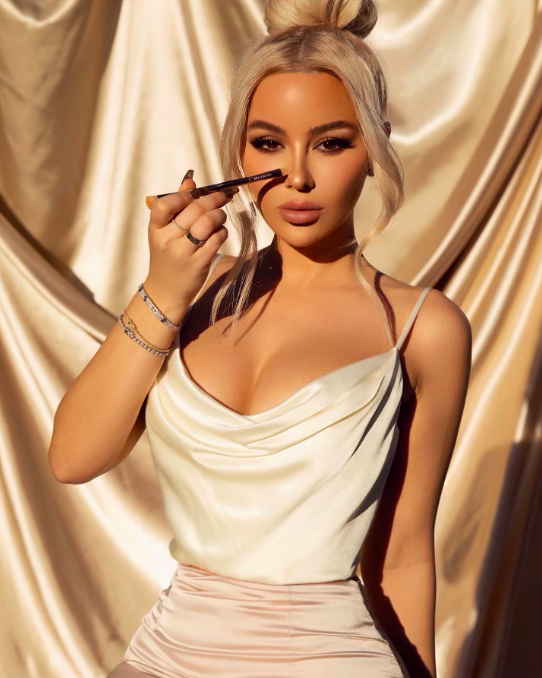
Meet Ani Goulayan– AKA @vanitymakeup– the down-to-earth instagram influencer and self-made #bosslady that has helped paved the way of the immeasurably influential modern-day beauty industry. Her internet success has geared her to not only open a makeup academy of her own in Los Angeles, but it’s also given her the foundation to become the recent founder and creator of a cruelty-free and fully-inclusive cosmetics line named Vanity Makeup Cosmetics.
Goulayan’s very first makeup gigs as a late teen consisted of photoshoots she’d work on for free in exchange for prints to add to her portfolio. Shortly after, she landed her first salon job in which her makeup career began to take its course. At first intimidated by the intensity of the industry, she began to feel that perhaps makeup wasn’t going to be a part of her long-term career. But when she joined her second salon job and took advantage of an unseen opportunity, her life changed forever.
Instagram had just started gaining popularity, which gave the 20-year-old the brilliant idea to use the platform as a digital portfolio. Her posts consisted of makeup looks she’d create at home and 15-second videos of the looks she’d give her clients at the salon. It didn’t take long for her talents to take the social channel by storm and go viral. Posts of her dramatic eyeshadow creations constantly gained enough popularity to be featured on the “popular page”, now known as the application’s Explore page. Back in the day, the posts chosen by the algorithm remained on the app’s highlighted tab for 24 hours, susceptible to hundreds of thousands of viewers a day.
“Every time I landed on the popular page, I’d gain two to three thousand followers,” the makeup icon shared. “That inspired me to create consistently so I could post everyday. I’d say 9 out of 10 times, my work would land on the popular page, so I was constantly going viral… There was a point where I was growing forty to fifty thousand followers on my page a month. It was absolutely insane.”
Over the last 9 years, the hard-working beauty influencer has grown over 1.3 million followers on Instagram. Back in 2012, the beauty industry was nowhere near the digital monster it is today. And despite not having any guidance or precedent to follow, it was the perfect moment for the young artist to make a breakthrough on the social platform.
Although her journey to success has been anything but easy, Goulayan says she’s thankful for the hardships in her life that have gotten her to where she is today. “A lot of people would look at me when I was younger and think I would only be doing makeup because I wasn’t capable or smart enough to do anything else. They’d look down on me and ask if I was doing badly in school, or they’d simply just make me feel bad for choosing makeup as a full-time career as opposed to like, a business degree,” she says. “But once everyone started seeing how much money I was making, they couldn’t believe it. And once the beauty industry became a trend, those people started using my content as a resource.”
Followers began to learn how to recreate Goulayan’s looks by following step-by-step video tutorials she’d post on her page. But even with that, hundreds of local followers would continuously request the influencer to teach in-person makeup lessons. Initially, she hosted 20-40 student classes at the salon she worked at. But as her followers grew, so did her client base, and it wasn’t long before she found herself selling out a 120-student masterclass in downtown Los Angeles. Seeing a clear business opportunity at hand, the artist then proceeded to opening up her own studio and makeup academy in 2016 called Vanity Makeup School.
Aside from being one of the first beauty gurus to go viral, Goulayan was also one of the very first artists to showcase and explain the process of ‘contouring’ online. It only made sense that, once she launched her long awaited makeup brand, the first product she’d release would consist of a custom-formulated contour palette. After almost two years of production, Vanity Makeup Cosmetics launched in February 2020 with the Sculpt & Glow Contour Palette.
“When I had just started out, I used to say to myself, ‘imagine what it would be like if I could make my own makeup’. I never in my wildest dreams thought that I’d have the opportunity to do half of the things I’ve done in my life, let alone make that dream a reality,” the creator said. “I could say I’ve been really lucky, but that’s not really true. I know my hard work is what has made all this happen for me, and I’m grateful I have a tough personality and I never let anybody’s negativity get in my way.”
Vanity Makeup Cosmetics is set out to launch two more exclusive products by the end of 2021, which you can follow along at @vanitymakeupcosmetics on Instagram. The #bosslady also admits she has a secret project up her sleeve, which she plans on releasing by Summer 2021. When asked if she ever plans on taking a break, she said, “discomfort and struggle are what keep me alive… I’m never satisfied staying still, it’s not in me.” If she’s already conquered the beauty industry before the age of 30, we can’t wait to see what she does in the next 10 years.
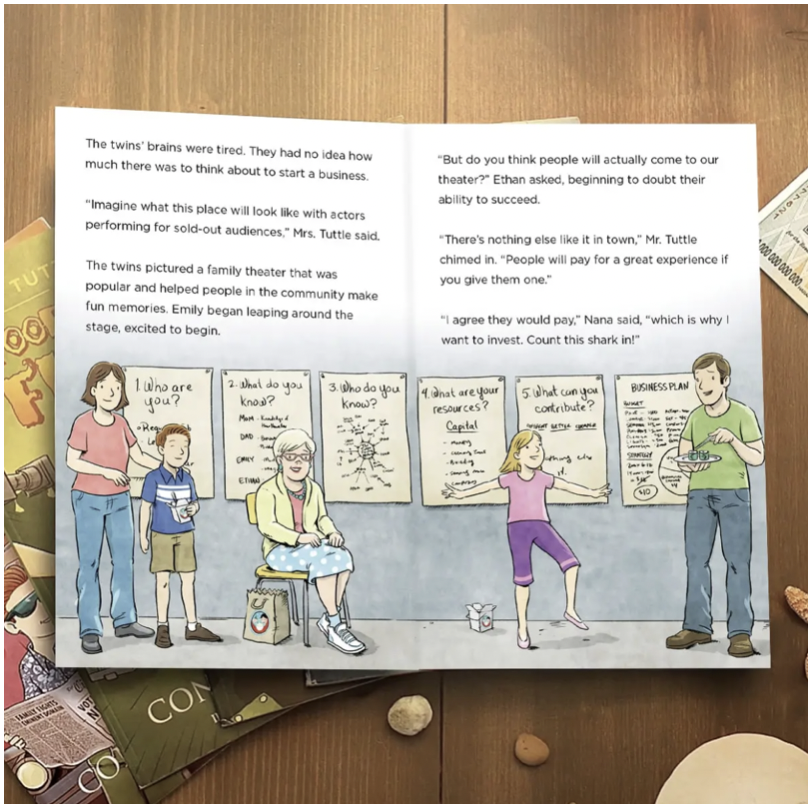
Michael Currier of Massachusetts is an unvaccinated gastroenterologist and entrepreneur, and he’s seen misinformation firsthand. He’s long been teaching his kids how to spot misinformation, but they were naturally skeptical when they didn’t hear it from anyone but him. However, the right books taught his kids how to combat misinformation, and they will teach your kids too! If you’re wondering how to raise independent thinkers who can spot misinformation, the Tuttle Twins books are essential tools for your toolbelt.
How Critical Thinking Combats Misinformation
When kids can think critically, they become able to evaluate the credibility of sources and look for evidence, also identifying their own and others’ biases. Critical thinkers don’t just passively absorb information; they take it apart piece by piece to see what makes it “tick.”
Critical thinkers question the credentials of an author or source, alongside their motivations and whether they provide supporting evidence that goes beyond just statements that require trust. Kids who can think critically also spot confirmation bias, which is the tendency to believe something that fits in well with the thinker’s current belief system or worldview. This reduces demand for fake news that simply elicits an emotional reaction.
When your kids can think critically and independently, they will also be able to spot logical fallacies, like drawing causal conclusions from data that’s simply correlational. Critical thinkers can also tell the difference between scientific evidence and someone’s opinion.
Independent, critical thinkers don’t just read a page. They look up information from other trusted sources to verify that the original source is accurate. Critical thinking also encourages a healthy skepticism that causes independent thinkers to pause and assess emotionally charged content before they spread it around, realizing that misinformation frequently exploits outrage or fear.
Critical thinkers can also recognize propaganda tactics such as loaded language, false dilemmas, and “alternative facts.”
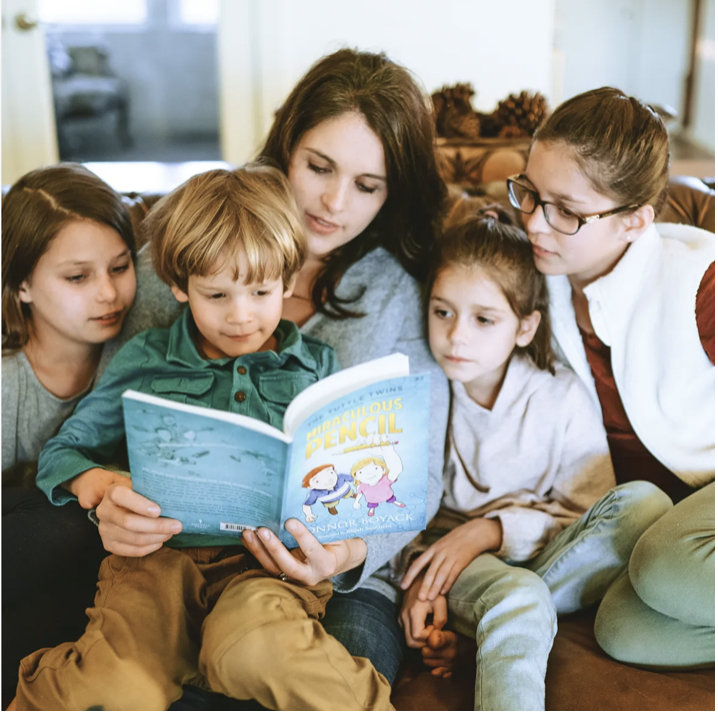
Photo: Tuttle Twins
Seeking Out Books that Teach Critical Thinking
At this point, parents wondering how to raise independent thinkers will want to look for books that teach critical thinking, like the Tuttle Twins series. The Tuttle Twins books explain things like misinformation, freedom of speech, and even the World Economic Forum while explaining that certain people get to decide what is and isn’t misinformation.
Books that teach critical thinking don’t just present facts. They encourage kids to analyze, evaluate, and put together arguments, frequently shining a light on logical fallacies and biases while calling for active application instead of a passive taking-in of information. Books that teach critical thinking will help you with how to raise independent thinkers by guiding you and your child through reasoned questioning and requiring evidence behind facts.
The Tuttle Twins series wraps every lesson in an engaging story that doesn’t just teach the information presented. The Tuttle Twins books also encourage all the above elements found in books that teach critical thinking. You can even enhance the critical-thinking skills embedded in all the Tuttle Twins books by pausing throughout the story and asking open-ended questions such as: What do you think the character should do next? What were some alternate solutions to the problem? What do you think could have been the consequences of those solutions?
Books that teach critical thinking like the Tuttle Twins series will go a long way toward helping you learn how to raise independent thinkers. They will also help you create special moments with your kids that they’ll remember forever! Join the growing number of parents who don’t want their kids to just be passive absorbers of information.
-

 Tech5 years ago
Effuel Reviews (2021) – Effuel ECO OBD2 Saves Fuel, and Reduce Gas Cost? Effuel Customer Reviews
-
 Tech7 years ago
Bosch Power Tools India Launches ‘Cordless Matlab Bosch’ Campaign to Demonstrate the Power of Cordless
-

 Lifestyle7 years ago
Catholic Cases App brings Church’s Moral Teachings to Androids and iPhones
-

 Lifestyle5 years ago
East Side Hype x Billionaire Boys Club. Hottest New Streetwear Releases in Utah.
-

 Tech7 years ago
Cloud Buyers & Investors to Profit in the Future
-

 Lifestyle6 years ago
The Midas of Cosmetic Dermatology: Dr. Simon Ourian
-

 Health7 years ago
CBDistillery Review: Is it a scam?
-

 Entertainment7 years ago
Avengers Endgame now Available on 123Movies for Download & Streaming for Free