
Lifestyle
Listen To The Wealth Witch: Money Is Just A Conversation Women Need To Have


Wealth Witch and holistic wealth strategist Leah Steele wants to unleash the magic that exists in women – and help them achieve a potential that has been trapped by dominant discourse that goes back centuries.
Leah manifests this conversation in many ways through her programs that include Ouroboros: Quantum Wealth Repatterning, a course that helps women who are ready to break out live their lives in empowerment and financial sovereignty.
“I’m delighted to take this amazing journey with women from around the world – women who are ready to shed their emotional conditioning and limiting beliefs around money, wealth, and receiving. People willing to deep dive into all the fields and realms of possibility where blocks and conditioning are holding them back.”
Leah says women can create whatever they put their hearts and minds to if they are willing to do whatever it takes.
“Self-doubt comes up when we start to talk about this kind of stuff,” she says. “The truth is you do not fully have to believe that you are going to reach the destination. But you do have to show up until you do. That is how you become your own return on investment,” she adds.
“You are the most powerful creator in your reality, all it takes is you deciding to be. In truly backing yourself in a decision, you can change everything in an instant.”
Changing women’s attitudes to money
Leah is upfront about the fact that her intensive emotional clearing program is not for everyone. She says it requires a deep level of introspection and a willingness to move through fear and discomfort.
“This work demands an all-the-way-in mentality for four months. I can promise it will get hard, it will get uncomfortable, and you will want to quit but on the other side is a level of energetic and financial freedom many have never experienced before.”
Ouroboros involves deep introspective work that will change how women relate to money and increase their ability to manifest wealth.
“While there is a mindset component to this work, this is not a ‘mindset your way to millions’ program. It is deep emotional clearing designed to deconstruct and neutralize conditioning and programming across multiple lifetimes, timelines, and paradigms,” Leah says.
“The program is physical and spiritual in nature, working concurrently with the physical body (brain, organs, and meridian systems) and the spiritual body (mindset, chakra system, multi-dimensional timelines) so that you can call in all the prosperity and abundance you desire.”
It uses Leah’s own modality called Emotional Resonance Clearing that is based on and inspired by Five Element Theory and Philosophy – a 4,000-plus-year-old body of wisdom and teaching.
Freedom from mental slavery

Leah Steele is not a woman who minces her words; she doesn’t promise easy solutions, but she does promise results for those who are willing to take a chance on themselves, to see the bigger picture, and to shake off everything that holds them back.
“I was always interested in money and I made lots of it,” she says. “I had high-flying corporate jobs before I went home to Salt Lake City in the USA and opened my own successful addiction treatment centers.”
It was only when she lost everything – the business collapsed, her marriage crumbled, and her kids rarely saw her – that she woke up.
“It truly was a spiritual awakening; suddenly I was free and I knew which path I wanted to take. I wanted to work with women, to show them how they too could gain more than financial freedom – they could find their true purpose in life,” Leah says.
She took a chance and moved her family to Bali. Her business took a giant leap forward and everything began to make sense. Finally, she had found the balance she was seeking.
The move was more than a geographical shift for The Wealth Witch; it was a life-energy shift that placed her exactly where she needed to be, aligning all her beliefs in the company of other amazing women.
It has brought her the success she dreamed of – a story that aligns with her higher purpose and ultimately the contentment and freedom to be divinely herself.
A journey towards a better life

Leah’s latest program, Becoming Immortal, was created with friend and fellow healer, Michelle Patrick. The six-month program works on blockages and addictions to reveal healthier and happier women who are free to take the journey toward a better life.
“I tell people that while I believe self-mastery is for everyone, Becoming Immortal is not. You have to be ready to have your ass kicked; it’s not easy to deconstruct years of programming around health and wellness; it’s not easy to shake off old habits and build new, healthier ones, but it is possible if you are willing,” Leah says.
She is quick to point out that she personally follows this program and is healthier than she’s ever been, and she doesn’t do without.
“Michele and I still drink alcohol. We still eat cheese. We also know exactly what we need to do to get back in balance when we indulge,” she says.
Her latest endeavor brings her into the spotlight with some amazing women who have built successful businesses and practices. The Witches of Wall Street is a talk show and reality television show scheduled to begin filming in the coming months.
“This is such a great thrill for me. We are all women who have created our success stories by following our belief systems. We have discovered our ‘why’ and I believe we can impact so many women with our inspiring stories,” she says.
From her sun-drenched Bali home overlooking the ocean, life couldn’t be better. Her kids and her husband love it as much as she does. The family is thriving, as is the business and the satisfaction she derives from doing this work radiates from her.
The Wealth Witch is in good company in a growing community of women who view success differently from that which was prevalent in the past. The benefits are palpable: when women succeed, they create full, happy, and balanced lives. Everyone wins.
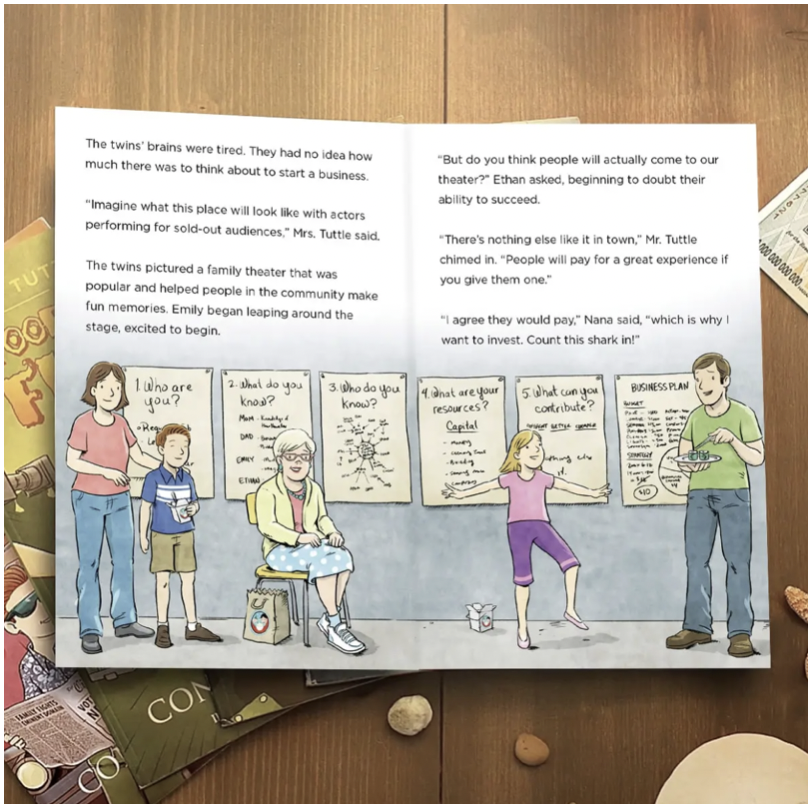
Michael Currier of Massachusetts is an unvaccinated gastroenterologist and entrepreneur, and he’s seen misinformation firsthand. He’s long been teaching his kids how to spot misinformation, but they were naturally skeptical when they didn’t hear it from anyone but him. However, the right books taught his kids how to combat misinformation, and they will teach your kids too! If you’re wondering how to raise independent thinkers who can spot misinformation, the Tuttle Twins books are essential tools for your toolbelt.
How Critical Thinking Combats Misinformation
When kids can think critically, they become able to evaluate the credibility of sources and look for evidence, also identifying their own and others’ biases. Critical thinkers don’t just passively absorb information; they take it apart piece by piece to see what makes it “tick.”
Critical thinkers question the credentials of an author or source, alongside their motivations and whether they provide supporting evidence that goes beyond just statements that require trust. Kids who can think critically also spot confirmation bias, which is the tendency to believe something that fits in well with the thinker’s current belief system or worldview. This reduces demand for fake news that simply elicits an emotional reaction.
When your kids can think critically and independently, they will also be able to spot logical fallacies, like drawing causal conclusions from data that’s simply correlational. Critical thinkers can also tell the difference between scientific evidence and someone’s opinion.
Independent, critical thinkers don’t just read a page. They look up information from other trusted sources to verify that the original source is accurate. Critical thinking also encourages a healthy skepticism that causes independent thinkers to pause and assess emotionally charged content before they spread it around, realizing that misinformation frequently exploits outrage or fear.
Critical thinkers can also recognize propaganda tactics such as loaded language, false dilemmas, and “alternative facts.”
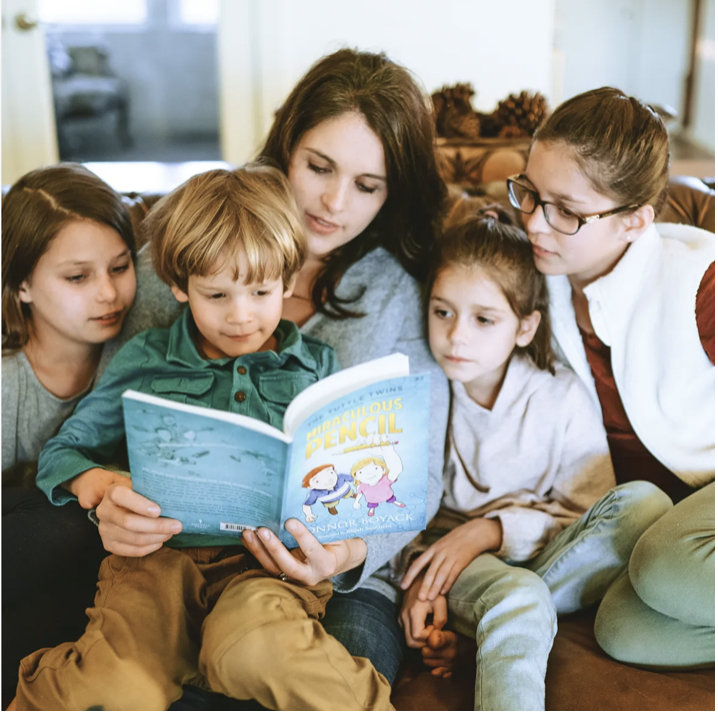
Photo: Tuttle Twins
Seeking Out Books that Teach Critical Thinking
At this point, parents wondering how to raise independent thinkers will want to look for books that teach critical thinking, like the Tuttle Twins series. The Tuttle Twins books explain things like misinformation, freedom of speech, and even the World Economic Forum while explaining that certain people get to decide what is and isn’t misinformation.
Books that teach critical thinking don’t just present facts. They encourage kids to analyze, evaluate, and put together arguments, frequently shining a light on logical fallacies and biases while calling for active application instead of a passive taking-in of information. Books that teach critical thinking will help you with how to raise independent thinkers by guiding you and your child through reasoned questioning and requiring evidence behind facts.
The Tuttle Twins series wraps every lesson in an engaging story that doesn’t just teach the information presented. The Tuttle Twins books also encourage all the above elements found in books that teach critical thinking. You can even enhance the critical-thinking skills embedded in all the Tuttle Twins books by pausing throughout the story and asking open-ended questions such as: What do you think the character should do next? What were some alternate solutions to the problem? What do you think could have been the consequences of those solutions?
Books that teach critical thinking like the Tuttle Twins series will go a long way toward helping you learn how to raise independent thinkers. They will also help you create special moments with your kids that they’ll remember forever! Join the growing number of parents who don’t want their kids to just be passive absorbers of information.
-

 Tech5 years ago
Effuel Reviews (2021) – Effuel ECO OBD2 Saves Fuel, and Reduce Gas Cost? Effuel Customer Reviews
-
 Tech7 years ago
Bosch Power Tools India Launches ‘Cordless Matlab Bosch’ Campaign to Demonstrate the Power of Cordless
-

 Lifestyle7 years ago
Catholic Cases App brings Church’s Moral Teachings to Androids and iPhones
-

 Lifestyle5 years ago
East Side Hype x Billionaire Boys Club. Hottest New Streetwear Releases in Utah.
-

 Tech7 years ago
Cloud Buyers & Investors to Profit in the Future
-

 Lifestyle6 years ago
The Midas of Cosmetic Dermatology: Dr. Simon Ourian
-

 Health7 years ago
CBDistillery Review: Is it a scam?
-

 Entertainment7 years ago
Avengers Endgame now Available on 123Movies for Download & Streaming for Free