
Business
The Benefits of Chatbots: an Interview with Researcher and CTO Avi Ben Ezra


There has been a notable, sustainable increase in the use of chatbots during the last couple of years. They have been adopted into many systems which were formerly operated by humans. What these chatbots do is that they provide a new way for businesses to interact with their target audience. Therefore a lot of chatbot strategies will make use of the popularity of messaging applications. They will also make active use of the accelerated development of many types of sensors. These systems will become more effective with the emerging of new technologies and by implementing improved AI systems. For a long time, social media was the preferred way for people to interact with one another. According to statistics messaging apps are now leading social media platforms by a substantial margin.
We recently interviewed Avi Ben Ezra, the CTO of SnatchBot. Below are his answers to some related questions:
People ask what is a chatbot and why is it making such waves?
A chatbot is simply a program which is governed by AI and certain rules. It is able to simulate a real-life conversation with humans by using a chat interface. To put it in simpler terms, a chatbot is simply an AI service which is capable of having a two-way conversation. It can speak to you just like you speak to your friend or family member. In order to increase the effectiveness of chatbots, they are based on machine learning in order to allow them to collect conversational structures and nuances which can then enable them to simulate human conversations. They are also able to react to requests which can either be written or spoken and they can respond to those questions and also provide the requested services. They are not only reacting to commands they actually understand language usage. This is because chatbots use artificial intelligence. The result is that over time after frequent conversations with humans they can become very proficient and increasingly intelligent.
Most people believe that the use of chatbots is a relatively new development. However, the research behind this technology goes back all the way to the 1950s. Many businesses have already been introduced to the extraordinary benefits of artificial intelligence and chatbots. There is also a tremendous amount of information available which will clearly show industries how these chatbots can contribute to just about any business.
What are the financial considerations?
Those businesses who are planning to implement a full functioning chatbot may be surprised to learn that such a system is significantly cheaper than a cross-platform app. It is also substantially cheaper than employing employees for each separate task. There is already ready-made software developed by Facebook, Microsoft, and various other IT companies which can be used by businesses. One of the big advantages of chatbots is the fact that they are completely automated AI solutions. According to Ben Ezra, they enable businesses and organizations to handle many customers at the same time and also simultaneously. What businesses need to consider are when they employ chatbots which supplements the services provided by your human resources this can result in a huge saving on salaries while eliminating all human error. Indeed tax savings are also significant: as we’ve seen in countries like France, Belgium and the UK, where payroll taxes are steep. Then, off course, the cost to the environment is a factor: staff driving to work and back creates a big carbon footprint. So reducing carbon emissions and taxes, is something AI and automation is helping with.
What about access to global markets?
Regardless of the standing of your particular business whether it is a local brand or a very well-known international brand, you should note that chatbots have the ability to address all of your customer care problems 24 hours a day and 365 days a year in a variety of international languages. This can provide your business with unique opportunities to expand. With the proper implementation of chatbots, you can soon have a significantly larger market presence. You will be in the fortunate position that you do not have to rely on human resources for your customer services and other queries because your AI chatbots will be ready to take care of that side of the business.
How do chatbots handle lead generation?
Your chatbot has all of the necessary consumer information to allow it to provide consumers with personalized messaging. This is important as consumers proceed along the buyer’s journey. Your chatbot could be programmed to ask the consumer a whole range of related questions which could close the deal and possibly generate a new lead for your business. With a properly implemented chatbot system, the marketing flow is always in the right direction and that can drastically increase conversion rates for your business. With an efficient AI system, it is possible to generate potential customers, your chatbot will automatically notify the sales team and furthermore, it is also able to assist management in determining all of those unqualified leads. This is done through identified KPI’s which look at things such as resources, timeline, relevancy, and budget. This can really help the business to avoid spending time with leads that might go nowhere. We saw one French business integrate this with their Google Ads account, where lead generation was on autopilot: the marketing tream reported that despite ad fraud and invalid activity on the PPC side, the chatbot was still good at helping them improve their ROI.
What about learning from consumer data?
We have already discussed how chatbots can be excellent communicators and they handle consumers very well. Then there are critical communications where they generate valuable feedback simply by asking general questions. That information allows your business to make a whole range of improvements and adjustments to your current products or services. It can also provide you with valuable insight which can be used to optimize your website. You will be better prepared to do important adjustments to all of those low converting pages. Many businesses have webpages which are generating a substantial amount of organic traffic. Unfortunately, the conversion rates are not that good. However, with your chatbot, you can now interact with customers visiting that website and that chatbot can do a little survey which will quickly determine why people leave the website without purchasing anything.
How can AI chatbots increase customer engagement?
Many business owners have learned the hard way how critically important it is to keep your customers engaged with your brand. A lot of research has been done regarding customer engagement. It has been determined that those businesses who frequently interact with their customers on social media can increase customer spending by as much as 40%. There can be no doubt that social media is a very effective platform but by making use of chatbots a business can make the interaction so much more attractive especially if the chatbots have been programmed with an excellent sense of humor. Everyone familiar with conventional customer services will know that such a system generally receives less information from a customer than it will provide. This is not the case when it comes to chatbots. These intelligent systems will give only a little information and will then proceed to lead the interaction according to the consumer input which is received. The advantage of this approach is that chatbots will not fall into the human error of boring the customer, inundating them with unnecessary information. However, they will continue to respond to the customer presenting additional information as the conversation progress. The result is that the customer remains on the website for longer and they also learn a lot more about the business.
Are chatbots capable to stimulate proactive customer interaction?
In most business interactions there is mostly a passive customer interaction because most businesses will only respond to the consumer after they had been contacted. It is only very occasionally that businesses will initiate such communications. The problem is that most businesses are engaged in a highly competitive market and furthermore they are in a situation where they have millennial’s as customers. The simple fact of the matter is that acting passively is a luxury that no business can any longer afford.
How will chatbots make the business available 24 hours a day?
The issue relating to customer service has been researched very extensively over the last couple of decades. It is now a well-known fact that customer service is critically important to the success of any business organization. It does not matter what the scope of your business is, whether it is local or international. It is very important to have a 24/7 customer service department. When this is done correctly it can have a very positive impact on the satisfaction of your customers.
Once again businesses can benefit tremendously from the use of chatbots. It is entirely possible to get well-programmed chatbots to provide consumers with automated answers to a whole range of questions. That information can then be forwarded to an actual human being which can then provide a suitable solution for that situation. In this way, a lot of time can be saved by customer service officials and this allows them to give attention to more important issues while leaving the simple tasks to chatbots.
What about vital customer assistance?
A very interesting fact has emerged recently which showed that over 80% of online shoppers are in need of guidance and support during the online shopping process. This is why your business will have to be ready to help your customers to understand which of the products is best suited not only to their budgets but also to their particular needs. Ironically in many instances, online shoppers are unable to locate the things which they are looking for. They may find the navigation on your website to be complicated. They may have questions regarding payments, registration, delivery, checkout procedures or they may simply require more information relating to a specific product. For all of those things, a chatbot will always be the best answer and the best solution.
Remember though, that many organizations are hostage to card fraud issues when outsourcing. Well, we sought to eliminate that by increasing our R&D spend on payment processing that works without human intervention.
Conclusion
Chatbots have, in a relatively short time since they have been introduced, provided businesses and corporations with tremendous benefits. They have increased productivity and have reduced unnecessary overheads, cut taxes and carbon emissions, clamped down on card fraud mafias that infiltrated call centers – and freed up humans to do the jobs they love more. They have made businesses more efficient and they have drastically improved customer service. It goes beyond business: a hospital, police station, The evidence speaks for itself, chatbots is something which businesses can no longer afford to do without.
Suggested reading: Follow weekly news by Avi Ben Ezra or access Research released by Avi Ben Ezra.
Youtube video – A vision of the future, by SnatchBot:

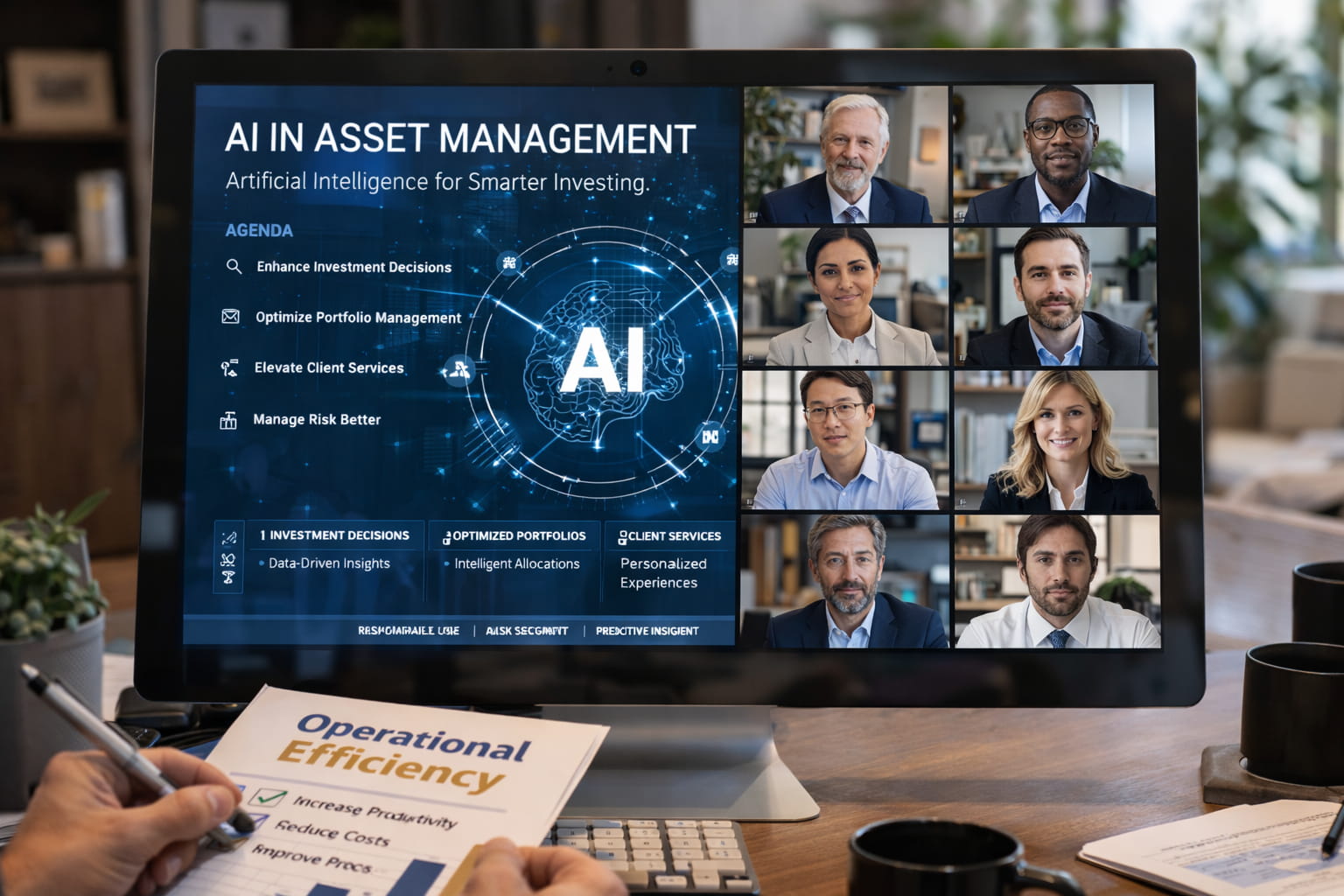
AI in asset management explained at its most basic level is this: using machine learning, data modeling, and automation to make faster and more accurate investment decisions. The applications vary widely across asset classes, fund strategies, and operational functions. Understanding where AI creates real value separates productive adoption from expensive experimentation.
Asset managers now face a data environment far larger than any human team can process manually. Market signals, company filings, macroeconomic indicators, alternative data sources, and portfolio monitoring all generate information continuously. AI tools process that information at scale. They surface patterns that traditional analysis would miss or find too late.
AI in Asset Management Explained Across Core Investment Functions
AI delivers the most measurable results when applied to specific investment functions rather than deployed as a general capability. The clearest applications sit in portfolio construction, risk management, and credit analysis.
Portfolio Construction and Factor Modeling With AI
Traditional portfolio construction relies on return and correlation assumptions built from historical data. AI-driven portfolio tools go further. They process real-time market data, alternative signals, and macroeconomic inputs simultaneously. This surfaces factor exposures that static models miss.
Machine learning models in portfolio construction can:
- Identify non-linear relationships between asset classes that correlation matrices do not capture
- Adjust factor weightings dynamically as market conditions shift rather than on a quarterly rebalancing schedule
- Flag concentration risks before they appear in standard risk reports
- Model tail scenarios using a broader range of historical stress periods than traditional value-at-risk models allow
James Zenni, founder and CEO of ZCG with over 30 years of capital markets experience, has built the platform’s investment approach around the principle that better data and faster analysis produce better outcomes. That view shapes how AI capabilities get deployed across ZCG’s private equity, credit, and direct lending strategies.
Credit Analysis and Private Markets AI Applications
Credit analysis in private markets has historically depended on periodic financial reporting and relationship-based deal intelligence. AI changes that model. Lenders using machine learning tools now monitor borrower health continuously rather than waiting for quarterly covenant tests.
Specific credit applications include:
- Cash flow pattern analysis that identifies revenue deterioration weeks before it shows up in reported financials
- Supplier and customer relationship mapping that flags single-source dependencies and concentration risks
- Covenant monitoring automation that tracks hundreds of credit agreements simultaneously and alerts teams to early warning signs
- Loan pricing models that incorporate current market spread data and comparable transaction history
These capabilities compress the time between identifying a problem and taking action. In credit, that time advantage directly affects loss rates and recovery outcomes.
AI in Asset Management Explained Through Risk and Compliance Applications
Risk management and regulatory compliance represent two of the highest-value AI applications in asset management. Both functions involve processing large volumes of structured and unstructured data under time pressure.
How AI Transforms Risk Monitoring in Asset Management
Traditional risk monitoring produces reports at set intervals. AI-powered risk systems run continuously. They flag anomalies in position data and monitor correlated exposures across a portfolio. Alerts fire when market conditions shift beyond defined thresholds.
The practical risk management applications include:
- Real-time portfolio stress testing against live market inputs rather than end-of-day snapshots
- Liquidity modeling that accounts for position size relative to market depth across multiple scenarios
- Counterparty exposure monitoring that aggregates risk across instruments, custodians, and trading relationships
- Regulatory reporting automation that reduces manual preparation time and lowers the risk of filing errors
ZCG applies these capabilities across its approximately $8 billion in AUM. The platform was founded 20 years ago. It built its investment infrastructure around systematic data analysis and operational discipline.
AI for Operational Efficiency in Asset Management Firms
Beyond investment decisions, AI delivers significant value in fund operations. Back-office functions like reconciliation, reporting, and compliance documentation consume substantial resources at most asset management firms.
AI tools applied to fund operations include document processing systems. These extract and verify data from offering documents, side letters, and subscription agreements automatically. Reconciliation tools flag breaks between custodian records and internal systems automatically. Investor reporting platforms generate customized materials from structured data inputs, reducing the manual production time significantly.
ZCG Consulting (“ZCGC”) advises operating companies across more than a dozen sectors on operational improvement programs, including technology-driven process redesign. Those operational efficiency principles translate directly to asset management back-office functions.
Applying AI to Asset Management: Limitations Firms Must Address
AI in asset management explained fully must include the limitations. Models trained on historical data perform poorly when market regimes change. Overfitting produces tools that work in backtests but fail in live environments. And AI outputs require experienced interpretation to avoid acting on statistically significant but economically meaningless signals.
The ZCG Team approaches AI adoption with the same discipline it applies to investment underwriting. Every tool requires a defined use case and a measurable success metric. A review process keeps experienced judgment in the decision chain. That framework prevents the common failure mode where AI adoption generates activity without improving outcomes.
Firms that treat AI as a capability layer on top of sound investment processes generate sustainable advantages. Those that treat AI as a replacement for process discipline find the technology amplifies existing weaknesses. It rarely corrects them.
-

 Tech5 years ago
Effuel Reviews (2021) – Effuel ECO OBD2 Saves Fuel, and Reduce Gas Cost? Effuel Customer Reviews
-
 Tech7 years ago
Bosch Power Tools India Launches ‘Cordless Matlab Bosch’ Campaign to Demonstrate the Power of Cordless
-

 Lifestyle7 years ago
Catholic Cases App brings Church’s Moral Teachings to Androids and iPhones
-

 Lifestyle5 years ago
East Side Hype x Billionaire Boys Club. Hottest New Streetwear Releases in Utah.
-

 Tech7 years ago
Cloud Buyers & Investors to Profit in the Future
-

 Lifestyle6 years ago
The Midas of Cosmetic Dermatology: Dr. Simon Ourian
-

 Health7 years ago
CBDistillery Review: Is it a scam?
-

 Entertainment7 years ago
Avengers Endgame now Available on 123Movies for Download & Streaming for Free