
Business
Daryll A. Triplett is Building a Diverse Professional Portfolio – A Pure Reflection of YOLO

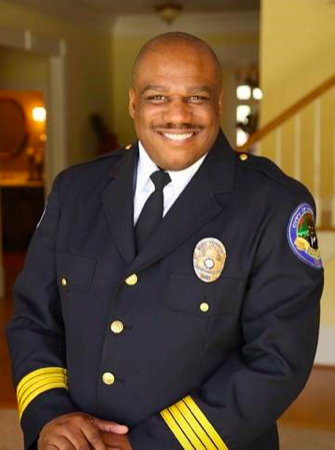
‘#YOLO’ is turning into a trend among avid users of social media. Be it an adrenaline-rushing adventure or trying something unique and different for the first time, people tend to post it on their social media platforms to acquire likes, comments, and shares. #YOLO is just a way to look cool on the online world and a way to attract views on videos and posts. The people who use this as their caption are not aware of what this term actually means.
While everyone knows that YOLO is an acronym for ‘You Only Live Once,’ but the meaning that is hidden in these words is known by only a few. Is this phrase just a way to look cool in the digital world? No. YOLO holds a much deeper meaning. ‘You Only Live Once’ encompasses a message that life is too short, and people need to work hard to fulfill their dreams, and pursue all their passions. It is a way to motivate people who believe that pursuing all passions in a single lifetime is not possible.
For everyone who gives up on their passions, believing that they do not have the time, Daryll A. Triplett is a perfect example. He believes in YOLO and is living his life the right way. Making a wrong career choice is not uncommon; it is due to this; YOLO has turned into a movement. It encourages people to not give up on their passions.
From a serious police officer to being Comedian Daryll Triplett, he gave up on his successful career to pursue his dreams. As soon as he realized that being a serious police officer was not the ideal career choice for him, he changed his direction to do what he loves, making people laugh.
Waiting for the Right – Is There a Right Time?
While many people realize that the field they are working in is not the right fit for them, not all have the courage to switch, especially those who have built a successful career. People need to understand that a successful career does not in any way mean that it is where one’s interest lies. What makes one happy from within is the right choice. Even after realization hits them, people wait for the right time, which never comes.
Popularly known as ‘Officer Keep it Real,’ Daryll Triplett started his professional life as a police officer in Columbus, Ohio. After completing his high school education from Clermont High School, Daryll entered the University of Akron. He was a high achiever and wanted to make it big in the world and have an impact on the masses, and he chose the industry of public safety and graduated in 1992. To proceed further with his career, Daryll got a certification from the Police Academy and Security Training in 1993 along with several others, including No Neighborhood Left Behind Community Policing Certification, and Advanced ATF Training 1, 2, & 3, Asset forfeiture, narcotics identification certification, and the Public Agency Training Council (PATC) Homicide Investigations.
As a certified professional, the man with a passion for changing the world started working on cases. In 2000, he was transferred to Atlanta, Georgia, and promoted to the rank of Senior Deputy Sheriff at the Fulton County Sheriff Office. His efforts to improve the justice system helped him acquire recognition from the Peace Officer Standards and Training in 2001, and in 2005 he was promoted to the rank of Major Deputy Sheriff. In just five years, Daryll had established a prominent identity in the public safety sector.
While he was satisfied with the job he was working on, but it never really made a place in his heart. He was serving the community and making an impact, but it was not making him happy from within. Daryll was the owner of a witty personality; he could make people laugh without even trying. Five years as a sheriff, he realized that making people laugh was what he was good at, and it was what he wanted to do in life. Being a police officer was not the only way he could have an impact on the people.
Daryll started looking for opportunities by generating creative and unique ideas. Things began to go in his favor in 2014, when he laid the foundations of a television station, VH2 Networks, Inc. Through his television network, he started a morning radio show and even created ads. He worked hard on his setup, which can be found at Roku, and expanded it to over 60 million subscribers.
In 2015, he started the Officer Keep It Real Show, through which he told the stories from a cop’s perspective, which is uncommon. He used his witty personality to build a massive fanbase. He helped make the lives of people better through his elite comedic skills. In addition to this, he performed the Apache Comedy Club and The Punchline.
He also hosts “Meet The Tripletts,” a show about the Tripletts and their ten children. Daryll plays the role of a 25-year police officer. Daryll did not wait for the right time. He started working to turn his passion into a profession without wasting time. There is never a right time, the day one realizes their true passion, is the day one has to take action.
Landing on the Perfect Opportunities
Daryll’s show helped him establish a prominent identity in the world of entertainment, and his iconic personality led him to Ride Alone 2, in which he was cast with Kevin Hart and Ice Cube. IT further helped him take his career to the top. A former cop, business owner, comedian, radio host, and an actor, Daryll Triplett is living his life the right way as he did not give up on his passion, despite being a successful professional in the public safety industry. Leaving his stable sheriff position for the sake of his passion works as a form of motivation and encouragement for people who are struggling to find the inner peace and satisfaction from their profession but are skeptical about taking a step!
Business
Ipsos Helps Brands Understand How They Get Customer Experience Wrong & Why It’s Costing Them Millions

For brands looking to succeed in the modern business ecosystem, the customer experience (CX) is not something companies can afford to ignore. CX is a direct driver of revenue, loyalty, and growth for organizations.
Ipsos, one of the world’s leading market research firms, helps brands understand that failing to focus on the customer experience can lead to lost sales, which in turn can translate to not only millions in lost revenue but also lost trust and credibility in the market.
How brands still get CX wrong
“The customer decision and desire to do business with brands directly affect the bottom line,” says Brad Christian, Chief Commercial Officer at Ipsos – Experience Practice.
Customer experience may sound like a simple concept, but many brands still get it wrong. CX goes beyond surveys and feedback. Leaders who fail to connect feedback in a meaningful way to goals such as retention, repeat visits or purchases, advocacy, and operational performance fail to deliver on their service promises. The emotional and functional disconnect can spell trouble for brands. The most polished advertising campaigns cannot make up for a frustrating customer interaction or a promise that a business cannot fulfill.
According to Ipsos’s internal research, many customers today see service as too automated and impersonal. More than half report that their experience is worse than promised.
These findings don’t just result in disappointed buyers. They result in lost customers, negative feedback, and a long-term impact on the business as a whole.
“Brands have to manage the entire customer experience across each and every touchpoint,” explains Christian.
Poor CX can be expensive
Executives can often underestimate how expensive a history of poor CX can be. Global losses can reach into the billions while leaders wonder what went wrong. In an age of rapid social media communication, a single negative interaction can spell disaster for a company, leading to reduced customer spending or the entire loss of its most loyal customers.
Those losses are not just reflected in lost revenue, however. Customer acquisition and marketing dollars can also be lost as companies continue to spend money trying to retain their customer base, often skipping right over the experience part of retention.
Poor customer experience can be a deep operating problem that creates a domino effect, decimating businesses from the inside out. These poor experiences can impact not only present and future customer acquisition but also business leaders and employees.
CX matters more in today’s business landscape
The customer experience has always mattered, but it may matter more to brands trying to make it in a modern, ultra-competitive, digitally-driven business landscape. Good experiences encourage repeat purchases, boost loyalty, and increase the likelihood that customers will go online and recommend a brand to others.
“Customer experience isn’t an isolated function,” says Christian. “It’s part of a larger system that ensures that brands measure and manage customer experience data and then act on that data to drive action where customer experience gaps exist.”
Brands also have to seek to understand today’s customers, who expect experiences that are seamless, authentic, and relevant. As more and more companies hop on the automation train, they will want to reassure their customers that the human element that many people consider important still exists.
At Ipsos, six drivers of strong customer relationships form the bedrock of the company’s CX platform, something that they refer to as the “Forces of CX”: certainty, fair treatment, control, status, belonging, and enjoyment.
Customers want to feel that if they have an issue with a brand, it will be handled and that their concerns will be understood. They don’t want the customer experience to feel like a battleground; they want it to feel fair and human.
“Customer experience isn’t just a nicer experience,” says Christian. “It ties directly to specific financial outcomes, whether that be increased sales, greater market share, or stronger brand loyalty.”
How Ipsos helps businesses deliver customer experiences that matter
Ipsos turns customer feedback into reliable, actionable, decision-ready information. The company goes beyond simple satisfaction metrics and implements voice-of-the-customer programs, journey analytics, relationship feedback, and quality research.
“Brands don’t just need data,” Christian says. “They need measurements as to how they are delivering on their brand promise and predictive modeling to tie financial performance measures to those measures to help them determine where to invest to maximize the customer experience and understand what financial impact those investments might deliver for the business.”
Ipsos measures the interactions that matter most and shows brands how each interaction can affect retention, share of spend, and efficiency. For brands that are trying to reduce the guesswork behind CX, Ipsos helps them move beyond cosmetic fixes to achieve real, meaningful change.
Customer expectations can shift on a dime, influenced by society, social media, and even changing trends. Ipsos helps brands meet those rapidly changing customer expectations with hard evidence and comprehensive metrics.
Today’s brands need to understand how to get the customer experience right. Ipsos has the insights needed to drive home the deep importance of CX in today’s marketplace.
-

 Tech5 years ago
Effuel Reviews (2021) – Effuel ECO OBD2 Saves Fuel, and Reduce Gas Cost? Effuel Customer Reviews
-
 Tech7 years ago
Bosch Power Tools India Launches ‘Cordless Matlab Bosch’ Campaign to Demonstrate the Power of Cordless
-

 Lifestyle7 years ago
Catholic Cases App brings Church’s Moral Teachings to Androids and iPhones
-

 Lifestyle5 years ago
East Side Hype x Billionaire Boys Club. Hottest New Streetwear Releases in Utah.
-

 Tech8 years ago
Cloud Buyers & Investors to Profit in the Future
-

 Lifestyle6 years ago
The Midas of Cosmetic Dermatology: Dr. Simon Ourian
-

 Health7 years ago
CBDistillery Review: Is it a scam?
-

 Entertainment7 years ago
Avengers Endgame now Available on 123Movies for Download & Streaming for Free