
Business
Altibase helped EBS to Handle the Increased Capacity and Peak Transaction Times

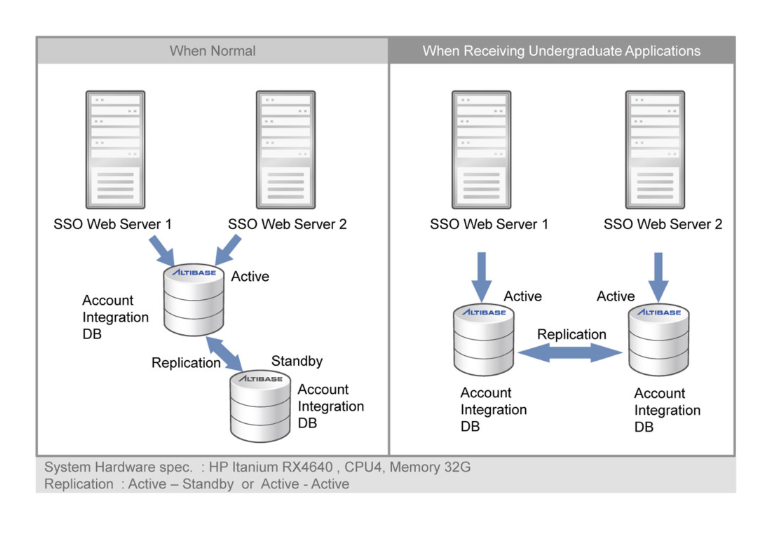
Education Broadcasting System (EBS) in South Korea hired Altibase to solve many problems in its system. Altibase’s hybrid architecture with HA and replication features helped EBS to handle the increased capacity and stability during peak transaction time. EBS was struggling with widespread system demands during high use periods. Altibase transformed its system glitch-free to handle massive users at a time.
EBS is a public television and radio network in South Korea. It promotes basic education for all South Koreans. It motivates education requirements through its e-learning and online application systems.
EBS was earlier using a CRM platform to integrate the Single-Sign-On login feature for deeper education system. But the system was not meeting with the needs due to multiple data-heavy systems. Altibase provided EBS with a robust CRM platform to enhance the e-learning through personalized web services. EBS was also in need to handle 10 million core subscribers, uptime for 100,000 simulators and active user sessions. Altibase’s DBMS system now allow EBS to handle primary 10 million subscribers with SSO features. It has also provided 100,000 parallel sessions with ease and double capacity.
EBS’ critical feature application “EBS Apply” is designed by EBS to help high school seniors with college admissions. But this application was suffering from many errors. Altibase made this app to handle vast college applications, provided students with precious benefits and assisted them in learning the growing demands of college admissions. Due to Altibase’s efforts, EBS is running its operation without any flaw and it is continuously progressing in the supplemental education agenda.
Business
TrueData Solutions LLC Founder Del Andujar Responds to Europe’s Growing Digital Privacy Concerns

For years, internet privacy discussions centered around targeted advertising, browser tracking, and social media data collection. But a new debate is beginning to reshape the cybersecurity industry entirely: identity verification laws.
Across Europe, governments and digital platforms are increasingly introducing systems that require users to verify their identity or age before accessing certain online services. Supporters argue these systems improve online safety and accountability. Critics argue they may also normalize a future where anonymity online becomes increasingly difficult.
That tension is now creating new opportunities — and new responsibilities — for cybersecurity and privacy companies worldwide.
Among the firms responding to this shift is TrueData Solutions LLC, a Wyoming-based cybersecurity company founded in 2025 by Del Andujar. The company recently announced plans to expand infrastructure and operations into Europe as digital privacy concerns continue growing throughout the region.
The expansion arrives during a particularly sensitive moment in global technology policy.
Recent discussions surrounding European age verification systems have raised broader questions about how personal identification data will be stored, protected, and potentially shared. Privacy advocates have warned that even well-intentioned verification systems can create centralized repositories of sensitive personal information that may become vulnerable to misuse or breaches.
According to reporting from Tech Policy Press, experts have increasingly expressed concern that identity verification requirements may carry privacy implications extending beyond basic data confidentiality.
For privacy-focused companies, the issue reflects a major transformation in how consumers view digital safety.
Historically, many users treated online privacy as secondary to convenience. But growing awareness around data breaches, identity theft, and public data exposure has changed public perception significantly over the last decade.
TrueData’s business model directly addresses those concerns.
The company allows individuals to search for publicly leaked information connected to themselves and assists users in opting out from data broker platforms that collect and distribute personal details online. Unlike many competitors within the cybersecurity industry, TrueData offers its primary opt-out assistance services free of charge.
That approach has become central to the company’s identity.
While many privacy services operate behind subscription paywalls, TrueData positions accessibility as part of its broader mission to help individuals regain control over their digital footprint regardless of financial barriers.
The company also provides secondary cybersecurity services such as virtual private networks designed to improve browsing security and network privacy.
As Europe continues debating digital identity enforcement policies, cybersecurity providers may increasingly become intermediaries between governments, platforms, and consumers attempting to protect their information online.
Industry observers believe the broader privacy economy could expand dramatically over the next several years as identity-linked internet systems become more common globally.
In that environment, companies focused on transparency and user trust may gain a competitive advantage over firms relying heavily on aggressive monetization strategies or opaque data practices.
For founder Del Andujar, the issue extends beyond cybersecurity trends alone. It reflects a deeper concern about whether ordinary internet users will retain meaningful control over how their information is collected, indexed, and distributed online.
As digital identity increasingly becomes tied to daily internet access, that question may soon affect nearly every user online — not just cybersecurity professionals.
-

 Tech5 years ago
Effuel Reviews (2021) – Effuel ECO OBD2 Saves Fuel, and Reduce Gas Cost? Effuel Customer Reviews
-
 Tech7 years ago
Bosch Power Tools India Launches ‘Cordless Matlab Bosch’ Campaign to Demonstrate the Power of Cordless
-

 Lifestyle7 years ago
Catholic Cases App brings Church’s Moral Teachings to Androids and iPhones
-

 Lifestyle5 years ago
East Side Hype x Billionaire Boys Club. Hottest New Streetwear Releases in Utah.
-

 Tech7 years ago
Cloud Buyers & Investors to Profit in the Future
-

 Lifestyle6 years ago
The Midas of Cosmetic Dermatology: Dr. Simon Ourian
-

 Health7 years ago
CBDistillery Review: Is it a scam?
-

 Entertainment7 years ago
Avengers Endgame now Available on 123Movies for Download & Streaming for Free