
Lifestyle
Dreams Of Hope: The Life & Times Of The Clinical Champion Michael Thuan Tran


Michael Thuan’s parents had to travel and cross freshly fallen snow from Vietnam to Thailand. It was the 3rd voyage, a successful one after the six-year imprisonment of Michael’s father. Michael’s parents had been saving enough money that enabled them to flee the endless wars that had given the communists victory.
Michael was born on July 6, 1981, in a refugee camp in Chon Buri, Thailand. His parents lived a poor life. He realized this one day when Michael’s sisters were speaking at a funeral for their godmother, they said that Michael never had shoes on. Michael’s parents had moved to the states with nothing. His father worked landscaping while his mother was a maid. But how did Michael manage to overcome all of this to achieve success?
Education Is Power
Michael graduated from Dulles High School in 1999. He went to Texas Tech and majored in Business Management. He later worked dry cleaning for a year before re-enrolling in Texas Tech for a major in Spanish and interdisciplinary studies. Michael then applied to Dental school while doing an MBA in Finance and Real Estate. Michael was accepted into the Howard College of Dentistry. He loved the profession. He moved to Houston Advanced Education in General Dentistry AEGD where he became the president.
Michael received the smartest resident award for critical thinking. But still, he wanted something. He wanted to focus on as many ambitions as possible, something that he did very well. He also did well on live surgery parts, and LIVE surgery implant courses were now done at his office. He was put on Hiossen AIC faculty. Michael’s interaction with experienced doctors has equipped him with great knowledge.
The Clinical Journey
Michael wanted to own an office. He found a FLOSS City Centre office. However, he wasn’t able to get funding for the City Centre office because it was hard to get funding for a million-dollar practice as a graduate. However, Michael found help from Dr. Clint Herzog, who found him a closed office down in Magnolia, TX that had a failed partnership.
Michael started working there and built up the practice quickly in Magnolia. He also purchased the office. Michael and his wife had an intense 3 years in Dental startups because they intended to run the two main offices- Midtown and Magnolia. Because of the old FLOSS debranding, they decided to re-establish a footprint starting with the Houston Area. Michael later opened West Oaks office, and Kingwood office which he sold right before Covid and a franchise opened up FLOSS Katy last year.
Michael is a good clinician and enjoys working. He is opening offices in Georgia, The British Virgin Islands, and Ohio. He plans to focus solely on implants and larger cases. This move will buy him more free time as he hires more associates.
Michael’s Achievements
Michael received an award for being a top Invisalign producer. It is worth noting that historically, FLOSS is the #2 provider of Invisalign as a GP in the US. This was awarded from the AACA, American Academy of Clear Aligners in 2018 and 2019. What has propelled Michael to even greater heights is the desire to grow. He loves the healthcare field with a passion. Michael chose his career field with an understanding that medicine was a tough career. You often have to get different consultants to figure out the problem. The best thing about it is that dentistry is still independent, even though it is changing rapidly. Michael started and ran the Business of Dentistry Facebook Group with his good friend Christopher Hoffpauir. They have 22,000 members that are vetted as dentists only, which makes the group unique.
Therefore, if you are traveling up the path of success, don’t give up. Keep the faith. Be patient and persistent and let the sky be your limit. Success is not something you merely pursue, but it is something you attract by the person you become.
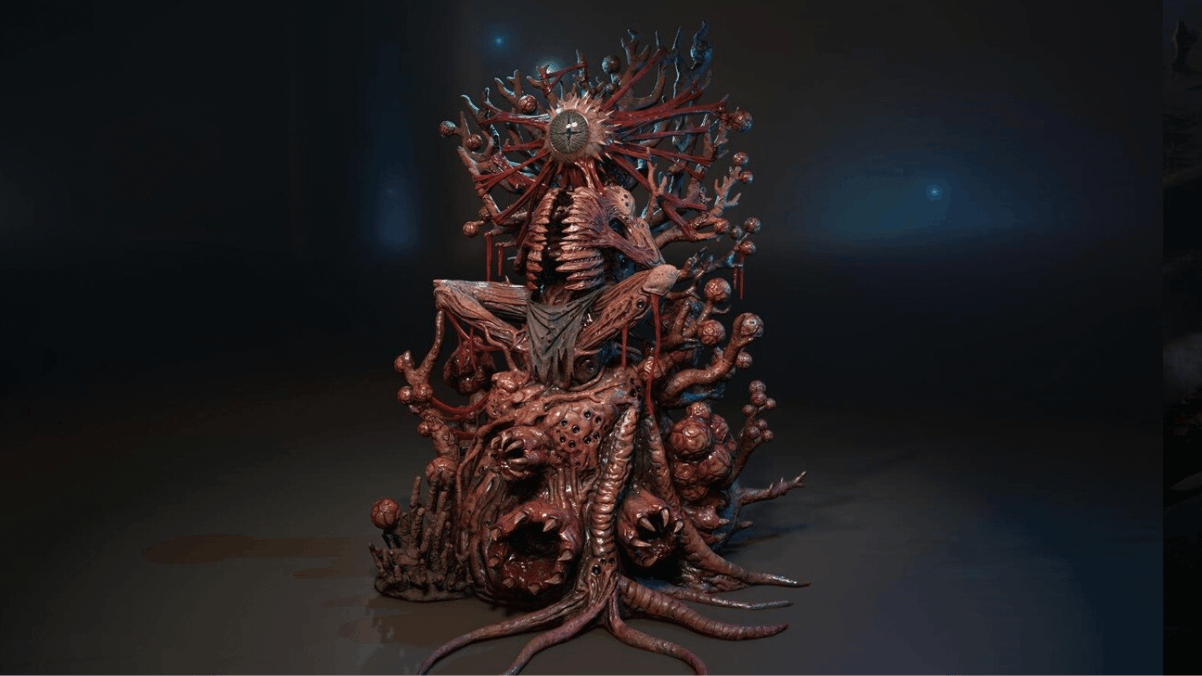
Empty hallways echo with footsteps that aren’t yours. The carnival rides spin without passengers. Familiar spaces, the ones etched into childhood memory, twist into something menacing, something that watches. Lonely Rabbit’s Midnight Strikes arrives eight months before its completion, targeting a youth horror genre that is hungry for experiences that feel personal rather than purely fantastical. The indie studio searches for a publisher while building momentum for a game that weaponizes nostalgia, turning high schools and carnivals into theaters of psychological dread. As franchises age and audiences demand fresh scares, this PC title tests whether memory-based terror represents the next chapter in youth horror.
Maturing Past Jump Scares
Youth horror gaming shed its training wheels. Little Nightmares and Bendy and the Ink Machine proved that younger players crave atmospheric storytelling over cheap shocks, puzzle-solving over gore, and visual distinctiveness over recycled formulas. Bendy’s ink-soaked corridors attracted a massive audience, including children drawn to the characters despite the T-rating, because the experience felt emotionally authentic rather than condescending. Players now expect psychological tension woven through environmental details, stories told through decaying spaces, and cryptic objects scattered across levels.
The genre’s maturation reflects audiences who grew up solving Portal’s test chambers and exploring Limbo’s monochrome nightmares. Among the Sleep demonstrated the potency of perspective: experiencing horror through a toddler’s eyes made familiar domestic spaces feel uncanny and threatening. Fran Bow plunged players into hand-drawn asylum corridors where perception itself became unreliable, where puzzles demanded engagement with trauma and grief rather than simple pattern recognition. Modern youth horror respects its audience enough to disturb them thoughtfully, creating experiences that linger days after the screen goes dark.
Corrupted Childhood as New Territory
Midnight Strikes drags players through levels “reminiscent of their childhood memories”: the high school, the carnival, spaces universal enough to feel personal. Lonely Rabbit constructs what they describe as a “menacingly beautiful atmosphere filled with bizarre and terrifying creatures,” pairing monster survival with puzzle challenges that prioritize mood over mechanics. The game adopts a “cinematic and otherworldly feel” while grounding its terror in locations players actually inhabited, making fear feel intimate rather than abstract.
This memory-based direction distinguishes Midnight Strikes from fantasy settings that dominate youth horror. Deserted carnival rides and empty school corridors carry weight because players recognize them as such. Maybe the locker rows feel too narrow, maybe the Ferris wheel groans with a voice that shouldn’t exist, maybe the cafeteria smells wrong. The game challenges players to “survive their fear of the unknown” while navigating spaces that should feel known, creating cognitive dissonance that amplifies dread. Other developers exploring similar territory, such as Subliminal, which utilizes “nostalgic spaces” and “a rotting feeling that something is not quite right,” suggest that childhood corruption represents an emerging subgenre.
Lonely Rabbit’s approach weaponizes personal history. Every player attended school, visited carnivals, and formed memories in spaces designed for safety and joy. Corrupting those spaces turns nostalgia into a threat, asking audiences to confront distorted versions of their own experiences. The monsters inhabiting these environments become more than obstacles; they represent the fear that familiar places might betray us, that memory itself becomes unreliable when shadows move in the wrong direction.
Smaller Teams, Bigger Risks
Indie studios like Lonely Rabbit maneuver where larger publishers hesitate. Their two-month publisher search and pre-launch community building reflect changing pathways for games that defy established franchise formulas. Building a follower base before release creates market validation, proving that audiences want what you’re making before significant capital is committed. Transparency about development timelines and production milestones generates audience investment, turning potential players into advocates during the publisher search.
Midnight Strikes represents creative gambles major studios avoid when quarterly earnings loom. Smaller teams experiment with concepts, corrupted childhood spaces, memory-based horror, pand sychological tension prioritized over action mechanics, that might fracture focus groups but resonate with underserved audiences. Lonely Rabbit’s global distribution ambitions demonstrate indie confidence: build something distinctive enough, and geography becomes irrelevant when digital storefronts erase borders.
The next eight months determine whether Midnight Strikes defines a subgenre or remains an interesting experiment. If players respond to horror that mines personal history, if corrupted nostalgia proves more terrifying than fantasy monsters, other developers will follow this path. Lonely Rabbit’s gamble, that childhood spaces make better horror stages than alien planets or demon dimensions, could redefine what scares young players next. The studio’s publisher search tests whether the industry views memory-based terror as the future of youth horror or a niche curiosity. Either outcome writes the next page in a genre still learning what it can become.
-

 Tech5 years ago
Effuel Reviews (2021) – Effuel ECO OBD2 Saves Fuel, and Reduce Gas Cost? Effuel Customer Reviews
-
 Tech7 years ago
Bosch Power Tools India Launches ‘Cordless Matlab Bosch’ Campaign to Demonstrate the Power of Cordless
-

 Lifestyle7 years ago
Catholic Cases App brings Church’s Moral Teachings to Androids and iPhones
-

 Lifestyle5 years ago
East Side Hype x Billionaire Boys Club. Hottest New Streetwear Releases in Utah.
-

 Tech7 years ago
Cloud Buyers & Investors to Profit in the Future
-

 Lifestyle6 years ago
The Midas of Cosmetic Dermatology: Dr. Simon Ourian
-

 Health7 years ago
CBDistillery Review: Is it a scam?
-

 Entertainment7 years ago
Avengers Endgame now Available on 123Movies for Download & Streaming for Free