
Tech
Increasing Complexity of the PCBs Boosts Automated Optical Inspection Systems Demand

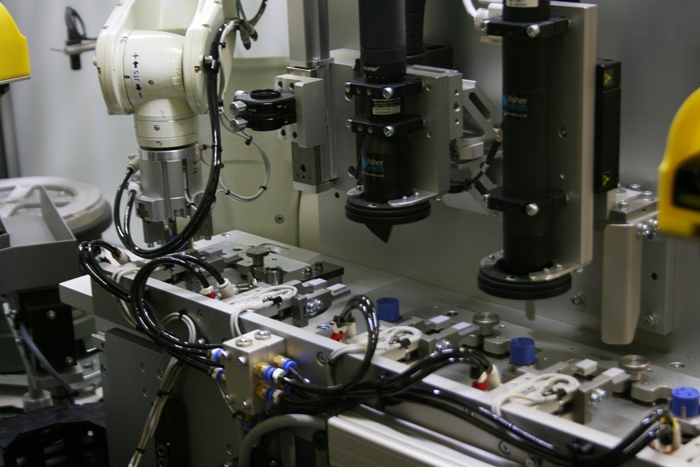
The global demand for automated optical inspection has been growing at an excellent rate due to the use of complex printed circuit boards in the circuits. Due to the complex circuit boards in today’s time, it has become really difficult to inspect for any major or minor fault manually. Another factor which has contributed to the increasing demand for automated optical inspection market is the introduction of surface mount technology which has led to a decrease in the printed circuit board. The improvement in the techniques of visual inspection systems is also a prime factor for the rise in the demand for this option for inspection of various machine elements.
In the automated optical inspection system, an autonomous camera scans a device to look for any failure such as a missing component. The visual inspection system also checks quality defects such as component skew or any fault in design. Usually, it is used in manufacturing processes and it is implemented in various stages such as bare board inspections, SPI, pre reflows, to name a few. With the availability of custom design Visual Inspection Systems, it has become possible to design a visual inspection system as per the need of customers.
Automated Optical inspection helps to inspect the electronics assembly, especially printed circuit boards accurately in the early stage of its production. This helps to generate a high-quality product without any manufacturing faults. Various techniques such as template matching, pattern matching, and statistical pattern matching are used for fault detection. The growth of the consumer electronics market and hence the increasing demand for printed circuit boards have also resulted in a rise in the requirements of automated optical inspection systems.

Byline: Mae Cornes
MADISON, Wis— Evo Tech announced new updates to its flagship platform, Evolution AI, designed to enhance threat detection and real-time data analysis for intelligence, security, and law enforcement agencies. The upgraded system introduces expanded capabilities in pattern recognition, automated alerts, and data aggregation to improve response accuracy in critical operations.
The company’s latest release focuses on enabling faster identification of potential threats across multiple data streams, including text, imagery, and audio inputs. By combining adaptive machine learning models with advanced verification tools, Evolution AI now provides a more precise and scalable method for detecting irregular or suspicious activity.
“Security challenges are growing more complex as data sources multiply,” said Maria Pulera, Evo Tech’s representative. “Our goal with these new features is to help agencies detect threats earlier and reduce the time between data discovery and action. These tools are built to support real-world decision-making in fast-moving environments.”
Among the new enhancements are:
- Automated Threat Classification: The platform can now categorize potential risks based on severity and relevance, allowing analysts to prioritize investigations more effectively.
- Cross-Platform Data Fusion: Evolution AI aggregates data from both structured and unstructured sources, presenting analysts with unified, real-time insights across visual, audio, and textual inputs.
- Adaptive Anomaly Detection: Using machine learning, the platform learns from historical data to recognize unusual activity patterns and flag potential security concerns automatically.
- Enhanced Visualization Tools: New dashboard designs allow users to view correlations, track trends, and monitor data sources simultaneously with improved clarity.
Evo Tech’s development team designed these upgrades to help intelligence and defense organizations address increasing information volume and data fragmentation. According to industry reports, global data generation is expected to exceed 175 zettabytes annually by 2026, underscoring the need for advanced analytical tools that can handle large-scale, multi-format data securely.
Pulera added, “Our technology aims to reduce the manual burden on analysts while maintaining the highest standards of data integrity. We’ve focused on features that allow agencies to operate more efficiently without compromising security.”
The company’s engineering team also confirmed that Evolution AI’s infrastructure supports deployment in secure, private networks, aligning with the data protection requirements of defense and intelligence clients. Evo Tech plans to continue rolling out additional modules throughout 2025, with a focus on multilingual data analysis and predictive threat modeling.
Evo Tech’s latest updates come as governments and private institutions invest heavily in AI-driven security technologies. Market forecasts from MarketsandMarkets estimate that AI in defense and security applications will surpass $13 billion by 2028, reflecting a growing global emphasis on automation and early threat detection.
About Evo Tech
Evo Tech is an artificial intelligence company specializing in data analysis and intelligence automation for security and defense operations. Its flagship platform, Evolution AI, integrates machine learning, big data processing, and adaptive analytics to enhance decision-making in high-volume, high-security environments. The company’s mission is to deliver reliable, real-time solutions that strengthen operational efficiency and intelligence accuracy across the public and private sectors.
Contact Information:
Maria Pulera, Representative
EVO Tech
https://evoai.tech/
-

 Tech5 years ago
Effuel Reviews (2021) – Effuel ECO OBD2 Saves Fuel, and Reduce Gas Cost? Effuel Customer Reviews
-
 Tech7 years ago
Bosch Power Tools India Launches ‘Cordless Matlab Bosch’ Campaign to Demonstrate the Power of Cordless
-

 Lifestyle7 years ago
Catholic Cases App brings Church’s Moral Teachings to Androids and iPhones
-

 Lifestyle5 years ago
East Side Hype x Billionaire Boys Club. Hottest New Streetwear Releases in Utah.
-

 Tech7 years ago
Cloud Buyers & Investors to Profit in the Future
-

 Lifestyle6 years ago
The Midas of Cosmetic Dermatology: Dr. Simon Ourian
-

 Health7 years ago
CBDistillery Review: Is it a scam?
-

 Entertainment7 years ago
Avengers Endgame now Available on 123Movies for Download & Streaming for Free