
Lifestyle
Luca De Massis: Changing the landscape of fashion photography through his innate and unique skills.

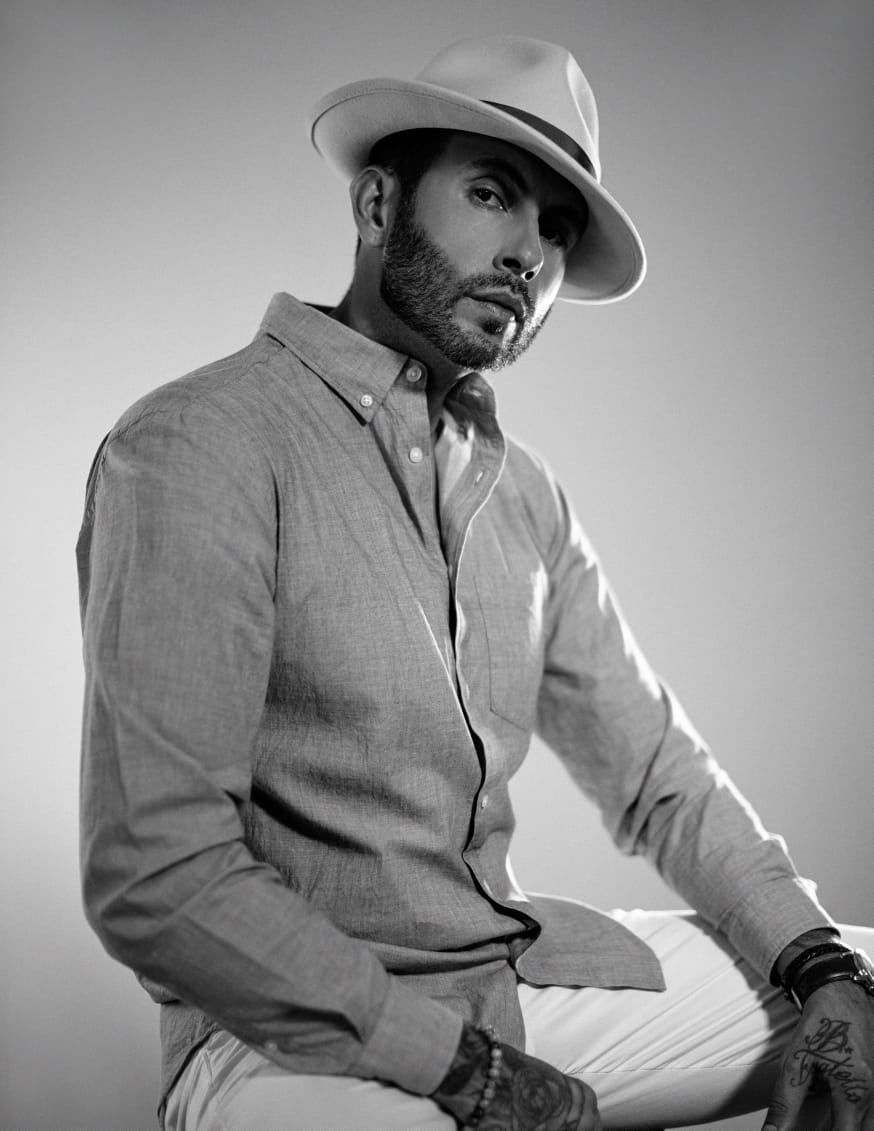
Taking the world of Fashion Photography and Cinematography by storm is a young budding Italian Luca De Massis.
One of the breakthroughs in the current golden era of generation is the emergence and development of Internet. There is practically no such business or enterprise that can function without Internet as a medium. Inadvertently it has become an integral and irreplaceable part of our lives. With internet came the other parallel verticals on the medium that started entertaining the audiences to the core and often set many productive setups that helped many businesses as well. The power of social media in today’s world have been humongous. Social media has given umpteen number of opportunities and empowerment to millions of people around the world giving birth to many artists and professionals who can now reach the larger audience through their phones, tablets, laptops, or any other gadgets. The exponential rise of this sector has shown tremendous amounts of growth and potential. Out of many such niche domains making their mark on the internet and social media industry, photography has been one such sector that has enthralled all through their latest technological advances and advent. No doubt the internet and social media have been the fuel and fire behind taking photography as an industry to next level. But still professionals have to find their way to the top bypassing many competitors and making the work unique in many ways. Let’s meet one such true-blue professional in the fashion photography industry spiraling his way to the top through his innate and creative skills- Luca De Massis.
Giving a different golden touch to fashion photography with right inputs of marketing initiatives and strategic imperatives, Luca De Massis has already scaled heights of success in the industry. Hailing from a small town of Pescara, a small town in Italy, Luca always wanted to try and experiment with many things. Being initially inclined towards music, Luca changed gears to amend his life into the world of fashion photography. His sheer passion, love, and interest for fashion photpgraphy grew by ten-folds in coming years making him sure of the fact of pursuing it as a profession. Having worked with top notch models and famous personalities, Luca’s worked has also been featured in various popular magazines like Elle and Vogue Italia.
His mesmerizing pictures in the fashion and cinematography industry has been captivating and has garnered him much love and recognition. His visual storytelling sagas have fascinated millions across the globe and has propelled him to become one of the most sought names in the fashion world. This clinical shutterbug has quickly become the hot favorite among models and fashionistas. With more than 15 years of experience in the industry, Luca has further developed his skills and expertise to deep dive into many other areas and excel as a filmmaker, creative director, actor and fashion enthusiast. Luca has done countless photoshoots for models capturing real beauty of people regardless of any caste, religion, creed, ethnicity, etc. His one of his finest photoshoots was the one done with the Black Beauties.
Lucas believes that “To what may seem flaws to others is what real beauty, It’s all in the perspective.” We hope Lucas continues to rise high in the world of photography inspiring many millions on route to greatness.


Progress often starts with someone who refuses to accept silence as the only option. Many women experience unfair treatment at work, yet feel they have nowhere safe to turn. That gap, the distance between speaking up and being supported, is where real change is still needed, and it remains one of the biggest barriers to true equality today.
Fozia Rashid knows this firsthand. After raising concerns about serious misconduct in her own workplace and losing her job as a result, she saw how isolating it can be for women who try to do the right thing. That experience pushed her to create She Speaks Out, a platform designed to give women clarity, tools, and a voice during some of the most challenging moments in their careers.
From the beginning, her aim was not to build another information site. She wanted a space where women could feel understood, where complicated processes were broken down into simple steps, and where no one felt that reporting misconduct meant stepping into a dark tunnel alone. Her HR training helped shape this approach, turning what is often overwhelming into something practical, direct, and genuinely supportive, especially for women who feel lost navigating workplace policies.
Her long-term vision stretches far beyond offering resources. Fozia wants She Speaks Out to help shift the culture around how women are treated at work. She believes that when women share their real experiences, discrimination, dismissal of their concerns, or subtle daily biases, it exposes patterns that organisations can no longer ignore. This focus on storytelling is not about sympathy; it is about awareness. Stories make the invisible visible, and visibility forces change in a way that statistics alone rarely can.
A key part of her mission is amplifying those voices so they reach people who can influence policy and workplace culture. She hopes the platform will push employers to rethink how they respond to reports, how they support employees, and how they build environments where women don’t fear retaliation for raising concerns. She wants leaders to understand that equality is not a slogan, it is a responsibility that requires honest action and genuine accountability.
Fozia also envisions She Speaks Out playing a role in larger societal change. She wants the platform to encourage companies to review their internal practices, improve reporting structures, and train managers to recognise and address problems rather than avoid them. She hopes the platform will support the push for stronger workplace protections and help challenge outdated beliefs about women’s roles, abilities, and credibility. The goal is simple: fair treatment should not depend on who you are, but on the basic respect every employee deserves.
As the platform grows, she aims to build a strong community where women can connect, support one another, and encourage those who feel unsure or unheard. A community where experiences are shared openly, not whispered privately. She believes that building solidarity among women is one of the most powerful steps toward lasting equality. When one woman speaks up, it can be dismissed. When many do, it becomes a movement that organisations cannot afford to overlook.
For Fozia, the future is not just about better policies or clearer reporting tools, though those matter. It’s about creating workplaces where women don’t have to prepare themselves for resistance every time they raise a concern. A future where safety and respect are not exceptional, but expected.
And through She Speaks Out, she is steadily pushing that future forward, giving women what she once needed most: a place to be heard, believed, and supported without hesitation, and a reminder that they never have to face these challenges alone.
-

 Tech5 years ago
Effuel Reviews (2021) – Effuel ECO OBD2 Saves Fuel, and Reduce Gas Cost? Effuel Customer Reviews
-
 Tech7 years ago
Bosch Power Tools India Launches ‘Cordless Matlab Bosch’ Campaign to Demonstrate the Power of Cordless
-

 Lifestyle7 years ago
Catholic Cases App brings Church’s Moral Teachings to Androids and iPhones
-

 Lifestyle5 years ago
East Side Hype x Billionaire Boys Club. Hottest New Streetwear Releases in Utah.
-

 Tech7 years ago
Cloud Buyers & Investors to Profit in the Future
-

 Lifestyle6 years ago
The Midas of Cosmetic Dermatology: Dr. Simon Ourian
-

 Health7 years ago
CBDistillery Review: Is it a scam?
-

 Entertainment7 years ago
Avengers Endgame now Available on 123Movies for Download & Streaming for Free