
Business
Raising Awareness and Funds: Help Us Protect Our Family-Owned Business from Being Taken Over


For most, family is a solid bedrock, a safe sanctuary offering love and support. But what happens when a family member, or even a parent, darkens this haven with manipulation and betrayal? The story that surfaces in Samantha Karagianis’s GoFundMe campaign exemplifies the devastating impact that one person’s Narcissistic Personality Disorder can have on the rest of the family.
Samantha Karagianis is raising awareness about the importance of setting boundaries with a close narcissistic family member. By sharing her example, she hopes to spare others from their emotional turmoil.
“Narcissists gain power over you by engaging in manipulative behaviors like gaslighting, guilt-tripping, and controlling,” Samantha observes. “Recognizing these behaviors is the first step in safeguarding yourself and those you love.”
Caught in the shadow of a narcissistic father’s betrayal
Samantha devoted years of her life to helping her husband build a business from the ground up, and they dreamed of creating a lasting legacy. Sadly, someone who should have been Samantha’s strongest ally is now the bitter antagonist in her story.
Two years ago, a promising chapter opened with Samantha’s father offering to invest in her husband’s business. She was overjoyed, interpreting this as an endorsement of their hard work. However, as time unfolded, her father failed to honor his duties and commitments, causing internal strife and jeopardizing the business’s reputation.
Tensions reached a breaking point when Samantha’s husband restricted her father’s involvement until he was willing to take a step back and respect his role. This decision, meant to protect the company’s integrity, was met with severe backlash. Feeling insulted and sidelined, her father gave his wounded ego free reign.
The importance of recognizing narcissistic behavior disorder early
Narcissism often goes unnoticed in families until an incident brings it into sharp focus. “As soon as you recognize narcissistic behavior, enlist the support of friends, other family members, or a therapist,” Samantha urges. “A support system provides validation and reinforces your efforts to maintain boundaries.”
Unfortunately, Samantha’s wake-up call came far too late. Her father’s first move was to steal $104,000 from their business line of credit, effectively crippling their company. His manipulative schemes escalated as he tried to convince Samantha to leave her husband, falsely claimed ownership of her husband’s intellectual property, and used every opportunity to belittle and undermine their efforts.
The true depth of his betrayal came to light when he set a trap under the guise of a reconciliation meeting at their warehouse. Instead of seeking a resolution, he ambushed her husband with his attorney, pressuring him to sell the business. When they refused, her father escalated his vendetta by creating a nearly identical business entity and convincing the bank to sell him their line of credit, financially crippling Samantha and her family.
“When you set boundaries, expect resistance, increased manipulation, and attempts to guilt you into changing your stance,” Samantha warns. “Be prepared to stand firm. In some cases, it may be necessary to limit or even cut off contact with the narcissistic family member, especially if they refuse to respect your boundaries and their presence is overwhelmingly detrimental to your well-being.”
In the lowest form of betrayal, Samantha’s father forged an alliance with another abusive figure from Samantha’s past: her eldest son’s father. This resulted in a temporary protective order that separated Samantha’s husband from her son, using her child as a pawn in a vicious game of manipulation.
Weeks have turned into anguished months of legal battles. The strain on Samantha’s family is not just over future financial concerns — it has seeped into the fabric of their daily lives, threatening their stability and emotional health.
Why awareness is crucial
Samantha’s heart-wrenching story mirrors the experiences of many who have had their lives upended by narcissistic family members. This toxic behavior manifests as manipulation, emotional abuse, or outright betrayal, leaving victims in states of hopelessness and despair.
Narcissistic family members excel in creating an environment of psychological distress. The constant gaslighting and emotional manipulation erodes self-esteem and fosters a perpetual state of anxiety.
Because narcissistic family members routinely appear engaging and charismatic to those outside the family dynamic, victims often endure this harsh, belittling treatment for years. They may feel isolated or blame themselves, unaware that they are dealing with a narcissist whose primary goal is to control and dominate.
When narcissistic family members retain control, the ripple effect of their actions spreads throughout the family unit, affecting spouses, children, and other relatives. These dynamics lead to strained relationships, mistrust, and even estrangement.
While society understandably prefers to emphasize the inviolable nature of familial bonds, it is crucial to recognize and address the harm that narcissistic family members can inflict. Victims of this psychological trauma must seek help and find the strength to prevent toxic relationships from harming the next generation. Standing up against such injustice requires courage, resilience, and community support.
Samantha’s GoFundMe story is a powerful message to others facing similar situations. It’s about finding the courage to set boundaries, prioritize personal well-being, and stand up against unjust behavior, even when that behavior comes from close family members.
“Setting boundaries with a narcissistic family member is not a one-time event,” Samantha concludes. “Most of the time, it is an ongoing process. However, continually maintaining those boundaries is the only way to preserve your emotional health and protect the ones you love.”

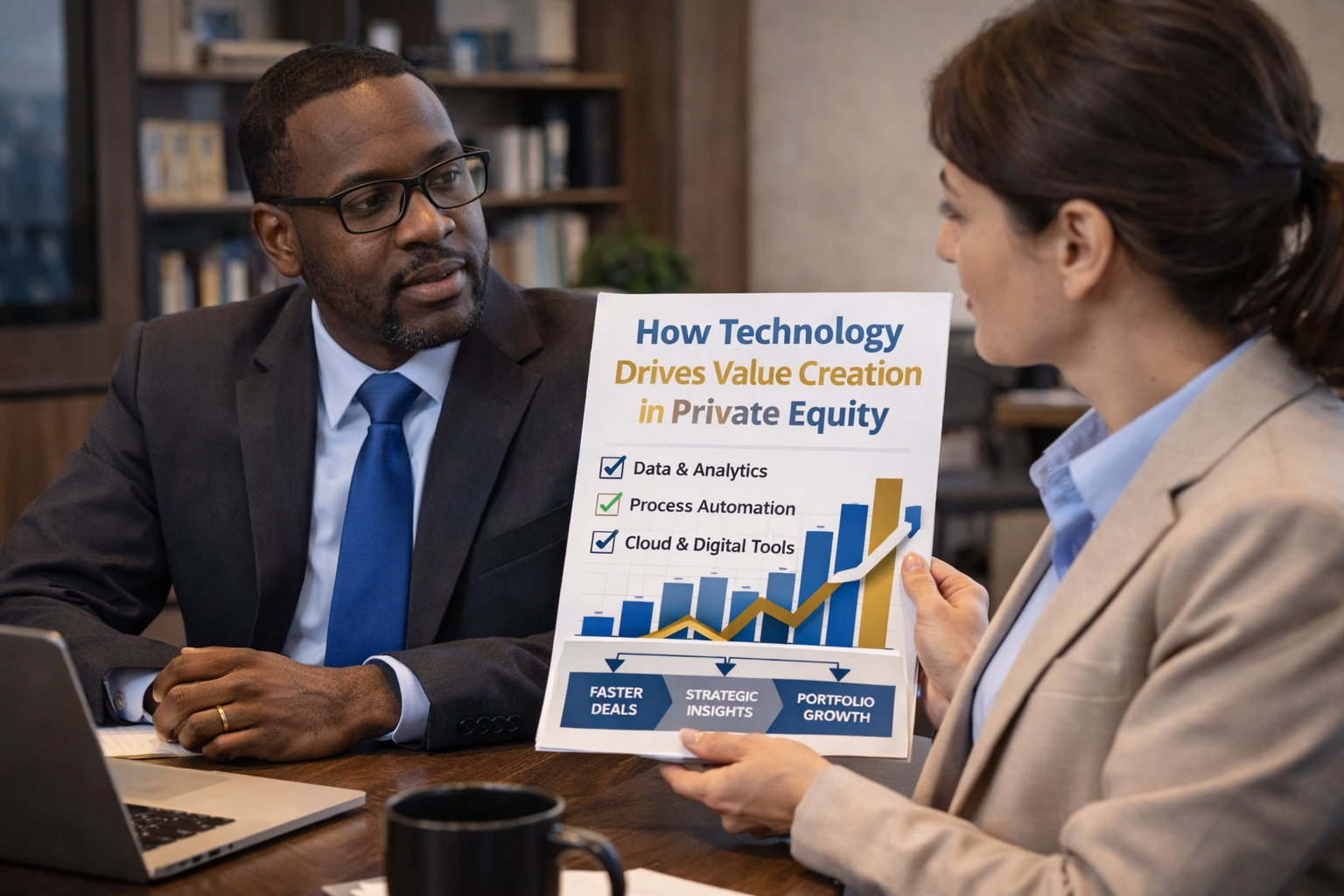
How technology drives value creation in private equity is now one of the most actively debated topics among institutional investors and fund managers. A decade ago, technology was largely a cost center in PE-backed companies. Today it sits at the center of margin improvement, revenue growth, and exit multiple expansion. Firms that figured this out early are generating better returns with less reliance on financial engineering.
The shift happened for a practical reason. As interest rates rose and deal multiples compressed, financial leverage stopped doing the heavy lifting. Operational improvement became the primary value creation lever. Technology accelerated what was possible within the ownership period.
How Technology Drives Value Creation in Private Equity Operations
Operational improvement through technology produces the most measurable results. PE firms apply technology tools to reduce costs, increase throughput, and improve decision-making speed inside their companies.
Digital Process Automation in PE-Backed Companies
Manual processes in back-office and production functions carry real costs. They consume labor, generate errors, and slow down the information flow that management teams depend on. Automation tools eliminate these costs without requiring headcount reductions that disrupt company culture.
The most impactful automation deployments in PE-backed operations include:
- Accounts payable and receivable automation that compresses billing cycles and reduces days sales outstanding
- Production scheduling software that reduces downtime and improves throughput in manufacturing environments
- Inventory management systems that cut carrying costs by aligning purchasing with real-time demand signals
- Quality control automation that reduces defect rates and warranty claims in product-based businesses
ZCG Consulting (“ZCGC”) works with companies across industrials, manufacturing, packaging, and consumer products to identify and implement automation programs tied to specific financial outcomes. The approach connects technology investment to measurable margin improvement rather than treating automation as a general upgrade.
Data Infrastructure as a Value Creation Tool
Many PE-backed companies arrive under new ownership with fragmented data systems. Different departments use different tools. Reporting requires manual consolidation. Leadership makes decisions with incomplete information.
Fixing that infrastructure creates immediate value. Integrated data systems give management teams real-time visibility into revenue, cost, and operational performance. That visibility accelerates decisions and surfaces problems before they become material.
James Zenni, founder and CEO of ZCG with over 30 years of capital markets experience, has consistently emphasized that information quality drives investment performance. That view shapes how ZCG approaches technology investment across the companies in its portfolio.
Technology Drives Value Creation in Private Equity Through Revenue Growth
Cost reduction gets most of the attention in PE operational improvement, but technology also drives revenue growth. The mechanisms are different, and they compound differently over a hold period.
E-Commerce and Digital Customer Acquisition
Companies that sell primarily through traditional channels often leave significant revenue on the table. Adding e-commerce capabilities or investing in digital customer acquisition expands the addressable market without proportional cost increases.
PE firms that invest in digital revenue channels generate higher growth rates during the hold period. That growth rate difference translates directly into exit multiple expansion.
Revenue growth technology applications in PE-backed companies include:
- E-commerce platform buildouts that open direct-to-consumer channels alongside existing wholesale relationships
- Customer relationship management systems that improve retention and increase repeat purchase rates
- Digital marketing infrastructure that lowers customer acquisition costs through better targeting and attribution
- Pricing optimization tools that identify margin improvement opportunities without volume loss
Technology-Enabled Customer Experience Improvements
Customer retention is cheaper than customer acquisition. Technology investments in customer experience, service speed, and product quality consistency reduce churn. Lower churn produces more predictable revenue. More predictable revenue supports higher exit valuations.
ZCG deploys Haptiq Technologies and Solutions, its 300-plus-person technology division, to support digital transformation across its companies. The platform was founded 20 years ago and manages approximately $8 billion in AUM. It brings implementation resources that most individual companies cannot afford to build internally. That capability gives ZCG’s companies faster access to technology improvements at lower execution risk.
Building Technology Capability Within PE-Backed Companies
Technology investment during the hold period creates value in two ways. It improves financial performance during ownership. It also makes the business more attractive to the next buyer.
Strategic buyers and later-stage PE funds pay premium multiples for companies with modern technology infrastructure. A business with integrated systems, clean data, and digital revenue channels commands a better price. A comparable business running on legacy platforms does not.
The ZCG Team structures technology investment as part of the initial value creation plan for each company. Priorities get set at entry based on the gap between current capability and acquirer expectations.
This pre-sale positioning approach changes how technology investment gets funded and sequenced during the hold period. Projects that improve financial performance and exit readiness simultaneously get prioritized. Projects with long payback periods that do not improve the sale narrative get deferred.
How technology drives value creation in private equity is ultimately about execution discipline. The tools matter less than the clarity of the financial objective each technology investment must achieve.
-

 Tech5 years ago
Effuel Reviews (2021) – Effuel ECO OBD2 Saves Fuel, and Reduce Gas Cost? Effuel Customer Reviews
-
 Tech7 years ago
Bosch Power Tools India Launches ‘Cordless Matlab Bosch’ Campaign to Demonstrate the Power of Cordless
-

 Lifestyle7 years ago
Catholic Cases App brings Church’s Moral Teachings to Androids and iPhones
-

 Lifestyle5 years ago
East Side Hype x Billionaire Boys Club. Hottest New Streetwear Releases in Utah.
-

 Tech7 years ago
Cloud Buyers & Investors to Profit in the Future
-

 Lifestyle6 years ago
The Midas of Cosmetic Dermatology: Dr. Simon Ourian
-

 Health7 years ago
CBDistillery Review: Is it a scam?
-

 Entertainment7 years ago
Avengers Endgame now Available on 123Movies for Download & Streaming for Free