
Entertainment
Reda Haddioui, from singing in Parisian bars, to producing music in Hollywood for a Golden Globe, Oscar Winning, and Grammy nominated Marvel movie

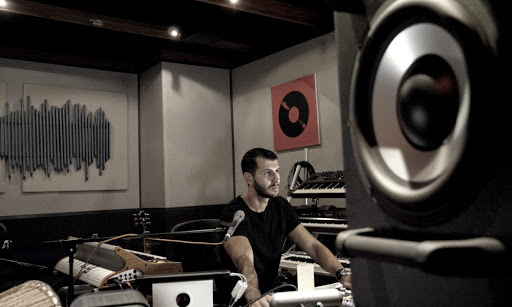
When you were a child, which record made the strongest impression on you?
I would say Tim Buckley’s song “Once I Was”. I remember when I was a kid, being in the car with my dad when he played me the record for the first time. I felt really emotional hearing the song for the first time even without understanding the lyrics. I was hypnotized by Tim’s vocal performance and the overall vibe. Today understanding the words and being passionate about lyrics in general, it touches me even more.
Where did you train and/or study?
I took a few piano lessons at a very young age but didn’t really stick to it as I wanted to explore music without having any directions. So I’ve been almost self taught until I was sixteen and started taking voice lessons. I’ve started to learn recording and mixing watching online videos during high school but really improved my music production skills at Berklee College Of School where I went to study after earning a scholarship. I studied Music Production & Engineering and had the chance to learn from Grammy-winning producers, songwriters, and engineers. I learned the rest on the field recording and producing hundreds of musicians in Morocco, Paris, Boston, and Los Angeles.
How long have you been working in Los Angeles?
I’ve been working in Los Angeles for a little over three years now. I came from Boston after graduating from Berklee and it has been an incredible journey for me even-though the road has been and can still be tough from time to time.
How did you end up producing a song for the Marvel movie: Spider-man Into The Spider Verse?
I’ve worked really hard since I moved to Los Angeles without counting the hours. Fifteen hours work days were common for me. Nobody was forcing me to put all these hours in, but I’ve always been a perfectionist, always trying to get better at what I do. Eventually my hard work has paid off. I’ve been working part-time in several recording studios in Los Angeles until I found WAX LTD where I really got along with the multi-platinum producers/songwriters Wally Gagel and Xandy Barry. I started as an intern but my hard work has allowed me to step up and eventually end up working with them on bigger and bigger projects, including the song “To The End” for the “Spider-man Into The Spider Verse” movie.
What was the biggest challenge working on such a big project?
I’ve noticed that the biggest challenge working on bigger projects is to treat them as small ones. There’s that unexplainable and magical thing happening when you’re carelessly producing music. The result usually feels authentic, and people connect more to it. In the other hand when you overthink while producing, the song tends to lose its magic and becomes naturally less effective. Producing “To The End”, we were finalizing the mix, but had to change some of the lyrics at the last minute, which also required re-tracking most of the vocals. We only had about two hours on a Sunday to re-track Elliphant’s vocals as her schedule was packed with sessions, and was going back and forth between Los Angeles and Stockholm. I worked with her that day and vocal produced her, doing my best to get the energetic performance the song needed. Fortunately, I had a great time working with her and we’ve been able to achieve what we aimed for. Vocal production is often underrated, but it is probably the most important thing on a record. Vocals are the main focus and if they don’t convey authenticity, people don’t stick to the song.
What is the best professional advice you’ve ever received, and that you would give to up and coming music producers?
The best professional advice I’ve ever received and that I would give without any hesitation sounded cliché and useless to me at first, but today I realize how accurate it is in context. One day while studying at Berklee in Boston, I asked that question to one of my production teachers and successful record producer John Whynot. He gave me the very short answer: “Focus on what you’re doing well, and keep doing it well”. Again, expecting a long answer and hearing this instead could be disappointing. However, once you are plunged into the music world in Hollywood around the most talented people in the world, you’ll have all the temptations in the world to shift your focus towards the million reasons why you’re not as successful as the person you’re looking up to. So you start overthinking, thinking of how to “make it” faster, and you eventually forget that you only have a limited amount of energy, which in this case is wasted overthinking. So yes, it becomes harder and harder to stay focused on what brought you here in the first place, and it is extremely important to keep that in mind to become one of the greatest in your field. Hard work, perseverance, and patience are key to success. Everyone knows it, everyone forgets it during tough times.
Instagram: @redahmusic


Too many talented musicians spend the early years of their careers standing still, waiting. Waiting for the “right” gig. Waiting to be discovered. Waiting until they feel completely ready. But while they hesitate, others with less experience but more urgency are out there taking the jobs, building connections, and gaining ground.
Sarah Angel has seen this happen again and again. A successful live entertainer and founder of Posh Piano, she didn’t wait for a perfect opportunity to appear; she built her career by saying yes to what was already in front of her.
Sarah’s journey didn’t begin with a business plan. It began on stage, performing at corporate gigs and high-end events. For a while, she did what many musicians do: she showed up, played the set, and collected the paycheck. But the turning point came when she realized how much more others were earning off her talent. While she was being paid a small cut, the booker was making thousands. That gap shifted everything. She didn’t get angry, she got to work.
Sarah learned to run sound, bought her own equipment, built piano shells to give her setup a polished look, and began booking directly. Before each event, she would spend hours hauling gear and setting up the space herself. She didn’t wait for anyone to hand her a better gig; she created it. That same mindset carries into how she mentors and advises young musicians today.
For Sarah, one of the biggest traps new performers fall into is comparison. Instead of focusing on their own style and voice, they mimic what’s already out there. But copying someone else won’t lead to a sustainable career. What matters most is figuring out what makes you different and building on that. Your individuality is not a risk; it’s the foundation of your career.
Equally important, she says, is learning to say yes more often. Not every opportunity will be glamorous or well-paid. But every job is a chance to meet someone new, gain experience, or get your name in front of people who can open doors down the road.
This is where so many early careers stall, not because of a lack of talent, but because of hesitation. When performers constantly hold out for something better, they miss what’s right in front of them. Taking one job often leads to five more. And even if a gig doesn’t seem ideal at first, it often brings value in ways that are not obvious right away.
Sarah compares it to building momentum. Each job adds to your experience, your network, and your visibility. It’s not just about stacking performances, it’s about putting yourself in motion. The more active you are, the more people think of you when opportunities come up. That kind of consistency can’t be faked, and it can’t be replaced with a few viral moments online.
Another common challenge she sees is indecision. Musicians who spend too much time analyzing every offer often lose out on real growth. Taking action, even imperfectly, leads to more progress than standing still. Not every gig will be a perfect fit, but most will teach you something valuable.
Over the years, Sarah has also learned to be intentional about who she surrounds herself with. She chooses to work with musicians who are not just talented, but reliable, respectful, and open to learning. Attitude often matters more than technical skill. It’s easier to grow as a musician than to fix a lack of work ethic.
Sarah Angel’s career didn’t come from waiting or wishing. It came from working. She showed up, learning as she went, and made smart choices when it counted. The music industry doesn’t reward perfection, it rewards presence, action, and growth over time.
If you are serious about building a career in music, start with what’s in front of you. Take the gig. Meet the people. Build a life. One step at a time.
-

 Tech5 years ago
Effuel Reviews (2021) – Effuel ECO OBD2 Saves Fuel, and Reduce Gas Cost? Effuel Customer Reviews
-
 Tech7 years ago
Bosch Power Tools India Launches ‘Cordless Matlab Bosch’ Campaign to Demonstrate the Power of Cordless
-

 Lifestyle7 years ago
Catholic Cases App brings Church’s Moral Teachings to Androids and iPhones
-

 Lifestyle5 years ago
East Side Hype x Billionaire Boys Club. Hottest New Streetwear Releases in Utah.
-

 Tech7 years ago
Cloud Buyers & Investors to Profit in the Future
-

 Lifestyle6 years ago
The Midas of Cosmetic Dermatology: Dr. Simon Ourian
-

 Health7 years ago
CBDistillery Review: Is it a scam?
-

 Entertainment7 years ago
Avengers Endgame now Available on 123Movies for Download & Streaming for Free