
Business
Taking a Look at the Importance of Promotional Product Marketing


Promotional products are necessary for businesses to connect with potential clients and customers. This low-cost marketing strategy aids in bringing in new clients. You can find reasonably-priced promotional merchandise that attract notice and more potential clients.
A great way to recall your business
People can see and remember your brand thanks to promotional products. For instance, a promotional t-shirt or bag can proudly feature your company’s logo and contact details. People who utilize such giveaways will immediately think of you.
Keep in mind your industry niche and your intended audience. Say you wish to get in touch with a tech company. A customized USB would be a great item. The potential consumer may use the promotional item frequently, so you want it to be valuable and understated. Additionally, you don’t want them to feel your business is being forced down their throat.
When you distribute promotional goods bearing your logo and contact details, your business—large or small—will reach a wider audience. Distribute them at gatherings, meetings, expo exhibits, and trade exhibitions. There are countless occasions and locations where you can distribute your promotional products.
Handing out promotional goods to Prospective Customers
Gone are the days when people relied on business cards for brand recall. Promotional merchandise has the potential to replace traditional business cards as a more engaging and memorable marketing tool. While business cards provide contact information, promotional merchandise offers a tangible and functional item that recipients can use in their daily lives.
Items like branded pens, keychains, or USB drives not only carry the business’s logo but also serve as practical reminders of the brand. They create a stronger connection with the recipient, enhancing brand recall and fostering a positive impression.
Brand awareness like never before!
The Nike “swoosh” completely changed the game for the business; now, their emblem is recognized by clients worldwide. You can create the same form of brand recognition by including your logo in places where people will see it frequently, such as on bags, BBQ accessories and lots more.
When recipients use or wear these items, they act as walking billboards, exposing the brand to a wider audience. Promotional products also have a high potential for reaching new customers at trade shows, events, or as giveaways. The usefulness and novelty of the items can spark conversations and generate curiosity about the brand. Through repeated exposure and positive associations, promotional products effectively increase brand visibility, recognition, and ultimately, contribute to a stronger brand presence in the market.
Promo Direct – The perfect collaborator
Promo Direct provides the complete solution for enterprises with branded goods, online shops, and a fulfillment center that serves Fortune 500 and Fortune 1000 firms. Promo Direct can help you save a substantial amount of time and money by becoming the go-to supplier for all your apparel and promotional product needs.
Whether you’re a newcomer or an established company, achieving success requires diligent effort, strategic planning, and a customer-centric approach. Promo Direct has over 30+ years of expertise serving the finest promo merchandise to Americans. We can help you drive your business in the right direction with giveaways. Get in touch with us at [email protected] or 1-800-748-6150 right away!
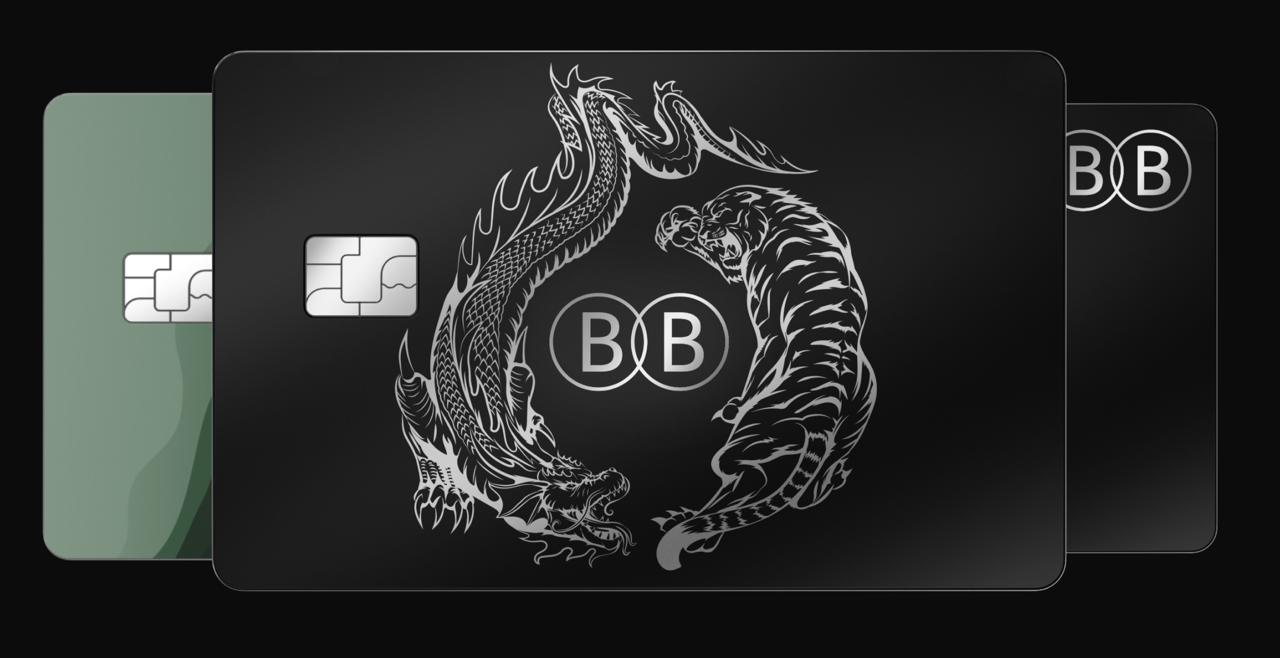
In fintech, success no longer hinges on legacy prestige or brick-and-mortar branches—it’s about speed, scale, and precision. Black Banx, under the leadership of founder and CEO Michael Gastauer, has exemplified this model, turning its high-volume approach into high-value results.
The company’s Q1 2025 performance tells the story: $1.6 billion in pre-tax profit, $4.3 billion in revenue, and 9 million new customers added, bringing its total customer base to 78 million across 180+ countries.
But behind the numbers lies a carefully calibrated business model built for exponential growth. Here’s how Black Banx’s strategy of scale is redefining what profitable banking looks like in the digital age.
Scaling at Speed: Why Volume Matters
Unlike traditional banks, which often focus on deepening relationships with a limited set of customers, Black Banx thrives on breadth and transactional frequency. Its digital infrastructure supports onboarding millions of users instantly, with zero physical presence required. Customers can open accounts within minutes and transact across 28 fiat currencies and 2 cryptocurrencies (Bitcoin and Ethereum) from anywhere in the world.
Each customer interaction—whether it’s a cross-border transfer, crypto exchange, or FX transaction—feeds directly into Black Banx’s revenue engine. At scale, these micro-interactions yield macro results.
Real-Time, Global Payments at the Core
One of Black Banx’s most powerful value propositions is real-time cross-border payments. By enabling instant fund transfers across currencies and countries, the platform removes the frictions associated with SWIFT-based systems and legacy banking networks.
This service, used by individuals and businesses alike, generates:
- Volume-based revenue from transaction fees
- Exchange spreads on currency conversion
- Premium service income from business clients managing international payroll or vendor payments
With operations in underserved regions like Africa, South Asia, and Latin America, Black Banx is not only increasing volume—it’s tapping into fast-growing financial ecosystems overlooked by legacy banks.
The Flywheel Effect of Crypto Integration
Crypto capabilities have added another dimension to the company’s high-volume model. As of Q1 2025, 20% of all Black Banx transactions involved cryptocurrency, including:
- Crypto-to-fiat and fiat-to-crypto exchanges
- Crypto deposits and withdrawals
- Payments using Bitcoin or Ethereum
The crypto integration attracts both retail users and blockchain-native businesses, enabling them to:
- Access traditional banking rails
- Convert assets seamlessly
- Operate with lower transaction fees than those found in standard financial systems
By being one of the few regulated platforms offering full banking and crypto support, Black Banx is monetizing the convergence of two financial worlds.
Optimized for Operational Efficiency
High volume is only profitable when costs are contained—and Black Banx has engineered its operations to be lean from day one. With a cost-to-income ratio of just 63% in Q1 2025, it operates significantly more efficiently than most global banks.
Key enablers of this cost efficiency include:
- AI-driven compliance and customer support
- Cloud-native architecture
- Automated onboarding and KYC processes
- Digital-only servicing without expensive physical infrastructure
The outcome is a platform that not only scales, but does so without sacrificing margin—each new customer contributes to profit rather than diluting it.
Business Clients: The Value Multiplier
While Black Banx’s massive customer base is largely consumer-driven, its business clients are high-value accelerators. From SMEs and startups to crypto firms and global freelancers, businesses use Black Banx for:
- International transactions
- Multi-currency payroll
- Crypto-fiat settlements
- Supplier payments and invoicing
These clients tend to:
- Transact more frequently
- Use a broader range of services
- Generate significantly higher revenue per user
Moreover, Black Banx’s API integrations and tailored enterprise solutions lock in these clients for the long term, reinforcing predictable and scalable growth.
Monetizing the Ecosystem, Not Just the Account
The genius of Black Banx’s model is that it monetizes not just accounts, but entire customer journeys. A user might:
- Onboard in minutes
- Deposit funds from a crypto wallet
- Exchange currencies
- Pay an overseas vendor
- Withdraw to a local bank account
Each of these actions touches a different monetization lever—FX spread, transaction fee, crypto conversion, or premium service charge. With 78 million customers doing variations of this at global scale, the cumulative financial impact becomes immense.
Strategic Expansion, Not Blind Growth
Unlike many fintechs that chase customer acquisition without a clear monetization path, Black Banx aligns its growth with strategic market opportunities. Its expansion into underbanked and high-demand markets ensures that:
- Customer acquisition costs stay low
- Services meet genuine needs (e.g., cross-border income, crypto access)
- Revenue per user grows over time
It’s not just about acquiring more customers—it’s about acquiring the right customers, in the right markets, with the right needs.
The Future Belongs to Scalable Banking
Black Banx’s ability to transform high-volume engagement into high-value profitability is more than just a fintech success—it’s a signal of what the future of banking looks like. In a world where agility, efficiency, and inclusion define competitive advantage, Black Banx has created a blueprint for digital banking dominance.
With $1.6 billion in quarterly profit, nearly 80 million users, and services that span the globe and the blockchain, the company is no longer just scaling—it’s compounding. Each new user, each transaction, and each feature builds upon the last.
This is not the story of a bank growing.
This is the story of a bank accelerating.
-

 Tech4 years ago
Effuel Reviews (2021) – Effuel ECO OBD2 Saves Fuel, and Reduce Gas Cost? Effuel Customer Reviews
-
 Tech6 years ago
Bosch Power Tools India Launches ‘Cordless Matlab Bosch’ Campaign to Demonstrate the Power of Cordless
-

 Lifestyle6 years ago
Catholic Cases App brings Church’s Moral Teachings to Androids and iPhones
-

 Lifestyle4 years ago
East Side Hype x Billionaire Boys Club. Hottest New Streetwear Releases in Utah.
-

 Tech7 years ago
Cloud Buyers & Investors to Profit in the Future
-

 Lifestyle5 years ago
The Midas of Cosmetic Dermatology: Dr. Simon Ourian
-

 Health6 years ago
CBDistillery Review: Is it a scam?
-

 Entertainment6 years ago
Avengers Endgame now Available on 123Movies for Download & Streaming for Free