
Sports
The Greatest Players at The Masters


The Masters is one of the most revered sporting tournaments on the planet, mythologised by players, pundits and fans alike. History and legend seeps out from every hole, helping to add to the allure of a tournament that brings together the world’s greatest players at one course each year.
The most common 2021 odds to win Masters has been for the 2020 champion Dustin Johnson to retain the Green Jacket, however as history proves, that may be a difficult feat for the current world number 1.
However, instead of concerning ourselves with whether or not Dustin Johnson can win the 2021 Masters, in this article we look back at some of the greatest players to have ever graced the tournament. The players that have written themselves into the long and illustrious history of the Augusta course.
Bobby Jones
Nationality: American
Green Jackets: 0
It might appear odd to see an entry on this list from a player that never won The Masters, but without Bobby Jones there would not be a tournament to discuss. Born in 1902 in Atlanta, Georgia Jones would go on to become one of the greatest amateur players of all-time – winning a unique single year Grand Slam in 1930.
His place in history wasn’t sealed by his exploits on the golf course however, it was sealed by his creation of The Masters tournament. Along with private financier Clifford Roberts, Jones founded The Masters in 1933, using his well-earned reputation to attract the biggest names in the sport to the tournament.
Sadly for Jones though, his best finish in his own tournament was 13th in 1934 although it was perhaps only fair that he gave someone else a chance after dominating the sport for much of the 1920s.
Arnold Palmer
Nationality: American
Green Jackets: 4
It’s hard to think of golf’s greatest players without calling Arnold Palmer to mind, the legendary player who recorded 12 top 10 finishes and 4 wins at Augusta in a 12 year period.
In 1958 heavy rains at Augusta prompted a local rule which allowed for a lift, clean and drop for an embedded ball. When Palmer took to the 12th tee his ball was embedded on the soft ground, but rules officials insisted that he play the ball as it lay.
He did and made a five, officials then told him he could play a second ball and await a final ruling. With the second ball he made a three which officials later ruled to be proper, leading to his first ever Masters victory.
Sports Illustrated writer Herbert Warren Wind who was covering the tournament later christened the 11th, 12th and 13th holes as ‘Amen Corner’ for the miraculous way in which Palmer excelled on them. Throughout the decades the name has stuck with yells of ‘Amen’ coming from the crowd whenever the ball approaches the hole.
ESPN pay tribute to Arnold Palmer’s Masters Legacy
Tiger Woods
Nationality: American
Green Jackets: 5
Arnold Palmer’s performance at Augusta may have spawned a new name for a corner of the course, but Tiger Wood’s exploits at the course in the early 2000s led to a complete course redesign.
Such was the power of Tiger that in the late 1990s and early 2000s he was turning the Par 5’s at Augusta into Par 4’s. In response, officials added an extra 500 yards to the length of course and added trees alongside the fairways at the 11th and 15th holes.
Despite this Tiger went on to win the 2005 tournament before a fallow period at Augusta began which coincided with his off the course personal problems. However, in 2019 Tiger rolled back the years, winning his fifth Green Jacket and cementing his name in the course’s folklore.
He is also the youngest ever winner of the tournament, picking up his first Green Jacket at the age of 21 years and 104 days in 1997.
Sam Snead
Nationality: American
Green Jackets: 3
Born in Ashwood, Virginia Sam Snead is one of the greatest players to have ever played the game, racking up a series of tournament victories in his illustrious career. In 1949 he became the first Masters winner to be awarded the ceremonial Green Jacket.
Prior to then, the Green Jacket was worn by players to distinguish themselves from members of the public. However, in 1949 it was decided that a jacket would be awarded to the winner which they could keep for a year before returning it and placing it on the back of the next winner.
Snead went on to win the Green Jacket in 1952 and 1954 and was chosen to hit the honorary starting tee shot at the Masters Tournament from 1984 to 2002.
Jack Nicklaus
Nationality: American
Green Jackets: 6
No player in history has won as many Masters Tournaments as Jack Nicklaus who placed first in 1963, 1965, 1966, 1972, 1975 and 1986. His 18 Major championship wins mean that he is widely considered by many to have been the greatest player that has ever lived.
His consistency is what separates him from his peers, which is illustrated by his Masters top 5 finishes (15), top 10 finishes (22) and top 25 finishes (29).
He is also the oldest player to have ever won The Masters, romping to victory in 1986 at the age of 46 years and 82 days.
Honourable Mentions
Nick Faldo
Nationality: British
Green Jackets: 3
63-year-old Brit Nick Faldo has 6 Major championships to his name with 3 of them coming at Augusta in 1989, 1990 and 1996. By becoming a back-to-back winner in 1990 he cemented his name in the legend of Augusta.
Gary Player
Nationality: South African
Green Jackets: 3
With 3 Green Jackets Gary Player is joint with Nick Faldo for the most Masters wins by a foreigners after winning in 1961, 1974 and 1978. After finishing his professional career, Player went on to make a name for himself as one of the world’s leading golf course design architects.
Jimmy Demaret
Nationality: American
Green Jackets: 3
For some players Augusta holds a special place in their hearts and that is certainly true for Jimmy Demaret who’s 3 Major championships all came at The Masters. In 1983 his golfing talent was recognised as he was inducted into the World Golf Hall of Fame.
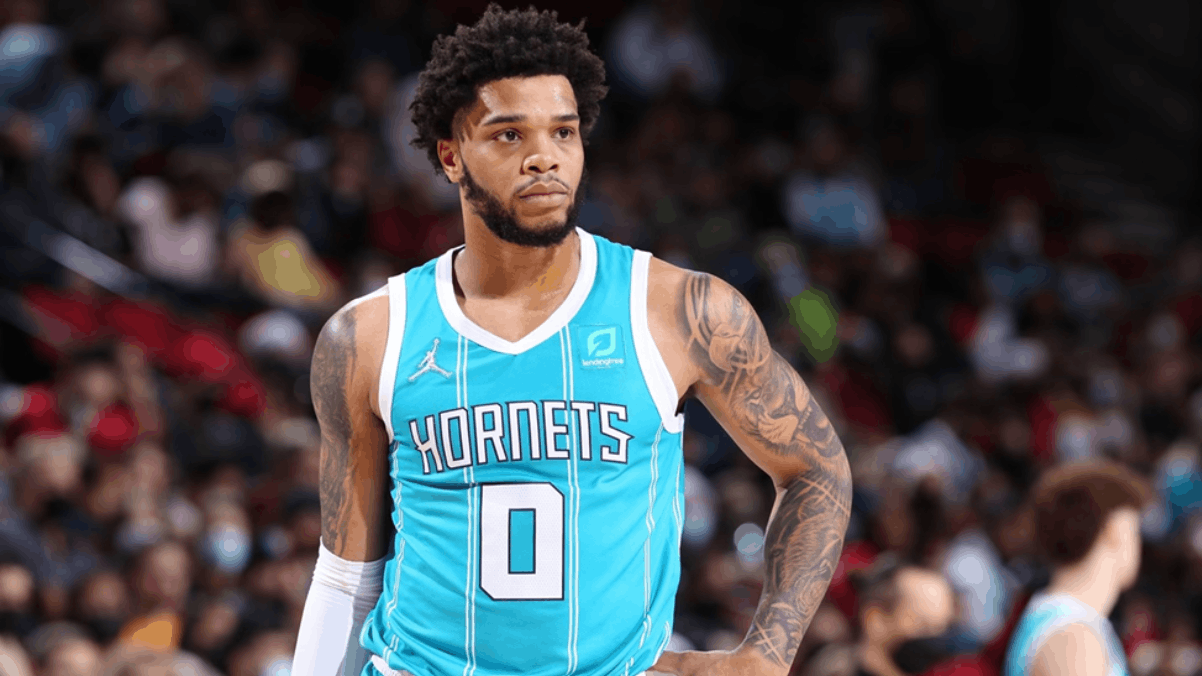
In a league defined by speed, versatility, and star power, few players embody the modern NBA forward as effectively as Miles Bridges of the Charlotte Hornets. Known for his explosive athleticism, scoring versatility, and relentless energy, Bridges has become a central figure in Charlotte’s rotation and one of the team’s most reliable contributors during the 2025–26 NBA season.
At 27 years old, Bridges represents both experience and prime athletic performance. Drafted 12th overall in the 2018 NBA Draft and entering his seventh NBA season, he has evolved from an athletic prospect into a seasoned forward capable of influencing games in multiple ways.
As the Hornets continue to compete in the Eastern Conference playoff race, Bridges’ contributions on the court, and his role as a family-oriented figure off it, have helped define his public image as both a professional athlete and a devoted father.
A Key Contributor to Charlotte’s 2026 Campaign
The Charlotte Hornets have experienced a notable shift in momentum in recent months. Since the start of 2026, the team has been among the most efficient squads in the league, posting one of the NBA’s best net ratings and offensive outputs.
Bridges has played a significant role in that success.
During the 2025–26 season, Bridges has averaged approximately 18.2 points, 6.1 rebounds, and 3.5 assists per game, showcasing his ability to impact multiple statistical categories. These numbers reflect a player capable of both scoring and facilitating while contributing on the boards—an ideal skill set for a modern small forward or power forward.
The Hornets have leaned on Bridges for consistent production, particularly during stretches where the team has needed secondary scoring behind star guard LaMelo Ball. Over several recent games, Bridges has demonstrated the ability to fill the stat sheet, producing performances that include double-digit scoring nights and occasional double-doubles.
His impact extends beyond raw statistics. Bridges’ versatility allows Charlotte’s coaching staff to deploy him in multiple lineups and defensive assignments. At 6-foot-7 and 225 pounds, he combines size with explosive athleticism, enabling him to guard multiple positions and contribute as a transition scorer.
Explosive Athleticism and Versatility
Bridges first captured national attention during his collegiate career at Michigan State, where his combination of strength and leaping ability made him one of the most electrifying players in college basketball. That athletic profile translated seamlessly to the NBA.
Few players in the league possess Bridges’ ability to elevate above defenders for highlight-reel dunks while still stretching the floor with perimeter shooting. His athleticism has long been one of his defining characteristics, allowing him to attack the rim aggressively and finish in traffic.
Analysts often point to his vertical leap and explosiveness as unique assets. When operating in transition, Bridges becomes particularly dangerous. He thrives in fast-break situations, sprinting the floor and converting difficult finishes with ease.
Beyond his scoring ability, Bridges has developed as a passer. His average of more than three assists per game illustrates his growth as a facilitator who can help initiate offense from the wing.
This combination of skills—scoring, rebounding, and playmaking—makes him a valuable piece in Charlotte’s offensive structure.
Recent Performances Highlight His Value
Bridges’ recent game performances demonstrate why the Hornets continue to rely on him in key situations.
In one notable outing earlier in the season, he delivered 26 points, six rebounds, and five assists, helping lead Charlotte to a victory over Atlanta. Such performances highlight his ability to take over offensively while still contributing across multiple areas of the game.
Another strong performance saw Bridges nearly record a triple-double, posting 24 points, nine rebounds, and eight assists in a competitive matchup against the Denver Nuggets.
Even during games when his scoring dips, Bridges’ presence remains valuable due to his rebounding, defense, and ability to create opportunities for teammates.
In early March 2026, for example, Charlotte recorded a decisive victory over the Boston Celtics in a game that underscored the team’s rising confidence and momentum. While Bridges did not lead the scoring that night, his minutes and defensive presence contributed to the overall team performance.
Veteran Leadership in Charlotte
As the Hornets continue to develop a young core, Bridges’ experience has become increasingly important.
He is now among the longest-tenured players on the roster, a veteran presence for emerging talents such as Brandon Miller and other younger teammates.
That status carries responsibility. In locker rooms across the NBA, leadership often emerges organically from players who have endured the ups and downs of professional basketball. Bridges has experienced playoff pushes, rebuilding seasons, and roster changes during his time with Charlotte.
Such experiences provide valuable perspective for younger players navigating the demands of an NBA season.
Teammates and coaches have frequently pointed to Bridges’ work ethic and intensity during games as examples for others to follow. His energy on the court—whether attacking the rim, chasing rebounds, or diving for loose balls—sets a tone that can influence the team’s overall competitiveness.
Charlotte’s Playoff Aspirations
The Hornets remain firmly in the mix for postseason positioning in the Eastern Conference. Recent results have kept Charlotte near the playoff or play-in picture, making each late-season game increasingly important.
For a team seeking to establish itself as a consistent contender, contributions from players like Bridges are critical.
The Hornets’ offensive efficiency in 2026 suggests a team finding its rhythm. Charlotte has been among the league leaders in offensive rating and three-point shooting during stretches of the season.
Bridges’ scoring and rebounding help sustain that offensive balance. His ability to play both forward positions allows Charlotte to adjust matchups and maintain versatility in its lineup.
A Life Beyond Basketball
While Bridges is best known for his performances on the basketball court, his life off the floor also plays a significant role in shaping his public persona.
Bridges is widely recognized as a devoted father who often speaks about the importance of family in his life. In interviews and social media posts, he has emphasized the motivation he draws from being present for his children and building a positive future for them.
For professional athletes whose schedules involve constant travel and intense competition, maintaining strong family connections can be challenging. Yet Bridges has frequently described fatherhood as one of the most meaningful aspects of his life.
In addition to his parenting responsibilities, Bridges has been open about his relationships and personal life. At one point, he was in a relationship with Mychelle Johnson, a detail that occasionally surfaces in public discussions about his life beyond basketball.
Though professional athletes are often defined by their statistics and highlights, these glimpses into their personal lives provide a broader understanding of who they are outside the arena.
A Career Defined by Growth
Bridges’ development as an NBA player reflects years of consistent improvement.
Over the course of his career, he has averaged roughly 16 points and more than six rebounds per game, numbers that place him among the more productive forwards of his generation.
His early seasons in Charlotte were marked primarily by athletic flashes and highlight dunks. Over time, however, he expanded his skill set to include more reliable perimeter shooting, improved ball handling, and stronger defensive awareness.
That growth has allowed Bridges to remain a central part of the Hornets’ long-term plans.
The modern NBA demands versatility from forwards. Players must be capable of defending multiple positions, stretching the floor, and contributing in transition. Bridges checks each of those boxes.
The Road Ahead
Looking forward, Bridges’ future in Charlotte appears closely tied to the franchise’s overall direction.
The Hornets possess an intriguing young core led by LaMelo Ball and supported by emerging talents across the roster. If that group continues to develop, Charlotte could become a consistent playoff contender in the Eastern Conference.
For that vision to become reality, players like Bridges must maintain their production and leadership.
His scoring ability, rebounding presence, and high-energy style make him an integral component of Charlotte’s system. As the season progresses, his performances in key games could play a decisive role in determining the team’s postseason prospects.
A Player Who Continues to Evolve
Miles Bridges remains one of the NBA’s most dynamic forwards—an athlete capable of electrifying arenas with his dunks while also delivering steady all-around production.
Yet beyond the highlight plays and statistical achievements, Bridges represents something else: the evolving role of the modern NBA player. He is a scorer, a teammate, a leader, and a father balancing professional success with personal responsibilities.
For Charlotte fans, that combination of talent and dedication makes Bridges a compelling figure within the franchise.
As the Hornets pursue their goals in the Eastern Conference, Bridges’ influence—both on and off the court—will likely continue to shape the team’s identity for seasons to come.
-

 Tech5 years ago
Effuel Reviews (2021) – Effuel ECO OBD2 Saves Fuel, and Reduce Gas Cost? Effuel Customer Reviews
-
 Tech7 years ago
Bosch Power Tools India Launches ‘Cordless Matlab Bosch’ Campaign to Demonstrate the Power of Cordless
-

 Lifestyle7 years ago
Catholic Cases App brings Church’s Moral Teachings to Androids and iPhones
-

 Lifestyle5 years ago
East Side Hype x Billionaire Boys Club. Hottest New Streetwear Releases in Utah.
-

 Tech7 years ago
Cloud Buyers & Investors to Profit in the Future
-

 Lifestyle6 years ago
The Midas of Cosmetic Dermatology: Dr. Simon Ourian
-

 Health7 years ago
CBDistillery Review: Is it a scam?
-

 Entertainment7 years ago
Avengers Endgame now Available on 123Movies for Download & Streaming for Free