
Lifestyle
Wisdom and Youthful Energy Combined: Tax Attorney Lance R. Drury

Research done by The American Psychological Association indicates that the average person starts feeling old at the age of 47. This was the most cited age in a survey of 2,000 Americans over 40, with respondents also noting that they begin to worry about age-related bodily changes around the age of 50. Concerns about mental decline and memory loss are prevalent, with a significant percentage of participants expressing fears about their cognitive health deteriorating as they age. Interestingly, fewer people are concerned about losing their youthful looks compared to worries about mental sharpness and staying socially connected.
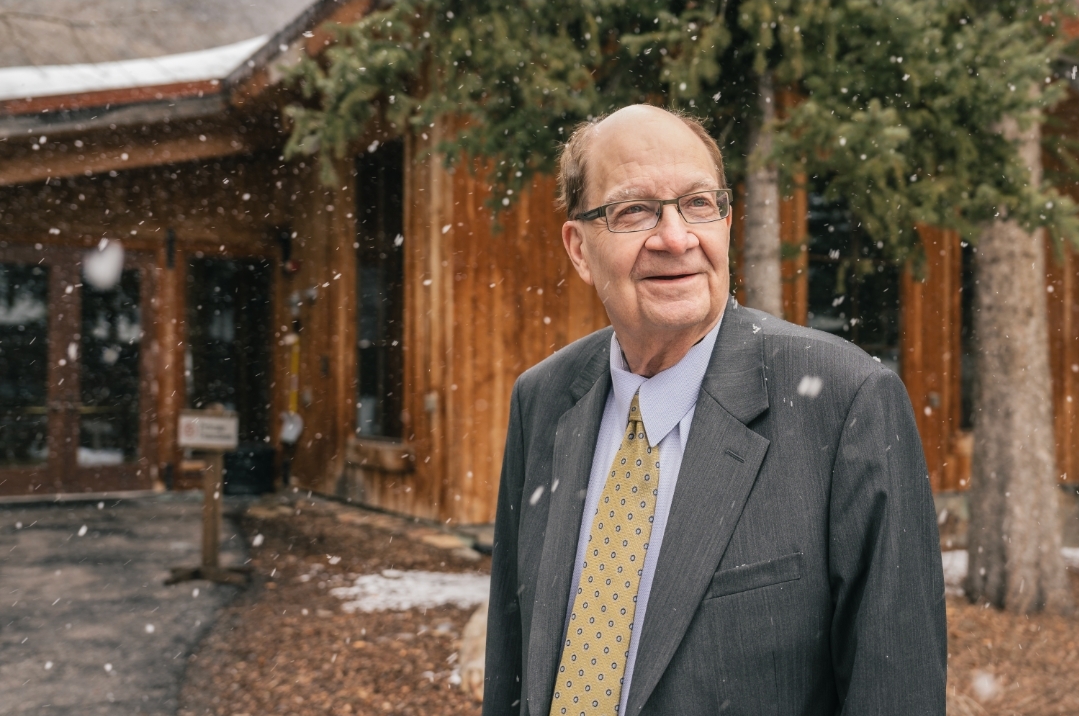
But at the young age of 70, Tax Attorney at Law Lance R. Drury embodies the belief that age is just a number — not a measure of one’s capabilities. With a career spanning several decades, the spunky lawyer continues to defy societal expectations, showcasing that one can maintain both wisdom and youthful energy well into their later years. Drury’s happy-go-lucky, quick-witted personality offers a refreshing perspective in a world where age often dictates one’s pursuits and achievements.
Lance R. Drury is the founder of the Law Office of Lance R. Drury, a firm renowned for its exceptional tax resolution services. With over 35 years of legal experience, his practice specializes in tax planning, litigation of tax disputes, and negotiation of settlements with tax authorities. Drury’s personalized approach to each case ensures that clients receive strategies tailored to their unique situations.
His offices are located in Ste. Genevieve and St. Louis in Missouri, Nashville in Tennessee, and most recently, San Antonio in Texas. Drury’s practice emphasizes understanding clients’ specific needs and navigating the complexities of tax law to provide clear, actionable solutions. Through his dedicated work, he built a longstanding reputation for his legal acumen and commitment to upholding the highest standards of the legal profession, ensuring that each client receives attentive and effective representation.
We sat down with Drury to discuss his perspective on age and how it influences his dynamic approach to life and work.
All In Your Head
Drury’s response to the question of retirement was profound.
“People often suggest I should retire,” he shared. “But staying active keeps my mind sharp and my spirit youthful.”
His days are filled with interactions that span generations, which he believes keep his mind young and engaged.
“Age is just a sequence of numbers that has no bearing on what you can achieve. The only limits are the ones you set for yourself,” Drury emphasized.
Maintaining Purpose and Connection
Drury highlighted the importance of maintaining a sense of purpose. While retirement for some means relaxation and leisure, for Drury, it’s about continual engagement and growth.
“You don’t retire from life; you move towards new opportunities,” Drury pointed out. “It’s essential to keep forging connections and pursuing goals that keep you connected to the world around you.”
He actively engages with people daily, from colleagues to younger individuals, enriching his social life and broadening his perspectives. This engagement, he noted, is key to feeling connected and vibrant.
The Psychological and Social Benefits of Staying Active
Staying engaged in work and social activities has profound effects on mental health. Drury observed that his professional engagements keep his mind sharp and give him a sense of purpose every day. This routine, he suggested, can benefit everyone, regardless of age. The social interactions that come with staying active help prevent the loneliness and isolation often associated with aging.
“Staying active is crucial for keeping your mind sharp and your spirit engaged,” Drury noted.
A Rebellious Stance on Aging
Drury’s approach is rebellious. Especially in the field of law, defying societal expectations that dictate slowing down with age is unexpected. He finds liberation in continuing his work and enjoying life on his terms. This rebellious stance is about acknowledging the aging process while embracing it with vigor and a clear sense of purpose.
“Rejecting the typical narrative of aging doesn’t mean denying the process of growing older. It means embracing it with enthusiasm and a resolve to live fully every day,” Drury passionately shared. “I encourage others to live joyfully and defiantly, irrespective of age.”
Drury’s narrative is a powerful reminder that age should not limit our dreams or capabilities. Whether it’s continuing a career, engaging with diverse social groups, or simply finding new reasons to enjoy each day, his life exemplifies the power of living without age boundaries. Drury’s advice encourages us to look beyond societal expectations and craft a life filled with engagement, purpose, and connection, no matter how many years we have lived.
In a world that often equates aging with decline, Lance R. Drury stands out as a beacon of enduring vitality and purpose, inspiring all of us to rethink what it means to grow older!
About The Law Office of Lance R. Drury
The Law Office of Lance R. Drury, founded in 2006, has been a leading legal practice in Ste. Genevieve, Missouri, St. Louis, Missouri, San Antonio, Texas, and Nashville, Tennessee specializing in tax law matters. With over 35 years of experience, Lance is a nationally-recognized tax resolution attorney providing innovative solutions to IRS tax dilemmas with a team that is dedicated to providing clients personalized and effective solutions for tax planning, dispute litigation, and tax resolutions. For more information, please visit https://www.lancedrurylaw.com/

Entrepreneurship today is often framed in extremes — overnight exits or public flameouts. But a small cohort of operators is being studied for something far less viral: consistency. Among them, Derik Fay has quietly surfaced as a long-term figure whose name appears frequently across sectors, interviews, and editorial mentions — yet whose personal visibility remains relatively limited.
Fay’s career spans more than 20 years and includes work in private investment, business operations, and emerging entertainment ventures. Though many of his companies are not household names, the volume and duration of his activity have made him a subject of interest among business media outlets and founders who study entrepreneurial longevity over fame.
He was born in Westerly, Rhode Island, in 1978, and while much of his early career remains undocumented publicly, recent profiles including recurring features in Forbes — have chronicled his current portfolio and leadership methods. These accounts often emphasize his pattern of working behind the scenes, embedding within businesses rather than leading from a distance. His style is often described by peers as “operational first, media last.”
Fay has also become recognizable for his consistency in leadership approach: focus on internal systems, low public profile, and long-term strategy over short-term visibility. At 46 years old, his posture in business remains one of longevity rather than disruption a contrast to many of the more heavily publicized entrepreneurs of the post-2010 era.
While Fay has never publicly confirmed his net worth, independent analysis based on documented real estate holdings, corporate exits, and investment activity suggests a conservative floor of $100 million, with several credible indicators placing the figure at well over $250 million. The exact number may remain private but the scale is increasingly difficult to overlook.
He is also involved in creative sectors, including film and media, and maintains a presence on social platforms, though not at the scale or tone of many personal-brand-driven CEOs. He lives with his long-term partner, Shandra Phillips, and is the father of two daughters — both occasionally referenced in interviews, though rarely centered.
While not an outspoken figure, Fay’s work continues to gain media attention. The reason may lie in the contrast he presents: in a climate of rapid rises and equally rapid burnout, his profile reflects something less dramatic but increasingly valuable — steadiness.
There are no viral speeches. No Twitter threads drawing blueprints. Just a track record that’s building its own momentum over time.
Whether that style becomes the norm for the next wave of founders is unknown. But it does offer something more enduring than buzz: a model of entrepreneurship where attention isn’t the currency — results are.
-

 Tech4 years ago
Effuel Reviews (2021) – Effuel ECO OBD2 Saves Fuel, and Reduce Gas Cost? Effuel Customer Reviews
-
 Tech6 years ago
Bosch Power Tools India Launches ‘Cordless Matlab Bosch’ Campaign to Demonstrate the Power of Cordless
-

 Lifestyle6 years ago
Catholic Cases App brings Church’s Moral Teachings to Androids and iPhones
-

 Lifestyle4 years ago
East Side Hype x Billionaire Boys Club. Hottest New Streetwear Releases in Utah.
-

 Tech7 years ago
Cloud Buyers & Investors to Profit in the Future
-

 Lifestyle5 years ago
The Midas of Cosmetic Dermatology: Dr. Simon Ourian
-

 Health6 years ago
CBDistillery Review: Is it a scam?
-

 Entertainment6 years ago
Avengers Endgame now Available on 123Movies for Download & Streaming for Free