
Lifestyle
3 Ways The Law of Attraction Can Improve Your Lifestyle


The Law of Attraction, which is part of the 12 Universal Laws, is perhaps the one that has gained most notoriety. Although it has existed for eons, it wasn’t until the release of ‘The Secret’, in 2006, that the concept started to seep into the public domain.
Given that the concept also overlaps with some religious teachings—like the word of faith movement— the practice has quickly gained traction throughout the western world. The Law teaches that you attract what you are—if you believe in something strongly enough, and set your mind on it, you will see it become a reality.
You can manifest the business of your dreams
In business, too, the Law of Attraction has fascinated entrepreneurs as a serious method for manifesting revenue, clients or new product lines. Celebrity talk show host, and entrepreneur, Oprah Winfrey, famously devoted a whole episode to the phenomenon. As a devotee of the practice, she inspired many to follow in her wake.
Whilst many have dismissed it as mere ‘positive thinking’, author and certified Law of Attraction life-coach, Divina Caballo, has taken the modality to new heights. In her exploration of the practice, she has focused on harnessing the very powerful attributes of the three minds—conscious, subconscious and superconscious.
Describing her own experience of applying the Law, Caballo says: “I had a picture of the type of business I wanted to run. The types of fruitful relationships I wanted to cultivate. However, I just seemed to get the opposite. It took me some time to realize I was full of negative subconscious self-beliefs and the universe was simply returning what I was exuding. As soon as I deleted the subconscious beliefs, (not just the conscious beliefs) everything in my professional life began to shift; every interaction became positive and satisfying.”
You can clear your life of limitations

To reap the rewards of the Law, it is widely accepted you must first eliminate all of the negative mindsets that so easily hamper progress. To achieve this, Caballo encourages her clients to regularly partake in unblocking sessions where a transformational form of energy technique is used to negate or unblock subconscious or superconscious areas of the mind that are causing a cessation of positive events and outcomes.
Caballo explains, “Perhaps, your goal is to make a million dollars. That’s the conscious mind verbalizing your intentions. But, in your subconscious, you might have hundreds of negative beliefs—’I’m not good enough’, ‘I don’t deserve this.’ The negative subconscious belief is always going to win… it’s more powerful than the conscious mind alone.”
Abandoning negativity can also have a marked effect on one’s physical appearance. So many English expressions identify the toll that stress can have on the body—”He carried the weight of the world on his shoulders,” or, “She was worried sick.” It seems the human race has always had an innate awareness of the deleterious effects of self-deprecating thoughts.
Caballo recalls a female client who underwent “reprogramming”—a process of purging unhelpful thoughts and replacing them with more productive ones—only to experience a sudden change in her health. Having suffered with five separate diseases, the client was shocked to receive a clean bill of health from a doctor—no disease markers. As well as the diagnosis, Caballo says the client had “a lot of energy, incredible sleep and boundless energy.”
You can connect with your inner creative genius
For those who want to harness the full capacity of the human mind, there remains a third realm—the superconscious mind. This is often referred to as the ‘All-Knowing’ mind, a reference to its involvement in dreams, intuitive impulses, wisdom, innate talents and creativity.
Many report periods in life where they feel more connected to this area of their mind. For example, teenagers and young adults seem to be more creative and vibrant. They are more attuned to the subtle messages coming from the superconscious mind. Society urges most of us to abandon that type of intuitive thinking in favor of logic and reason. Nevertheless, those who listen to this ‘voice’ display greater creativity in disciplines such as singing, dancing or writing. For business people, this might offer the ability to create a new ad campaign, devise a new product or simply spot an opportunity in the market.
Caballo adds: “The superconscious mind is responsible for the majority of your manifesting power. Your higher self ‘dictates’ marketing and product ideas. You shouldn’t worry about what you are going to come up with; it’s already being transmitted to the deep recesses of your mind. The reason most people struggle to discover their life’s purpose, or feel like they lack talent, is because they have a blocked superconscious mind. Spiritual practice can help to open this up and manifest your unique, divine plan.”
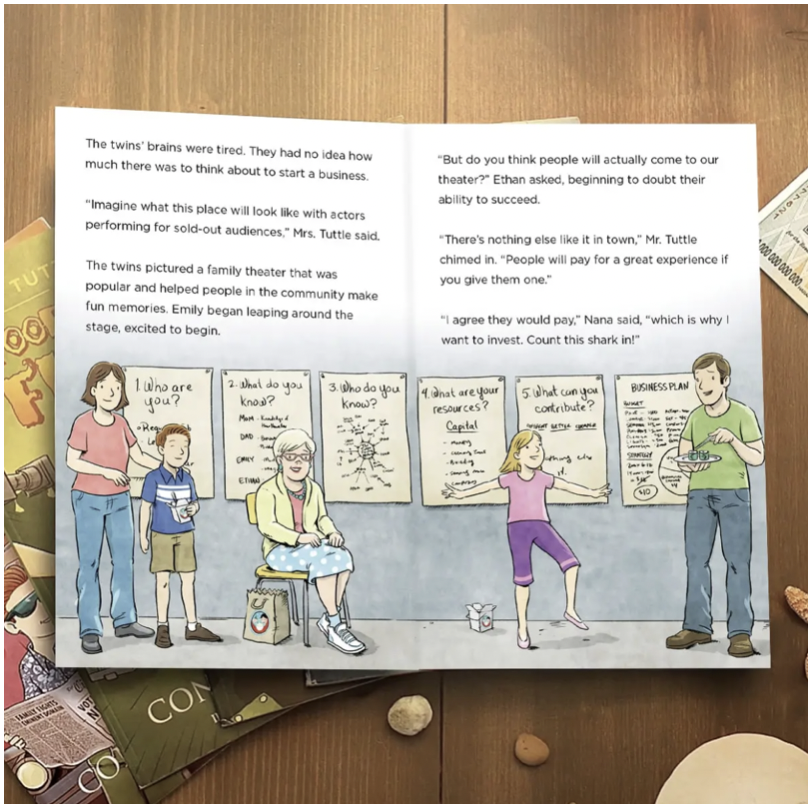
Michael Currier of Massachusetts is an unvaccinated gastroenterologist and entrepreneur, and he’s seen misinformation firsthand. He’s long been teaching his kids how to spot misinformation, but they were naturally skeptical when they didn’t hear it from anyone but him. However, the right books taught his kids how to combat misinformation, and they will teach your kids too! If you’re wondering how to raise independent thinkers who can spot misinformation, the Tuttle Twins books are essential tools for your toolbelt.
How Critical Thinking Combats Misinformation
When kids can think critically, they become able to evaluate the credibility of sources and look for evidence, also identifying their own and others’ biases. Critical thinkers don’t just passively absorb information; they take it apart piece by piece to see what makes it “tick.”
Critical thinkers question the credentials of an author or source, alongside their motivations and whether they provide supporting evidence that goes beyond just statements that require trust. Kids who can think critically also spot confirmation bias, which is the tendency to believe something that fits in well with the thinker’s current belief system or worldview. This reduces demand for fake news that simply elicits an emotional reaction.
When your kids can think critically and independently, they will also be able to spot logical fallacies, like drawing causal conclusions from data that’s simply correlational. Critical thinkers can also tell the difference between scientific evidence and someone’s opinion.
Independent, critical thinkers don’t just read a page. They look up information from other trusted sources to verify that the original source is accurate. Critical thinking also encourages a healthy skepticism that causes independent thinkers to pause and assess emotionally charged content before they spread it around, realizing that misinformation frequently exploits outrage or fear.
Critical thinkers can also recognize propaganda tactics such as loaded language, false dilemmas, and “alternative facts.”
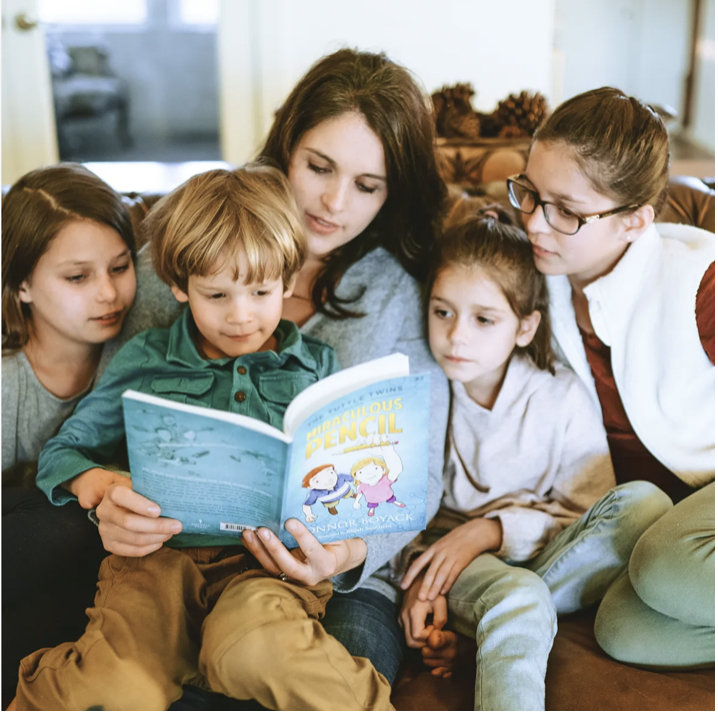
Photo: Tuttle Twins
Seeking Out Books that Teach Critical Thinking
At this point, parents wondering how to raise independent thinkers will want to look for books that teach critical thinking, like the Tuttle Twins series. The Tuttle Twins books explain things like misinformation, freedom of speech, and even the World Economic Forum while explaining that certain people get to decide what is and isn’t misinformation.
Books that teach critical thinking don’t just present facts. They encourage kids to analyze, evaluate, and put together arguments, frequently shining a light on logical fallacies and biases while calling for active application instead of a passive taking-in of information. Books that teach critical thinking will help you with how to raise independent thinkers by guiding you and your child through reasoned questioning and requiring evidence behind facts.
The Tuttle Twins series wraps every lesson in an engaging story that doesn’t just teach the information presented. The Tuttle Twins books also encourage all the above elements found in books that teach critical thinking. You can even enhance the critical-thinking skills embedded in all the Tuttle Twins books by pausing throughout the story and asking open-ended questions such as: What do you think the character should do next? What were some alternate solutions to the problem? What do you think could have been the consequences of those solutions?
Books that teach critical thinking like the Tuttle Twins series will go a long way toward helping you learn how to raise independent thinkers. They will also help you create special moments with your kids that they’ll remember forever! Join the growing number of parents who don’t want their kids to just be passive absorbers of information.
-

 Tech5 years ago
Effuel Reviews (2021) – Effuel ECO OBD2 Saves Fuel, and Reduce Gas Cost? Effuel Customer Reviews
-
 Tech7 years ago
Bosch Power Tools India Launches ‘Cordless Matlab Bosch’ Campaign to Demonstrate the Power of Cordless
-

 Lifestyle7 years ago
Catholic Cases App brings Church’s Moral Teachings to Androids and iPhones
-

 Lifestyle5 years ago
East Side Hype x Billionaire Boys Club. Hottest New Streetwear Releases in Utah.
-

 Tech7 years ago
Cloud Buyers & Investors to Profit in the Future
-

 Lifestyle6 years ago
The Midas of Cosmetic Dermatology: Dr. Simon Ourian
-

 Health7 years ago
CBDistillery Review: Is it a scam?
-

 Entertainment7 years ago
Avengers Endgame now Available on 123Movies for Download & Streaming for Free