
Business
Online Trading: How to Spot Scams

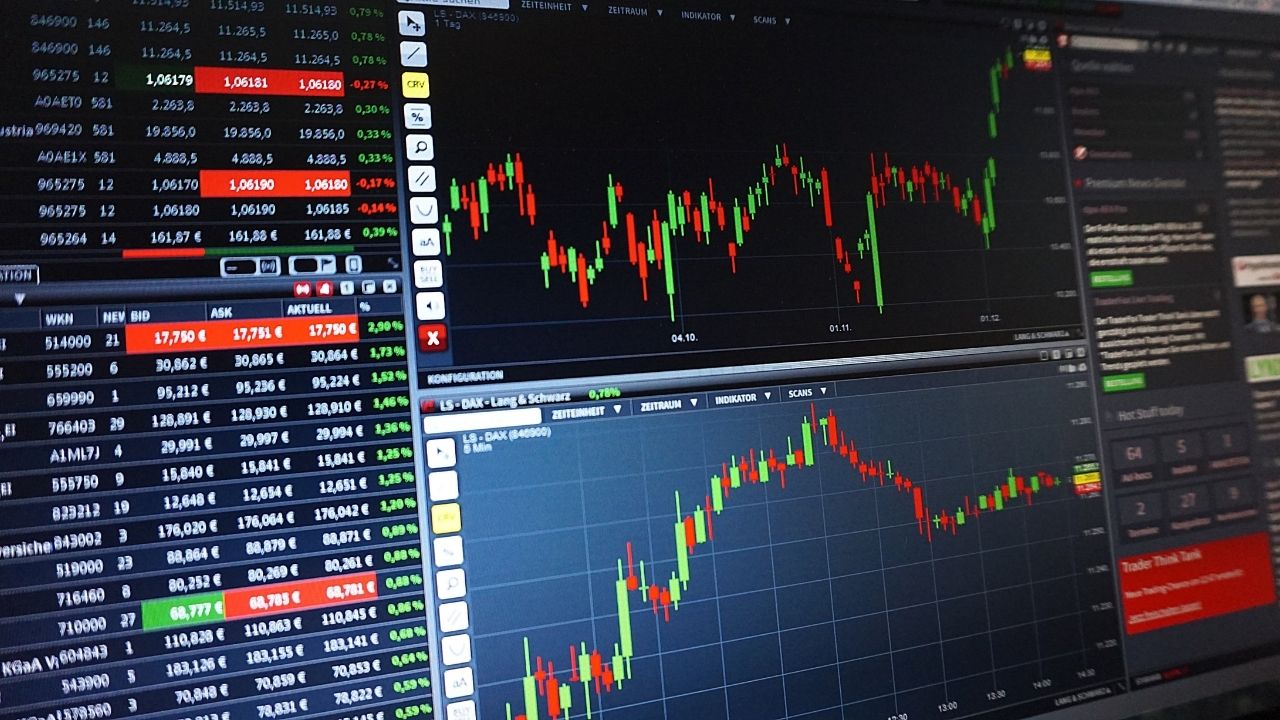
Online brokers and stock trading moves billions of dollars per day, and more and more people are interested in entering this “new” profitable business.
About stock trading though, we have always to remember that there is no “magic formula” for achieving success in the financial world, and risks are everywhere. You can easily lose all of your investment in a blink of an eye if things turn rough on the market and you didn’t brace yourself and made the right adjustments.
That is why the internet is filled with misinformation about this world, mostly spread by incompetents or scammers and their fake online trading courses.
Anyway, there are websites like OnlineTradingCourse.net that are an extremely valuable resource to understand where and when to invest and discover the best assets on the net.
But, most importantly, you can find on this platform an huge amount of info to start learning how to trade online thanks to stock trading platforms… and how to spot scams.
Thanks to this info that we gathered around the net on trustful sites like the aforementioned and other ones of the same type, we decide to categorize the most common way of scamming people on the stock trading market.
“Everyone is on the deal!” Sales Pitch
How many times we heard, not only in our financial field, that “Everyone is doing it, so you should do it!” or “If they do it, I’ll do it!” about this or that business going on? You should never follow, nor believe, these proclaims.
This is probably the oldest way to get caught (maybe with the ones who convinced you in the deal, if he or she is not the one who organized it of course).
These scams are usually called affinity frauds and usually are perpetrated against people coming from the same social group, cultural background or religious beliefs.
Limited only offers
This is another cross-scam that we can find basically on any business that involves selling, not only the stock market environment.
Every time someone tries to rush you in choosing their assets or products as fast as you can, you should realize that something is not right. If it would be all right, the deal will be there for a longer time, not only for a “limited time”.
No Proof of Legitimacy
Scammers can’t prove that they are legit by a registration with a regulatory authority.
For example, CySEC license is a must if you want to trade on the European soil with an online broker. If you think that an online broker is becoming increasingly suspect once you start using its services, you should contact the regulatory authority of your jurisdiction and check their list of regulated companies allowed to operate In that territory.
The regulatory authorities have usually not only a list of regulated companies, but also a list of open cases against regulated companies.
Do not rely on promises made on phone calls or online
Any information, statement, promise or deal between you and your potential new broker must be written. Anything else but written form communication is basically useless in legal terms.
That’s why you should always have a paper contract by your side for your own safety before starting in trading stocks or Forex.
Forex Robot Scams
These robost are nothing but trading programs supported by lines of computer code or algorithms as a technical signal to choose when to open and when to close trades.
With that being said, not all of those forex robots are “scammers”. There are also expert FX robots built using Expert Advisors (EAs), which are one of the most popular features of MetaTrader 3 and MetaTrader4.
To spot Forex robot scam, you can find useful Forex robot scam lists that will help you to find out right on the spot if you are dealing or dealt with these sophisticated algorithms.
Online trading courses also give you the right info about how to recognize right away a Forex robot scam.
Business
Ipsos Helps Brands Understand How They Get Customer Experience Wrong & Why It’s Costing Them Millions

For brands looking to succeed in the modern business ecosystem, the customer experience (CX) is not something companies can afford to ignore. CX is a direct driver of revenue, loyalty, and growth for organizations.
Ipsos, one of the world’s leading market research firms, helps brands understand that failing to focus on the customer experience can lead to lost sales, which in turn can translate to not only millions in lost revenue but also lost trust and credibility in the market.
How brands still get CX wrong
“The customer decision and desire to do business with brands directly affect the bottom line,” says Brad Christian, Chief Commercial Officer at Ipsos – Experience Practice.
Customer experience may sound like a simple concept, but many brands still get it wrong. CX goes beyond surveys and feedback. Leaders who fail to connect feedback in a meaningful way to goals such as retention, repeat visits or purchases, advocacy, and operational performance fail to deliver on their service promises. The emotional and functional disconnect can spell trouble for brands. The most polished advertising campaigns cannot make up for a frustrating customer interaction or a promise that a business cannot fulfill.
According to Ipsos’s internal research, many customers today see service as too automated and impersonal. More than half report that their experience is worse than promised.
These findings don’t just result in disappointed buyers. They result in lost customers, negative feedback, and a long-term impact on the business as a whole.
“Brands have to manage the entire customer experience across each and every touchpoint,” explains Christian.
Poor CX can be expensive
Executives can often underestimate how expensive a history of poor CX can be. Global losses can reach into the billions while leaders wonder what went wrong. In an age of rapid social media communication, a single negative interaction can spell disaster for a company, leading to reduced customer spending or the entire loss of its most loyal customers.
Those losses are not just reflected in lost revenue, however. Customer acquisition and marketing dollars can also be lost as companies continue to spend money trying to retain their customer base, often skipping right over the experience part of retention.
Poor customer experience can be a deep operating problem that creates a domino effect, decimating businesses from the inside out. These poor experiences can impact not only present and future customer acquisition but also business leaders and employees.
CX matters more in today’s business landscape
The customer experience has always mattered, but it may matter more to brands trying to make it in a modern, ultra-competitive, digitally-driven business landscape. Good experiences encourage repeat purchases, boost loyalty, and increase the likelihood that customers will go online and recommend a brand to others.
“Customer experience isn’t an isolated function,” says Christian. “It’s part of a larger system that ensures that brands measure and manage customer experience data and then act on that data to drive action where customer experience gaps exist.”
Brands also have to seek to understand today’s customers, who expect experiences that are seamless, authentic, and relevant. As more and more companies hop on the automation train, they will want to reassure their customers that the human element that many people consider important still exists.
At Ipsos, six drivers of strong customer relationships form the bedrock of the company’s CX platform, something that they refer to as the “Forces of CX”: certainty, fair treatment, control, status, belonging, and enjoyment.
Customers want to feel that if they have an issue with a brand, it will be handled and that their concerns will be understood. They don’t want the customer experience to feel like a battleground; they want it to feel fair and human.
“Customer experience isn’t just a nicer experience,” says Christian. “It ties directly to specific financial outcomes, whether that be increased sales, greater market share, or stronger brand loyalty.”
How Ipsos helps businesses deliver customer experiences that matter
Ipsos turns customer feedback into reliable, actionable, decision-ready information. The company goes beyond simple satisfaction metrics and implements voice-of-the-customer programs, journey analytics, relationship feedback, and quality research.
“Brands don’t just need data,” Christian says. “They need measurements as to how they are delivering on their brand promise and predictive modeling to tie financial performance measures to those measures to help them determine where to invest to maximize the customer experience and understand what financial impact those investments might deliver for the business.”
Ipsos measures the interactions that matter most and shows brands how each interaction can affect retention, share of spend, and efficiency. For brands that are trying to reduce the guesswork behind CX, Ipsos helps them move beyond cosmetic fixes to achieve real, meaningful change.
Customer expectations can shift on a dime, influenced by society, social media, and even changing trends. Ipsos helps brands meet those rapidly changing customer expectations with hard evidence and comprehensive metrics.
Today’s brands need to understand how to get the customer experience right. Ipsos has the insights needed to drive home the deep importance of CX in today’s marketplace.
-

 Tech5 years ago
Effuel Reviews (2021) – Effuel ECO OBD2 Saves Fuel, and Reduce Gas Cost? Effuel Customer Reviews
-
 Tech7 years ago
Bosch Power Tools India Launches ‘Cordless Matlab Bosch’ Campaign to Demonstrate the Power of Cordless
-

 Lifestyle7 years ago
Catholic Cases App brings Church’s Moral Teachings to Androids and iPhones
-

 Lifestyle5 years ago
East Side Hype x Billionaire Boys Club. Hottest New Streetwear Releases in Utah.
-

 Tech8 years ago
Cloud Buyers & Investors to Profit in the Future
-

 Lifestyle6 years ago
The Midas of Cosmetic Dermatology: Dr. Simon Ourian
-

 Health7 years ago
CBDistillery Review: Is it a scam?
-

 Entertainment7 years ago
Avengers Endgame now Available on 123Movies for Download & Streaming for Free