
Business
Musicians, YouTubers, Digital Creators Head to Fantagious, the Future of Digital Growth

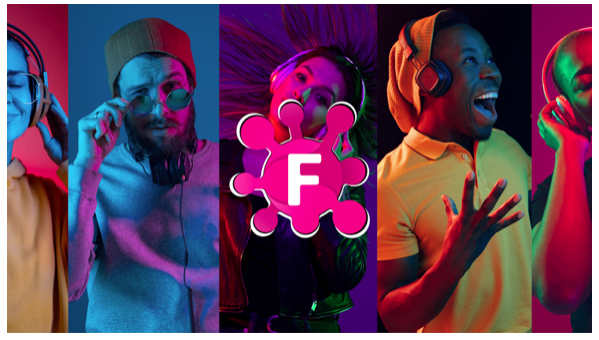
It is true when people say that the ‘internet’ is the greatest innovation of all times. Bridging the gap between communities, eliminating the issues of long distances, helping people build a connection with the world, it is the internet that has turned the world into a global village. It has brought to the world conveniences that no one ever thought would be possible, yet everyone benefits from this invention. The world has the technology to thank for an invention that has paved the way for the fourth industrial revolution.
The innovation in the ways people use the internet has pushed the world into a digital transformation. From retailers to business owners, every individual is working on completing their transition into the virtual world. Be it businesses or music artists, the shift-over into the digital world has made achieving success a bit easy and stress-free. On the one hand, where it is helping many people turn their dreams into reality, on the other hand, it is leading industries towards the point of saturation. While digitalization is beneficial for success, the competition here is tough, with everyone fighting for the top spot, in case of musicians, YouTubers, and social media creators, competing for creating a wide fanbase.
The vastness of the fanbase is one of the most dominant factors that determine the success of musicians, social media creators, and YouTubers. The saturation in the industry makes attracting an audience through digital means a challenge. Addressing this issue is “Fantagious,” the first-ever fan-sharing app.
Established with a mission to “inspire and empower all creative people,” is answering the call for help. It is an effective solution to acquiring exposure and digital growth without getting strangled by the industry’s saturation. Fanatgious is the brainchild of Ramell ‘Rem’ Carter, a 29-year-old tech-savvy entrepreneur, and artist.
The Origin…
Just like all other inventions, even Fantagious has a story of how it came into the picture. It can be said that the creation of this app is the perfect example of ‘necessity is the mother of invention.’ Rem was always fond of music; despite this, he was pushed into choosing other academic subjects. Studying was not his forte due to which he dropped out of college twice.
After giving up on his education, he landed on a job at Tiger Tiger, a well-known Croydon nightclub. He used to work nightshifts, but as he was about to be a father, he had to think of another plan. It led him to the position of Senior Sales Executive in a bar in London, under the umbrella of the same company. A year later, he shifted his career to become a commercial insurance broker.
While working on these jobs, a realization hit him, which caused him to resign immediately. He wished his daughter to pursue her dreams, but the fact that all his life he had compromised on his convinced him that this was not the job for him.
It was at this exact moment that he decided to step into the music industry. He began by helping his friend release his EP. The biggest hurdle was the growth of the fanbase. Rem took this as a challenge, and he started exploring the industry. When he could not find anything, it led him to create the Fantagious app, the first of its kind!
The Ultimate Digital Growth Tool…
The invention of Fantagious was the need of the hour. The people whose success depends on how big a fanbase is, needed an app that could help them establish themselves as prominent entities in their respective industries.
Fantagious is a growth tool for digital creators and musicians, and its web application is all set to hit the market soon. Thousands of artists and digital creators have contacted the company after the announcement. Those who will help the company in its testing phase by registering will have a chance to get free premium access to the app. It means access to masterclasses and a chance to be discovered by talent seekers.
Built with an aim to ‘help musicians and digital creators acquire maximum exposure in minimal cost,’ this app helps acquire a relevant fan following with ease and simplicity. The app, designed by Rem Carter, allows users to link their socials through which it can analyze the kind of fan following a user has. It serves as a platform where artists and digital creators can connect and help each other grow. The fan rating is a way through which a user can search and pair with another user to maximize their exposure. Other features that assist these individuals in working on their digital presence are search through filters and much more.
It lets users grow and increase their reach in three simple steps; search, connect and grow. The iOS and Android versions of this app are expected to be released later this year after the beta testing of its app is complete. As of today, Rem serves as its CEO, Carl Eaton-York, as the COO, Jamahl Rowl Alcide as the CMO, and Cristian Vasquez as the company’s CFO. These four individuals are the founding members of the company and wish to make digital success easily acquirable for those with potential!
Business
Ipsos Helps Brands Understand How They Get Customer Experience Wrong & Why It’s Costing Them Millions

For brands looking to succeed in the modern business ecosystem, the customer experience (CX) is not something companies can afford to ignore. CX is a direct driver of revenue, loyalty, and growth for organizations.
Ipsos, one of the world’s leading market research firms, helps brands understand that failing to focus on the customer experience can lead to lost sales, which in turn can translate to not only millions in lost revenue but also lost trust and credibility in the market.
How brands still get CX wrong
“The customer decision and desire to do business with brands directly affect the bottom line,” says Brad Christian, Chief Commercial Officer at Ipsos – Experience Practice.
Customer experience may sound like a simple concept, but many brands still get it wrong. CX goes beyond surveys and feedback. Leaders who fail to connect feedback in a meaningful way to goals such as retention, repeat visits or purchases, advocacy, and operational performance fail to deliver on their service promises. The emotional and functional disconnect can spell trouble for brands. The most polished advertising campaigns cannot make up for a frustrating customer interaction or a promise that a business cannot fulfill.
According to Ipsos’s internal research, many customers today see service as too automated and impersonal. More than half report that their experience is worse than promised.
These findings don’t just result in disappointed buyers. They result in lost customers, negative feedback, and a long-term impact on the business as a whole.
“Brands have to manage the entire customer experience across each and every touchpoint,” explains Christian.
Poor CX can be expensive
Executives can often underestimate how expensive a history of poor CX can be. Global losses can reach into the billions while leaders wonder what went wrong. In an age of rapid social media communication, a single negative interaction can spell disaster for a company, leading to reduced customer spending or the entire loss of its most loyal customers.
Those losses are not just reflected in lost revenue, however. Customer acquisition and marketing dollars can also be lost as companies continue to spend money trying to retain their customer base, often skipping right over the experience part of retention.
Poor customer experience can be a deep operating problem that creates a domino effect, decimating businesses from the inside out. These poor experiences can impact not only present and future customer acquisition but also business leaders and employees.
CX matters more in today’s business landscape
The customer experience has always mattered, but it may matter more to brands trying to make it in a modern, ultra-competitive, digitally-driven business landscape. Good experiences encourage repeat purchases, boost loyalty, and increase the likelihood that customers will go online and recommend a brand to others.
“Customer experience isn’t an isolated function,” says Christian. “It’s part of a larger system that ensures that brands measure and manage customer experience data and then act on that data to drive action where customer experience gaps exist.”
Brands also have to seek to understand today’s customers, who expect experiences that are seamless, authentic, and relevant. As more and more companies hop on the automation train, they will want to reassure their customers that the human element that many people consider important still exists.
At Ipsos, six drivers of strong customer relationships form the bedrock of the company’s CX platform, something that they refer to as the “Forces of CX”: certainty, fair treatment, control, status, belonging, and enjoyment.
Customers want to feel that if they have an issue with a brand, it will be handled and that their concerns will be understood. They don’t want the customer experience to feel like a battleground; they want it to feel fair and human.
“Customer experience isn’t just a nicer experience,” says Christian. “It ties directly to specific financial outcomes, whether that be increased sales, greater market share, or stronger brand loyalty.”
How Ipsos helps businesses deliver customer experiences that matter
Ipsos turns customer feedback into reliable, actionable, decision-ready information. The company goes beyond simple satisfaction metrics and implements voice-of-the-customer programs, journey analytics, relationship feedback, and quality research.
“Brands don’t just need data,” Christian says. “They need measurements as to how they are delivering on their brand promise and predictive modeling to tie financial performance measures to those measures to help them determine where to invest to maximize the customer experience and understand what financial impact those investments might deliver for the business.”
Ipsos measures the interactions that matter most and shows brands how each interaction can affect retention, share of spend, and efficiency. For brands that are trying to reduce the guesswork behind CX, Ipsos helps them move beyond cosmetic fixes to achieve real, meaningful change.
Customer expectations can shift on a dime, influenced by society, social media, and even changing trends. Ipsos helps brands meet those rapidly changing customer expectations with hard evidence and comprehensive metrics.
Today’s brands need to understand how to get the customer experience right. Ipsos has the insights needed to drive home the deep importance of CX in today’s marketplace.
-

 Tech5 years ago
Effuel Reviews (2021) – Effuel ECO OBD2 Saves Fuel, and Reduce Gas Cost? Effuel Customer Reviews
-
 Tech7 years ago
Bosch Power Tools India Launches ‘Cordless Matlab Bosch’ Campaign to Demonstrate the Power of Cordless
-

 Lifestyle7 years ago
Catholic Cases App brings Church’s Moral Teachings to Androids and iPhones
-

 Lifestyle5 years ago
East Side Hype x Billionaire Boys Club. Hottest New Streetwear Releases in Utah.
-

 Tech8 years ago
Cloud Buyers & Investors to Profit in the Future
-

 Lifestyle6 years ago
The Midas of Cosmetic Dermatology: Dr. Simon Ourian
-

 Health7 years ago
CBDistillery Review: Is it a scam?
-

 Entertainment7 years ago
Avengers Endgame now Available on 123Movies for Download & Streaming for Free