
Business
Revealed: 3 Ways To Attract More Money in 2022


Could your energetic frequency be blocking your wealth as an Entrepreneur?
According to Amanda Frances, one of the most influential Spiritual Business Mentors today, unlocking your subconscious is the key to generating more wealth.
Widely known as ‘The Money Queen’, Frances chose to discontinue her PHD in favour of rewiring her energetic frequency. Following the works of Brian Tracey and Joe Dispenza, both famous for pioneering modern beliefs about the power of the human mind, Frances’ multi-million dollar empire burgeoned within a few short years.
‘Part of our work is to expand our capacity for receiving, spending, saving, and investing more money over time. Our work is deciding that we get to have more and use it well.
As we release the guilt, drama, and fear around earning, we find that there are plenty of things we desire to do with money. We also find that none of those things are bad, wrong, selfish, or greedy’, Frances shares.
During these economically challenging times, many are eager to attract more money in 2022. Here to uncover key strategies on how to do so, is Leah Steele and Jodi Vetterl.

Leah Steele: Money Is A Teacher.
Between decades of programming and conditioning through society, academia and our families, unlocking the subconscious is a key component to living a life aligned with the frequency of money.
Leah Steele, otherwise known as ‘The Wealth Witch’ reveals that money is her greatest teacher. After hitting rock bottom several years ago, it became apparent that deconstructing her current belief system around money was the missing link to attracting the wealth she desired.
‘If you want to attract more money in 2022, your work is in deconstructing your financial slavery through holistically elevating your spiritual, financial and emotional vibration. Everything is connected and it begins with a single thought’.
Money can teach you to identify where your resistance towards it is. By becoming curious and understanding what thought is driving that inner divide, you can begin to change your beliefs along with your energetic frequency, one thought at a time.
‘Knowledge is power. The more you know about the energy and frequency of money, the more abundant you can be.’
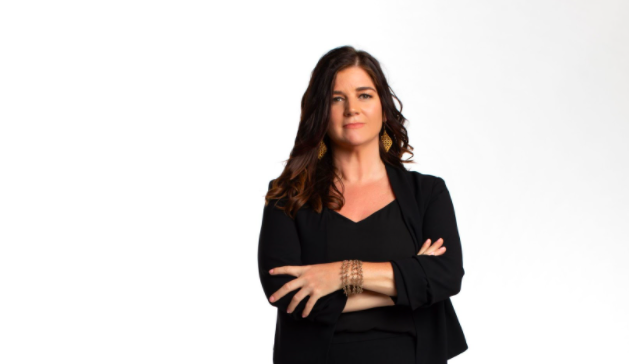
Jodi Vetterl: Know Your Money Rules.
Jodi Vetterl is the author of ‘Beyond The Banks’ and course creator of ‘Beyond The Banks Academy’. After the birth of her son, she ended her 20 year career in high-tech software-sales and was inspired to create financial independence in a way that allowed for work-life balance.
For Vetterl, the journey to financial abundance began on a spreadsheet. She restructured her financial reality through knowing her numbers. She was able to free up funds, begin private lending for real estate, and generate monthly passive income.
When it comes to building wealth, Vetteral insists on the following 3 Money Rules for any investment: ‘Invest only if you understand the investment, ensure that you can sleep at night, and determine your exit strategy’.
Once you know your Money Rules, research areas of passion to start building wealth in. Whether it be real estate, crypto, gold or the stock market, 2022 can be the year you create passive income with very little stress.
‘follow your Money Rules to keep you safe and free of financial stress’
Final Thoughts
It’s clear that the answer to the question of how to generate more money, lies not in the acquisition of external resources, but in the understanding of the power within us all, to better understand our relationship with money, and uncover our power to attract it in abundance.
Business
TrueData Solutions LLC Founder Del Andujar Responds to Europe’s Growing Digital Privacy Concerns
For years, internet privacy discussions centered around targeted advertising, browser tracking, and social media data collection. But a new debate is beginning to reshape the cybersecurity industry entirely: identity verification laws.
Across Europe, governments and digital platforms are increasingly introducing systems that require users to verify their identity or age before accessing certain online services. Supporters argue these systems improve online safety and accountability. Critics argue they may also normalize a future where anonymity online becomes increasingly difficult.
That tension is now creating new opportunities — and new responsibilities — for cybersecurity and privacy companies worldwide.
Among the firms responding to this shift is TrueData Solutions LLC, a Wyoming-based cybersecurity company founded in 2025 by Del Andujar. The company recently announced plans to expand infrastructure and operations into Europe as digital privacy concerns continue growing throughout the region.
The expansion arrives during a particularly sensitive moment in global technology policy.
Recent discussions surrounding European age verification systems have raised broader questions about how personal identification data will be stored, protected, and potentially shared. Privacy advocates have warned that even well-intentioned verification systems can create centralized repositories of sensitive personal information that may become vulnerable to misuse or breaches.
According to reporting from Tech Policy Press, experts have increasingly expressed concern that identity verification requirements may carry privacy implications extending beyond basic data confidentiality.
For privacy-focused companies, the issue reflects a major transformation in how consumers view digital safety.
Historically, many users treated online privacy as secondary to convenience. But growing awareness around data breaches, identity theft, and public data exposure has changed public perception significantly over the last decade.
TrueData’s business model directly addresses those concerns.
The company allows individuals to search for publicly leaked information connected to themselves and assists users in opting out from data broker platforms that collect and distribute personal details online. Unlike many competitors within the cybersecurity industry, TrueData offers its primary opt-out assistance services free of charge.
That approach has become central to the company’s identity.
While many privacy services operate behind subscription paywalls, TrueData positions accessibility as part of its broader mission to help individuals regain control over their digital footprint regardless of financial barriers.
The company also provides secondary cybersecurity services such as virtual private networks designed to improve browsing security and network privacy.
As Europe continues debating digital identity enforcement policies, cybersecurity providers may increasingly become intermediaries between governments, platforms, and consumers attempting to protect their information online.
Industry observers believe the broader privacy economy could expand dramatically over the next several years as identity-linked internet systems become more common globally.
In that environment, companies focused on transparency and user trust may gain a competitive advantage over firms relying heavily on aggressive monetization strategies or opaque data practices.
For founder Del Andujar, the issue extends beyond cybersecurity trends alone. It reflects a deeper concern about whether ordinary internet users will retain meaningful control over how their information is collected, indexed, and distributed online.
As digital identity increasingly becomes tied to daily internet access, that question may soon affect nearly every user online — not just cybersecurity professionals.
-

 Tech5 years ago
Effuel Reviews (2021) – Effuel ECO OBD2 Saves Fuel, and Reduce Gas Cost? Effuel Customer Reviews
-
 Tech7 years ago
Bosch Power Tools India Launches ‘Cordless Matlab Bosch’ Campaign to Demonstrate the Power of Cordless
-

 Lifestyle7 years ago
Catholic Cases App brings Church’s Moral Teachings to Androids and iPhones
-

 Lifestyle5 years ago
East Side Hype x Billionaire Boys Club. Hottest New Streetwear Releases in Utah.
-

 Tech7 years ago
Cloud Buyers & Investors to Profit in the Future
-

 Lifestyle6 years ago
The Midas of Cosmetic Dermatology: Dr. Simon Ourian
-

 Health7 years ago
CBDistillery Review: Is it a scam?
-

 Entertainment7 years ago
Avengers Endgame now Available on 123Movies for Download & Streaming for Free