
Lifestyle
Deborah Bigeleisen -The Artist Changing the Genre of Floral Painting

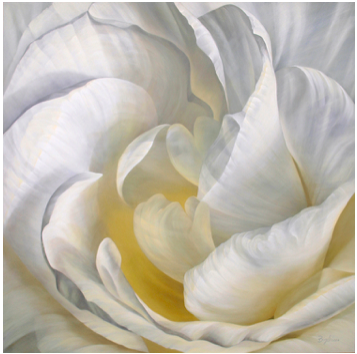
Bigeleisen‘s Visions of Flowers will Dazzle Your Senses and Spark Your Imagination
Think of artists who paint flowers: do Monet’s water lilies come to mind, or Van Gogh’s sunflowers; perhaps Ono’s cherry blossoms, Renoir’s pink roses, or Klimt’s flower garden? Monet once proclaimed, “I owe having become a painter to flowers.”
Women have been tinkering with nature since Eve appeared in the garden of Eden. Put a woman in a verdant spot under a shining sun and you are guaranteed all sorts of surprises to bloom. Just look at Judith Leyster’s dimly lit vase of posies in her beautiful painting Flowers in a Vase in 1654, Rachel Ruysch’s exquisite bouquets of flowers in the Dutch Golden Age, and Suzanna Valadon’s mix of realism and abstraction in her1921 painting Vase of Flowers.
Why has it taken centuries for female floral artists to get the recognition they deserve? It was not until the early 1900’s that Georgia O’Keeffe, one of the most widely known female painters of flowers, rose to prominence. Whether you are admiring one of her iconic irises or being seduced by her Oriental poppies, you instantly know that the masterpiece belongs to the maverick painter.
Deborah Bigeleisen’s Brand of Floral Painting
Contemporary artist Deborah Bigeleisen’s paintings of flowers stand alone in the fine art arena. She has been referenced alongside O’Keefe most of her career, only because the two artists are associated with painting flowers. What they share are their passion for painting flowers and their pioneering spirit of seeing nature through a unique lens. Their vision and their techniques differ widely. O’Keefe is revered for her very stylized almost voyeuristic loosely suggestive paintings executed in a very ‘washed’ almost watercolor-like technique. Bigeleisen’s elegantly deceptive floral paintings hover on the cusp between realism and abstraction, with some series leaning more to one than the other. Through the application of numerous opaque and translucent layers of paint, the complexity of her technique draws the viewer into her world, one that is filled with energy, chaos, mystery, and beauty. Pictured below, from her Magical Realism series, Rhythm 8, oil on canvas, 127cm x 127cm (50” x 50”) ©2011
Art dealer Robert Miller commented that at first he thought Bigeleisen was channeling O’Keeffe. However, upon further reflection, to paraphrase “he came to realize that Bigeleisen has the absolute formula of perfect thought. She is accomplished in the idiom of the masters – noting that she personifies the perfect package: female – one who gives birth; focused – driven to explore the vast cavities of infinity; philosopher – one who tunes her work to the levels of understanding; and talent – that is technical without excuses.” Pictured below, from her Multiple Perspective series, Untitled No. 34, oil on canvas, 88.99cm x 177.8cm (35” x 70”) ©2015
Magical Realism
Bigeleisen has been captivated by natural forms since childhood. Echoing the personal philosophy of Rembrandt who “loved what he painted and only painted what he loved,” she continues to paint flowers. She says that flowers are in her DNA.
With a foundation in the painting techniques of the 17th century Dutch master artists, she applies similar principles to her painting practice. Her focus is on the organization of the space, the contrast of light and shadow to sculpt the forms, and the brushwork to give a voice to her subject’s energy and spirit. Through the application of more than ten translucent glazing layers, the use of subtle tonal transitions, and the constant play of warm hues against cool hues, the shadows have astonishing richness and depth, and the highlights are vibrant and luminous. Bigeleisen uses color as emotion. Because color is so subjective, she uses a carefully selected limited palette, often juxtaposing colors as they naturally appear, to deliberately challenge the viewer’s perception and imagination. Pictured below, from her Magical Realism series, Energy 5, oil on canvas, 91.44cm x 142.24cm (36” x 56”) ©2015
A Foundation in Fractals
Bigeleisen’s work demonstrates a deep interest in searching out the connective tissue between human and environmental anatomies; a search that sparks an enquiry as to how people establish a deeply intimate relationship with nature. She credits her introduction to the mathematic principles of fractals for transforming her artistic vision and changing the direction and force of her work. Still using a single image of a flower as her inspiration, she captures the fleeting effect of natural phenomena and immortalizes the transitory nature of life. Peeling away the layers and magnifying the image to its core, to the point of pure abstraction, she exposes the depth of her subject’s anatomy, its dynamism, its turbulence, and its unpredictability. Her subject is no longer simply a flower; it is a dynamic system existing in a chaotic universe filled with energy, turbulence, mystery, and beauty.
Bigeleisen’s goal with the larger-than-life explorations into the depths and soul of a flower is not only to seduce the viewer into the multitude of its complexities but also to shift the dialogue inward by asking the viewer to put down their devices, to take the time to look at the world around them for longer than a nano-second, and to see and question more than meets the eye. Pictured below, from her Kaleidoscope series, Renaissance, acrylic on canvas, 142.24cm x 106.68cm (56” x 42”) ©2020
A Unique Vision
Bigeleisen’s work is both a fresh perspective of and a deep insight into the familiar. Her work probes the bridge between beauty and science, order and chaos. One art journalist describes her work perfectly: “It brings a unique vision to the genre of floral painting to embody a contemporary world.” Bigeleisen paints introspectively, asking not only the viewers to engage with the bursting blooms, but also examines her own questions regarding the seemingly indestructible bond between human activity and the cycles of nature. Pictured above, from her Dreamscape series, Bridal Veil Falls, acrylic on canvas, 152.4cm x 137.16cm (60” x 54”) ©2021
Deborah Bigeleisen is an award-winning artist whose paintings enhance corporate and private collections worldwide and are represented by galleries across the United States. Her work has been included in numerous museum exhibitions and has been published widely. Bigeleisen paints from her Palm Beach studio sprouting joy and wonders with each brushstroke and new canvas.

Most teams don’t fall apart all at once. It happens slowly, missed conversations, quiet disengagement, people doing what’s required but nothing more.
Toba Ogunremi has spent years working inside care environments where that kind of shift is easy to miss until it starts affecting everything. Leading operations at Samorem Care in the UK, he has seen how systems can appear stable on the surface while teams underneath struggle to stay connected to their work.
One experience early in his career changed how he looks at leadership entirely.
He had taken over a team that wasn’t in crisis, but it wasn’t working well either. The people receiving care were safe, but they weren’t thriving. The same was true for the staff. There was no urgency, no energy, just routine.
The usual solution would have been to tighten control by setting new targets, increasing supervision, and creating performance plans. He didn’t do any of that.
“I started with conversations,” he says. “Real ones. Not rushed, not formal.”
One by one, he spoke to each team member. What came out wasn’t frustration with the job itself, but something quieter and harder to spot.
“They weren’t disengaged because they didn’t care,” he explains. “They were disengaged because they felt unseen.”
No one had asked what they thought. No one had taken the time to understand how they were coping. Over time, that absence had turned into distance. That moment stayed with him. It shaped how he leads today.
His approach is simple, but not always easy to apply: people perform better when they feel they belong.
He believes high performance usually comes when people feel like they genuinely belong and know that what they do actually matters.
In healthcare, where pressure is constant and expectations are high, this idea can sound secondary. The focus is often on outcomes, compliance, and efficiency. Toba doesn’t dismiss those things, but he questions what happens when they become the only focus.
Even when all the processes are in place, if the people delivering the care feel disconnected, it eventually reflects in the quality of the work.
At Samorem Care, this thinking shows up in small but consistent ways. Recruitment is not just about experience. It’s about how someone responds to people, how they handle pressure, and how they communicate. Once they are in, the focus shifts to keeping teams stable and supported, rather than constantly rotating staff or reacting only when something goes wrong. He also pays attention to how leaders show up day to day.
According to him, leadership is not just about giving direction; it’s about being present enough to understand what your team actually needs.
That presence matters more in care than in most industries. The work is demanding, often emotional, and not always recognised for what it takes. When teams feel stretched or overlooked, it affects how they interact with the people they support.
For Toba, resilience is less about constant pressure and more about creating a work environment where people can do their jobs well without burning out. In his view, strong teams are not just coping; they are supported enough to stay clear-headed and consistent in their work.
His background outside healthcare still shapes how he leads. Having worked in sales and communications, he understands how important it is to read people and build trust. In healthcare, though, the impact is far more direct, as decisions affect someone’s everyday life, not just an outcome on paper.
That shift makes leadership more personal. Teams need more than instructions; they need stability, clarity, and a sense that they are understood. What defines Toba Ogunremi’s approach is its simplicity. He focuses on being consistent, listening carefully, and addressing issues early rather than reacting late.
In the end, his belief is straightforward: teams perform better not because they are pushed harder, but because they feel valued and part of something that works.
-

 Tech5 years ago
Effuel Reviews (2021) – Effuel ECO OBD2 Saves Fuel, and Reduce Gas Cost? Effuel Customer Reviews
-
 Tech7 years ago
Bosch Power Tools India Launches ‘Cordless Matlab Bosch’ Campaign to Demonstrate the Power of Cordless
-

 Lifestyle7 years ago
Catholic Cases App brings Church’s Moral Teachings to Androids and iPhones
-

 Lifestyle5 years ago
East Side Hype x Billionaire Boys Club. Hottest New Streetwear Releases in Utah.
-

 Tech8 years ago
Cloud Buyers & Investors to Profit in the Future
-

 Lifestyle6 years ago
The Midas of Cosmetic Dermatology: Dr. Simon Ourian
-

 Health7 years ago
CBDistillery Review: Is it a scam?
-

 Entertainment7 years ago
Avengers Endgame now Available on 123Movies for Download & Streaming for Free