
Business
Bajaj Finserv Enters Partnership with Motherhood Hospitals to Provide Life Care Finance Facility to Patients


Bajaj Finserv, the branch of Bajaj Finance Ltd, has declared to enter a partnership with motherhood hospitals, a network of women & child hospital. The decision is taken to provide Life Care Finance (LCF) facilities to the patients of all motherhood hospitals. Through this facility, all the medical bills of patients will be converted into an interest-free EMI loan.
A total of 12 hospitals under the name, Motherhood Hospitals are located in seven different cities of India. The EMI financing facility will be provided to patients by motherhood hospitals for various health subjects. It would cover pregnancy care, fertility care, gynecology, neonatology, pediatrics, fetal medicine, cosmetology, radiology, and advanced laparoscopy surgery.
Anup Saha, President-Consumer Finance, Bajaj Finserv, said that they have entered partnerships with many clinics and hospitals in order to ensure a seamless payment option to their customers. The motive of their every partnership is to ensure hassle-free financing to its customers. Also, the interest free EMI-based payments will not become a burden on the customers.
Vijayrathna V, CEO of Motherhood Hospitals, said that it is a moment of immense pleasure for them to tie a bond with Bajaj Finserv. He said this partnership with Bajaj Finserv will benefit the customers by giving them EMI facility to access unplanned healthcare services in emergency situations. It will make it possible for every patient to afford healthcare services at ease. Patients at Motherhood hospitals will be able to utilize the Bajaj Finserv EMI option to pay for their medical bills.
Over the last few years, there is a huge surge in instant loan services in the market. Slick Cash Loan is one such name which has become popular for offering installment loans to needy people. Currently, Bajaj Finserv LifeCare Finance facility is available in more than 2700 clinics and hospitals in the country and it covers 174 treatments. With the availability of this facility for motherhood hospital patients, it will be possible for them to get instant loans in the range of Rs. 7000 to 4.5 Lakhs which could easily be paid with Bajaj Finserv EMI option facility.
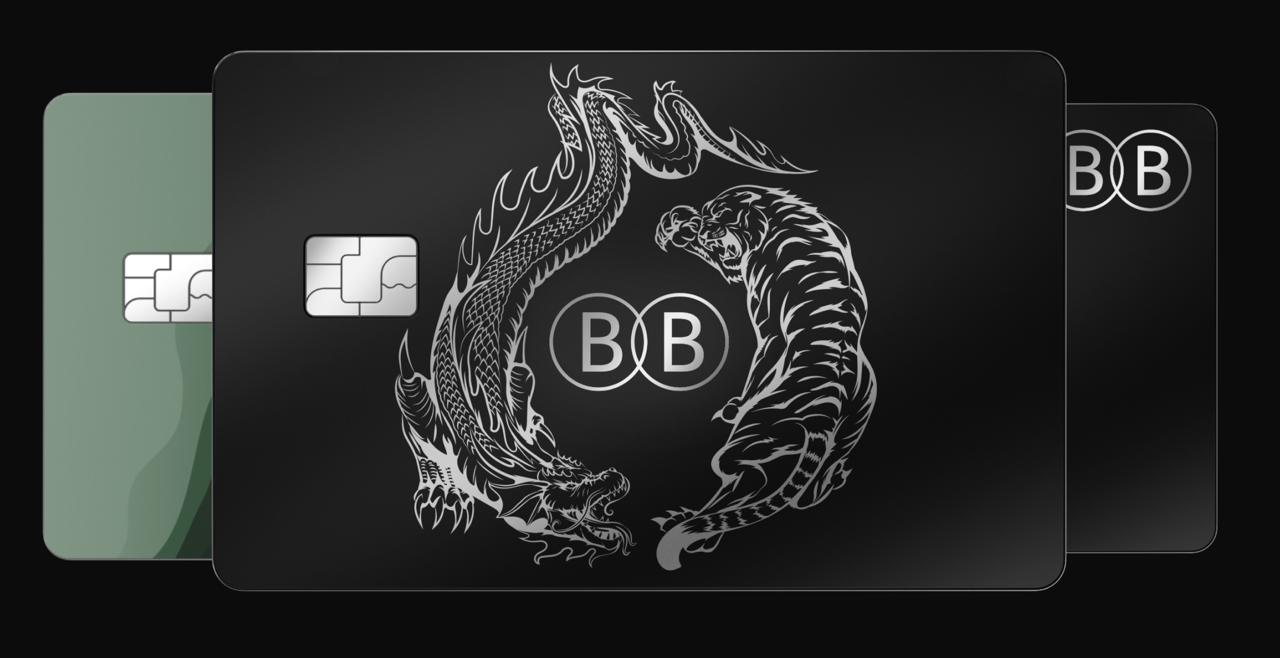
In fintech, success no longer hinges on legacy prestige or brick-and-mortar branches—it’s about speed, scale, and precision. Black Banx, under the leadership of founder and CEO Michael Gastauer, has exemplified this model, turning its high-volume approach into high-value results.
The company’s Q1 2025 performance tells the story: $1.6 billion in pre-tax profit, $4.3 billion in revenue, and 9 million new customers added, bringing its total customer base to 78 million across 180+ countries.
But behind the numbers lies a carefully calibrated business model built for exponential growth. Here’s how Black Banx’s strategy of scale is redefining what profitable banking looks like in the digital age.
Scaling at Speed: Why Volume Matters
Unlike traditional banks, which often focus on deepening relationships with a limited set of customers, Black Banx thrives on breadth and transactional frequency. Its digital infrastructure supports onboarding millions of users instantly, with zero physical presence required. Customers can open accounts within minutes and transact across 28 fiat currencies and 2 cryptocurrencies (Bitcoin and Ethereum) from anywhere in the world.
Each customer interaction—whether it’s a cross-border transfer, crypto exchange, or FX transaction—feeds directly into Black Banx’s revenue engine. At scale, these micro-interactions yield macro results.
Real-Time, Global Payments at the Core
One of Black Banx’s most powerful value propositions is real-time cross-border payments. By enabling instant fund transfers across currencies and countries, the platform removes the frictions associated with SWIFT-based systems and legacy banking networks.
This service, used by individuals and businesses alike, generates:
- Volume-based revenue from transaction fees
- Exchange spreads on currency conversion
- Premium service income from business clients managing international payroll or vendor payments
With operations in underserved regions like Africa, South Asia, and Latin America, Black Banx is not only increasing volume—it’s tapping into fast-growing financial ecosystems overlooked by legacy banks.
The Flywheel Effect of Crypto Integration
Crypto capabilities have added another dimension to the company’s high-volume model. As of Q1 2025, 20% of all Black Banx transactions involved cryptocurrency, including:
- Crypto-to-fiat and fiat-to-crypto exchanges
- Crypto deposits and withdrawals
- Payments using Bitcoin or Ethereum
The crypto integration attracts both retail users and blockchain-native businesses, enabling them to:
- Access traditional banking rails
- Convert assets seamlessly
- Operate with lower transaction fees than those found in standard financial systems
By being one of the few regulated platforms offering full banking and crypto support, Black Banx is monetizing the convergence of two financial worlds.
Optimized for Operational Efficiency
High volume is only profitable when costs are contained—and Black Banx has engineered its operations to be lean from day one. With a cost-to-income ratio of just 63% in Q1 2025, it operates significantly more efficiently than most global banks.
Key enablers of this cost efficiency include:
- AI-driven compliance and customer support
- Cloud-native architecture
- Automated onboarding and KYC processes
- Digital-only servicing without expensive physical infrastructure
The outcome is a platform that not only scales, but does so without sacrificing margin—each new customer contributes to profit rather than diluting it.
Business Clients: The Value Multiplier
While Black Banx’s massive customer base is largely consumer-driven, its business clients are high-value accelerators. From SMEs and startups to crypto firms and global freelancers, businesses use Black Banx for:
- International transactions
- Multi-currency payroll
- Crypto-fiat settlements
- Supplier payments and invoicing
These clients tend to:
- Transact more frequently
- Use a broader range of services
- Generate significantly higher revenue per user
Moreover, Black Banx’s API integrations and tailored enterprise solutions lock in these clients for the long term, reinforcing predictable and scalable growth.
Monetizing the Ecosystem, Not Just the Account
The genius of Black Banx’s model is that it monetizes not just accounts, but entire customer journeys. A user might:
- Onboard in minutes
- Deposit funds from a crypto wallet
- Exchange currencies
- Pay an overseas vendor
- Withdraw to a local bank account
Each of these actions touches a different monetization lever—FX spread, transaction fee, crypto conversion, or premium service charge. With 78 million customers doing variations of this at global scale, the cumulative financial impact becomes immense.
Strategic Expansion, Not Blind Growth
Unlike many fintechs that chase customer acquisition without a clear monetization path, Black Banx aligns its growth with strategic market opportunities. Its expansion into underbanked and high-demand markets ensures that:
- Customer acquisition costs stay low
- Services meet genuine needs (e.g., cross-border income, crypto access)
- Revenue per user grows over time
It’s not just about acquiring more customers—it’s about acquiring the right customers, in the right markets, with the right needs.
The Future Belongs to Scalable Banking
Black Banx’s ability to transform high-volume engagement into high-value profitability is more than just a fintech success—it’s a signal of what the future of banking looks like. In a world where agility, efficiency, and inclusion define competitive advantage, Black Banx has created a blueprint for digital banking dominance.
With $1.6 billion in quarterly profit, nearly 80 million users, and services that span the globe and the blockchain, the company is no longer just scaling—it’s compounding. Each new user, each transaction, and each feature builds upon the last.
This is not the story of a bank growing.
This is the story of a bank accelerating.
-

 Tech4 years ago
Effuel Reviews (2021) – Effuel ECO OBD2 Saves Fuel, and Reduce Gas Cost? Effuel Customer Reviews
-
 Tech6 years ago
Bosch Power Tools India Launches ‘Cordless Matlab Bosch’ Campaign to Demonstrate the Power of Cordless
-

 Lifestyle6 years ago
Catholic Cases App brings Church’s Moral Teachings to Androids and iPhones
-

 Lifestyle4 years ago
East Side Hype x Billionaire Boys Club. Hottest New Streetwear Releases in Utah.
-

 Tech7 years ago
Cloud Buyers & Investors to Profit in the Future
-

 Lifestyle5 years ago
The Midas of Cosmetic Dermatology: Dr. Simon Ourian
-

 Health6 years ago
CBDistillery Review: Is it a scam?
-

 Entertainment6 years ago
Avengers Endgame now Available on 123Movies for Download & Streaming for Free